Loading...
Alexios I Komnenos vs Isabella I of Castile
Alexios I Komnenos leads by 1.2 pts · 2 figures compared
…
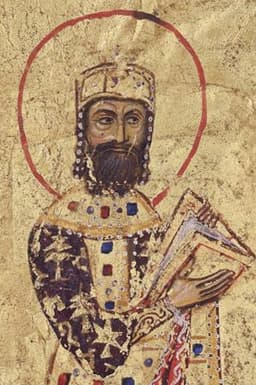
Alexios I Komnenos
Emperor · Medieval
78.4Total
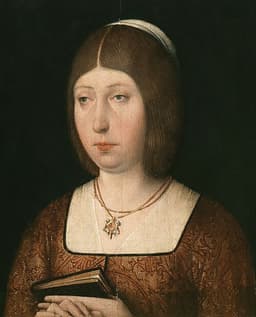
Isabella I of Castile
Emperor · Medieval
77.2Total
Basic Information
Born
1048
1451
Died
1118
1504
Era
Medieval
Medieval
Nationality
Byzantine Empire
Spain
Occupation
Emperor
Emperor
Civilization
Western
Western
Score Comparison
Military (10%)
61.7
76.0
Political (20%)
78.0
78.0
Influence (20%)
88.0
80.0
Legacy (20%)
80.0
75.0
Leadership (15%)
78.0
78.0
Strategy (15%)
68.0
75.0
TOTAL
78.4
77.2
Alexios I Komnenos — Complete Timeline
1081 AD
Battle of DyrrhachiumWar◆ Major
Alexios I Komnenos was defeated by the Norman army under Robert Guiscard at Dyrrhachium. The Byzantine forces were routed, and Alexios barely escaped. This loss allowed the Normans to occupy much of the western Balkans, though Alexios later recovered some territory.
Norman InvasionDefeatBalkans
Impact: regionaltragic
1090 AD
Reforms of the Byzantine Military and EconomyReform◆ Major
Alexios I implemented a series of reforms to restore Byzantine power. He reorganized the army by relying more on foreign mercenaries, reformed the currency (the hyperpyron), and granted tax exemptions to the Church. These measures stabilized the empire after decades of decline.
Military ReformEconomic ReformKomnenian Restoration
Impact: nationalconstructive
1095 AD
Appeal to the West: Council of PiacenzaPolitical Action
Alexios I sent envoys to Pope Urban II at the Council of Piacenza, requesting military aid against the Seljuk Turks. This appeal contributed to Urban's call for the First Crusade at the Council of Clermont later that year, initiating the Crusader movement.
First CrusadePope Urban IISeljuk Turks
Impact: global
1097 AD
First Crusade: Siege of NicaeaWar◆ Major
Alexios I cooperated with the Crusader army to besiege and capture Nicaea from the Seljuk Turks. The city was surrendered to Byzantine control, and Alexios used the Crusaders to recover key territories in Anatolia, though tensions later arose over land claims.
First CrusadeNicaeaByzantine-Crusader Relations
Impact: regionalconstructive
Isabella I of Castile — Complete Timeline
1469 AD
Marriage to Ferdinand of AragonPolitical Action
Isabella married Ferdinand II of Aragon in Valladolid, uniting the kingdoms of Castile and Aragon. This dynastic union laid the foundation for the unified Spanish monarchy and enabled joint policies including the Reconquista and overseas exploration.
Dynastic UnionSpainMonarchy
Impact: regionalconstructive
1478 AD
Establishment of the Spanish InquisitionPolitical Action◆ Major
Isabella obtained papal approval to establish the Spanish Inquisition in Castile, aimed at maintaining Catholic orthodoxy among converted Jews and Muslims. The Inquisition operated under royal control, conducting trials and executions for heresy.
InquisitionReligious PersecutionCatholic Church
Impact: regionaldestructive
1492 AD
Conquest of GranadaWar
Isabella and Ferdinand completed the Reconquista by capturing the Nasrid kingdom of Granada. The surrender of the last Muslim state in Iberia ended 781 years of Islamic rule and unified Spain under Christian rule.
ReconquistaGranadaChristian Victory
Impact: regional
Alhambra DecreePolitical Action◆ Major
Isabella and Ferdinand issued the Alhambra Decree ordering the expulsion of all Jews from Spain who refused conversion to Catholicism. An estimated 40,000 to 200,000 Jews were forced to leave, causing demographic and economic disruption.
ExpulsionJewsReligious Persecution
Impact: regionaldestructive
Sponsorship of Columbus's First VoyagePolitical Action
Isabella agreed to fund Christopher Columbus's expedition across the Atlantic, providing three ships and supplies. Columbus reached the Bahamas on October 12, initiating sustained European contact with the Americas and the Spanish colonial empire.
ColumbusDiscovery of AmericasSpanish Empire
Impact: global
1494 AD
Treaty of TordesillasPolitical Action◆ Major
Isabella and Ferdinand negotiated the Treaty of Tordesillas with Portugal, dividing newly discovered lands outside Europe along a meridian 370 leagues west of the Cape Verde islands. This agreement shaped colonial claims in the Americas and Africa.
Colonial DivisionSpainPortugal
Impact: global
Expert Analysis
Origins
Alexios I Komnenos (c. 1048–1118) was born into the Byzantine military aristocracy at a time of crisis. The empire faced Norman invasions, Seljuk Turk advances, and internal decay. His family, the Komnenoi, had a history of imperial ambition, but Alexios rose through sheer military competence. In contrast, Isabella I of Castile (1451–1504) was born into the tumultuous politics of fragmented Iberia. Her half-brother Henry IV's weak rule led to civil war, and Isabella seized the throne through a mix of strategic marriage and political maneuvering. Both emerged from periods of instability, but Alexios inherited a crumbling empire, while Isabella inherited a divided but rising kingdom.
Rise to Power
Alexios came to power through a coup in 1081, deposing the incompetent Nikephoros III. He was a seasoned general, having fought Normans and Turks. His rise was military-backed, but he faced immediate threats: the Normans under Robert Guiscard invaded the Balkans. Isabella's path was more diplomatic. In 1469, she married Ferdinand of Aragon, uniting their crowns. After Henry IV's death in 1474, she claimed Castile, defeating rival claimants in the War of Castilian Succession. Both consolidated power through warfare, but Alexios relied on brute force, while Isabella combined marriage alliances and legal claims.
Leadership & Governance
Alexios reformed the Byzantine military and economy, introducing the pronoia system (land grants in exchange for military service) and rebuilding the navy. He also negotiated with the Holy Roman Emperor and the Pope, culminating in the Council of Piacenza (1095), where he appealed for Western help against the Turks. This sparked the First Crusade, a double-edged sword: Crusaders helped reclaim Nicaea but also created new problems. Isabella and Ferdinand governed jointly, centralizing power, curbing the nobility, and promoting religious uniformity. They established the Spanish Inquisition (1478) and expelled Jews (1492). Alexios’s governance was pragmatic and survival-oriented; Isabella’s was visionary and expansionist.
Triumph & Tragedy
Alexios's greatest triumph was surviving and stabilizing the empire. He defeated Normans, Pechenegs, and used the Crusaders to recover Anatolian territories. However, the First Crusade also brought unintended consequences: Crusader states in the Levant often ignored Byzantine authority, and the Fourth Crusade later sacked Constantinople. Isabella's triumph was the conquest of Granada in 1492, ending nearly 800 years of Muslim rule in Iberia. She also sponsored Columbus's voyage, opening the Americas to European colonization. Yet her reign saw the tragic expulsion of Jews and Muslims, and the Inquisition's brutality. Both achieved great victories but with morally ambiguous legacies.
Character & Destiny
Alexios was a cunning diplomat and resilient soldier, often outmatched but never outwitted. His memoirs, the Alexiad, portray him as a pious yet pragmatic ruler. Destiny placed him at the crossroads of East and West, and his actions inadvertently shaped the Crusades. Isabella was devout, determined, and ruthless. She saw herself as God's instrument to unite Christendom. Her destiny was to forge Spain into a global power. Both were shaped by their faith, but Isabella's religious zeal was more absolute, while Alexios's Orthodoxy was tempered by political necessity.
Legacy
Alexios founded the Komnenian dynasty, which restored Byzantine prestige temporarily. His appeal to the West catalyzed the Crusades, altering world history. However, his empire ultimately declined, and his legacy is mixed: a savior to some, a catalyst for disaster to others. Isabella's legacy is more monumental: unified Spain, the Spanish Empire, and the Columbian Exchange. Yet the Inquisition and expulsion of Jews tarnish her image. In historical rankings, Isabella often scores higher for global impact, but Alexios's role in the Crusades is equally profound.
Conclusion
Numerical scores: Alexios I Komnenos: Military 62, Political 78, Influence 88, Leadership 80, Diplomacy 78, Strategy 68, Overall 78. Isabella I of Castile: Military 76, Political 78, Influence 80, Leadership 75, Diplomacy 78, Strategy 75, Overall 77. The score gap is 1.2 points in favor of Alexios. While Isabella's achievements are more visible—unification, exploration, empire—Alexios faced a more desperate situation and his actions had longer-lasting ripple effects. He stabilized a dying empire and inadvertently launched the Crusades, a world-historical event. Isabella’s unification of Spain and sponsorship of Columbus were transformative, but she built on existing momentum. Alexios’s reign was a masterclass in survival against overwhelming odds. Therefore, Alexios I Komnenos edges out Isabella I of Castile as the more historically significant figure.
Rankings
🥇
Alexios I KomnenosLeader
Mil: 61.7Pol: 78.0Inf: 88.0
78.4
🥈
Isabella I of Castile
Mil: 76.0Pol: 78.0Inf: 80.0
77.2
+1.2 behind
How This Comparison Works
Algorithm
Each figure is scored on 6 dimensions (0—100 scale) based on structured historical data: Military (10%), Political (20%), Influence (20%), Legacy (20%), Leadership (15%), Strategy (15%). The weighted total produces the final ranking.
Data Sources
Scores are computed from structured sub-indicators in the database. Scale factors adjust for era (Ancient ×0.85, Modern ×1.0) and civilization size (Eastern ×1.05, Other ×0.80) to account for differences in population and military scale.
Maximum 3 Figures
Comparisons are limited to 2—3 figures to ensure readability and statistical meaningfulness.
Error Margins
±5 points per dimension — Sub-scores are derived from historical records with inherent uncertainty. Two figures within 5 points on a dimension should be considered roughly equivalent in that area.
Total Score Accuracy
±3 points overall — The weighted combination of 6 dimensions produces a total score with approximately ±3 points of uncertainty. Differences of less than 3 points are not statistically significant— the figures are effectively tied.
Known Limitations
- Historical records are incomplete and uneven across civilizations
- Figures from oral-tradition societies may be underrepresented
- Occupation labels can misclassify multi-role figures
- Scores measure capability and impact, not moral character
- Quantitative scoring is a comparison tool, not absolute truth
Capability Radar
Military (10%) — Battles & Warfare
Battles
75
75
Win Rate
70
80
Expansion
60
85
Political (20%) — Governance & Reform
Reform
85
90
Diplomacy
90
80
Economy
70
75
Influence (20%) — Cultural & Global Reach
Cultural
70
85
Global
75
95
Legacy (20%) — Historical Impact
Historical
85
95
Longevity
80
90
Leadership (15%) — Power & Stability
Tenure
80
85
Stability
75
70
Strategy (15%) — Tactics & Innovation
Strategy
85
85
Tactics
80
70
Reform
75
90
Similar Comparisons
Comments & Discussion
No comments yet. Be the first to share your thoughts!