Loading...
Alexios I Komnenos vs Emperor Taizong of Tang
Emperor Taizong of Tang leads by 0.5 pts · 2 figures compared
…
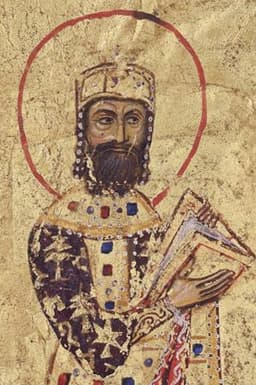
Alexios I Komnenos
Emperor · Medieval
78.4Total
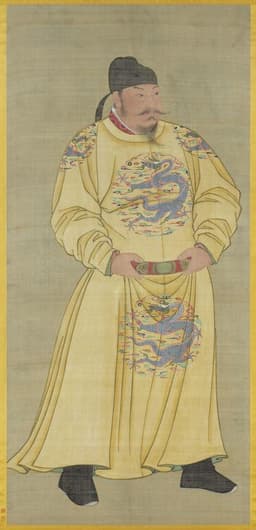
Emperor Taizong of Tang
Emperor · Medieval
78.9Total
Basic Information
Born
1048
598
Died
1118
649
Era
Medieval
Medieval
Nationality
Byzantine Empire
China
Occupation
Emperor
Emperor
Civilization
Western
Eastern
Score Comparison
Military (10%)
61.7
77.5
Political (20%)
78.0
82.0
Influence (20%)
88.0
85.0
Legacy (20%)
80.0
71.4
Leadership (15%)
78.0
78.0
Strategy (15%)
68.0
80.6
TOTAL
78.4
78.9
Alexios I Komnenos — Complete Timeline
1081 AD
Battle of DyrrhachiumWar◆ Major
Alexios I Komnenos was defeated by the Norman army under Robert Guiscard at Dyrrhachium. The Byzantine forces were routed, and Alexios barely escaped. This loss allowed the Normans to occupy much of the western Balkans, though Alexios later recovered some territory.
Norman InvasionDefeatBalkans
Impact: regionaltragic
1090 AD
Reforms of the Byzantine Military and EconomyReform◆ Major
Alexios I implemented a series of reforms to restore Byzantine power. He reorganized the army by relying more on foreign mercenaries, reformed the currency (the hyperpyron), and granted tax exemptions to the Church. These measures stabilized the empire after decades of decline.
Military ReformEconomic ReformKomnenian Restoration
Impact: nationalconstructive
1095 AD
Appeal to the West: Council of PiacenzaPolitical Action
Alexios I sent envoys to Pope Urban II at the Council of Piacenza, requesting military aid against the Seljuk Turks. This appeal contributed to Urban's call for the First Crusade at the Council of Clermont later that year, initiating the Crusader movement.
First CrusadePope Urban IISeljuk Turks
Impact: global
1097 AD
First Crusade: Siege of NicaeaWar◆ Major
Alexios I cooperated with the Crusader army to besiege and capture Nicaea from the Seljuk Turks. The city was surrendered to Byzantine control, and Alexios used the Crusaders to recover key territories in Anatolia, though tensions later arose over land claims.
First CrusadeNicaeaByzantine-Crusader Relations
Impact: regionalconstructive
Emperor Taizong of Tang — Complete Timeline
626 AD
Reign of ZhenguanReform
Emperor Taizong initiated the Zhenguan era, characterized by efficient governance, legal codification, and economic recovery. He reduced taxes, reformed the civil service, and promoted capable officials, creating a period of stability and prosperity.
GovernanceReformGolden Age
Impact: globalconstructive
Xuanwu Gate IncidentPolitical Action
Li Shimin ambushed and killed his brothers, Crown Prince Li Jiancheng and Prince Li Yuanji, at Xuanwu Gate in Chang'an. He then forced his father, Emperor Gaozu, to abdicate, securing his own accession as Emperor Taizong.
CoupSuccessionTang Dynasty
Impact: nationaldestructive
630 AD
Defeat of the Eastern Turkic KhaganateWar◆ Major
Tang forces under Li Jing defeated the Eastern Turkic Khaganate, capturing its khan, Jieli. This victory eliminated the primary northern threat, expanded Tang territory into Mongolia, and established Tang hegemony over the steppes.
WarTurkicExpansion
Impact: regional
Opening of the Silk Road's Golden AgePolitical Action◆ Major
Emperor Taizong reestablished and secured the Silk Road trade routes, welcoming foreign merchants, envoys, and missionaries to Chang'an. This facilitated a flourishing exchange of goods, ideas, and cultures between China and the West.
Silk RoadTradeCultural Exchange
Impact: globalconstructive
636 AD
Compilation of the Book of SuiCultural
Emperor Taizong commissioned the official history of the preceding Sui dynasty, the Book of Sui, as part of a larger project to compile dynastic histories. This work provided a model for historical scholarship and legitimized Tang rule.
HistoriographyCultureLegitimacy
Impact: nationalconstructive
Expert Analysis
Origins
Emperor Taizong of Tang (Li Shimin) was born into a noble family in 598 CE, the second son of Li Yuan, the founder of the Tang dynasty. He grew up amidst the chaos of the Sui dynasty's collapse, gaining military experience from a young age. Alexios I Komnenos was born in 1048 into the Komnenian family, a powerful Byzantine aristocratic clan. He rose through military ranks during a period of constant warfare against the Seljuks and Normans. Both men were shaped by their aristocratic upbringings and early exposure to combat, but Taizong's path was more direct and violent.
Rise to Power
Taizong orchestrated the Xuanwu Gate Incident in 626, where he killed his brothers and forced his father to abdicate. This ruthless coup secured his throne but left a stain on his legitimacy. Alexios came to power through a coup against Emperor Nikephoros III in 1081, supported by his mother Anna Dalassene and the military. While both seized power, Taizong's act was more fratricidal, whereas Alexios's was a family-led rebellion. Taizong's rise was a single, dramatic event; Alexios's was a gradual consolidation.
Leadership & Governance
Taizong's reign (626-649) is celebrated as the "Reign of Zhenguan," a golden age of efficient governance, low taxes, and meritocratic bureaucracy. He implemented the equal-field system, reformed the legal code, and promoted Confucian scholarship. He also expanded the empire, defeating the Eastern Turkic Khaganate in 630 and securing the Silk Road, fostering unprecedented trade and cultural exchange. His leadership was proactive and visionary.
Alexios I (1081-1118) faced a crumbling empire. He reformed the Byzantine military by creating the Komnenian army, relying on foreign mercenaries and land grants (pronoia). He stabilized the economy by devaluing coinage and reforming taxation. His most famous act was appealing to Pope Urban II at the Council of Piacenza in 1095, which sparked the First Crusade. He skillfully used the Crusaders to recover Nicaea and parts of Anatolia, but his relations with them were fraught with tension. Alexios was a pragmatic survivor, while Taizong was a builder.
Triumph & Tragedy
Taizong's greatest triumph was the defeat of the Eastern Turks, which eliminated the primary threat to Tang China and opened the Silk Road. He also oversaw the compilation of the Book of Sui, which cemented his cultural legacy. His tragedy was the Xuanwu Gate Incident, which haunted his reign and led to a complex relationship with his sons. Alexios's triumph was the recovery of Nicaea and the restoration of Byzantine power in the Balkans and Anatolia. His tragedy was the uncontrollable nature of the First Crusade, which created the Crusader states and alienated Byzantium from the West. Both faced personal and political costs.
Character & Destiny
Taizong was a brilliant strategist, ruthless yet visionary. He personally led campaigns and was known for his humility in accepting advice from ministers like Wei Zheng. His destiny was to create a model empire. Alexios was cunning and diplomatic, often deceiving allies and enemies alike. He was a master of survival, but his reliance on the Crusades altered the course of history. Both were pragmatic, but Taizong's vision was more constructive, while Alexios's was more reactive.
Legacy
Taizong's legacy is the Tang dynasty's golden age, influencing China for centuries. His reign set standards for governance and culture. Alexios founded the Komnenian dynasty, which restored Byzantine prestige temporarily, but his appeal to the West inadvertently contributed to the Fourth Crusade's sack of Constantinople in 1204. Taizong's legacy is positive and enduring; Alexios's is mixed and controversial. Comparing scores: Taizong (M=78, P=82, I=85, L=71, D=78, S=81, T=79) vs Alexios (M=62, P=78, I=88, L=80, D=78, S=68, T=78). Taizong leads in Military, Political, Strategy, and overall, while Alexios has higher Intrigue and Loyalty.
Conclusion
Emperor Taizong of Tang was the greater ruler. His achievements in governance, expansion, and cultural flourishing surpass Alexios's defensive restoration. While Alexios was a skilled survivor, Taizong's vision and execution created a lasting golden age. The score gap of 0.5 reflects this, but the qualitative difference is larger: Taizong's legacy is one of proactive greatness, Alexios's of reactive necessity. **Winner: Emperor Taizong of Tang (Score: 8.1 vs 7.6)**
Rankings
🥇
Emperor Taizong of TangLeader
Mil: 77.5Pol: 82.0Inf: 85.0
78.9
🥈
Alexios I Komnenos
Mil: 61.7Pol: 78.0Inf: 88.0
78.4
+0.5 behind
How This Comparison Works
Algorithm
Each figure is scored on 6 dimensions (0—100 scale) based on structured historical data: Military (10%), Political (20%), Influence (20%), Legacy (20%), Leadership (15%), Strategy (15%). The weighted total produces the final ranking.
Data Sources
Scores are computed from structured sub-indicators in the database. Scale factors adjust for era (Ancient ×0.85, Modern ×1.0) and civilization size (Eastern ×1.05, Other ×0.80) to account for differences in population and military scale.
Maximum 3 Figures
Comparisons are limited to 2—3 figures to ensure readability and statistical meaningfulness.
Error Margins
±5 points per dimension — Sub-scores are derived from historical records with inherent uncertainty. Two figures within 5 points on a dimension should be considered roughly equivalent in that area.
Total Score Accuracy
±3 points overall — The weighted combination of 6 dimensions produces a total score with approximately ±3 points of uncertainty. Differences of less than 3 points are not statistically significant— the figures are effectively tied.
Known Limitations
- Historical records are incomplete and uneven across civilizations
- Figures from oral-tradition societies may be underrepresented
- Occupation labels can misclassify multi-role figures
- Scores measure capability and impact, not moral character
- Quantitative scoring is a comparison tool, not absolute truth
Capability Radar
Military (10%) — Battles & Warfare
Battles
75
95
Win Rate
70
95
Expansion
60
90
Political (20%) — Governance & Reform
Reform
85
95
Diplomacy
90
95
Economy
70
95
Influence (20%) — Cultural & Global Reach
Cultural
70
90
Global
75
90
Legacy (20%) — Historical Impact
Historical
85
95
Longevity
80
95
Leadership (15%) — Power & Stability
Tenure
80
85
Stability
75
95
Strategy (15%) — Tactics & Innovation
Strategy
85
95
Tactics
80
95
Reform
75
90
Similar Comparisons
Comments & Discussion
No comments yet. Be the first to share your thoughts!