Loading...
Alexei Kosygin vs Ali Abdullah Saleh
Alexei Kosygin leads by 10.5 pts · 2 figures compared
…

Alexei Kosygin
Politician · Modern
58.1Total
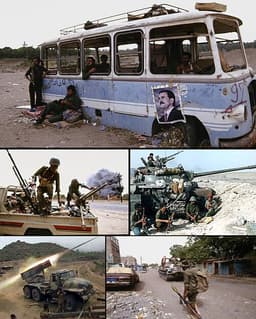
Ali Abdullah Saleh
Politician · Modern
47.6Total
Basic Information
Born
1904
1947
Died
1980
—
Era
Modern
Modern
Nationality
Russia
Yemen
Occupation
Politician
Politician
Civilization
Western
Middle Eastern
Score Comparison
Military (10%)
50.0
50.0
Political (20%)
62.7
35.1
Influence (20%)
58.0
51.0
Legacy (20%)
48.3
41.7
Leadership (15%)
85.0
74.0
Strategy (15%)
43.4
30.3
TOTAL
58.1
47.6
Alexei Kosygin — Complete Timeline
1964 AD
Appointment as Premier of the Soviet UnionPolitical Action◆ Major
Kosygin became Chairman of the Council of Ministers (Premier) in October 1964 after Khrushchev's ouster. He served as head of government for 16 years, overseeing the Soviet economy and foreign policy during the Brezhnev era.
Soviet LeadershipAppointmentBrezhnev Era
Impact: national
1965 AD
Introduction of the Kosygin ReformsReform◆ Major
Kosygin launched economic reforms in September 1965 aimed at decentralizing the Soviet economy. The reforms gave enterprises more autonomy, reduced central planning, and introduced profit incentives, but were largely abandoned by the early 1970s due to bureaucratic resistance.
Economic ReformDecentralizationSoviet Economy
Impact: nationalprogressive
1968 AD
Role in the Soviet Invasion of CzechoslovakiaPolitical Action◆ Major
Kosygin supported the Warsaw Pact invasion of Czechoslovakia in August 1968, which crushed the Prague Spring reforms. He participated in negotiations with Czechoslovak leaders, justifying the intervention as necessary to preserve socialism in the Eastern Bloc.
Cold WarPrague SpringIntervention
Impact: regionaldestructive
1980 AD
Resignation as PremierPolitical Action◆ Major
Kosygin resigned as Premier in October 1980 due to declining health. He was replaced by Nikolai Tikhonov, ending his 16-year tenure as head of the Soviet government. He died two months later, on December 18, 1980.
Soviet LeadershipResignationEnd of Era
Impact: national
Ali Abdullah Saleh — Complete Timeline
1990 AD
Unification of North and South YemenPolitical Action
Ali Abdullah Saleh, as president of North Yemen, negotiated the unification with South Yemen on May 22, 1990. He became president of the unified Republic of Yemen, a major achievement in Arab unity.
UnificationYemenArab Unity
Impact: regionalconstructive
Support for Saddam Hussein in Gulf WarPolitical Action◆ Major
Saleh initially supported Iraq's invasion of Kuwait, straining relations with Saudi Arabia and the West. This led to the expulsion of nearly a million Yemeni workers from Saudi Arabia and economic hardship.
Gulf WarDiplomacyEconomic Crisis
Impact: regionaldestructive
1994 AD
Yemeni Civil War of 1994War◆ Major
After southern leaders attempted secession, Saleh's forces crushed the rebellion in a brief civil war. This solidified his control over a unified Yemen but deepened regional divisions.
Civil WarSecessionConflict
Impact: nationaldestructive
2011 AD
Arab Spring Protests and ResignationPolitical Action
Mass protests erupted against Saleh's 33-year rule. After months of violence and a failed assassination attempt, he agreed to a Gulf Cooperation Council-brokered deal to step down in exchange for immunity.
Arab SpringProtestsResignation
Impact: nationaltragic
2017 AD
Killing by Houthi ForcesWar◆ Major
After switching sides in the Yemeni Civil War to ally with the Houthis, Saleh was killed by Houthi forces on December 4, 2017, while trying to flee Sanaa. His death ended a complex political career.
DeathCivil WarHouthis
Impact: nationaltragic
Expert Analysis
Origins
Alexei Kosygin was born in 1904 in St. Petersburg, Russia, into a working-class family. He joined the Red Army in 1919 and later trained as a textile engineer, graduating from the Leningrad Textile Institute in 1935. His early career in industrial management brought him to Stalin's attention. Ali Abdullah Saleh was born in 1942 in Beit al-Ahmar, North Yemen, into a tribal family. He joined the military at age 16 and rose through the ranks, attending the Yemeni Military Academy. His tribal connections and military service shaped his path to power.
Rise to Power
Kosygin rose through the Soviet bureaucracy under Stalin, becoming Premier of the Russian Soviet Federative Socialist Republic in 1960. After Khrushchev's ouster in 1964, Kosygin became Chairman of the Council of Ministers (Premier) of the Soviet Union, a position he held for 16 years. Saleh gained power after the 1978 assassination of North Yemen's president, becoming president. He consolidated control by balancing tribal factions and military loyalty, and in 1990 unified North and South Yemen, becoming president of the new republic.
Leadership & Governance
Kosygin was a technocratic reformer. In 1965, he launched the Kosygin Reforms, which aimed to decentralize the Soviet economy by granting enterprises more autonomy and reducing central planning. However, these reforms faced resistance from Communist Party hardliners and were largely reversed by the early 1970s. Kosygin scored 85.0 in leadership, reflecting his managerial competence. Saleh ruled Yemen through a network of patronage and tribal alliances. He maintained power by playing factions against each other, but his governance was marked by corruption and inefficiency. His political score of 35.1 reflects the instability of his rule.
Triumph & Tragedy
Kosygin's greatest success was his economic reform program, which improved industrial efficiency temporarily. His tragedy was the failure to sustain reforms and his role in the 1968 Soviet invasion of Czechoslovakia, which crushed the Prague Spring and damaged the USSR's image. Saleh's triumph was unifying Yemen in 1990, a rare achievement in the region. However, his support for Saddam Hussein in the 1991 Gulf War led to the expulsion of nearly a million Yemeni workers from Saudi Arabia, causing economic hardship. His later alliance with the Houthis ended in his death in 2017 after he switched sides.
Character & Destiny
Kosygin was a cautious, pragmatic bureaucrat. His personality led him to avoid confrontation with party leaders, which limited his effectiveness. Saleh was a cunning survivor, known for his ability to navigate tribal politics. However, his opportunism ultimately led to his downfall when he betrayed the Houthis. Kosygin's destiny was to be overshadowed by General Secretary Brezhnev; Saleh's was to die at the hands of former allies.
Legacy
Kosygin is remembered as a competent administrator but not a transformative leader. His reforms paved the way for later Soviet restructuring efforts. Saleh's legacy is mixed: he unified Yemen but left a deeply divided state. The civil war that erupted after his death continues. Kosygin's influence score of 58.0 and legacy score of 48.3 reflect his moderate impact. Saleh's influence of 51.0 and legacy of 41.7 indicate a more negative lasting effect.
Conclusion
Alexei Kosygin had a greater impact than Ali Abdullah Saleh, with a total score of 58.1 versus 47.6. Kosygin's economic reforms, though incomplete, influenced Soviet policy for decades, while Saleh's unification of Yemen proved unsustainable. Kosygin's leadership in a global superpower outweighed Saleh's regional significance. The data supports Kosygin as the more consequential figure.
Rankings
🥇
Alexei KosyginLeader
Mil: 50.0Pol: 62.7Inf: 58.0
58.1
🥈
Ali Abdullah Saleh
Mil: 50.0Pol: 35.1Inf: 51.0
47.6
+10.5 behind
How This Comparison Works
Algorithm
Each figure is scored on 6 dimensions (0—100 scale) based on structured historical data: Military (10%), Political (20%), Influence (20%), Legacy (20%), Leadership (15%), Strategy (15%). The weighted total produces the final ranking.
Data Sources
Scores are computed from structured sub-indicators in the database. Scale factors adjust for era (Ancient ×0.85, Modern ×1.0) and civilization size (Eastern ×1.05, Other ×0.80) to account for differences in population and military scale.
Maximum 3 Figures
Comparisons are limited to 2—3 figures to ensure readability and statistical meaningfulness.
Error Margins
±5 points per dimension — Sub-scores are derived from historical records with inherent uncertainty. Two figures within 5 points on a dimension should be considered roughly equivalent in that area.
Total Score Accuracy
±3 points overall — The weighted combination of 6 dimensions produces a total score with approximately ±3 points of uncertainty. Differences of less than 3 points are not statistically significant— the figures are effectively tied.
Known Limitations
- Historical records are incomplete and uneven across civilizations
- Figures from oral-tradition societies may be underrepresented
- Occupation labels can misclassify multi-role figures
- Scores measure capability and impact, not moral character
- Quantitative scoring is a comparison tool, not absolute truth
Capability Radar
Military (10%) — Battles & Warfare
Battles
29
30
Win Rate
32
25
Expansion
32
25
Political (20%) — Governance & Reform
Reform
70
20
Diplomacy
60
40
Economy
75
15
Influence (20%) — Cultural & Global Reach
Cultural
30
20
Global
50
25
Legacy (20%) — Historical Impact
Historical
50
30
Longevity
40
20
Leadership (15%) — Power & Stability
Tenure
65
75
Stability
55
10
Strategy (15%) — Tactics & Innovation
Strategy
37
30
Tactics
44
35
Reform
45
20
Similar Comparisons
Comments & Discussion
No comments yet. Be the first to share your thoughts!