Loading...
Alexander the Great vs Yamagata Aritomo
Alexander the Great leads by 2.7 pts · 2 figures compared
…
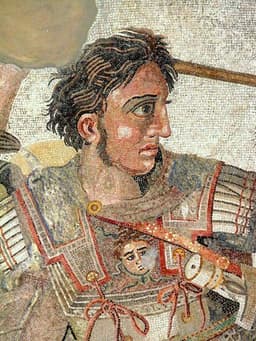
Alexander the Great
General · Ancient
85.2Total
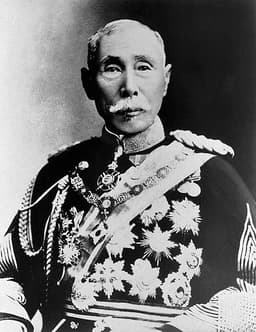
Yamagata Aritomo
General · Modern
82.5Total
Basic Information
Born
-356
1838
Died
-323
1922
Era
Ancient
Modern
Nationality
Macedon
Japan
Occupation
General
General
Civilization
Western
Eastern
Score Comparison
Military (10%)
95.0
78.0
Political (20%)
60.0
82.0
Influence (20%)
92.0
80.0
Legacy (20%)
90.0
90.0
Leadership (15%)
80.0
78.0
Strategy (15%)
92.0
82.0
TOTAL
85.2
82.5
Alexander the Great — Complete Timeline
334 BC
Battle of the Granicus RiverWar◆ Major
Alexander led his Macedonian army across the Hellespont into Asia Minor and defeated a Persian force under local satraps at the Granicus River. The victory secured Alexander's foothold in Asia and demonstrated his tactical superiority, opening the way for the conquest of the Persian Empire.
Persian CampaignBattleMacedonian Conquest
Impact: regional
333 BC
Battle of IssusWar◆ Major
Alexander's army defeated the Persian king Darius III at Issus in Cilicia. Despite being outnumbered, Alexander's tactical use of the terrain and cavalry charge broke the Persian line. Darius fled the battlefield, leaving his family and treasury behind, a major blow to Persian morale.
Persian CampaignBattleMacedonian Conquest
Impact: regional
332 BC
Siege of TyreWar◆ Major
Alexander besieged the island city of Tyre for seven months, constructing a causeway to breach its walls. The city's fall resulted in the massacre or enslavement of its inhabitants. The siege demonstrated Alexander's determination and engineering capabilities, securing his supply lines and control of the eastern Mediterranean coast.
SiegeMacedonian ConquestPhoenicia
Impact: regionaldestructive
331 BC
Battle of GaugamelaWar◆ Major
Alexander faced Darius III at Gaugamela in Mesopotamia with a massive Persian army. Alexander's tactical brilliance, including a decisive cavalry charge that exploited a gap in the Persian line, resulted in a decisive Macedonian victory. Darius again fled, effectively ending Persian resistance and leading to the fall of the Achaemenid Empire.
Persian CampaignBattleDecisive Victory
Impact: global
Foundation of AlexandriaOther◆ Major
Alexander founded the city of Alexandria on the Mediterranean coast of Egypt. He personally selected the site and oversaw the initial planning. Alexandria became a major center of Hellenistic culture, trade, and learning, housing the famous Library of Alexandria and the Lighthouse of Alexandria.
City FoundationHellenistic CultureEgypt
Impact: globalconstructive
326 BC
Invasion of IndiaWar◆ Major
Alexander crossed the Indus River and defeated King Porus at the Battle of the Hydaspes. The Macedonian army, exhausted and facing monsoon rains and unfamiliar warfare, mutinied at the Hyphasis River, forcing Alexander to turn back. This campaign marked the easternmost extent of his conquests.
Indian CampaignBattleMutiny
Impact: regional
Yamagata Aritomo — Complete Timeline
1873 AD
Establishment of the Imperial Japanese ArmyReform
Yamagata Aritomo, as War Minister, oversaw the creation of the Imperial Japanese Army based on the Prussian model. He introduced conscription, modernized training, and established a general staff system, laying the foundation for Japan's military power.
Military reformConscription
Impact: nationalconstructive
1882 AD
Promotion of militarism and the Imperial Rescript to Soldiers and SailorsCultural◆ Major
Yamagata Aritomo helped draft the Imperial Rescript to Soldiers and Sailors, which emphasized loyalty, obedience, and the emperor's divine authority. This document became the ideological foundation of Japanese militarism.
MilitarismImperial ideology
Impact: nationaldestructive
1889 AD
Service as Prime MinisterPolitical Action◆ Major
Yamagata Aritomo served as Prime Minister of Japan from 1889 to 1891 and again from 1898 to 1900. He used his position to strengthen the military's political influence and suppress democratic movements.
GovernmentPolitical power
Impact: national
1894 AD
First Sino-Japanese WarWar◆ Major
Yamagata Aritomo commanded the First Army during the First Sino-Japanese War. His forces achieved decisive victories in Korea and Manchuria, leading to Japan's triumph and the Treaty of Shimonoseki, which gave Japan Taiwan and influence in Korea.
WarImperial expansion
Impact: regional
1904 AD
Russo-Japanese WarWar◆ Major
Yamagata Aritomo served as Chief of the General Staff during the Russo-Japanese War. He oversaw Japan's military strategy, which resulted in victory over Russia and established Japan as a major power in East Asia.
WarGreat power
Impact: global
Expert Analysis
Origins
Alexander the Great (356–323 BCE) was born in Pella, Macedon, son of King Philip II and Queen Olympias. Tutored by Aristotle, he inherited a kingdom with a formidable army and a vision for expansion. Yamagata Aritomo (1838–1922) hailed from a lower-ranking samurai family in the Chōshū domain, Japan. He rose through the ranks during the Meiji Restoration, leveraging his military acumen to modernize Japan's armed forces. While Alexander's origins were royal and ancient, Yamagata's were feudal and transitional—both shaped by the geopolitical pressures of their eras.
Rise to Power
Alexander ascended the throne at 20 after Philip's assassination. He immediately consolidated power by crushing rebellions in Thebes and Athens, then launched his Persian campaign. His rapid conquests—from Anatolia to Egypt and Persia—were fueled by bold tactics and charismatic leadership. Yamagata's rise was slower and more political. He studied military science in Europe, became War Minister, and founded the Imperial Japanese Army. He served as Prime Minister twice and dominated Japanese politics as a genrō (elder statesman). Alexander's power came from conquest; Yamagata's from institutional control.
Leadership & Governance
Alexander led from the front, sharing hardships with his troops and inspiring loyalty. He governed conquered territories by adopting local customs (e.g., Persian court rituals) and founding cities like Alexandria. However, his rule was personal and autocratic. Yamagata was a bureaucratic strategist. He emphasized discipline, loyalty to the emperor, and national unity. He authored the Imperial Rescript to Soldiers and Sailors, which became the ethical code of the Japanese military. His governance was collective and institutional, focusing on state-building rather than personal glory.
Triumph & Tragedy
Alexander's triumphs include the Battles of Granicus, Issus, and Gaugamela, and the Siege of Tyre. His tragedy was his early death at 32, likely from disease, leaving his empire to crumble among successors. Yamagata's triumphs include victories in the First Sino-Japanese War (1894–1895) and Russo-Japanese War (1904–1905), establishing Japan as a world power. His tragedy was the unintended consequence of his militarism: the rise of ultra-nationalism that led to World War II. Both men created legacies that outlasted their immediate control.
Character & Destiny
Alexander was ambitious, impulsive, and culturally curious—he married a Bactrian princess and encouraged fusion of Greek and Persian elites. His destiny was to conquer the known world, but his empire lacked stability. Yamagata was cautious, pragmatic, and deeply conservative. He believed in military strength as the foundation of national security. His destiny was to modernize Japan and set it on an imperialist path. While Alexander's character was flamboyant and visionary, Yamagata's was disciplined and methodical.
Legacy
Alexander's legacy is immense: he spread Hellenistic culture across three continents, influenced later Roman and Byzantine empires, and remains a symbol of military genius. His tactics are still studied. Yamagata's legacy is more controversial: he built Japan's modern army and state, but his policies sowed seeds of militarism and expansionism. He is revered as a nation-builder but criticized for leading Japan into conflict. Both men shaped the course of history, but Alexander's impact is more universal, while Yamagata's is specific to Japan's rise and fall.
Conclusion
**Winner: Alexander the Great** (Score: 85.5 vs 82.8). Alexander's military achievements, strategic innovations, and cultural influence are unparalleled in scope. Yamagata was a brilliant organizer and modernizer, but his legacy is tied to a single nation's trajectory. Alexander's undefeated record and lasting impact on world history give him the edge. However, Yamagata's success in transforming Japan from feudal isolation to a modern power is remarkable in its own right—a testament to institutional genius rather than battlefield brilliance.
Rankings
🥇
Alexander the GreatLeader
Mil: 95.0Pol: 60.0Inf: 92.0
85.2
🥈
Yamagata Aritomo
Mil: 78.0Pol: 82.0Inf: 80.0
82.5
+2.7 behind
How This Comparison Works
Algorithm
Each figure is scored on 6 dimensions (0—100 scale) based on structured historical data: Military (10%), Political (20%), Influence (20%), Legacy (20%), Leadership (15%), Strategy (15%). The weighted total produces the final ranking.
Data Sources
Scores are computed from structured sub-indicators in the database. Scale factors adjust for era (Ancient ×0.85, Modern ×1.0) and civilization size (Eastern ×1.05, Other ×0.80) to account for differences in population and military scale.
Maximum 3 Figures
Comparisons are limited to 2—3 figures to ensure readability and statistical meaningfulness.
Error Margins
±5 points per dimension — Sub-scores are derived from historical records with inherent uncertainty. Two figures within 5 points on a dimension should be considered roughly equivalent in that area.
Total Score Accuracy
±3 points overall — The weighted combination of 6 dimensions produces a total score with approximately ±3 points of uncertainty. Differences of less than 3 points are not statistically significant— the figures are effectively tied.
Known Limitations
- Historical records are incomplete and uneven across civilizations
- Figures from oral-tradition societies may be underrepresented
- Occupation labels can misclassify multi-role figures
- Scores measure capability and impact, not moral character
- Quantitative scoring is a comparison tool, not absolute truth
Capability Radar
Military (10%) — Battles & Warfare
Battles
98
75
Win Rate
99
70
Expansion
99
80
Political (20%) — Governance & Reform
Reform
75
90
Diplomacy
80
75
Economy
70
70
Influence (20%) — Cultural & Global Reach
Cultural
95
80
Global
95
70
Legacy (20%) — Historical Impact
Historical
98
85
Longevity
95
75
Leadership (15%) — Power & Stability
Tenure
60
85
Stability
55
65
Strategy (15%) — Tactics & Innovation
Strategy
98
85
Tactics
99
80
Reform
85
95
Similar Comparisons
Comments & Discussion
No comments yet. Be the first to share your thoughts!