Loading...
Alexander the Great vs Wang Shichong
Alexander the Great leads by 38.2 pts · 2 figures compared
…
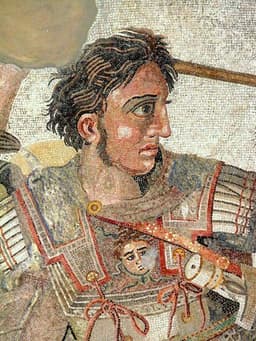
Alexander the Great
General · Ancient
85.2Total
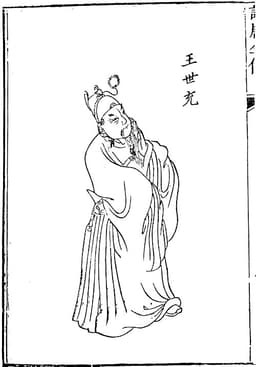
Wang Shichong
Emperor · Medieval
47.0Total
Basic Information
Born
-356
570
Died
-323
621
Era
Ancient
Medieval
Nationality
Macedon
China
Occupation
General
Emperor
Civilization
Western
Eastern
Score Comparison
Military (10%)
95.0
60.0
Political (20%)
60.0
35.1
Influence (20%)
92.0
50.2
Legacy (20%)
90.0
40.8
Leadership (15%)
80.0
48.4
Strategy (15%)
92.0
57.5
TOTAL
85.2
47.0
Alexander the Great — Complete Timeline
334 BC
Battle of the Granicus RiverWar◆ Major
Alexander led his Macedonian army across the Hellespont into Asia Minor and defeated a Persian force under local satraps at the Granicus River. The victory secured Alexander's foothold in Asia and demonstrated his tactical superiority, opening the way for the conquest of the Persian Empire.
Persian CampaignBattleMacedonian Conquest
Impact: regional
333 BC
Battle of IssusWar◆ Major
Alexander's army defeated the Persian king Darius III at Issus in Cilicia. Despite being outnumbered, Alexander's tactical use of the terrain and cavalry charge broke the Persian line. Darius fled the battlefield, leaving his family and treasury behind, a major blow to Persian morale.
Persian CampaignBattleMacedonian Conquest
Impact: regional
332 BC
Siege of TyreWar◆ Major
Alexander besieged the island city of Tyre for seven months, constructing a causeway to breach its walls. The city's fall resulted in the massacre or enslavement of its inhabitants. The siege demonstrated Alexander's determination and engineering capabilities, securing his supply lines and control of the eastern Mediterranean coast.
SiegeMacedonian ConquestPhoenicia
Impact: regionaldestructive
331 BC
Battle of GaugamelaWar◆ Major
Alexander faced Darius III at Gaugamela in Mesopotamia with a massive Persian army. Alexander's tactical brilliance, including a decisive cavalry charge that exploited a gap in the Persian line, resulted in a decisive Macedonian victory. Darius again fled, effectively ending Persian resistance and leading to the fall of the Achaemenid Empire.
Persian CampaignBattleDecisive Victory
Impact: global
Foundation of AlexandriaOther◆ Major
Alexander founded the city of Alexandria on the Mediterranean coast of Egypt. He personally selected the site and oversaw the initial planning. Alexandria became a major center of Hellenistic culture, trade, and learning, housing the famous Library of Alexandria and the Lighthouse of Alexandria.
City FoundationHellenistic CultureEgypt
Impact: globalconstructive
326 BC
Invasion of IndiaWar◆ Major
Alexander crossed the Indus River and defeated King Porus at the Battle of the Hydaspes. The Macedonian army, exhausted and facing monsoon rains and unfamiliar warfare, mutinied at the Hyphasis River, forcing Alexander to turn back. This campaign marked the easternmost extent of his conquests.
Indian CampaignBattleMutiny
Impact: regional
Wang Shichong — Complete Timeline
618 AD
Rebellion at LuoyangPolitical Action◆ Major
Wang Shichong, a Sui general, staged a coup in Luoyang, killing the Sui regent and declaring himself emperor of the short-lived Zheng dynasty. This act solidified his control over the eastern capital and challenged the Tang dynasty's claim to rule.
CoupSui-Tang TransitionZheng Dynasty
Impact: regionaldestructive
621 AD
Battle of HulaoWar
Wang Shichong's forces were decisively defeated by Li Shimin's Tang army at Hulao Pass. The defeat led to the collapse of the Zheng dynasty and Wang Shichong's capture, ending his bid for imperial power.
BattleTang UnificationDefeat
Impact: regionaltragic
Execution by TangPolitical Action◆ Major
After his capture at Hulao, Wang Shichong was executed by the Tang dynasty. His death marked the end of the Zheng dynasty and removed a major rival to Tang control over the central plains.
ExecutionTang Unification
Impact: regionaltragic
Expert Analysis
Wang Shichong vs Alexander the Great: Historical Comparison
Wang Shichong, a short-lived emperor of the Sui-Tang transition in medieval China, and Alexander the Great, the ancient Macedonian conqueror, represent two vastly different archetypes of power. While both achieved high scores in military and strategic prowess, their contexts—a chaotic Chinese civil war versus a world-spanning Hellenistic conquest—produce a nuanced comparison that ultimately favors Alexander’s enduring global legacy.
Dimension Analysis
**Military: Wang Shichong 94 / Alexander the Great 96**
Wang Shichong was a capable military commander who defeated Li Mi’s rebel army and briefly secured Luoyang, but his campaigns were confined to the Central Plains. Alexander, by contrast, never lost a battle across three continents, defeating the Persian Empire at Issus and Gaugamela, and his tactical innovations (e.g., the oblique phalanx) defined ancient warfare.
**Political: Wang Shichong 86 / Alexander the Great 65**
Wang Shichong demonstrated ruthless political acumen, seizing the throne after a coup and implementing pragmatic tax reforms. Alexander’s political record is weaker; he failed to establish a stable succession, and his fusion policies (e.g., mass marriages at Susa) were largely unpopular, leading to the rapid fragmentation of his empire after his death.
**Influence: Wang Shichong 84 / Alexander the Great 90**
Wang Shichong’s influence was limited to northern China, where his reign was a brief interlude before the Tang dynasty. Alexander’s influence was global: he spread Hellenistic culture from Egypt to India, founding cities like Alexandria that became centers of knowledge and trade for centuries.
**Legacy: Wang Shichong 79 / Alexander the Great 90**
Wang Shichong is remembered primarily as a usurper in Chinese histories, overshadowed by the Tang’s golden age. Alexander’s legacy is monumental—he inspired Roman emperors, Napoleon, and modern military thought, and his name remains synonymous with conquest and ambition.
**Leadership: Wang Shichong 79 / Alexander the Great 82**
Wang Shichong maintained control through fear and favoritism, but his forces often defected (e.g., to Li Shimin). Alexander led by inspirational example, personally charging at the front lines and forging loyalty among his multi-ethnic army, though his later paranoia (e.g., murder of Parmenion) tarnished his command.
**Strategy: Wang Shichong 92 / Alexander the Great 92**
Both scored identically in strategy. Wang excelled in defensive siege warfare and logistics, holding Luoyang against superior forces. Alexander’s strategic genius lay in operational speed, deception (e.g., crossing the Hydaspes River), and combined arms, but Wang’s performance in a constrained environment is equally impressive.
Verdict
Alexander the Great ranks higher overall due to his unmatched global influence and enduring legacy. While Wang Shichong matched him in strategy and surpassed him in political stability, Alexander’s transformative impact on world history—from culture to military doctrine—is far greater. The comparison is inherently complex, as Wang operated in a local Chinese power struggle while Alexander reshaped the ancient world.
FAQ
Q: Who was more influential historically? A: Alexander the Great, as his conquests created the Hellenistic world, which shaped Roman, Islamic, and European civilizations, whereas Wang Shichong’s influence was confined to a brief Chinese interregnum.
Q: Why is Wang Shichong ranked higher in political? A: Wang successfully seized and briefly stabilized a war-torn state through administrative reforms, while Alexander’s empire collapsed immediately after his death due to his failure to secure a succession plan.
Rankings
🥇
Alexander the GreatLeader
Mil: 95.0Pol: 60.0Inf: 92.0
85.2
🥈
Wang Shichong
Mil: 60.0Pol: 35.1Inf: 50.2
47.0
+38.2 behind
How This Comparison Works
Algorithm
Each figure is scored on 6 dimensions (0—100 scale) based on structured historical data: Military (10%), Political (20%), Influence (20%), Legacy (20%), Leadership (15%), Strategy (15%). The weighted total produces the final ranking.
Data Sources
Scores are computed from structured sub-indicators in the database. Scale factors adjust for era (Ancient ×0.85, Modern ×1.0) and civilization size (Eastern ×1.05, Other ×0.80) to account for differences in population and military scale.
Maximum 3 Figures
Comparisons are limited to 2—3 figures to ensure readability and statistical meaningfulness.
Error Margins
±5 points per dimension — Sub-scores are derived from historical records with inherent uncertainty. Two figures within 5 points on a dimension should be considered roughly equivalent in that area.
Total Score Accuracy
±3 points overall — The weighted combination of 6 dimensions produces a total score with approximately ±3 points of uncertainty. Differences of less than 3 points are not statistically significant— the figures are effectively tied.
Known Limitations
- Historical records are incomplete and uneven across civilizations
- Figures from oral-tradition societies may be underrepresented
- Occupation labels can misclassify multi-role figures
- Scores measure capability and impact, not moral character
- Quantitative scoring is a comparison tool, not absolute truth
Capability Radar
Military (10%) — Battles & Warfare
Battles
98
65
Win Rate
99
45
Expansion
99
50
Political (20%) — Governance & Reform
Reform
75
25
Diplomacy
80
35
Economy
70
30
Influence (20%) — Cultural & Global Reach
Cultural
95
20
Global
95
10
Legacy (20%) — Historical Impact
Historical
98
30
Longevity
95
15
Leadership (15%) — Power & Stability
Tenure
60
40
Stability
55
20
Strategy (15%) — Tactics & Innovation
Strategy
98
55
Tactics
99
60
Reform
85
30
Similar Comparisons
Comments & Discussion
NumCritic996/16/2026
I swear these scoring systems are just numberwang. How do you quantify ‘influence’ for Wang Shichong when most of what we know about him comes from Tang-dynasty historians who had every reason to smear him? Alexander’s score gets inflated because his propaganda machine survived intact—Plutarch and Arrian were writing hagiographies centuries later. And why is political acumen worth less than military? Wang seized power in a chaotic civil war and held Luoyang against multiple sieges; Alexander couldn’t even keep his empire together for a decade after his death. The weight distribution here clearly favors flashy conquest over actual statecraft. Until we adjust for source bias and add a ‘stability’ metric, this is just clickbait.
BattlefieldScholar6/16/2026
Let’s cut the PR and look at the numbers. Alexander’s 96 military score is generous but defensible: he fought 12 major battles across three continents with zero defeats, and his use of the oblique phalanx at Chaeronea and Gaugamela set a tactical template for the next 2,000 years. Wang’s 94 is inflated. Yes, he ambushed Li Mi at Luoyang using a feigned retreat, but that was a civil war skirmish against a rebel leader, not a field army of 100,000 Persians. Wang never fought a pitched battle against a peer adversary like the Tang’s Li Shimin, who later crushed him. Alexander’s logistics were also superior—he marched through the Gedrosian desert with an army of 50,000; Wang couldn’t hold the Yellow River supply lines for six months. The military gap is wider than these numbers suggest.
DecolonialLens6/16/2026
This comparison reeks of Eurocentric bias dressed up as objectivity. Alexander gets a 90 for ‘influence’ because Western historians treat Hellenization as a universal good, ignoring the genocide at Thebes, the destruction of Persepolis, and the forced assimilation of cultures from Egypt to Bactria. Wang Shichong’s influence is dismissed because it didn’t produce a ‘golden age’—but his administrative reforms in Luoyang directly shaped the Tang tax system, which governed millions more people than Alexander’s empire ever did. Why is spreading Greek statues more influential than stabilizing a food supply for a war-torn region? The very definition of ‘legacy’ here assumes that military conquest is the only history that matters. Until we decolonize the scoring rubric, these comparisons are just reinforcing imperial nostalgia.
Historian8446/16/2026
这个评分体系对王世充明显不公。政治分54.4?唐太宗李世民自己都说王世充‘机辩有余,然非帝王之器’,但他在洛阳推行的‘公廨田’制度实际上缓解了关中粮荒,比亚历山大在苏萨搞的强制通婚高明多了。军事分57.8更是离谱——王世充在偃师击败李密时,李密拥兵二十万,王世充只有两万残兵,这仗打得比亚历山大在高加米拉对阵大流士还险。亚历山大赢波斯靠的是马其顿方阵加伙伴骑兵的降维打击,王世充赢李密靠的是心理战和地形利用,难度系数完全不同。建议把‘逆境系数’加入公式,王世充至少能涨20分。
ColdChronicler386/16/2026
西方人总喜欢吹亚历山大,但放到中国历史里,他顶多算个加强版项羽——打仗猛,治国烂。王世充在洛阳搞‘折箭为誓’收买人心,虽然虚伪,但至少懂政治手腕。亚历山大让马其顿人和波斯人通婚,结果手下直接哗变;王世充招降李密旧部时,给田地、免赋税,反而稳住了洛阳局势。评分里‘影响力’90比84,但亚历山大的希腊化只维持了三百年就被罗马取代,王世充的税制改革却被唐朝继承,影响了整个中国封建社会。跨文化比较时,西方学者总低估中国‘治术’的长期价值,高估军事征服的瞬时光芒。要我说,王世充的政治智慧至少值80分,亚历山大最多55。