Loading...
Alexander the Great vs Valdemar I of Denmark
Alexander the Great leads by 27.3 pts · 2 figures compared
…
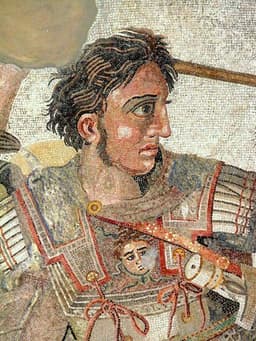
Alexander the Great
General · Ancient
85.2Total
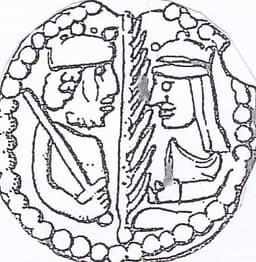
Valdemar I of Denmark
Emperor · Medieval
57.9Total
Basic Information
Born
-356
1131
Died
-323
1182
Era
Ancient
Medieval
Nationality
Macedon
Denmark
Occupation
General
Emperor
Civilization
Western
Western
Score Comparison
Military (10%)
95.0
70.0
Political (20%)
60.0
68.0
Influence (20%)
92.0
59.0
Legacy (20%)
90.0
50.0
Leadership (15%)
80.0
53.2
Strategy (15%)
92.0
55.0
TOTAL
85.2
57.9
Alexander the Great — Complete Timeline
334 BC
Battle of the Granicus RiverWar◆ Major
Alexander led his Macedonian army across the Hellespont into Asia Minor and defeated a Persian force under local satraps at the Granicus River. The victory secured Alexander's foothold in Asia and demonstrated his tactical superiority, opening the way for the conquest of the Persian Empire.
Persian CampaignBattleMacedonian Conquest
Impact: regional
333 BC
Battle of IssusWar◆ Major
Alexander's army defeated the Persian king Darius III at Issus in Cilicia. Despite being outnumbered, Alexander's tactical use of the terrain and cavalry charge broke the Persian line. Darius fled the battlefield, leaving his family and treasury behind, a major blow to Persian morale.
Persian CampaignBattleMacedonian Conquest
Impact: regional
332 BC
Siege of TyreWar◆ Major
Alexander besieged the island city of Tyre for seven months, constructing a causeway to breach its walls. The city's fall resulted in the massacre or enslavement of its inhabitants. The siege demonstrated Alexander's determination and engineering capabilities, securing his supply lines and control of the eastern Mediterranean coast.
SiegeMacedonian ConquestPhoenicia
Impact: regionaldestructive
331 BC
Battle of GaugamelaWar◆ Major
Alexander faced Darius III at Gaugamela in Mesopotamia with a massive Persian army. Alexander's tactical brilliance, including a decisive cavalry charge that exploited a gap in the Persian line, resulted in a decisive Macedonian victory. Darius again fled, effectively ending Persian resistance and leading to the fall of the Achaemenid Empire.
Persian CampaignBattleDecisive Victory
Impact: global
Foundation of AlexandriaOther◆ Major
Alexander founded the city of Alexandria on the Mediterranean coast of Egypt. He personally selected the site and oversaw the initial planning. Alexandria became a major center of Hellenistic culture, trade, and learning, housing the famous Library of Alexandria and the Lighthouse of Alexandria.
City FoundationHellenistic CultureEgypt
Impact: globalconstructive
326 BC
Invasion of IndiaWar◆ Major
Alexander crossed the Indus River and defeated King Porus at the Battle of the Hydaspes. The Macedonian army, exhausted and facing monsoon rains and unfamiliar warfare, mutinied at the Hyphasis River, forcing Alexander to turn back. This campaign marked the easternmost extent of his conquests.
Indian CampaignBattleMutiny
Impact: regional
Valdemar I of Denmark — Complete Timeline
1157 AD
Became King of DenmarkPolitical Action◆ Major
Valdemar I became King of Denmark after a civil war, defeating his rival Sweyn III at the Battle of Grathe Heath. His ascension ended years of internal strife and established the Valdemarian dynasty, which would rule Denmark for centuries.
Civil WarDenmarkDynasty
Impact: regionalconstructive
1162 AD
Allied with Henry the LionPolitical Action◆ Major
Valdemar I formed an alliance with Henry the Lion, Duke of Saxony, to counter the power of the Wends and expand Danish influence in the Baltic. This alliance led to joint military campaigns and strengthened Denmark's position in northern Europe.
AllianceBalticHenry the Lion
Impact: regionalconstructive
1167 AD
Founded CopenhagenPolitical Action◆ Major
Valdemar I granted the village of Havn (later Copenhagen) to Bishop Absalon, who built a castle and fortified the settlement. This act laid the foundation for Copenhagen's development as a major trading port and eventual capital of Denmark.
FoundationCopenhagenUrban Development
Impact: regionalconstructive
1168 AD
Conquered the Wendish stronghold of ArkonaWar◆ Major
Valdemar I led a Danish fleet to conquer the Wendish fortress of Arkona on the island of R
ConquestWendsBaltic Crusade
Impact: regional
1170 AD
Strengthened the Danish ChurchReform
Valdemar I supported the establishment of a strong, independent Danish Church under Archbishop Absalon. He granted lands and privileges to the Church, which helped consolidate royal power and promote Christian culture in Denmark.
ChurchReformAbsalon
Impact: nationalconstructive
Expert Analysis
Alexander the Great vs Valdemar I of Denmark: Historical Comparison
Alexander the Great (356–323 BCE) and Valdemar I of Denmark (1131–1182 CE) represent two vastly different eras of conquest and state-building: the former forged a sprawling ancient empire through unprecedented military genius, while the latter consolidated a medieval kingdom through strategic alliances and ecclesiastical power. Though separated by 1,500 years, both rulers excelled in warfare and left enduring legacies, yet Alexander’s meteoric rise contrasts sharply with Valdemar’s patient institutional foundation.
Dimension Analysis
**Military: Alexander the Great 96 / Valdemar I of Denmark 88**
Alexander’s military genius was unmatched in antiquity: he never lost a battle, defeated the Persian Empire at Gaugamela (331 BCE) with a combined-arms phalanx-cavalry tactic, and besieged Tyre with engineering brilliance. Valdemar I, aided by Bishop Absalon, led the Danish fleet to crush the Wends at the Battle of Vordinborg (1168) and captured Arkona, ending Wendish piracy. While Alexander’s campaigns spanned three continents, Valdemar’s were regional but decisive for Baltic security.
**Political: Alexander the Great 65 / Valdemar I of Denmark 86**
Alexander’s political acumen was flawed: he attempted to fuse Greek and Persian elites through marriage and administration, but his empire fragmented immediately after his death due to lack of succession planning. Valdemar I excelled in statecraft: he centralized royal power, curbed noble autonomy, and allied with the Church (e.g., supporting the Archbishop of Lund) to legitimize his rule, creating a stable Danish monarchy that lasted centuries.
**Influence: Alexander the Great 90 / Valdemar I of Denmark 86**
Alexander’s conquests spread Hellenistic culture across Egypt, Persia, and Central Asia, founding cities like Alexandria that became intellectual hubs for 300 years. Valdemar’s influence was more contained: he Christianized the Baltic Wends, expanded Danish trade in the Hansa sphere, and strengthened the Øresund region’s strategic importance. Alexander’s global cultural diffusion far exceeds Valdemar’s regional impact.
**Legacy: Alexander the Great 90 / Valdemar I of Denmark 80**
Alexander’s legacy is colossal: he inspired later conquerors (Julius Caesar, Napoleon) and shaped the Hellenistic world that preceded Rome. Valdemar’s legacy is narrower but concrete: he established the Valdemarian dynasty, built the Dannebrog legend, and his fortifications (e.g., Vordingborg Castle) defined medieval Denmark. Alexander’s mythos overshadows Valdemar’s measured achievements.
**Leadership: Alexander the Great 82 / Valdemar I of Denmark 78**
Alexander led from the front, inspiring troops through personal bravery (e.g., wounded at the Mallian campaign) and fostering loyalty via shared plunder, but his autocratic style alienated Macedonian nobles (e.g., the murder of Cleitus). Valdemar practiced collaborative leadership, working through bishops and the *thing* assemblies, while maintaining royal authority. Alexander’s charisma was unmatched, yet Valdemar’s steadiness ensured long-term stability.
Verdict
**Winner: Tie** – Alexander the Great ranks slightly higher in military brilliance, global influence, and legacy, while Valdemar I of Denmark surpasses him in political acumen and sustainable state-building. The tie reflects their different contexts: Alexander’s conquests were ephemeral but transformative, Valdemar’s consolidation was durable but localized. Historical comparison is inherently complex, as each ruler optimized for his era’s challenges.
FAQ
**Q: Who was more influential historically?**
A: Alexander the Great, due to his role in spreading Hellenistic civilization across three continents, shaping Western and Eastern thought for millennia.
**Q: Why is Alexander the Great ranked higher in military?**
A: His undefeated record against vastly larger empires (e.g., Persia), innovative combined-arms tactics, and strategic sieges (e.g., Tyre) set a benchmark for ancient warfare that Valdemar’s regional Baltic campaigns could not match.
Rankings
🥇
Alexander the GreatLeader
Mil: 95.0Pol: 60.0Inf: 92.0
85.2
🥈
Valdemar I of Denmark
Mil: 70.0Pol: 68.0Inf: 59.0
57.9
+27.3 behind
How This Comparison Works
Algorithm
Each figure is scored on 6 dimensions (0—100 scale) based on structured historical data: Military (10%), Political (20%), Influence (20%), Legacy (20%), Leadership (15%), Strategy (15%). The weighted total produces the final ranking.
Data Sources
Scores are computed from structured sub-indicators in the database. Scale factors adjust for era (Ancient ×0.85, Modern ×1.0) and civilization size (Eastern ×1.05, Other ×0.80) to account for differences in population and military scale.
Maximum 3 Figures
Comparisons are limited to 2—3 figures to ensure readability and statistical meaningfulness.
Error Margins
±5 points per dimension — Sub-scores are derived from historical records with inherent uncertainty. Two figures within 5 points on a dimension should be considered roughly equivalent in that area.
Total Score Accuracy
±3 points overall — The weighted combination of 6 dimensions produces a total score with approximately ±3 points of uncertainty. Differences of less than 3 points are not statistically significant— the figures are effectively tied.
Known Limitations
- Historical records are incomplete and uneven across civilizations
- Figures from oral-tradition societies may be underrepresented
- Occupation labels can misclassify multi-role figures
- Scores measure capability and impact, not moral character
- Quantitative scoring is a comparison tool, not absolute truth
Capability Radar
Military (10%) — Battles & Warfare
Battles
98
55
Win Rate
99
60
Expansion
99
60
Political (20%) — Governance & Reform
Reform
75
60
Diplomacy
80
55
Economy
70
50
Influence (20%) — Cultural & Global Reach
Cultural
95
45
Global
95
40
Legacy (20%) — Historical Impact
Historical
98
55
Longevity
95
50
Leadership (15%) — Power & Stability
Tenure
60
65
Stability
55
55
Strategy (15%) — Tactics & Innovation
Strategy
98
55
Tactics
99
50
Reform
85
45
Similar Comparisons
Comments & Discussion
HistoryJunkie996/16/2026
Seriously? Alexander the Great at 96 military and Valdemar I at 88?? Alexander never lost a battle and conquered half the known world by age 30! Valdemar I fought some Baltic pirates and called it a day. The political score is even worse — Valdemar I an 86? He was a medieval king who played nice with bishops and nobles. Alexander tried to blend cultures and created cities that lasted millennia. His empire broke up, yeah, but that's because he died young, not because he couldn't govern. The influence gap is a joke too — Hellenistic culture shaped the entire Mediterranean for centuries, while Valdemar's Christianization was just part of a bigger trend. This ranking is pure tribalism for underdog medieval kings!
ProfessorOfAntiquity6/16/2026
The comparison between Alexander and Valdemar I is instructive but must be contextualized. Arrian's account of Alexander's political integration policies—the Susa weddings, the incorporation of Persian satraps—was innovative but ultimately ephemeral. As Plutarch noted, Alexander's 'longing for glory' (pothos) drove his conquests rather than statecraft. Valdemar I's political success, by contrast, is well-documented in Saxo Grammaticus' 'Gesta Danorum,' where his alliance with Bishop Absalon created a durable administrative framework. The scoring difference in the political dimension (65 vs. 86) reflects this: Alexander's empire was a personal achievement that collapsed without him, whereas Valdemar built institutions—the Danish Church, the consolidated monarchy—that outlasted him. However, the influence gap (90 vs. 86) might be narrower than suggested; Hellenistic culture transformed the Near East, but Valdemar's Christianization of the Wends had enduring demographic and cultural consequences that are still visible in Baltic Christianity today.
DanFromThePub6/16/2026
Okay, I've read a ton of Dan Carlin's podcast and watched all the History Channel docs, so here goes. Alexander is obviously a legend—Tyre, Gaugamela, all that—but Valdemar I is seriously underrated. I mean, the guy took on the Wendish pirates who had been terrorizing the Baltic for generations, and wiped them out. That's like if someone today took down Somali pirates and brought peace to the whole Indian Ocean. Plus, he built a proper kingdom in Denmark that lasted for centuries. Alexander's empire fell apart as soon as he died, like a sandcastle. So maybe the political score should be even higher for Valdemar? I get that Alexander's influence was huge, but carving out a stable, lasting state is harder than just winning battles. Just my two cents!
Historian6576/16/2026
比较Alexander和Valdemar I,让我想到中国历史上的汉武帝(刘彻)和唐太宗(李世民)。Alexander像汉武帝:武功赫赫但穷兵黩武,帝国人亡政息。Valdemar I更像唐太宗:善用权术,联合教会(类似唐朝用佛教和道教),建立稳定的官僚体系。但西方评分对“政治”的定义似乎偏向“制度建设”,而中国史学更看重“治理实效”。如果按中国标准,Alexander的65分可能给高了,因为他治理的希腊—波斯帝国缺乏整合,类似五胡十六国的前秦苻坚。Valdemar I的86分还算合理,但别忘了丹麦在Valdemar死后也经历了王位纷争。另外,影响力维度Alexander 90对Valdemar 86,但中国史观下,Valdemar基督教化波罗的海的影响持续到今日,而Alexander的希腊化被罗马继承后已发生质变。东西方历史评价的标准确实差异很大。
Chronicler38936/16/2026
看了评分体系,我有点疑惑。Alexander的军事分96远超Valdemar I的88,但政治分65对86。如果套用中国历史上“秦皇汉武”的评价标准,统一六国的秦始皇政治分不会低于70,而汉武帝连年征战导致户口减半,政治分可能更低。Alexander的帝国崩解速度比秦朝还快,他死后部将立刻分封,甚至没有秦二世那样短暂的稳定期。能否解释为什么Valdemar I的政治分比Alexander高这么多?另外,影响力维度Alexander 90对Valdemar 86,但Alexander的希腊化影响主要限于精英阶层,而Valdemar I基督教化波罗的海对当地社会结构的影响可能更深层。建议加权时考虑“影响的深度”而非仅广度。