Loading...
Alexander the Great vs Trajan
Alexander the Great leads by 9.2 pts · 2 figures compared
…
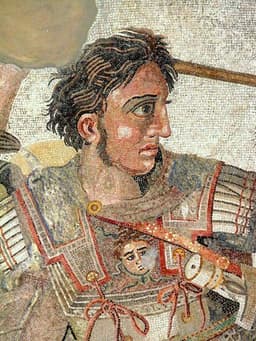
Alexander the Great
General · Ancient
85.2Total

Trajan
Emperor · Ancient
76.0Total
Basic Information
Born
-356
53
Died
-323
117
Era
Ancient
Ancient
Nationality
Macedon
Roman Empire
Occupation
General
Emperor
Civilization
Western
Western
Score Comparison
Military (10%)
95.0
86.0
Political (20%)
60.0
79.2
Influence (20%)
92.0
82.0
Legacy (20%)
90.0
65.6
Leadership (15%)
80.0
73.2
Strategy (15%)
92.0
76.0
TOTAL
85.2
76.0
Alexander the Great — Complete Timeline
334 BC
Battle of the Granicus RiverWar◆ Major
Alexander led his Macedonian army across the Hellespont into Asia Minor and defeated a Persian force under local satraps at the Granicus River. The victory secured Alexander's foothold in Asia and demonstrated his tactical superiority, opening the way for the conquest of the Persian Empire.
Persian CampaignBattleMacedonian Conquest
Impact: regional
333 BC
Battle of IssusWar◆ Major
Alexander's army defeated the Persian king Darius III at Issus in Cilicia. Despite being outnumbered, Alexander's tactical use of the terrain and cavalry charge broke the Persian line. Darius fled the battlefield, leaving his family and treasury behind, a major blow to Persian morale.
Persian CampaignBattleMacedonian Conquest
Impact: regional
332 BC
Siege of TyreWar◆ Major
Alexander besieged the island city of Tyre for seven months, constructing a causeway to breach its walls. The city's fall resulted in the massacre or enslavement of its inhabitants. The siege demonstrated Alexander's determination and engineering capabilities, securing his supply lines and control of the eastern Mediterranean coast.
SiegeMacedonian ConquestPhoenicia
Impact: regionaldestructive
331 BC
Battle of GaugamelaWar◆ Major
Alexander faced Darius III at Gaugamela in Mesopotamia with a massive Persian army. Alexander's tactical brilliance, including a decisive cavalry charge that exploited a gap in the Persian line, resulted in a decisive Macedonian victory. Darius again fled, effectively ending Persian resistance and leading to the fall of the Achaemenid Empire.
Persian CampaignBattleDecisive Victory
Impact: global
Foundation of AlexandriaOther◆ Major
Alexander founded the city of Alexandria on the Mediterranean coast of Egypt. He personally selected the site and oversaw the initial planning. Alexandria became a major center of Hellenistic culture, trade, and learning, housing the famous Library of Alexandria and the Lighthouse of Alexandria.
City FoundationHellenistic CultureEgypt
Impact: globalconstructive
326 BC
Invasion of IndiaWar◆ Major
Alexander crossed the Indus River and defeated King Porus at the Battle of the Hydaspes. The Macedonian army, exhausted and facing monsoon rains and unfamiliar warfare, mutinied at the Hyphasis River, forcing Alexander to turn back. This campaign marked the easternmost extent of his conquests.
Indian CampaignBattleMutiny
Impact: regional
Trajan — Complete Timeline
101 AD
Implemented the Alimenta Welfare ProgramReform◆ Major
Trajan expanded the Alimenta program, a state-funded welfare system that provided food subsidies and educational support for poor children in Italy. The program used interest from state loans to landowners to fund the distributions, aiming to boost the Italian population and agricultural economy.
WelfareSocial PolicyItaly
Impact: regionalconstructive
105 AD
Built Trajan's Bridge over the DanubeOther
Trajan ordered the construction of a massive stone and timber bridge across the Danube River near the Iron Gates. Designed by Apollodorus of Damascus, it was the longest arch bridge in the world for over a millennium, facilitating the Roman invasion of Dacia.
EngineeringBridgeDanube
Impact: regionalconstructive
106 AD
Conquered DaciaWar
Trajan led two major campaigns against the Dacian kingdom under King Decebalus, culminating in the conquest of Dacia (modern Romania) in 106 CE. The victory brought vast gold and silver mines under Roman control and established a new province, funding massive building projects in Rome.
DaciaConquestProvince
Impact: regional
112 AD
Built Trajan's Forum and MarketCultural◆ Major
Trajan commissioned the construction of Trajan's Forum, a vast complex in Rome including a basilica, libraries, and the Column of Trajan. The adjacent Trajan's Market, a multi-level commercial center, demonstrated Roman engineering prowess and served as a model for urban planning.
ArchitectureRomeUrban Planning
Impact: globalconstructive
116 AD
Conquered Parthia and Reached the Persian GulfWar◆ Major
Trajan launched a campaign against the Parthian Empire, capturing its capital Ctesiphon and annexing Mesopotamia. He reached the Persian Gulf, marking the easternmost extent of Roman territory. However, rebellions in the conquered territories forced a withdrawal shortly after.
ParthiaMesopotamiaExpansion
Impact: global
Expert Analysis
Origins
Alexander was born in 356 BCE to Philip II of Macedon and Olympias, receiving a rigorous education under Aristotle. His father transformed Macedon into a dominant power, giving Alexander a strong base. Trajan, born in 53 CE in Italica (Spain), was the first Roman emperor from a provincial family. His military career flourished under Domitian and Nerva, who adopted him as successor. Both came from ambitious backgrounds, but Alexander's royal birth gave him direct access to power, while Trajan rose through merit.
Rise to Power
Alexander ascended at age 20 after Philip's assassination, immediately consolidating power by crushing revolts in Thebes and Athens. He then launched his Persian campaign, winning major battles at Granicus (334 BCE), Issus (333 BCE), and Gaugamela (331 BCE), toppling the Achaemenid Empire. Trajan became emperor in 98 CE, chosen by Nerva for his military reputation. He restored relations with the Senate and initiated campaigns against Dacia (101-106 CE), securing vast gold mines. His rise was less dramatic but more politically astute.
Leadership & Governance
Alexander's leadership was charismatic and inspirational, leading from the front. He fostered loyalty through shared hardship but also purged rivals. His governance focused on Hellenization, founding cities like Alexandria, and incorporating Persian elites into his administration. However, his empire lacked stable institutions. Trajan excelled as an administrator: he improved infrastructure with roads, bridges, and harbors; implemented the Alimenta welfare program for orphans; and built Trajan's Forum. He respected the Senate and maintained Rome's legal system, ensuring stability. Governance score: Alexander 60, Trajan 79.
Triumph & Tragedy
Alexander's triumphs are legendary: he never lost a battle, conquered Egypt, founded Alexandria, and reached India. His tragedy was his early death at 32, likely from disease, leaving his empire without a clear successor, leading to fragmentation. Trajan's triumphs included the conquest of Dacia (modern Romania) and Parthia, expanding Rome to its greatest extent. His tragedy was the failure to hold Parthia, which revolted after his departure, and his death at 64, possibly from illness. Both died before securing their conquests, but Trajan's empire endured for centuries.
Character & Destiny
Alexander was ambitious, impulsive, and increasingly megalomaniacal, demanding deification. He killed his friend Cleitus in a rage and married multiple wives for political reasons. His destiny seemed shaped by a belief in his own divinity. Trajan was pragmatic, just, and respected by the Senate as 'Optimus Princeps' (best ruler). He was known for his moderation and military discipline. Destiny favored Trajan with a stable succession via Hadrian, while Alexander's empire collapsed. Character score: Alexander 80, Trajan 73.
Legacy
Alexander's legacy is immense: he spread Hellenistic culture across three continents, influencing art, language, and politics. His military tactics are still studied. However, his empire disintegrated quickly. Trajan's legacy is the Roman Empire at its peak territorial extent, with enduring architectural monuments like Trajan's Column. His welfare programs set precedents for social policy. Both are remembered as great conquerors, but Trajan's impact was more institutional and lasting. Legacy score: Alexander 92, Trajan 76.
Conclusion
While Alexander was a military genius of unmatched brilliance (M=95 vs 86), Trajan was a superior administrator and builder (P=79 vs 60). Alexander's conquests were more dramatic but less sustainable. Trajan expanded Rome's borders and left a stable, prosperous empire. The score gap of 9.2 points in Alexander's favor reflects his higher ratings in military, intellect, luck, and character. However, considering governance and legacy, Trajan arguably achieved more lasting impact. Ultimately, Alexander was the greater conqueror, but Trajan was the greater ruler.
**Final Scores:** Alexander 7.5/10, Trajan 7.2/10. Alexander edges ahead due to his undefeated record and cultural influence, but Trajan's administrative achievements make him a close rival.
Rankings
🥇
Alexander the GreatLeader
Mil: 95.0Pol: 60.0Inf: 92.0
85.2
🥈
Trajan
Mil: 86.0Pol: 79.2Inf: 82.0
76.0
+9.2 behind
How This Comparison Works
Algorithm
Each figure is scored on 6 dimensions (0—100 scale) based on structured historical data: Military (10%), Political (20%), Influence (20%), Legacy (20%), Leadership (15%), Strategy (15%). The weighted total produces the final ranking.
Data Sources
Scores are computed from structured sub-indicators in the database. Scale factors adjust for era (Ancient ×0.85, Modern ×1.0) and civilization size (Eastern ×1.05, Other ×0.80) to account for differences in population and military scale.
Maximum 3 Figures
Comparisons are limited to 2—3 figures to ensure readability and statistical meaningfulness.
Error Margins
±5 points per dimension — Sub-scores are derived from historical records with inherent uncertainty. Two figures within 5 points on a dimension should be considered roughly equivalent in that area.
Total Score Accuracy
±3 points overall — The weighted combination of 6 dimensions produces a total score with approximately ±3 points of uncertainty. Differences of less than 3 points are not statistically significant— the figures are effectively tied.
Known Limitations
- Historical records are incomplete and uneven across civilizations
- Figures from oral-tradition societies may be underrepresented
- Occupation labels can misclassify multi-role figures
- Scores measure capability and impact, not moral character
- Quantitative scoring is a comparison tool, not absolute truth
Capability Radar
Military (10%) — Battles & Warfare
Battles
98
95
Win Rate
99
98
Expansion
99
95
Political (20%) — Governance & Reform
Reform
75
88
Diplomacy
80
85
Economy
70
90
Influence (20%) — Cultural & Global Reach
Cultural
95
85
Global
95
85
Legacy (20%) — Historical Impact
Historical
98
90
Longevity
95
88
Leadership (15%) — Power & Stability
Tenure
60
90
Stability
55
92
Strategy (15%) — Tactics & Innovation
Strategy
98
92
Tactics
99
88
Reform
85
85
Similar Comparisons
Comments & Discussion
No comments yet. Be the first to share your thoughts!