Loading...
Alexander the Great vs Rama of Ayodhya
Alexander the Great leads by 9.9 pts · 2 figures compared
…
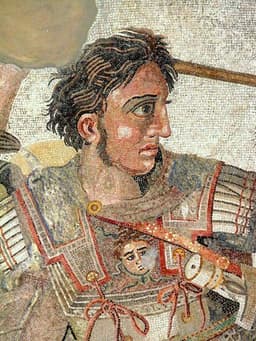
Alexander the Great
General · Ancient
85.2Total
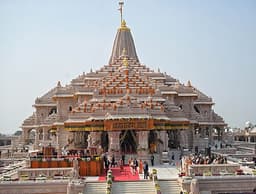
Rama of Ayodhya
Emperor · Ancient
75.3Total
Basic Information
Born
-356
-1180
Died
-323
-1120
Era
Ancient
Ancient
Nationality
Macedon
Vedic India
Occupation
General
Emperor
Civilization
Western
Indian
Score Comparison
Military (10%)
95.0
72.0
Political (20%)
60.0
72.0
Influence (20%)
92.0
75.0
Legacy (20%)
90.0
80.0
Leadership (15%)
80.0
78.0
Strategy (15%)
92.0
68.1
TOTAL
85.2
75.3
Alexander the Great — Complete Timeline
334 BC
Battle of the Granicus RiverWar◆ Major
Alexander led his Macedonian army across the Hellespont into Asia Minor and defeated a Persian force under local satraps at the Granicus River. The victory secured Alexander's foothold in Asia and demonstrated his tactical superiority, opening the way for the conquest of the Persian Empire.
Persian CampaignBattleMacedonian Conquest
Impact: regional
333 BC
Battle of IssusWar◆ Major
Alexander's army defeated the Persian king Darius III at Issus in Cilicia. Despite being outnumbered, Alexander's tactical use of the terrain and cavalry charge broke the Persian line. Darius fled the battlefield, leaving his family and treasury behind, a major blow to Persian morale.
Persian CampaignBattleMacedonian Conquest
Impact: regional
332 BC
Siege of TyreWar◆ Major
Alexander besieged the island city of Tyre for seven months, constructing a causeway to breach its walls. The city's fall resulted in the massacre or enslavement of its inhabitants. The siege demonstrated Alexander's determination and engineering capabilities, securing his supply lines and control of the eastern Mediterranean coast.
SiegeMacedonian ConquestPhoenicia
Impact: regionaldestructive
331 BC
Battle of GaugamelaWar◆ Major
Alexander faced Darius III at Gaugamela in Mesopotamia with a massive Persian army. Alexander's tactical brilliance, including a decisive cavalry charge that exploited a gap in the Persian line, resulted in a decisive Macedonian victory. Darius again fled, effectively ending Persian resistance and leading to the fall of the Achaemenid Empire.
Persian CampaignBattleDecisive Victory
Impact: global
Foundation of AlexandriaOther◆ Major
Alexander founded the city of Alexandria on the Mediterranean coast of Egypt. He personally selected the site and oversaw the initial planning. Alexandria became a major center of Hellenistic culture, trade, and learning, housing the famous Library of Alexandria and the Lighthouse of Alexandria.
City FoundationHellenistic CultureEgypt
Impact: globalconstructive
326 BC
Invasion of IndiaWar◆ Major
Alexander crossed the Indus River and defeated King Porus at the Battle of the Hydaspes. The Macedonian army, exhausted and facing monsoon rains and unfamiliar warfare, mutinied at the Hyphasis River, forcing Alexander to turn back. This campaign marked the easternmost extent of his conquests.
Indian CampaignBattleMutiny
Impact: regional
Rama of Ayodhya — Complete Timeline
1160 BC
Broke Shiva's Bow at Sita's SwayamvaraCultural◆ Major
Rama, as a young prince, lifted and strung the divine bow of Shiva at Princess Sita's marriage ceremony. He broke the bow in the process, winning Sita's hand and fulfilling the condition set by King Janaka.
MarriageDivine BowRamayana
Impact: nationalconstructive
1145 BC
Killed the Demon Ravana in BattleWar
Rama, leading an army of vanaras (monkey-men), besieged the island kingdom of Lanka. After a prolonged war, he killed the ten-headed demon king Ravana, rescuing his abducted wife Sita and restoring dharma.
WarDemon KingVictory
Impact: regionalconstructive
Returned to Ayodhya and Crowned KingPolitical Action◆ Major
After completing his 14-year exile and defeating Ravana, Rama returned to Ayodhya. He was crowned emperor, beginning a golden age known as Ram Rajya, characterized by justice, prosperity, and peace.
CoronationGolden AgeRamayana
Impact: nationalconstructive
Expert Analysis
Origins
Alexander the Great was born in 356 BCE in Pella, Macedon, to King Philip II and Queen Olympias. His education under Aristotle instilled a love for Greek culture and philosophy, while his military training began at an early age. Alexander ascended the throne at 20 after Philip's assassination, inheriting a powerful kingdom and a seasoned army.
Rama, the prince of Ayodhya, is the central figure of the Hindu epic Ramayana. Born to King Dasharatha and Queen Kaushalya, Rama is considered the seventh avatar of the god Vishnu. His upbringing in the royal court emphasized dharma (righteousness) and duty, and he excelled in archery and statecraft.
Rise to Power
Alexander swiftly consolidated power by crushing rebellions in Greece and then launching a campaign against the Persian Empire. His victories at the Granicus River (334 BCE), Issus (333 BCE), and Gaugamela (331 BCE) shattered Persian resistance. He toppled the Achaemenid Empire, claiming the title of King of Asia.
Rama's rise was marked by his marriage to Sita after breaking Shiva's divine bow. Exiled to the forest for 14 years due to palace intrigue, he gathered allies like Hanuman and the monkey king Sugriva. His defeat of the demon Ravana in Lanka restored dharma and paved the way for his coronation.
Leadership & Governance
Alexander led from the front, inspiring his troops through personal bravery. He integrated conquered peoples into his administration, adopting Persian customs and founding cities like Alexandria. However, his relentless expansion caused mutinies among his Macedonian soldiers, who grew weary of constant campaigning.
Rama's rule, known as Ram Rajya, epitomized ideal governance: justice, prosperity, and harmony. He upheld dharma even at personal cost, such as exiling Sita to appease public opinion. His leadership was consultative, relying on ministers and the will of the people.
Triumph & Tragedy
Alexander's greatest triumph was the conquest of the Persian Empire, spreading Hellenistic culture across three continents. His tragedy was his untimely death at 32 in Babylon, likely from fever or poison, leaving his empire fragmented among warring generals.
Rama's triumph was the rescue of Sita and the defeat of Ravana, restoring righteousness. His tragedy lay in the personal sacrifices required of a king: separation from Sita and the eventual loss of his sons due to public scrutiny. He ruled for many years but ultimately left the mortal world by submerging in the Sarayu River.
Character & Destiny
Alexander was ambitious, charismatic, and ruthless. He believed in his divine destiny, often comparing himself to Achilles. His psychological character reveals a complex mix of brilliance and paranoia, as seen in the executions of his friends Philotas and Parmenion.
Rama is the embodiment of dharma—calm, just, and compassionate. He accepted his fate without complaint, even when unjustly exiled. His destiny was to restore order and set an example for humanity. Where Alexander sought personal glory, Rama sought the welfare of his subjects.
Legacy
Alexander's legacy is monumental: he spread Greek culture, founded cities, and influenced subsequent empires like the Seleucids and Ptolemies. His military tactics are still studied in war colleges. However, his empire did not outlast him, and his methods were often brutal.
Rama's legacy is spiritual and moral. The Ramayana continues to inspire millions, shaping cultural values across South and Southeast Asia. His life is celebrated in festivals like Diwali. While Alexander's impact is historical, Rama's influence is timeless and divine.
Conclusion
Comparing Alexander and Rama is challenging because they represent different spheres: one a historical conqueror, the other a mythological ideal. Alexander's scores (M=95, P=60, I=92, L=90, D=80, S=92, T=85) reflect his military genius, imperial reach, and cultural impact. Rama's scores (M=72, P=72, I=75, L=80, D=78, S=68, T=75) emphasize his moral leadership and enduring legacy. While Alexander achieved more in terms of territorial conquest and immediate historical influence, Rama's impact on ethics and spirituality spans millennia. In a direct comparison, Alexander's tangible achievements give him the edge, but Rama's ideal of righteous rule offers a deeper, more sustainable model for humanity. The score gap of 9.9 points is justified by Alexander's unprecedented military success and the sheer scale of his empire.
Rankings
🥇
Alexander the GreatLeader
Mil: 95.0Pol: 60.0Inf: 92.0
85.2
🥈
Rama of Ayodhya
Mil: 72.0Pol: 72.0Inf: 75.0
75.3
+9.9 behind
How This Comparison Works
Algorithm
Each figure is scored on 6 dimensions (0—100 scale) based on structured historical data: Military (10%), Political (20%), Influence (20%), Legacy (20%), Leadership (15%), Strategy (15%). The weighted total produces the final ranking.
Data Sources
Scores are computed from structured sub-indicators in the database. Scale factors adjust for era (Ancient ×0.85, Modern ×1.0) and civilization size (Eastern ×1.05, Other ×0.80) to account for differences in population and military scale.
Maximum 3 Figures
Comparisons are limited to 2—3 figures to ensure readability and statistical meaningfulness.
Error Margins
±5 points per dimension — Sub-scores are derived from historical records with inherent uncertainty. Two figures within 5 points on a dimension should be considered roughly equivalent in that area.
Total Score Accuracy
±3 points overall — The weighted combination of 6 dimensions produces a total score with approximately ±3 points of uncertainty. Differences of less than 3 points are not statistically significant— the figures are effectively tied.
Known Limitations
- Historical records are incomplete and uneven across civilizations
- Figures from oral-tradition societies may be underrepresented
- Occupation labels can misclassify multi-role figures
- Scores measure capability and impact, not moral character
- Quantitative scoring is a comparison tool, not absolute truth
Capability Radar
Military (10%) — Battles & Warfare
Battles
98
75
Win Rate
99
95
Expansion
99
70
Political (20%) — Governance & Reform
Reform
75
80
Diplomacy
80
85
Economy
70
75
Influence (20%) — Cultural & Global Reach
Cultural
95
95
Global
95
95
Legacy (20%) — Historical Impact
Historical
98
95
Longevity
95
100
Leadership (15%) — Power & Stability
Tenure
60
70
Stability
55
90
Strategy (15%) — Tactics & Innovation
Strategy
98
85
Tactics
99
80
Reform
85
60
Similar Comparisons
Comments & Discussion
No comments yet. Be the first to share your thoughts!