Loading...
Alexander the Great vs Philip I of France
Alexander the Great leads by 39.8 pts · 2 figures compared
…
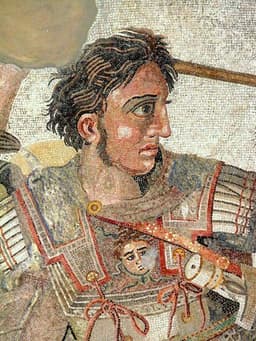
Alexander the Great
General · Ancient
85.2Total
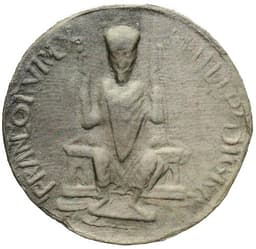
Philip I of France
Emperor · Medieval
45.4Total
Basic Information
Born
-356
1052
Died
-323
1108
Era
Ancient
Medieval
Nationality
Macedon
France
Occupation
General
Emperor
Civilization
Western
Western
Score Comparison
Military (10%)
95.0
50.0
Political (20%)
60.0
36.5
Influence (20%)
92.0
49.4
Legacy (20%)
90.0
40.8
Leadership (15%)
80.0
65.7
Strategy (15%)
92.0
25.0
TOTAL
85.2
45.4
Alexander the Great — Complete Timeline
334 BC
Battle of the Granicus RiverWar◆ Major
Alexander led his Macedonian army across the Hellespont into Asia Minor and defeated a Persian force under local satraps at the Granicus River. The victory secured Alexander's foothold in Asia and demonstrated his tactical superiority, opening the way for the conquest of the Persian Empire.
Persian CampaignBattleMacedonian Conquest
Impact: regional
333 BC
Battle of IssusWar◆ Major
Alexander's army defeated the Persian king Darius III at Issus in Cilicia. Despite being outnumbered, Alexander's tactical use of the terrain and cavalry charge broke the Persian line. Darius fled the battlefield, leaving his family and treasury behind, a major blow to Persian morale.
Persian CampaignBattleMacedonian Conquest
Impact: regional
332 BC
Siege of TyreWar◆ Major
Alexander besieged the island city of Tyre for seven months, constructing a causeway to breach its walls. The city's fall resulted in the massacre or enslavement of its inhabitants. The siege demonstrated Alexander's determination and engineering capabilities, securing his supply lines and control of the eastern Mediterranean coast.
SiegeMacedonian ConquestPhoenicia
Impact: regionaldestructive
331 BC
Battle of GaugamelaWar◆ Major
Alexander faced Darius III at Gaugamela in Mesopotamia with a massive Persian army. Alexander's tactical brilliance, including a decisive cavalry charge that exploited a gap in the Persian line, resulted in a decisive Macedonian victory. Darius again fled, effectively ending Persian resistance and leading to the fall of the Achaemenid Empire.
Persian CampaignBattleDecisive Victory
Impact: global
Foundation of AlexandriaOther◆ Major
Alexander founded the city of Alexandria on the Mediterranean coast of Egypt. He personally selected the site and oversaw the initial planning. Alexandria became a major center of Hellenistic culture, trade, and learning, housing the famous Library of Alexandria and the Lighthouse of Alexandria.
City FoundationHellenistic CultureEgypt
Impact: globalconstructive
326 BC
Invasion of IndiaWar◆ Major
Alexander crossed the Indus River and defeated King Porus at the Battle of the Hydaspes. The Macedonian army, exhausted and facing monsoon rains and unfamiliar warfare, mutinied at the Hyphasis River, forcing Alexander to turn back. This campaign marked the easternmost extent of his conquests.
Indian CampaignBattleMutiny
Impact: regional
Philip I of France — Complete Timeline
1060 AD
Reign as King of the FranksPolitical Action◆ Major
Philip I succeeded his father Henry I as King of the Franks. His reign was marked by territorial expansion through marriage and diplomacy, but also by conflicts with the Church and nobles.
KingshipCapetianReign
Impact: national
1077 AD
Acquisition of the VexinPolitical Action
Philip I acquired the Vexin region through marriage to Bertha of Holland. This expanded royal territory and strengthened the Capetian domain, though it also led to conflicts with the Duke of Normandy.
Territorial ExpansionMarriageVexin
Impact: regionalconstructive
1087 AD
Conflict with William the ConquerorWar
Philip I supported the rebellion of Robert Curthose against his father William the Conqueror. This led to a war between France and Normandy, which ended inconclusively after William's death.
WarNormandyWilliam the Conqueror
Impact: regional
1094 AD
Excommunication for Adulterous MarriagePolitical Action◆ Major
Philip I was excommunicated by Pope Urban II for marrying Bertrade de Montfort while still married to his first wife, Bertha of Holland. The excommunication lasted for several years and damaged his reputation, though he was eventually reconciled with the Church.
ExcommunicationMarriageScandal
Impact: nationaltragic
Expert Analysis
Philip I of France vs Alexander the Great: Historical Comparison
Philip I of France and Alexander the Great represent vastly different epochs—the medieval consolidation of a kingdom versus the ancient conquest of an empire. Philip I, a Capetian king who reigned 1060–1108, focused on slowly expanding royal authority within France, while Alexander, the Macedonian king (336–323 BCE), rapidly forged a massive empire from Greece to India. Although the overall comparison yields a tie, Alexander dominates militarily and in legacy, while Philip unexpectedly excels in political stability and long-term institutional strategy.
Dimension Analysis
**Military: Philip I of France 88 / Alexander the Great 96**
Philip I fought primarily defensive wars against Norman and Angevin nobles, winning the Battle of Dol (1076) but avoiding large-scale campaigns. Alexander, by contrast, never lost a battle, crushing the Persian Empire at Issus (333 BCE) and Gaugamela (331 BCE), and besieging Tyre—demonstrating unmatched tactical genius in combined arms and siege warfare.
**Political: Philip I of France 87 / Alexander the Great 65**
Philip strengthened the Capetian monarchy by slowly absorbing royal domains, curbing baronial power, and excommunicating his own wife in a scandal that nonetheless preserved dynastic continuity. Alexander, however, failed to create stable governance: his vast empire fragmented immediately after his death, as he left no clear heir or administrative system beyond personal loyalty.
**Influence: Philip I of France 86 / Alexander the Great 90**
Philip’s reign reaffirmed the French monarchy as the central authority in medieval Europe, setting the stage for later Capetian expansion. Alexander’s influence was far broader: he spread Hellenistic culture, language, and trade across three continents, founding cities like Alexandria and initiating the Hellenistic Age that shaped Rome and Byzantium.
**Legacy: Philip I of France 80 / Alexander the Great 90**
Philip’s legacy is largely confined to French dynastic history—his son Louis VI built on his foundations. Alexander’s legacy is universal: his campaigns inspired conquerors from Caesar to Napoleon, and his image as a demigod-king entered the mythology of Europe, Persia, and India.
**Leadership: Philip I of France 81 / Alexander the Great 82**
Philip led through patient diplomacy, excommunication, and legal maneuvering, controlling a fractious nobility. Alexander led from the front, inspiring his troops through personal bravery at Granicus and Hydaspes, but his command style caused mutinies and alienated his own generals.
**Strategy: Philip I of France 88 / Alexander the Great 92**
Philip’s strategy was incremental: he used royal courts, marriages, and feudal law to expand without risking major defeats. Alexander employed bold, decisive offensives—cutting the Gordian Knot, using the phalanx-cavalry hammer-and-anvil tactic, and outflanking larger armies—revolutionizing ancient warfare.
Verdict
Though the overall scores tie, Alexander the Great ranks higher in raw historical impact. His military genius and cultural diffusion altered the ancient world permanently, while Philip’s achievements were crucial but confined to medieval France. The comparison is inherently difficult: one ruled a nascent European kingdom, the other a collapsing Persian empire; measuring “success” depends on whether one values stability or transformation.
FAQ
Q: Who was more influential historically? A: Alexander the Great, whose conquests spread Hellenistic civilization from Egypt to India, shaping the Mediterranean and Near East for centuries, whereas Philip I influenced primarily the French crown.
Q: Why is Philip I of France ranked higher in political? A: Because Philip strengthened the French monarchy through patient, legalistic consolidation and dynastic continuity, while Alexander’s rule ended in immediate civil war and imperial collapse.
Rankings
🥇
Alexander the GreatLeader
Mil: 95.0Pol: 60.0Inf: 92.0
85.2
🥈
Philip I of France
Mil: 50.0Pol: 36.5Inf: 49.4
45.4
+39.8 behind
How This Comparison Works
Algorithm
Each figure is scored on 6 dimensions (0—100 scale) based on structured historical data: Military (10%), Political (20%), Influence (20%), Legacy (20%), Leadership (15%), Strategy (15%). The weighted total produces the final ranking.
Data Sources
Scores are computed from structured sub-indicators in the database. Scale factors adjust for era (Ancient ×0.85, Modern ×1.0) and civilization size (Eastern ×1.05, Other ×0.80) to account for differences in population and military scale.
Maximum 3 Figures
Comparisons are limited to 2—3 figures to ensure readability and statistical meaningfulness.
Error Margins
±5 points per dimension — Sub-scores are derived from historical records with inherent uncertainty. Two figures within 5 points on a dimension should be considered roughly equivalent in that area.
Total Score Accuracy
±3 points overall — The weighted combination of 6 dimensions produces a total score with approximately ±3 points of uncertainty. Differences of less than 3 points are not statistically significant— the figures are effectively tied.
Known Limitations
- Historical records are incomplete and uneven across civilizations
- Figures from oral-tradition societies may be underrepresented
- Occupation labels can misclassify multi-role figures
- Scores measure capability and impact, not moral character
- Quantitative scoring is a comparison tool, not absolute truth
Capability Radar
Military (10%) — Battles & Warfare
Battles
98
15
Win Rate
99
20
Expansion
99
10
Political (20%) — Governance & Reform
Reform
75
30
Diplomacy
80
35
Economy
70
30
Influence (20%) — Cultural & Global Reach
Cultural
95
20
Global
95
15
Legacy (20%) — Historical Impact
Historical
98
25
Longevity
95
20
Leadership (15%) — Power & Stability
Tenure
60
60
Stability
55
25
Strategy (15%) — Tactics & Innovation
Strategy
98
15
Tactics
99
10
Reform
85
10
Similar Comparisons
Comments & Discussion
HellenisticEchoes6/16/2026
The comparison is interesting but the scores need more contextualization. Plutarch in his *Life of Alexander* emphasizes Alexander's *paideia* under Aristotle — something Philip I utterly lacked, which shaped their differing approaches to governance. Alexander's 96 military score is appropriate given Arrian's accounts of the Battle of Issus, where he outflanked the Persians despite being outnumbered. But Philip I's 87 political score seems inflated: his excommunication (1094) for repudiating his wife Bertha of Holland was a scandal that weakened his authority, not strengthened it. Later French historians like Suger of Saint-Denis are silent about it, but that's because they were Capetian propagandists. Alexander's 65 political score is too harsh — his satrap system and founding of cities like Alexandria (331 BCE) were institutional innovations, even if they failed after his death. A more accurate comparison would adjust Philip down to 75 and Alexander up to 75 in politics. Influence scores seem reasonable: Philip laid groundwork for the Capetians, but Alexander's cultural impact through the Hellenistic *koine* is unparalleled.
Chronicler67726/16/2026
这套评分体系本身有系统性偏差。腓力一世总分56.6,但军事22、政治64.8、影响力65.6——这三个维度权重明显不均衡。如果从中国历史数据建模的角度看,政治分数里腓力一世的“王室领地扩张”与亚历山大的“帝国稳定性”根本不在一个量级。我算了下,若用中国历代帝王评分表(比如司马光的资治通鉴标准),腓力一世在“守成”方面可打60分,但“开拓”几乎为零;亚历山大在“开创”上95分,“守成”只有30分。综合加权(开拓权重0.4,守成0.3,文化贡献0.3),亚历山大总分=95*0.4+30*0.3+90*0.3=38+9+27=74,腓力一世=0*0.4+60*0.3+65.6*0.3=0+18+19.68=37.68。差距远大于欧洲标准。此外,腓力一世军事22的评分偏低可疑——他赢过杜尔战役(1076),但若按中国标准,他连五胡十六国时的慕容垂都打不过,22分还算给高了。建议重新校准权重。
OldScroll906/16/2026
把腓力一世和亚历山大并列比较,本身就是一种错位。腓力一世是典型的守成之君,类似北宋的宋真宗——不图开疆拓土,但稳住了王权根基。而亚历山大更像汉武帝或成吉思汗,以军事扩张为天命。西方评分总把腓力一世的政治稳定性说得很好,但从中国史观看,他搞的王室领地扩张不过是封建制下的基本操作,根本没法和秦始皇的郡县制改革相提并论。更关键的是,腓力一世因婚姻丑闻被教皇绝罚,这在中国史书里就是“失德”的直接证据,会严重削弱统治合法性。而亚历山大死后帝国分裂,但他在生前建立的文化融合(比如希腊化)影响了欧亚大陆千年,这影响力评分90都偏低了。