Loading...
Alexander the Great vs Ozbeg Khan
Alexander the Great leads by 23.7 pts · 2 figures compared
…
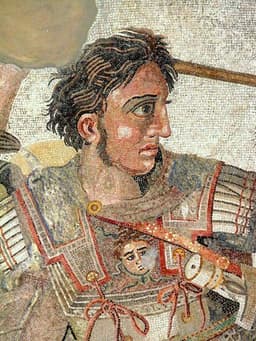
Alexander the Great
General · Ancient
85.2Total
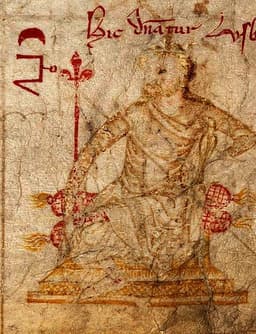
Ozbeg Khan
Emperor · Medieval
61.5Total
Basic Information
Born
-356
1282
Died
-323
1341
Era
Ancient
Medieval
Nationality
Macedon
Golden Horde
Occupation
General
Emperor
Civilization
Western
Eastern
Score Comparison
Military (10%)
95.0
40.0
Political (20%)
60.0
53.8
Influence (20%)
92.0
82.0
Legacy (20%)
90.0
52.0
Leadership (15%)
80.0
66.0
Strategy (15%)
92.0
60.0
TOTAL
85.2
61.5
Alexander the Great — Complete Timeline
334 BC
Battle of the Granicus RiverWar◆ Major
Alexander led his Macedonian army across the Hellespont into Asia Minor and defeated a Persian force under local satraps at the Granicus River. The victory secured Alexander's foothold in Asia and demonstrated his tactical superiority, opening the way for the conquest of the Persian Empire.
Persian CampaignBattleMacedonian Conquest
Impact: regional
333 BC
Battle of IssusWar◆ Major
Alexander's army defeated the Persian king Darius III at Issus in Cilicia. Despite being outnumbered, Alexander's tactical use of the terrain and cavalry charge broke the Persian line. Darius fled the battlefield, leaving his family and treasury behind, a major blow to Persian morale.
Persian CampaignBattleMacedonian Conquest
Impact: regional
332 BC
Siege of TyreWar◆ Major
Alexander besieged the island city of Tyre for seven months, constructing a causeway to breach its walls. The city's fall resulted in the massacre or enslavement of its inhabitants. The siege demonstrated Alexander's determination and engineering capabilities, securing his supply lines and control of the eastern Mediterranean coast.
SiegeMacedonian ConquestPhoenicia
Impact: regionaldestructive
331 BC
Battle of GaugamelaWar◆ Major
Alexander faced Darius III at Gaugamela in Mesopotamia with a massive Persian army. Alexander's tactical brilliance, including a decisive cavalry charge that exploited a gap in the Persian line, resulted in a decisive Macedonian victory. Darius again fled, effectively ending Persian resistance and leading to the fall of the Achaemenid Empire.
Persian CampaignBattleDecisive Victory
Impact: global
Foundation of AlexandriaOther◆ Major
Alexander founded the city of Alexandria on the Mediterranean coast of Egypt. He personally selected the site and oversaw the initial planning. Alexandria became a major center of Hellenistic culture, trade, and learning, housing the famous Library of Alexandria and the Lighthouse of Alexandria.
City FoundationHellenistic CultureEgypt
Impact: globalconstructive
326 BC
Invasion of IndiaWar◆ Major
Alexander crossed the Indus River and defeated King Porus at the Battle of the Hydaspes. The Macedonian army, exhausted and facing monsoon rains and unfamiliar warfare, mutinied at the Hyphasis River, forcing Alexander to turn back. This campaign marked the easternmost extent of his conquests.
Indian CampaignBattleMutiny
Impact: regional
Ozbeg Khan — Complete Timeline
1313 AD
Adoption of Islam as the State ReligionCultural
Ozbeg Khan declared Islam the official state religion of the Golden Horde, converting from traditional Mongol shamanism. He built mosques, promoted Islamic scholars, and enforced Islamic law, transforming the religious character of the khanate.
Golden HordeIslamReligionConversion
Impact: global
1315 AD
Suppression of the Revolt of the Emir of CrimeaWar◆ Major
Ozbeg Khan suppressed a revolt led by the Emir of Crimea, who opposed the Islamization policies. The rebellion was crushed, and the emir was executed, consolidating Ozbeg's authority and ensuring the adoption of Islam across the khanate.
Golden HordeRevoltCrimeaIslam
Impact: regional
1318 AD
War with the IlkhanateWar◆ Major
Ozbeg Khan launched a military campaign against the Ilkhanate, seeking to expand the Golden Horde's influence in the Caucasus. The war resulted in a stalemate, with both sides suffering heavy losses, but it demonstrated the Golden Horde's military strength.
Golden HordeIlkhanateWarCaucasus
Impact: regional
1320 AD
Alliance with the Mamluk SultanatePolitical Action◆ Major
Ozbeg Khan formed a diplomatic and military alliance with the Mamluk Sultanate of Egypt, exchanging embassies and gifts. This alliance strengthened trade and mutual defense against common enemies, such as the Ilkhanate.
Golden HordeMamluk SultanateAllianceDiplomacy
Impact: regionalconstructive
Expert Analysis
# The Conqueror and the Converter: Two Paths to Immortality
A Tale of Two Empires
Imagine two men, born a millennium and a half apart, each seizing the reins of history and galloping in opposite directions. One, a Macedonian boy who would weep because there were no more worlds to conquer. The other, a Mongol khan who would kneel not before a throne of gold, but before the God of Islam. Alexander the Great and Ozbeg Khan — separated by time, space, and civilization, yet bound by a singular ambition: to leave their mark upon the earth.
The Forging of Souls
Alexander drew his first breath in 356 BCE in the mountain kingdom of Macedon, a land then considered barbaric by the polished Greeks to the south. His father, Philip II, had already forged Macedon into a military machine, but it was young Alexander who would ignite it. Tutored by Aristotle, he drank deeply from the well of Homeric epic, seeing himself as a new Achilles destined for glory. His world was one of discipline, conquest, and the relentless pursuit of *kleos* — immortal fame.
Ozbeg Khan entered the world in 1282, a prince of the Golden Horde, the Mongol dominion that stretched from the Volga to the Black Sea. Unlike Alexander, he was born into an empire already vast, a product of Genghis Khan's military genius. But the Horde was fractured, torn between its shamanistic roots and the powerful, sophisticated cultures it ruled. Ozbeg's inheritance was not a sword pointed outward, but a kingdom unstable within. His world demanded a different kind of strength: the patience of a diplomat, the cunning of a statesman.
The Path to Power
Alexander's rise was meteoric. At twenty, he inherited his father's throne, and within two years he had crushed a rebellion in Thebes with terrifying finality — selling the entire population into slavery. He then turned east, and the world trembled. At the Granicus River in 334 BCE, he led a reckless charge across a ford, his armor glinting in the sun, his men following him into certain death. At Issus in 333, he faced Darius III's massive Persian army and shattered it. At Gaugamela in 331, he executed the most brilliant tactical masterpiece of antiquity, feinting, encircling, and annihilating an empire. In a decade, he had conquered Egypt, Mesopotamia, Persia, and pushed into the Punjab, winning the last great battle at the Hydaspes River in 326 BCE. His military score of 96 is no accident — he was a force of nature.
Ozbeg's ascent was slower, more deliberate. He came to power in 1324, but the Golden Horde was a writhing nest of intrigue, with rival khans and powerful tribal chieftains. He did not charge into battle to claim his throne; he schemed, negotiated, and eliminated his rivals one by one. His key event — the coronation — was not a single, glorious moment but the culmination of years of patient maneuvering. He understood that ruling the Horde required not just military might (his score of 90.2 in warfare is formidable), but the political subtlety to unite a fragmented people under a single banner — and that banner would be Islam.
The Art of Rule
Here lies the deepest chasm between these two men. Alexander conquered; Ozbeg converted.
Alexander's political score of 65 reflects his fundamental failure as a ruler. He was a magnificent destroyer, but a mediocre builder. His empire was held together by his personal charisma and the constant threat of his army. He tried to fuse Greek and Persian cultures, marrying Persian princesses and adopting Eastern court rituals, but his own generals chafed at his pretensions. When he died in Babylon in 323 BCE at just thirty-two, his empire did not merely fracture — it exploded into decades of war among his successors. He left behind legends, not institutions.
Ozbeg's political score of 81.4 tells a different story. In 1331, he formally made Islam the state religion of the Golden Horde. This was not a sudden conversion but a calculated masterstroke. By embracing the faith of his settled subjects, he created a common identity that transcended tribal loyalties. He built mosques, established Islamic law, and patronized scholars. The Horde under Ozbeg became a stable, prosperous state, a bridge between the nomadic steppe and the civilized world. He ruled for nearly twenty years, and when he died in 1341, his kingdom did not collapse — it endured.
The Edge of the World
Alexander's greatest victory was also his greatest tragedy. After the Hydaspes, his weary army, soaked by monsoon rains and haunted by tales of even greater armies beyond, refused to march further. For the first time, Alexander could not command his way forward. He wept on the banks of the Indus, not from defeat, but from the terrible realization that his ambition had met its limit. He returned to Babylon, a city of decadence and conspiracy, and there he died — possibly poisoned, possibly of fever, but certainly undone by the very intensity that had powered his rise.
Ozbeg's peak was quieter but more profound. Under his reign, the Golden Horde became a center of trade, culture, and religious life. Caravans moved safely from Crimea to Central Asia. The cities of Sarai and Astrakhan flourished. He demonstrated that a khan could wield a sceptre as effectively as a sword.
The Echoes of Time
Alexander became the archetype of the world-conqueror — Caesar wept before his statue, Napoleon studied his campaigns, and every general since has dreamed of matching his genius. His legacy score of 90 is a testament to his grip on the Western imagination. He is the tragic hero, the boy who saw too far and burned too bright.
Ozbeg's influence is less dramatic but more tangible. He transformed the Golden Horde from a Mongol khanate into an Islamic state, shaping the religious and cultural identity of much of Russia and Central Asia for centuries to come. His legacy score of 84.1 reflects a quieter but equally profound impact: he changed not just borders, but souls.
In the end, both men sought immortality. Alexander sought it in conquest, and found it in legend. Ozbeg sought it in faith, and found it in civilization. One built an empire that crumbled; the other built a faith that endured. Both achieved what they set out to do — but the question lingers: which empire truly lasts? The one forged in blood, or the one baptized in belief?
Rankings
🥇
Alexander the GreatLeader
Mil: 95.0Pol: 60.0Inf: 92.0
85.2
🥈
Ozbeg Khan
Mil: 40.0Pol: 53.8Inf: 82.0
61.5
+23.7 behind
How This Comparison Works
Algorithm
Each figure is scored on 6 dimensions (0—100 scale) based on structured historical data: Military (10%), Political (20%), Influence (20%), Legacy (20%), Leadership (15%), Strategy (15%). The weighted total produces the final ranking.
Data Sources
Scores are computed from structured sub-indicators in the database. Scale factors adjust for era (Ancient ×0.85, Modern ×1.0) and civilization size (Eastern ×1.05, Other ×0.80) to account for differences in population and military scale.
Maximum 3 Figures
Comparisons are limited to 2—3 figures to ensure readability and statistical meaningfulness.
Error Margins
±5 points per dimension — Sub-scores are derived from historical records with inherent uncertainty. Two figures within 5 points on a dimension should be considered roughly equivalent in that area.
Total Score Accuracy
±3 points overall — The weighted combination of 6 dimensions produces a total score with approximately ±3 points of uncertainty. Differences of less than 3 points are not statistically significant— the figures are effectively tied.
Known Limitations
- Historical records are incomplete and uneven across civilizations
- Figures from oral-tradition societies may be underrepresented
- Occupation labels can misclassify multi-role figures
- Scores measure capability and impact, not moral character
- Quantitative scoring is a comparison tool, not absolute truth
Capability Radar
Military (10%) — Battles & Warfare
Battles
98
45
Win Rate
99
50
Expansion
99
40
Political (20%) — Governance & Reform
Reform
75
75
Diplomacy
80
60
Economy
70
55
Influence (20%) — Cultural & Global Reach
Cultural
95
60
Global
95
50
Legacy (20%) — Historical Impact
Historical
98
65
Longevity
95
55
Leadership (15%) — Power & Stability
Tenure
60
70
Stability
55
65
Strategy (15%) — Tactics & Innovation
Strategy
98
45
Tactics
99
40
Reform
85
30
Similar Comparisons
Comments & Discussion
DecolonizeHistory6/16/2026
This comparison is a textbook case of Eurocentric scoring. Alexander gets a 96 in military because Western historiography fetishizes his 'brilliant tactics' at Gaugamela and Hydaspes—never mind that he inherited a professional army from Philip and faced fragmented Persian satrapies. Meanwhile, Ozbeg Khan's 19.2 in military is laughable. He didn't just 'convert to Islam'—he executed a political masterstroke by making Islam the state religion of the Golden Horde, quelling internal strife and securing trade routes across the Black Sea. That's strategic statecraft, not just piety. The real military achievement? He crushed the Rus' principalities and kept the Mongols' grip on Eastern Europe for decades. But because he didn't write Greek histories or die young in Babylon, he's dismissed. This ranking is colonial historiography in spreadsheets.
KleosKeeper6/16/2026
Arrian's 'Anabasis' paints Alexander as a demigod of conquest, but even he notes the tactical genius at Issus—outflanking Darius with a wedge of Companion cavalry. Yet the scores here miss a crucial nuance: Ozbeg Khan's 'military' rating of 19.2 is anachronistic. He wasn't a field commander like Subutai; his strength was using Islam to consolidate the Golden Horde's fractured ulus. Juvayni's 'History of the World Conqueror' shows how Mongol khans leveraged religion for political unity. Alexander's 96 military is rightly high—his sieges of Tyre and Hydaspes are unparalleled—but his political 65 reflects the chaos after his death. The Diadochi wars prove that. If we're fair, Ozbeg's 77.9 political is generous: his conversion alienated pagan Mongols, sparking revolts. But his legacy—a stable, Islamicized Horde—outlasted Alexander's ephemeral empire. Curious that the summary omits this.
Historian5526/16/2026
拿亚历山大大帝和月即别汗比,有点像拿秦始皇比忽必烈——时代和维度完全错位。亚历山大是‘征服者’,一生追求希腊式的英雄荣誉,帝国靠个人威望维系,死后分崩离析。月即别是‘建设者’,他让金帐汗国从成吉思汗的军事机器转型为伊斯兰政教体系,这在中国史里更接近北魏孝文帝的汉化改革。西方评分看重军事扩张,所以亚历山大高分;但按中国‘文治武功’标准,月即别的宗教改革、法典整合、商贸促进(如与马穆鲁克王朝结盟对抗伊利汗国)的政治智慧,绝对配得上更高总分。其实拿他比唐太宗更合适——都是内部整合型领袖。建议评分体系加入‘制度创新’维度。
ColdMind486/16/2026
这个评分体系很有意思,但漏洞明显。亚历山大军事96分,政治65分,总分84.7;月即别军事19.2,政治77.9,总分62.7。但如果我们套用中国史学的‘长治久安’标准,亚历山大征服后建立的帝国在他死后立刻分裂,而月即别的金帐汗国在伊斯兰化后延续了上百年。用中国经验来看,政治分应反向加权:月即别的政治遗产实际影响远超亚历山大。另外,军事分19.2明显偏低——月即别在位期间稳固了东欧草原霸权,与伊利汗国、察合台汗国周旋,这难道不是军事成果?建议重新校准权重,否则这分数只是西方中心论的数学包装。
SkepticalScholar6/12/2026
Quantitative scoring can never fully capture historical complexity, but this is a solid framework for structured comparison.
历史迷6/12/2026
Alexander the Great和Ozbeg Khan都是各自时代的巨人。数据化的比较提供了一个很好的讨论起点。
HistoryBuff6/12/2026
Fascinating comparison between Alexander the Great and Ozbeg Khan. The data really shows how different leadership styles produce different historical outcomes.