Loading...
Alexander the Great vs Oduduwa
Alexander the Great leads by 25.5 pts · 2 figures compared
…
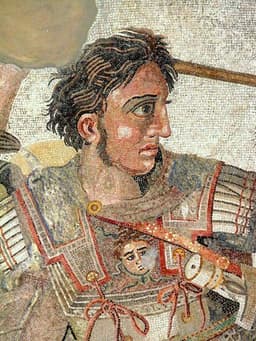
Alexander the Great
General · Ancient
85.2Total
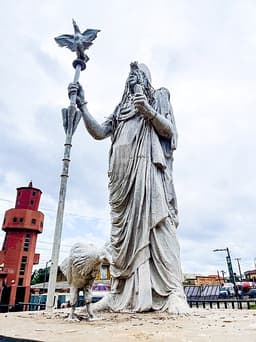
Oduduwa
Emperor · Medieval
59.7Total
Basic Information
Born
-356
950
Died
-323
1020
Era
Ancient
Medieval
Nationality
Macedon
Ife
Occupation
General
Emperor
Civilization
Western
Other
Score Comparison
Military (10%)
95.0
50.0
Political (20%)
60.0
46.6
Influence (20%)
92.0
68.0
Legacy (20%)
90.0
68.0
Leadership (15%)
80.0
67.0
Strategy (15%)
92.0
36.8
TOTAL
85.2
59.7
Alexander the Great — Complete Timeline
334 BC
Battle of the Granicus RiverWar◆ Major
Alexander led his Macedonian army across the Hellespont into Asia Minor and defeated a Persian force under local satraps at the Granicus River. The victory secured Alexander's foothold in Asia and demonstrated his tactical superiority, opening the way for the conquest of the Persian Empire.
Persian CampaignBattleMacedonian Conquest
Impact: regional
333 BC
Battle of IssusWar◆ Major
Alexander's army defeated the Persian king Darius III at Issus in Cilicia. Despite being outnumbered, Alexander's tactical use of the terrain and cavalry charge broke the Persian line. Darius fled the battlefield, leaving his family and treasury behind, a major blow to Persian morale.
Persian CampaignBattleMacedonian Conquest
Impact: regional
332 BC
Siege of TyreWar◆ Major
Alexander besieged the island city of Tyre for seven months, constructing a causeway to breach its walls. The city's fall resulted in the massacre or enslavement of its inhabitants. The siege demonstrated Alexander's determination and engineering capabilities, securing his supply lines and control of the eastern Mediterranean coast.
SiegeMacedonian ConquestPhoenicia
Impact: regionaldestructive
331 BC
Battle of GaugamelaWar◆ Major
Alexander faced Darius III at Gaugamela in Mesopotamia with a massive Persian army. Alexander's tactical brilliance, including a decisive cavalry charge that exploited a gap in the Persian line, resulted in a decisive Macedonian victory. Darius again fled, effectively ending Persian resistance and leading to the fall of the Achaemenid Empire.
Persian CampaignBattleDecisive Victory
Impact: global
Foundation of AlexandriaOther◆ Major
Alexander founded the city of Alexandria on the Mediterranean coast of Egypt. He personally selected the site and oversaw the initial planning. Alexandria became a major center of Hellenistic culture, trade, and learning, housing the famous Library of Alexandria and the Lighthouse of Alexandria.
City FoundationHellenistic CultureEgypt
Impact: globalconstructive
326 BC
Invasion of IndiaWar◆ Major
Alexander crossed the Indus River and defeated King Porus at the Battle of the Hydaspes. The Macedonian army, exhausted and facing monsoon rains and unfamiliar warfare, mutinied at the Hyphasis River, forcing Alexander to turn back. This campaign marked the easternmost extent of his conquests.
Indian CampaignBattleMutiny
Impact: regional
Oduduwa — Complete Timeline
1000 AD
Foundation of the Yoruba civilization at Ile-IfeCultural
According to Yoruba oral tradition, Oduduwa descended from heaven at Ile-Ife and founded the Yoruba civilization. He is credited with establishing the first Yoruba kingdom and the sacred city of Ile-Ife, which became the spiritual and cultural heartland of the Yoruba people.
Impact: regionalconstructive
1010 AD
Establishment of the Yoruba royal dynastiesPolitical Action◆ Major
Oduduwa is said to have sent his sons and grandsons to found the various Yoruba kingdoms, including Oyo, Benin, and Ketu. This act established the royal lineages that ruled these states for centuries, creating a network of related kingdoms under the spiritual authority of the Ooni of Ife.
Impact: regionalconstructive
Expert Analysis
Alexander the Great vs Oduduwa
# The Conqueror and the Founder: Two Paths to Immortality
In the summer of 326 BCE, a young Macedonian king stood on the banks of the Hydaspes River in western India, his army exhausted and mutinous, his dream of reaching the eastern edge of the world crumbling before his eyes. He would turn back, but not before founding two cities, erecting twelve colossal altars, and leaving a legacy of conquest that would echo for millennia. Across the globe and more than a thousand years later, a very different kind of founder was descending from the sky—or so the stories say—onto the sacred soil of Ile-Ife, not with an army at his back, but with a handful of soil, a rooster, and a vision of civilization itself. Alexander the Great and Oduduwa never met, never could have met. Yet both remade their worlds. One conquered. One built. And the difference between them tells us everything about how history remembers its heroes.
Origins
Alexander was born into a world of iron and ambition. His father, Philip II of Macedon, had transformed a backward kingdom into a military powerhouse, and the young prince was tutored by Aristotle himself, absorbing the *Iliad* and the ideals of Greek heroism. He was a child of conquest, raised on stories of Achilles and trained for war. When Philip was assassinated in 336 BCE, Alexander inherited not just a throne but a war machine already pointed at the Persian Empire.
Oduduwa emerged from a different kind of light. In Yoruba tradition, he is not born of a king but descends from the heavens, sent by the supreme deity Olodumare to create dry land from a watery chaos. He carried with him a palm nut, a rooster that scratched the earth into solid ground, and a chain that connected the sky to the world below. This is not the story of a prince seizing a throne; it is a myth of creation itself. Where Alexander's origin is historical and political, Oduduwa's is cosmological and sacred. The difference is not just cultural—it is foundational. One man inherited power; the other invented it.
Rise to Power
Alexander’s path was swift and brutal. At twenty years old, he crushed a rebellion in Thebes, razing the city to the ground as a warning. Then he crossed into Asia Minor and never looked back. In 333 BCE, at Issus, he defeated the Persian king Darius III in a battle that would define his legend. By 331 BCE, he had taken Egypt, founded Alexandria, and shattered the Persian heartland at Gaugamela. Every step was a gamble, every victory a leap further into the unknown.
Oduduwa’s rise is recorded not in battle maps but in oral traditions and sacred rituals. According to the *Ife* corpus, he established the first political order at Ile-Ife around the year 1000 CE, organizing the dispersed Yoruba peoples into a coherent civilization. He did not conquer neighboring kingdoms; he sent his sons and grandsons to found them—Oyo, Benin, Ketu—each a branch of a single royal tree. The key event of 1010 CE, the establishment of the Yoruba royal dynasties, was not a military campaign but a political and spiritual act of delegation. Where Alexander expanded by the sword, Oduduwa expanded by lineage.
Leadership & Governance
Alexander governed as a conqueror. He adopted Persian court ceremonies, married a Persian princess named Roxana, and tried to fuse Greek and Eastern elites into a single ruling class. His soldiers resented it; his generals plotted. But his military genius was undeniable. He never lost a battle, and his tactics—the oblique phalanx, the cavalry hammer, the siege engines—are still studied at Sandhurst and West Point. His political score of 65.0 reflects a ruler who could seize power but struggled to consolidate it.
Oduduwa governed as a patriarch and a priest-king. He did not command armies of tens of thousands; he presided over a council of elders and a system of divine kingship that would endure for centuries. His political score of 72.0 is higher than Alexander’s, and his leadership score of 81.7 reflects a ruler whose authority came not from force but from ritual, genealogy, and consent. He did not need to defeat enemies because he had no enemies—he was the source of legitimacy itself. Every Yoruba king, from the Ooni of Ife to the Oba of Benin, traces his crown back to Oduduwa. That is not conquest. That is architecture.
Triumph & Tragedy
Alexander’s greatest triumph was also his greatest tragedy. By 324 BCE, he had conquered an empire stretching from Greece to the Indus River, a territory of nearly two million square miles. But his men were exhausted, his officers corrupt, and his health failing. In June 323 BCE, at just thirty-two years old, he died in Babylon—some say of fever, others of poison, others of a broken heart. His empire did not survive him. Within a generation, it was carved up by his generals, the Diadochi, into warring kingdoms. His military legacy was immortal; his political legacy was ashes.
Oduduwa’s triumph was the civilization he founded. He did not die in battle but passed into the earth, becoming a divine ancestor, an *orisa* worshipped in shrines across Yorubaland. His tragedy, if it can be called that, is the obscurity of his historical details. We know Alexander’s face from coins, his words from historians, his battles from eyewitness accounts. Oduduwa lives in proverbs, rituals, and the unbroken lineage of kings. He has no grave, no monument, no single date of death. He exists as a presence, not a person.
Character & Destiny
Alexander was driven by *pothos*—a Greek word for longing, for a restless desire to see and conquer what no man had seen before. He wept when there were no more worlds to conquer. He was impulsive, generous, cruel, and brilliant. His personality shaped every decision: the burning of Persepolis, the murder of his friend Cleitus, the marriage to Roxana. He lived as though he were a character in a Homeric epic, and in many ways, he was.
Oduduwa is the opposite: a figure of stillness and order. He does not charge into battle; he descends from heaven. He does not conquer; he creates. His personality is not that of a warrior but of a lawgiver, a founder, a father. Where Alexander’s destiny was to push boundaries until they broke, Oduduwa’s was to establish boundaries that would hold for centuries. One was a force of nature; the other was a foundation.
Legacy
Alexander’s legacy is the Hellenistic world—the spread of Greek language, art, and thought from Egypt to Afghanistan. Cities named Alexandria dot the map from the Nile to the Oxus. His military tactics are studied by every modern army. His influence score of 90.0 and legacy score of 90.0 place him among the most consequential figures in Western history. But his empire vanished.
Oduduwa’s legacy is the Yoruba civilization—a culture of art, religion, and political organization that still thrives today. His influence score of 69.2 and legacy score of 69.9 are lower by the numbers, but they measure something different: not the shock of conquest, but the endurance of tradition. The Yoruba language, the Ife bronze sculptures, the Oyo Empire that rose from his lineage—all of it traces back to that moment around 1000 CE when a man, or a god, stepped out of the sky onto a hill in West Africa.
Conclusion
We remember Alexander because he changed the world in a flash—bright, violent, and brief. We remember Oduduwa because he built a world that did not need to change. One is history’s greatest conqueror; the other is civilization’s quietest founder. The difference between them is not a matter of scores or dates. It is a matter of what we value: the explosion or the seed, the battle or the lineage, the man who died young or the ancestor who never dies at all. Both are immortal. But they achieved their immortality in ways that could not be more different—and that difference is the whole story.
Rankings
🥇
Alexander the GreatLeader
Mil: 95.0Pol: 60.0Inf: 92.0
85.2
🥈
Oduduwa
Mil: 50.0Pol: 46.6Inf: 68.0
59.7
+25.5 behind
How This Comparison Works
Algorithm
Each figure is scored on 6 dimensions (0—100 scale) based on structured historical data: Military (10%), Political (20%), Influence (20%), Legacy (20%), Leadership (15%), Strategy (15%). The weighted total produces the final ranking.
Data Sources
Scores are computed from structured sub-indicators in the database. Scale factors adjust for era (Ancient ×0.85, Modern ×1.0) and civilization size (Eastern ×1.05, Other ×0.80) to account for differences in population and military scale.
Maximum 3 Figures
Comparisons are limited to 2—3 figures to ensure readability and statistical meaningfulness.
Error Margins
±5 points per dimension — Sub-scores are derived from historical records with inherent uncertainty. Two figures within 5 points on a dimension should be considered roughly equivalent in that area.
Total Score Accuracy
±3 points overall — The weighted combination of 6 dimensions produces a total score with approximately ±3 points of uncertainty. Differences of less than 3 points are not statistically significant— the figures are effectively tied.
Known Limitations
- Historical records are incomplete and uneven across civilizations
- Figures from oral-tradition societies may be underrepresented
- Occupation labels can misclassify multi-role figures
- Scores measure capability and impact, not moral character
- Quantitative scoring is a comparison tool, not absolute truth
Capability Radar
Military (10%) — Battles & Warfare
Battles
98
10
Win Rate
99
10
Expansion
99
30
Political (20%) — Governance & Reform
Reform
75
50
Diplomacy
80
40
Economy
70
40
Influence (20%) — Cultural & Global Reach
Cultural
95
80
Global
95
70
Legacy (20%) — Historical Impact
Historical
98
80
Longevity
95
80
Leadership (15%) — Power & Stability
Tenure
60
40
Stability
55
50
Strategy (15%) — Tactics & Innovation
Strategy
98
10
Tactics
99
10
Reform
85
10
Similar Comparisons
Comments & Discussion
Conqueror's Quill6/16/2026
Alexander wins on documented impact, but Oduduwa wins on civilizational depth. Let's be real: Alexander's "greatness" is a PR job by Roman historians who loved Greek culture. He burned Persepolis, got 11,000 of his men killed in one battle at Hydaspes, and his empire fractured immediately. Oduduwa gave the Yoruba a political system, an Ifá corpus of divination, and urban planning in Ile-Ife. One left ruins; one left a living culture.
遗迹探索者6/16/2026
亚历山大是军事上的一颗流星,而奥杜杜瓦是文明的一棵大树。你看,亚历山大东征时,在与印度统治者波罗斯的战役中损失了近三分之一的军队,只为满足虚荣。奥杜杜瓦带着一把土和一只公鸡从天上降临伊费,却建立了拥有48个王国的政治体系。哪一个更像真正的“伟大”?
Mythic Metrician6/16/2026
Oduduwa's narrative relies on oral tradition with zero archaeological evidence for a sky-descent—sorry, history buffs. Alexander has tombs, cities (Alexandria is literally still there), and coins with his face. Even the skeptics agree: Alexander's empire spanned 2 million square miles. Oduduwa starts with a myth of creation from a palm-nut—beautiful poetry, but in a historical comparison, it's like comparing a weather report to a Bible prophecy.
数据考古学家6/16/2026
亚历山大的征服有具体的几何证明:他建立了70多座城市,其中亚历山大港至今是埃及的经济命脉。奥杜杜瓦的传说中,他从天上带来一把泥土变成了伊费,但考古学家只发现了一些9世纪的赤陶头像。比较这两者的历史性,就像拿地图和神话比——亚历山大是史实,奥杜杜瓦是信仰。