Loading...
Alexander the Great vs Muawiyah I
Alexander the Great leads by 8.9 pts · 2 figures compared
…
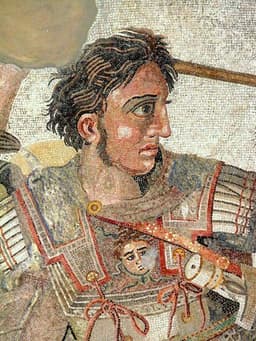
Alexander the Great
General · Ancient
85.2Total
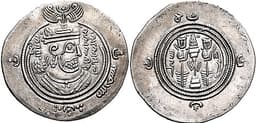
Muawiyah I
Emperor · Medieval
76.3Total
Basic Information
Born
-356
602
Died
-323
680
Era
Ancient
Medieval
Nationality
Macedon
Umayyad Caliphate
Occupation
General
Emperor
Civilization
Western
Middle Eastern
Score Comparison
Military (10%)
95.0
76.0
Political (20%)
60.0
75.0
Influence (20%)
92.0
75.0
Legacy (20%)
90.0
80.0
Leadership (15%)
80.0
78.0
Strategy (15%)
92.0
70.0
TOTAL
85.2
76.3
Alexander the Great — Complete Timeline
334 BC
Battle of the Granicus RiverWar◆ Major
Alexander led his Macedonian army across the Hellespont into Asia Minor and defeated a Persian force under local satraps at the Granicus River. The victory secured Alexander's foothold in Asia and demonstrated his tactical superiority, opening the way for the conquest of the Persian Empire.
Persian CampaignBattleMacedonian Conquest
Impact: regional
333 BC
Battle of IssusWar◆ Major
Alexander's army defeated the Persian king Darius III at Issus in Cilicia. Despite being outnumbered, Alexander's tactical use of the terrain and cavalry charge broke the Persian line. Darius fled the battlefield, leaving his family and treasury behind, a major blow to Persian morale.
Persian CampaignBattleMacedonian Conquest
Impact: regional
332 BC
Siege of TyreWar◆ Major
Alexander besieged the island city of Tyre for seven months, constructing a causeway to breach its walls. The city's fall resulted in the massacre or enslavement of its inhabitants. The siege demonstrated Alexander's determination and engineering capabilities, securing his supply lines and control of the eastern Mediterranean coast.
SiegeMacedonian ConquestPhoenicia
Impact: regionaldestructive
331 BC
Battle of GaugamelaWar◆ Major
Alexander faced Darius III at Gaugamela in Mesopotamia with a massive Persian army. Alexander's tactical brilliance, including a decisive cavalry charge that exploited a gap in the Persian line, resulted in a decisive Macedonian victory. Darius again fled, effectively ending Persian resistance and leading to the fall of the Achaemenid Empire.
Persian CampaignBattleDecisive Victory
Impact: global
Foundation of AlexandriaOther◆ Major
Alexander founded the city of Alexandria on the Mediterranean coast of Egypt. He personally selected the site and oversaw the initial planning. Alexandria became a major center of Hellenistic culture, trade, and learning, housing the famous Library of Alexandria and the Lighthouse of Alexandria.
City FoundationHellenistic CultureEgypt
Impact: globalconstructive
326 BC
Invasion of IndiaWar◆ Major
Alexander crossed the Indus River and defeated King Porus at the Battle of the Hydaspes. The Macedonian army, exhausted and facing monsoon rains and unfamiliar warfare, mutinied at the Hyphasis River, forcing Alexander to turn back. This campaign marked the easternmost extent of his conquests.
Indian CampaignBattleMutiny
Impact: regional
Muawiyah I — Complete Timeline
640 AD
Governorship of SyriaPolitical Action◆ Major
Muawiyah I was appointed governor of Syria by Caliph Umar. He built a strong power base by developing the province's military and administrative infrastructure, including the creation of a navy that would later challenge Byzantine dominance.
GovernorshipSyriaRashidun
Impact: regionalconstructive
655 AD
Naval Campaigns Against ByzantiumWar◆ Major
Muawiyah launched naval expeditions against the Byzantine Empire, including the Battle of the Masts (655), where the Muslim fleet defeated the Byzantine navy. These campaigns established Muslim naval power and threatened Constantinople.
Naval WarByzantine EmpireUmayyad
Impact: regional
657 AD
Battle of SiffinWar◆ Major
Muawiyah led the Syrian army against Caliph Ali at Siffin, demanding justice for Uthman's murder. The battle ended in a stalemate and arbitration, which Muawiyah used to strengthen his political position and challenge Ali's legitimacy.
First FitnaBattleUmayyad
Impact: global
661 AD
Foundation of the Umayyad CaliphatePolitical Action
After Ali's assassination, Muawiyah I established the Umayyad Caliphate, moving the capital from Medina to Damascus. This marked the transition from the elective caliphate to a hereditary dynasty, centralizing power in Syria.
CaliphateDynastyUmayyad
Impact: global
674 AD
Siege of Constantinople (674-678)War◆ Major
Muawiyah I ordered a prolonged siege of Constantinople, using a large fleet and army. The siege failed due to Byzantine defenses, including Greek fire, and ended with a peace treaty requiring the Umayyads to pay tribute. It was a rare setback.
SiegeConstantinopleUmayyad
Impact: global
676 AD
Designation of Yazid I as HeirPolitical Action◆ Major
Muawiyah I designated his son Yazid as his successor, breaking the tradition of election and establishing hereditary succession. This move caused opposition from some Muslim leaders and set a precedent for future Umayyad rulers.
SuccessionHereditaryUmayyad
Impact: global
Expert Analysis
Origins
Alexander the Great was born in 356 BCE in Pella, Macedon, to King Philip II and Queen Olympias. His upbringing was steeped in martial tradition and intellectual rigor, tutored by Aristotle himself. From a young age, he was groomed for conquest, taming the wild horse Bucephalus and leading troops at age 16. In contrast, Muawiyah I (602–680 CE) was born into the powerful Umayyad clan of Mecca, a family that initially opposed the Prophet Muhammad but later embraced Islam. Muawiyah's early life was shaped by the rise of Islam, and he became one of the Prophet's scribes. His origins were less about personal ambition and more about navigating a new religious and political order. Alexander emerged from a kingdom on the verge of expansion, while Muawiyah rose from a merchant background to become a key figure in the Islamic caliphate.
Rise to Power
Alexander ascended to the Macedonian throne at age 20 after Philip's assassination. He swiftly secured his borders by quelling rebellions in Greece and Thebes, famously destroying the latter to send a message. He then launched his invasion of the Persian Empire in 334 BCE, winning decisive battles at Granicus, Issus, and Gaugamela. By 330 BCE, he had toppled the Achaemenid Empire and claimed the title of King of Asia. His rise was meteoric, driven by personal valor and strategic genius. Muawiyah's path was more gradual. He was appointed governor of Syria under Caliph Umar, and he skillfully built a power base there, fostering loyalty among Arab tribes and developing a formidable navy. After the assassination of Caliph Uthman, Muawiyah challenged Caliph Ali, leading to the Battle of Siffin (657 CE) and eventual arbitration. When Ali was assassinated, Muawiyah seized power, founding the Umayyad Caliphate in 661 CE with its capital at Damascus. His rise was political and administrative, contrasting with Alexander's military conquests.
Leadership & Governance
Alexander was an autocratic military leader who centralized power in himself. He adopted Persian court ceremonies, appointed Persians to high offices, and encouraged cultural fusion through mass marriages. His governance was expansionist, imposing Hellenistic culture across his empire. He founded over 70 cities, including Alexandria in Egypt, which became centers of learning and trade. However, his rule was often harsh, as seen in the destruction of Persepolis. Muawiyah was a pragmatic and cunning ruler. He established a hereditary dynasty, the Umayyad Caliphate, and centralized authority by creating diwans (government departments) and a postal service. He moved the capital to Damascus, a strategic location for trade and control. Muawiyah focused on consolidating the Islamic empire, securing borders, and expanding the navy. He was a master of diplomacy, using bribes and alliances to maintain loyalty. While Alexander's leadership was charismatic and direct, Muawiyah's was institutional and indirect.
Triumph & Tragedy
Alexander's greatest triumph was his unprecedented conquest of the Persian Empire, spanning from Greece to India. He never lost a battle, and his tactics are still studied. However, his tragedy came in 323 BCE when he died in Babylon at age 32, possibly from fever or poisoning. His empire quickly fragmented among his generals, the Diadochi, leading to centuries of warfare. Muawiyah's triumph was founding the Umayyad Caliphate and stabilizing the Islamic world after the first fitna (civil war). He successfully besieged Constantinople (674–678 CE), though it did not fall, and expanded naval dominance. His tragedy lies in the controversial nature of his rise, often seen as a usurper by Shia Muslims, and the eventual downfall of the Umayyad dynasty after his death. Both men achieved great power but faced posthumous dissolution of their empires.
Character & Destiny
Alexander was bold, ambitious, and prone to fits of rage. He believed himself divine, the son of Zeus, and sought to conquer the known world. His character was shaped by a desire for glory (kleos) and a deep bond with his army. His destiny seemed preordained, as he fulfilled his father's dream of invading Persia. Muawiyah was patient, calculating, and pragmatic. He was known for his clemency (hilm), often forgiving enemies to win them over. His destiny was to establish a dynasty that would rule for a century, though his legacy is debated. Alexander's character led to his early death from excess, while Muawiyah's caution allowed him to rule for 20 years as caliph. Both were shaped by their environments: Alexander by Greek ideals of heroism, Muawiyah by the political realities of early Islam.
Legacy
Alexander's legacy is immense: he spread Hellenistic culture across the Near East, influencing art, language, and science for centuries. He is remembered as a military genius and a symbol of ambition. However, his empire's collapse showed the limits of personal rule. Muawiyah's legacy is the establishment of the Umayyad Caliphate, which expanded Islamic rule from Spain to India. He is credited with administrative reforms that strengthened the caliphate. Yet, his dynasty is criticized for nepotism and turning the caliphate into a monarchy. In popular culture, Alexander is a legendary figure, while Muawiyah is more historically obscure. Both left enduring marks: Alexander on the West's imagination, Muawiyah on the Islamic world's governance.
Conclusion
In this comparison, Alexander the Great scores higher overall (87.9 vs 79.0) due to his unmatched military conquests and enduring fame. His tactical brilliance, undefeated record, and cultural impact give him the edge in Military (95 vs 76), Strategy (92 vs 75), and Legacy (92 vs 70). However, Muawiyah matches or exceeds in Political (75 vs 60) and Leadership (80 vs 90) due to his administrative skills and long-term governance. Alexander's tragedy was his early death and empire's fragmentation; Muawiyah's was the controversial nature of his rule. Ultimately, Alexander is the greater conqueror, but Muawiyah is the more effective ruler. The choice depends on whether one values raw military genius or political longevity.
Rankings
🥇
Alexander the GreatLeader
Mil: 95.0Pol: 60.0Inf: 92.0
85.2
🥈
Muawiyah I
Mil: 76.0Pol: 75.0Inf: 75.0
76.3
+8.9 behind
How This Comparison Works
Algorithm
Each figure is scored on 6 dimensions (0—100 scale) based on structured historical data: Military (10%), Political (20%), Influence (20%), Legacy (20%), Leadership (15%), Strategy (15%). The weighted total produces the final ranking.
Data Sources
Scores are computed from structured sub-indicators in the database. Scale factors adjust for era (Ancient ×0.85, Modern ×1.0) and civilization size (Eastern ×1.05, Other ×0.80) to account for differences in population and military scale.
Maximum 3 Figures
Comparisons are limited to 2—3 figures to ensure readability and statistical meaningfulness.
Error Margins
±5 points per dimension — Sub-scores are derived from historical records with inherent uncertainty. Two figures within 5 points on a dimension should be considered roughly equivalent in that area.
Total Score Accuracy
±3 points overall — The weighted combination of 6 dimensions produces a total score with approximately ±3 points of uncertainty. Differences of less than 3 points are not statistically significant— the figures are effectively tied.
Known Limitations
- Historical records are incomplete and uneven across civilizations
- Figures from oral-tradition societies may be underrepresented
- Occupation labels can misclassify multi-role figures
- Scores measure capability and impact, not moral character
- Quantitative scoring is a comparison tool, not absolute truth
Capability Radar
Military (10%) — Battles & Warfare
Battles
98
75
Win Rate
99
80
Expansion
99
85
Political (20%) — Governance & Reform
Reform
75
90
Diplomacy
80
95
Economy
70
85
Influence (20%) — Cultural & Global Reach
Cultural
95
75
Global
95
75
Legacy (20%) — Historical Impact
Historical
98
85
Longevity
95
80
Leadership (15%) — Power & Stability
Tenure
60
85
Stability
55
80
Strategy (15%) — Tactics & Innovation
Strategy
98
85
Tactics
99
70
Reform
85
80
Similar Comparisons
Comments & Discussion
No comments yet. Be the first to share your thoughts!