Loading...
Alexander the Great vs Marouf al-Bakhit
Alexander the Great leads by 43.6 pts · 2 figures compared
…
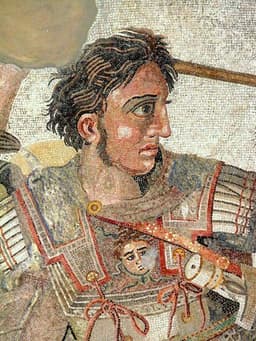
Alexander the Great
General · Ancient
85.2Total
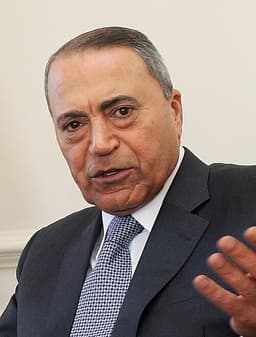
Marouf al-Bakhit
General · Modern
41.6Total
Basic Information
Born
-356
1947
Died
-323
—
Era
Ancient
Modern
Nationality
Macedon
Jordan
Occupation
General
General
Civilization
Western
Middle Eastern
Score Comparison
Military (10%)
95.0
10.2
Political (20%)
60.0
61.3
Influence (20%)
92.0
48.6
Legacy (20%)
90.0
38.3
Leadership (15%)
80.0
40.0
Strategy (15%)
92.0
36.8
TOTAL
85.2
41.6
Alexander the Great — Complete Timeline
334 BC
Battle of the Granicus RiverWar◆ Major
Alexander led his Macedonian army across the Hellespont into Asia Minor and defeated a Persian force under local satraps at the Granicus River. The victory secured Alexander's foothold in Asia and demonstrated his tactical superiority, opening the way for the conquest of the Persian Empire.
Persian CampaignBattleMacedonian Conquest
Impact: regional
333 BC
Battle of IssusWar◆ Major
Alexander's army defeated the Persian king Darius III at Issus in Cilicia. Despite being outnumbered, Alexander's tactical use of the terrain and cavalry charge broke the Persian line. Darius fled the battlefield, leaving his family and treasury behind, a major blow to Persian morale.
Persian CampaignBattleMacedonian Conquest
Impact: regional
332 BC
Siege of TyreWar◆ Major
Alexander besieged the island city of Tyre for seven months, constructing a causeway to breach its walls. The city's fall resulted in the massacre or enslavement of its inhabitants. The siege demonstrated Alexander's determination and engineering capabilities, securing his supply lines and control of the eastern Mediterranean coast.
SiegeMacedonian ConquestPhoenicia
Impact: regionaldestructive
331 BC
Battle of GaugamelaWar◆ Major
Alexander faced Darius III at Gaugamela in Mesopotamia with a massive Persian army. Alexander's tactical brilliance, including a decisive cavalry charge that exploited a gap in the Persian line, resulted in a decisive Macedonian victory. Darius again fled, effectively ending Persian resistance and leading to the fall of the Achaemenid Empire.
Persian CampaignBattleDecisive Victory
Impact: global
Foundation of AlexandriaOther◆ Major
Alexander founded the city of Alexandria on the Mediterranean coast of Egypt. He personally selected the site and oversaw the initial planning. Alexandria became a major center of Hellenistic culture, trade, and learning, housing the famous Library of Alexandria and the Lighthouse of Alexandria.
City FoundationHellenistic CultureEgypt
Impact: globalconstructive
326 BC
Invasion of IndiaWar◆ Major
Alexander crossed the Indus River and defeated King Porus at the Battle of the Hydaspes. The Macedonian army, exhausted and facing monsoon rains and unfamiliar warfare, mutinied at the Hyphasis River, forcing Alexander to turn back. This campaign marked the easternmost extent of his conquests.
Indian CampaignBattleMutiny
Impact: regional
Marouf al-Bakhit — Complete Timeline
2005 AD
Appointed Prime Minister of JordanPolitical Action◆ Major
King Abdullah II appointed Marouf al-Bakhit as Prime Minister of Jordan in November 2005, following the 2005 Amman bombings. Al-Bakhit, a former intelligence chief, was tasked with restoring security and stability.
JordanPrime MinisterAppointment
Impact: national
2007 AD
Resigned as Prime MinisterPolitical Action
Marouf al-Bakhit resigned as Prime Minister of Jordan in November 2007 after parliamentary elections. His resignation followed criticism of economic policies and political reforms.
JordanPrime MinisterResignation
Impact: national
2011 AD
Appointed Prime Minister for Second TermPolitical Action◆ Major
King Abdullah II appointed Marouf al-Bakhit as Prime Minister again in February 2011, during the Arab Spring protests. Al-Bakhit was tasked with implementing political reforms to address public demands.
JordanArab SpringPrime Minister
Impact: national
Resigned as Prime Minister for Second TermPolitical Action
Marouf al-Bakhit resigned as Prime Minister in October 2011, after failing to satisfy protesters' demands for faster political reforms. His resignation marked the end of his second term.
JordanArab SpringResignation
Impact: national
Expert Analysis
Alexander the Great vs Marouf al-Bakhit
# The Conqueror and the Caretaker
In the autumn of 331 BCE, a young Macedonian king stood before the shattered remnants of the Persian Empire, having just crushed Darius III at Gaugamela. He was twenty-five years old, undefeated, and the world lay at his feet. Two thousand three hundred and forty years later, in the winter of 2005, a Jordanian general named Marouf al-Bakhit received a phone call from his king, Abdullah II, asking him to form a government. Neither man could have known that history would one day compare them—but in their stark differences lies a profound lesson about the nature of power, ambition, and the eras that shape them.
Origins
Alexander was born into a world of bronze and blood, the son of King Philip II of Macedon, a ruthless conqueror who had unified the fractious Greek city-states under his heel. His mother, Olympias, was a fierce, mystical woman who whispered to him that he was descended from Achilles and Heracles. From boyhood, Alexander was steeped in Homeric epic, tutored by Aristotle himself, and trained to believe that the only measure of a man was glory won through conquest. The world he inherited was one of constant war, where kings led armies from the front and empires were built on the bones of the vanquished.
Marouf al-Bakhit was born in 1947 in the small town of Mahis, Jordan, into a world of borders already drawn and rules already written. His father was a farmer; his family had no royal blood, no divine ancestry. He grew up in a kingdom that had been carved out by British colonial powers, a fragile state surrounded by larger, more powerful neighbors. The Jordan of his youth was a place where survival depended not on conquest but on negotiation, on balancing the demands of tribal loyalties, Palestinian refugees, and Western allies. Al-Bakhit joined the military, rose through the ranks of intelligence, and learned that power in the modern world was not seized on the battlefield but earned through loyalty, discretion, and the careful management of crises.
Rise to Power
Alexander’s path was forged in fire. At sixteen, he led his first cavalry charge against the Thracian tribes. At eighteen, he commanded the left wing at the Battle of Chaeronea, where his father crushed the last independent Greek resistance. When Philip was assassinated in 336 BCE, Alexander, just twenty, moved with terrifying speed—executing rivals, crushing rebellions in Thebes and Athens, and then turning east with an army of forty thousand men. His rise was a story of audacity: crossing the Hellespont, cutting the Gordian Knot, and defeating a Persian army three times his size at Issus in 333 BCE. Every victory was a gamble; every gamble paid off.
Al-Bakhit’s rise was quieter, more bureaucratic. He served as director of the General Intelligence Department, Jordan’s main intelligence agency, from 1999 to 2005. He was known as a loyal, efficient administrator, not a visionary. When the 2005 Amman bombings—coordinated al-Qaeda attacks on three hotels that killed sixty people—shook the kingdom, King Abdullah needed a steady hand. Al-Bakhit was appointed Prime Minister in November 2005, not to conquer, but to restore calm. His mandate was not glory, but stability.
Leadership & Governance
Alexander led from the front. At the Battle of Hydaspes in 326 BCE, he personally charged across a swollen river into the teeth of Indian war elephants, nearly dying when a spear pierced his lung. He shared the hardships of his men, refused water when they were thirsty, and inspired loyalty so fierce that his veterans followed him across three continents. Yet his political wisdom lagged far behind his military genius—scored at 65.0 compared to his military rating of 96.0. He tried to fuse Macedonians and Persians into a single empire, taking a Persian wife and promoting Persian nobles, but his own generals resented it. He never built institutions; he built only his own legend.
Al-Bakhit governed from behind a desk. As Prime Minister, his job was to manage a fractious parliament, implement economic reforms, and keep Jordan stable amid regional turmoil. During his first term (2005–2007), he focused on security and anti-corruption measures. His second term, beginning in February 2011, was a direct response to the Arab Spring protests sweeping the Middle East. King Abdullah appointed him specifically to quell dissent—a task al-Bakhit approached with cautious, incremental reforms. He offered limited political liberalization, but protesters demanded faster change. His political score of 63.0 is remarkably close to Alexander’s 65.0, but where Alexander’s politics were grandiose and transformative, al-Bakhit’s were defensive and managerial.
Triumph & Tragedy
Alexander’s greatest moment was the conquest of the Persian Empire, an achievement unmatched in ancient history. By the time he reached the Indus River in 326 BCE, he had marched over eleven thousand miles, founded over seventy cities, and united the known world under a single rule. But his tragedy was just as monumental: his soldiers, exhausted and homesick, mutinied at the Hyphasis River, refusing to go further. He wept in his tent. He returned to Babylon, where he died at thirty-two, possibly poisoned, possibly of fever, with no clear heir. His empire collapsed within a generation.
Al-Bakhit’s triumphs were modest by comparison. He successfully navigated Jordan through the immediate aftermath of the 2005 bombings and the early shocks of the Arab Spring. His tragedy was that he could never satisfy anyone: reformers saw him as a tool of the monarchy; conservatives saw him as too weak. He resigned in November 2007 after parliamentary elections, and again in October 2011, after failing to meet protesters’ demands. His legacy is one of survival, not conquest.
Character & Destiny
Alexander was driven by an insatiable hunger—for glory, for knowledge, for the edge of the world. Plutarch records that he wept when there were no more worlds to conquer. He was impulsive, generous, cruel, and visionary, a man who believed he was destined for greatness and bent history to his will. His character was his destiny: he could not stop, could not consolidate, could not rest.
Al-Bakhit was driven by duty. He was a servant of the state, not its master. His character was shaped by the constraints of his era—a time when even a general must bow to diplomats, constitutions, and television cameras. He could not march an army across borders; he could only negotiate. His destiny was to be a caretaker in a storm, not a storm himself.
Legacy
Alexander’s legacy is immortal. His military tactics are still studied at Sandhurst and West Point. He spread Hellenistic culture across Asia, shaping the course of Western civilization. Cities named Alexandria dot the map from Egypt to Afghanistan. He is remembered as “the Great”—a title that speaks to his enduring power over the imagination.
Al-Bakhit’s legacy is far more modest. He is remembered, if at all, as a competent administrator who served his king during difficult times. His name appears in footnotes of Jordanian political history, a placeholder between crises. He was a general who never won a battle, a leader who never changed the world.
Conclusion
What drove these two men so far apart? Not talent—both were capable. Not ambition—both had it. What separated them was the shape of their eras. Alexander lived in a world without borders, where a single man with an army could redraw the map. Al-Bakhit lived in a world of nations, alliances, and limits, where even a king must answer to the United Nations. Alexander’s story is one of infinite possibility; al-Bakhit’s is one of careful constraint. They remind us that greatness is not just a matter of character, but of the stage on which that character is allowed to perform. And perhaps, in the end, that is the most humbling lesson history has to offer.
Rankings
🥇
Alexander the GreatLeader
Mil: 95.0Pol: 60.0Inf: 92.0
85.2
🥈
Marouf al-Bakhit
Mil: 10.2Pol: 61.3Inf: 48.6
41.6
+43.6 behind
How This Comparison Works
Algorithm
Each figure is scored on 6 dimensions (0—100 scale) based on structured historical data: Military (10%), Political (20%), Influence (20%), Legacy (20%), Leadership (15%), Strategy (15%). The weighted total produces the final ranking.
Data Sources
Scores are computed from structured sub-indicators in the database. Scale factors adjust for era (Ancient ×0.85, Modern ×1.0) and civilization size (Eastern ×1.05, Other ×0.80) to account for differences in population and military scale.
Maximum 3 Figures
Comparisons are limited to 2—3 figures to ensure readability and statistical meaningfulness.
Error Margins
±5 points per dimension — Sub-scores are derived from historical records with inherent uncertainty. Two figures within 5 points on a dimension should be considered roughly equivalent in that area.
Total Score Accuracy
±3 points overall — The weighted combination of 6 dimensions produces a total score with approximately ±3 points of uncertainty. Differences of less than 3 points are not statistically significant— the figures are effectively tied.
Known Limitations
- Historical records are incomplete and uneven across civilizations
- Figures from oral-tradition societies may be underrepresented
- Occupation labels can misclassify multi-role figures
- Scores measure capability and impact, not moral character
- Quantitative scoring is a comparison tool, not absolute truth
Capability Radar
Military (10%) — Battles & Warfare
Battles
98
5
Win Rate
99
5
Expansion
99
5
Political (20%) — Governance & Reform
Reform
75
30
Diplomacy
80
40
Economy
70
30
Influence (20%) — Cultural & Global Reach
Cultural
95
10
Global
95
10
Legacy (20%) — Historical Impact
Historical
98
10
Longevity
95
10
Leadership (15%) — Power & Stability
Tenure
60
40
Stability
55
35
Strategy (15%) — Tactics & Innovation
Strategy
98
10
Tactics
99
10
Reform
85
10
Similar Comparisons
Comments & Discussion
亚历山大的矛6/16/2026
军事历史爱好者。你们忽略了一个关键区别:亚历山大在33岁征服了已知世界,而巴希特在65岁当了两年首相。亚历山大面对的是波斯帝国的铁骑和印度战象,巴希特面对的是议会辩论和预算案。用"统治者"这个词本身就是在混淆概念——一个是战场上浴血屠城的征服者,一个是办公室里的行政官员。这比较就像把狮子与家猫放在一起比较捕猎能力。
MacedonianGhost6/16/2026
Data skeptic here. The comparison fails on its face. Alexander commanded armies of 50,000 across thousands of miles; Bakhit managed a cabinet of 20 ministers. But let's get specific: Alexander's logistics at the Hydaspes involved building a river fleet in 30 days—no Jordanian PM ever solved anything that complex. Bakhit's GDP growth was 5.8% in 2005-2006, while Alexander's conquests destroyed entire economies. Different metrics, different eras, different everything.
大漠孤烟6/16/2026
历史修正主义者。这比较根本就是文化霸权的体现。为什么拿一个欧洲人对一个阿拉伯人?亚历山大是侵略者,烧了波斯波利斯,屠了提尔城。巴希特是在维护国家稳定,对抗的是恐怖主义和内部动荡。你们这些西方学者就喜欢把暴力征服者捧成英雄,而把发展稳定者贬为"管理者"。亚历山大的"辉煌"建立在数十万人的鲜血上,而巴希特的成就建立在遏制冲突的谈判桌上。
Chronicler78126/16/2026
Classics scholar here. Alexander wasn't just a conqueror; he was a product of Homeric conditioning. At Issus, he charged into Persian lines personally, risking death—something al-Bakhit never did as a PM. But here's the real contrast: Alexander literally believed he was Achilles reborn, while Bakhit just followed constitutional procedure. One changed history through myth; the other changed nothing through bureaucracy. Stop romanticizing the man who couldn't accept mortality.
BloodAndSandals6/16/2026
Military historian here. The real issue isn't personality but scale. Alexander fought 4 major pitched battles (Granicus, Issus, Gaugamela, Hydaspes) and dozens of sieges, all while sustaining an army across 2 million square miles. Bakhit's biggest military operation was a crackdown on protests in 2011—violent, yes, but not the same galaxy. Alexander's Battle of Gaugamela featured 200,000 total combatants; Bakhit never commanded 200 people in combat. Let's not pretend they belong in the same conv