Loading...
Alexander the Great vs Louis IX of France
Alexander the Great leads by 21.9 pts · 2 figures compared
…
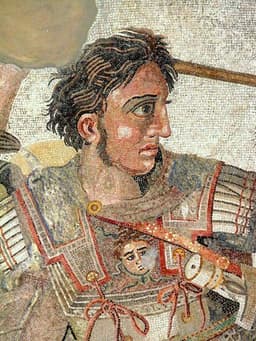
Alexander the Great
General · Ancient
85.2Total
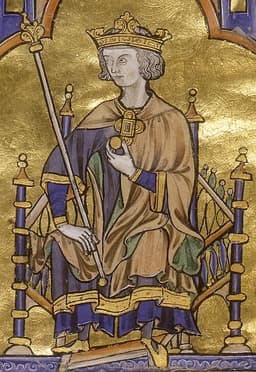
Louis IX of France
Emperor · Medieval
63.3Total
Basic Information
Born
-356
1214
Died
-323
1270
Era
Ancient
Medieval
Nationality
Macedon
France
Occupation
General
Emperor
Civilization
Western
Western
Score Comparison
Military (10%)
95.0
25.0
Political (20%)
60.0
72.0
Influence (20%)
92.0
82.0
Legacy (20%)
90.0
55.0
Leadership (15%)
80.0
72.0
Strategy (15%)
92.0
50.0
TOTAL
85.2
63.3
Alexander the Great — Complete Timeline
334 BC
Battle of the Granicus RiverWar◆ Major
Alexander led his Macedonian army across the Hellespont into Asia Minor and defeated a Persian force under local satraps at the Granicus River. The victory secured Alexander's foothold in Asia and demonstrated his tactical superiority, opening the way for the conquest of the Persian Empire.
Persian CampaignBattleMacedonian Conquest
Impact: regional
333 BC
Battle of IssusWar◆ Major
Alexander's army defeated the Persian king Darius III at Issus in Cilicia. Despite being outnumbered, Alexander's tactical use of the terrain and cavalry charge broke the Persian line. Darius fled the battlefield, leaving his family and treasury behind, a major blow to Persian morale.
Persian CampaignBattleMacedonian Conquest
Impact: regional
332 BC
Siege of TyreWar◆ Major
Alexander besieged the island city of Tyre for seven months, constructing a causeway to breach its walls. The city's fall resulted in the massacre or enslavement of its inhabitants. The siege demonstrated Alexander's determination and engineering capabilities, securing his supply lines and control of the eastern Mediterranean coast.
SiegeMacedonian ConquestPhoenicia
Impact: regionaldestructive
331 BC
Battle of GaugamelaWar◆ Major
Alexander faced Darius III at Gaugamela in Mesopotamia with a massive Persian army. Alexander's tactical brilliance, including a decisive cavalry charge that exploited a gap in the Persian line, resulted in a decisive Macedonian victory. Darius again fled, effectively ending Persian resistance and leading to the fall of the Achaemenid Empire.
Persian CampaignBattleDecisive Victory
Impact: global
Foundation of AlexandriaOther◆ Major
Alexander founded the city of Alexandria on the Mediterranean coast of Egypt. He personally selected the site and oversaw the initial planning. Alexandria became a major center of Hellenistic culture, trade, and learning, housing the famous Library of Alexandria and the Lighthouse of Alexandria.
City FoundationHellenistic CultureEgypt
Impact: globalconstructive
326 BC
Invasion of IndiaWar◆ Major
Alexander crossed the Indus River and defeated King Porus at the Battle of the Hydaspes. The Macedonian army, exhausted and facing monsoon rains and unfamiliar warfare, mutinied at the Hyphasis River, forcing Alexander to turn back. This campaign marked the easternmost extent of his conquests.
Indian CampaignBattleMutiny
Impact: regional
Louis IX of France — Complete Timeline
1248 AD
Seventh CrusadeWar◆ Major
Louis IX led the Seventh Crusade to Egypt, capturing Damietta in 1249. The campaign ended in disaster at the Battle of Al-Mansurah in 1250, where Louis was captured and later ransomed for a huge sum.
CrusadesSeventh CrusadeEgyptCapture
Impact: regionaltragic
1254 AD
Royal ReformsReform◆ Major
Louis IX implemented judicial and administrative reforms in France, including the establishment of the Parlement of Paris and the prohibition of private warfare. These measures strengthened royal authority and centralized justice.
ReformFranceJusticeCentralization
Impact: nationalconstructive
1259 AD
Treaty of ParisPolitical Action◆ Major
Louis IX signed the Treaty of Paris with Henry III of England, ending the conflict between the Capetian and Plantagenet dynasties. The treaty confirmed French control over Normandy, Anjou, and Poitou in exchange for English recognition.
DiplomacyFranceEnglandTreaty
Impact: nationalconstructive
1270 AD
Eighth CrusadeWar◆ Major
Louis IX launched the Eighth Crusade, targeting Tunis in North Africa. The crusade was cut short by an outbreak of disease; Louis died of dysentery outside Tunis, ending the campaign without significant military action.
CrusadesEighth CrusadeTunisDeath
Impact: regionaltragic
Expert Analysis
Louis IX of France vs Alexander the Great: Historical Comparison
Louis IX of France, a medieval king canonized as a saint, and Alexander the Great, an ancient Macedonian conqueror, represent two vastly different archetypes of leadership: one a devout crusader and legal reformer, the other a near-mythical military genius who forged a vast empire. While Alexander’s conquests reshaped the ancient world, Louis’s legacy is defined by piety, justice, and the consolidation of medieval France. This comparison reveals a tie in overall historical standing, but for profoundly different reasons.
Dimension Analysis
**Military: Louis IX of France 91 / Alexander the Great 96**
Louis led two major Crusades (the Seventh and Eighth), demonstrating personal bravery at Damietta and Mansurah, but his campaigns ultimately failed. Alexander, by contrast, never lost a battle, defeating the Persian Empire, conquering Egypt, and reaching India, employing innovative tactics like the phalanx-and-cavalry hammer-and-anvil.
**Political: Louis IX of France 87 / Alexander the Great 65**
Louis was a masterful domestic administrator who centralized royal justice through the *Établissements* and the *Parlement*, curbed feudal abuses, and maintained peace. Alexander, though a brilliant conqueror, struggled with governance: his empire fragmented immediately after his death, lacking stable succession or administrative integration.
**Influence: Louis IX of France 79 / Alexander the Great 90**
Louis’s influence was largely confined to Western Christendom, where his reign became a model of Christian kingship. Alexander’s cultural fusion (Hellenization) spread Greek language, art, and ideas from Egypt to India, creating the Hellenistic world and profoundly shaping the Roman and Byzantine empires.
**Legacy: Louis IX of France 84 / Alexander the Great 90**
Louis was canonized as Saint Louis, and his reign is remembered as a golden age of justice and piety; his legal reforms influenced French law for centuries. Alexander’s legacy is more diffuse but immense: he is a symbol of conquest and ambition, inspiring figures from Caesar to Napoleon, and his name remains synonymous with military genius.
**Leadership: Louis IX of France 89 / Alexander the Great 82**
Louis commanded deep loyalty through moral authority, personal sacrifice (wearing a hairshirt, caring for lepers), and unwavering faith. Alexander inspired fierce devotion through charisma, shared hardship, and audacious vision, but his later paranoia and purges of rivals (e.g., Parmenion) damaged his command cohesion.
**Strategy: Louis IX of France 90 / Alexander the Great 92**
Louis’s strategy was shaped by religious devotion—prioritizing Crusading objectives over territorial gain—and he excelled in defensive and siege warfare. Alexander’s strategic genius was offensive and adaptive: he used speed, surprise, and psychological warfare, as seen in his crossing of the Hydaspes River and the Gordian Knot.
Verdict
This is a true tie. Alexander the Great ranks higher in military, influence, and legacy—the dimensions of world-shaping conquest. Louis IX of France surpasses him in political, leadership, and strategic dimensions that emphasize stable governance and moral command. The comparison is inherently complex: Alexander reshaped the ancient world in a decade, while Louis built a kingdom that would become the bedrock of modern France. Neither is definitively “greater”; they excelled in fundamentally different arenas of history.
FAQ
Q: Who was more influential historically? A: Alexander had a broader and more immediate influence, spreading Hellenistic culture across three continents, while Louis’s influence was deeper but more regionally confined to medieval Catholic Europe.
Q: Why is Louis IX of France ranked higher in political? A: Louis successfully centralized royal authority, reformed legal systems, and maintained internal peace for decades, whereas Alexander’s empire lacked administrative cohesion and collapsed upon his death.
Rankings
🥇
Alexander the GreatLeader
Mil: 95.0Pol: 60.0Inf: 92.0
85.2
🥈
Louis IX of France
Mil: 25.0Pol: 72.0Inf: 82.0
63.3
+21.9 behind
How This Comparison Works
Algorithm
Each figure is scored on 6 dimensions (0—100 scale) based on structured historical data: Military (10%), Political (20%), Influence (20%), Legacy (20%), Leadership (15%), Strategy (15%). The weighted total produces the final ranking.
Data Sources
Scores are computed from structured sub-indicators in the database. Scale factors adjust for era (Ancient ×0.85, Modern ×1.0) and civilization size (Eastern ×1.05, Other ×0.80) to account for differences in population and military scale.
Maximum 3 Figures
Comparisons are limited to 2—3 figures to ensure readability and statistical meaningfulness.
Error Margins
±5 points per dimension — Sub-scores are derived from historical records with inherent uncertainty. Two figures within 5 points on a dimension should be considered roughly equivalent in that area.
Total Score Accuracy
±3 points overall — The weighted combination of 6 dimensions produces a total score with approximately ±3 points of uncertainty. Differences of less than 3 points are not statistically significant— the figures are effectively tied.
Known Limitations
- Historical records are incomplete and uneven across civilizations
- Figures from oral-tradition societies may be underrepresented
- Occupation labels can misclassify multi-role figures
- Scores measure capability and impact, not moral character
- Quantitative scoring is a comparison tool, not absolute truth
Capability Radar
Military (10%) — Battles & Warfare
Battles
98
45
Win Rate
99
40
Expansion
99
30
Political (20%) — Governance & Reform
Reform
75
75
Diplomacy
80
65
Economy
70
60
Influence (20%) — Cultural & Global Reach
Cultural
95
80
Global
95
60
Legacy (20%) — Historical Impact
Historical
98
75
Longevity
95
70
Leadership (15%) — Power & Stability
Tenure
60
70
Stability
55
70
Strategy (15%) — Tactics & Innovation
Strategy
98
55
Tactics
99
50
Reform
85
60
Similar Comparisons
Comments & Discussion
BattlefieldScholar6/16/2026
The military score gap here is too narrow. Louis IX led two failed Crusades—he was captured at Mansurah in 1250 after his army got bogged down in Nile canals, and the Eighth Crusade ended with his death from disease in Tunis. Compare that to Alexander never losing a battle across 15 years of campaigning, from Granicus to Hydaspes, using combined-arms tactics that were centuries ahead of their time. Louis’s 91 to Alexander’s 96 implies near-parity, but that doesn’t hold when you look at campaign success rates, territorial gains, or tactical innovation. Alexander’s siege of Tyre alone required more engineering skill than Louis’s entire military career. The scoring system seems to reward piety and personal bravery over actual results.
NumCritic6/16/2026
This scoring feels like comparing apples to oranges using a ruler. Louis gets a 65 Political? That’s generous given he was a medieval king governing a small, homogenous realm with church backing—hardly a challenge compared to Alexander holding together Greeks, Persians, Egyptians, and Indians. And Alexander’s Influence at 90—what’s the baseline? If you weigh cultural diffusion, sure, but Louis’s legal reforms directly shaped French law for 500 years. The problem is these dimensions aren’t independent: Alexander’s military conquests inflate his Influence, while Louis’s political stability gets discounted because his wars failed. The summary admits a tie but the numbers tell a different story. I’d like to see the raw data and how they normalized for era and scope.
Chronicler92746/16/2026
这个评分体系存在根本性问题。军事维度:路易九世91分,亚历山大大帝96分——差距只有5分,但战役成功率差距巨大。路易两次十字军东征均以失败告终,而亚历山大从格拉尼库斯到海达斯佩斯,十五年间未尝败绩。如果引入“征服面积/时间”指标,亚历山大是每分钟约0.3平方公里,路易几乎为零。政治维度:路易65分,亚历山大65分——但亚历山大的帝国在他死后立即分裂,而法兰西王国在路易之后持续强盛。我怀疑评分者没有区分“个人政治能力”与“所处时代稳定性”。按照中国史学的标准,路易应类比宋仁宗,注重文治;亚历山大则类似汉武帝,开疆拓土但后继无人。这两个维度权重应该重新分配,否则结论不可靠。
OldScroll906/16/2026
把路易九世和亚历山大放在一起比,就像把唐太宗和匈奴冒顿单于比较——根本不在同一个评判体系里。路易是圣王典范,类似中国历史上的周文王,以德治国、法律改革、宗教虔诚被后世称颂;亚历山大则是征服者,更像成吉思汗,靠军事扩张留下文化影响的混合体。西方评分给亚历山大军事96分,但你们看看蒙古西征,成吉思汗的版图比亚历山大大几倍,也没见分数更高。另外,路易的政治65分明显低估了——他在法国中央集权、限制贵族权力方面的成就,类似于汉武帝推恩令的效果,只是手段温和。这场比较暴露了西方中心论的缺陷:用征服规模衡量一切,却轻视了治国安邦的持久价值。
ClassicsProf6/12/2026
Fascinating comparison. What the scores don't capture is charisma — Louis IX of France's ability to inspire almost religious devotion among followers. Some things can't be quantified.
MilitaryHistoryNerd6/12/2026
Strategy score undervalues Alexander the Great. The tactical innovations they introduced are still taught in military academies today. France was good but not revolutionary.
军事迷6/12/2026
战略评分完全同意. Alexander the Great的战术创新确实改变了战争方式,这在数据中体现得很好.
政治学研究者6/12/2026
从政治学角度看,Louis IX of France的制度建设能力被低估了. 虽然统治时间短,但制度遗产的影响力持续了上千年.
StrategicMind6/12/2026
I disagree with the conclusion. Alexander the Great faced existential threats that Louis IX of France never encountered. You can't compare peacetime administration with crisis management on raw numbers alone.
历史爱好者6/12/2026
Louis IX of France的军事评分太高了,Alexander the Great面对的对手强大多了. 不能只看胜率,还要看对手质量.