Loading...
Alexander the Great vs Hong Taiji
Alexander the Great leads by 6.9 pts · 2 figures compared
…
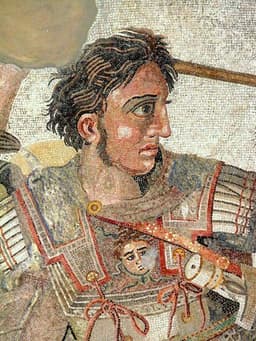
Alexander the Great
General · Ancient
85.2Total
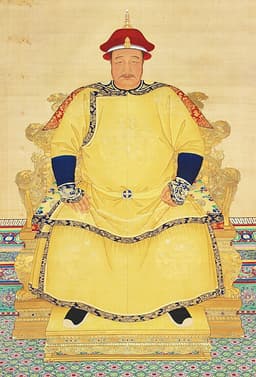
Hong Taiji
Emperor · Modern
78.3Total
Basic Information
Born
-356
1592
Died
-323
1643
Era
Ancient
Modern
Nationality
Macedon
China
Occupation
General
Emperor
Civilization
Western
Eastern
Score Comparison
Military (10%)
95.0
85.0
Political (20%)
60.0
82.0
Influence (20%)
92.0
88.0
Legacy (20%)
90.0
65.0
Leadership (15%)
80.0
78.0
Strategy (15%)
92.0
76.0
TOTAL
85.2
78.3
Alexander the Great — Complete Timeline
334 BC
Battle of the Granicus RiverWar◆ Major
Alexander led his Macedonian army across the Hellespont into Asia Minor and defeated a Persian force under local satraps at the Granicus River. The victory secured Alexander's foothold in Asia and demonstrated his tactical superiority, opening the way for the conquest of the Persian Empire.
Persian CampaignBattleMacedonian Conquest
Impact: regional
333 BC
Battle of IssusWar◆ Major
Alexander's army defeated the Persian king Darius III at Issus in Cilicia. Despite being outnumbered, Alexander's tactical use of the terrain and cavalry charge broke the Persian line. Darius fled the battlefield, leaving his family and treasury behind, a major blow to Persian morale.
Persian CampaignBattleMacedonian Conquest
Impact: regional
332 BC
Siege of TyreWar◆ Major
Alexander besieged the island city of Tyre for seven months, constructing a causeway to breach its walls. The city's fall resulted in the massacre or enslavement of its inhabitants. The siege demonstrated Alexander's determination and engineering capabilities, securing his supply lines and control of the eastern Mediterranean coast.
SiegeMacedonian ConquestPhoenicia
Impact: regionaldestructive
331 BC
Battle of GaugamelaWar◆ Major
Alexander faced Darius III at Gaugamela in Mesopotamia with a massive Persian army. Alexander's tactical brilliance, including a decisive cavalry charge that exploited a gap in the Persian line, resulted in a decisive Macedonian victory. Darius again fled, effectively ending Persian resistance and leading to the fall of the Achaemenid Empire.
Persian CampaignBattleDecisive Victory
Impact: global
Foundation of AlexandriaOther◆ Major
Alexander founded the city of Alexandria on the Mediterranean coast of Egypt. He personally selected the site and oversaw the initial planning. Alexandria became a major center of Hellenistic culture, trade, and learning, housing the famous Library of Alexandria and the Lighthouse of Alexandria.
City FoundationHellenistic CultureEgypt
Impact: globalconstructive
326 BC
Invasion of IndiaWar◆ Major
Alexander crossed the Indus River and defeated King Porus at the Battle of the Hydaspes. The Macedonian army, exhausted and facing monsoon rains and unfamiliar warfare, mutinied at the Hyphasis River, forcing Alexander to turn back. This campaign marked the easternmost extent of his conquests.
Indian CampaignBattleMutiny
Impact: regional
Hong Taiji — Complete Timeline
1631 AD
Adoption of Chinese-style governmentReform◆ Major
Hong Taiji established a Chinese-style bureaucracy, including the Six Ministries and a Hanlin Academy. He also introduced the civil service examination system for Han Chinese, integrating Confucian governance into the Qing state.
Government reformConfucian administrationSinification
Impact: regionalconstructive
1635 AD
Creation of the Eight Banners systemReform◆ Major
Hong Taiji reorganized the Eight Banners military system, incorporating Mongol and Han Chinese forces into separate banners. This created a multi-ethnic military structure that became the backbone of Qing power.
Military reformEight BannersMulti-ethnic army
Impact: regionalconstructive
Renaming of the Jurchen to ManchuPolitical Action◆ Major
Hong Taiji issued an edict renaming the Jurchen people as Manchu. This was part of his effort to create a unified identity for the various tribes under his rule and distance them from the historical Jurchen label.
Ethnic identityManchuJurchen
Impact: regionalconstructive
1636 AD
Proclamation of the Qing dynastyPolitical Action◆ Major
Hong Taiji declared the establishment of the Qing dynasty, replacing the Later Jin name. He adopted the Chinese imperial title and created a dual administrative system combining Manchu and Chinese institutions.
Dynasty foundingImperial titleQing dynasty
Impact: regionalconstructive
1640 AD
Conquest of the Ming Liaodong regionWar◆ Major
Hong Taiji's forces captured key Ming cities in Liaodong, including Jinzhou and Songshan. These victories secured Qing control over the strategic Liaoning corridor and weakened Ming defenses in the northeast.
Territorial expansionMing-Qing WarLiaodong
Impact: regional
Expert Analysis
Origins
**Alexander the Great** (356–323 BCE) was born in Pella, Macedonia, to King Philip II and Queen Olympias. He was tutored by Aristotle, instilling in him a love for Greek culture and philosophy. His father had already unified Greece and built a formidable army, giving Alexander a strong foundation for conquest. In contrast, **Hong Taiji** (1592–1643) was born into the Jurchen (Manchu) tribal confederation, the eighth son of Nurhaci. The Jurchen were a semi-nomadic people in what is now northeastern China, initially fragmented and under Ming influence. Hong Taiji rose through a system of tribal politics and military prowess, with no formal education comparable to Alexander's. His origins were in a harsh, competitive environment where survival depended on strategic alliances and warfare.
Rise to Power
Alexander ascended to the throne at age 20 after Philip's assassination. He quickly consolidated power by crushing internal revolts and securing Greek allegiance. His rise was swift and decisive, leveraging his father's military reforms. Hong Taiji, however, became Khan in 1626 after his father's death, but faced challenges from rival princes and needed to assert control over the Eight Banners. He gradually centralized power, sidelining opponents like his brother Amin. While Alexander's rise was dramatic and immediate, Hong Taiji's was a gradual, calculated process over years, involving political maneuvering and institutional reforms.
Leadership & Governance
Alexander led from the front, personally commanding in battles like Granicus, Issus, and Gaugamela. He inspired fierce loyalty among his troops, but his governance was autocratic and expansionist, often imposing Greek culture on conquered peoples. He founded over 70 cities, spreading Hellenism. Hong Taiji, with a military score of 85 vs Alexander's 95, was also a capable commander but excelled in statecraft. He reformed the Qing government by adopting Chinese-style bureaucracy, creating the Six Ministries, and promoting meritocracy. He renamed the Jurchen to Manchu to forge a unified identity. His governance was more systematic and less reliant on personal charisma. Alexander's leadership was charismatic and heroic, while Hong Taiji's was administrative and strategic.
Triumph & Tragedy
Alexander's greatest triumph was the conquest of the Persian Empire, culminating in the Battle of Gaugamela (331 BCE). He also founded Alexandria, a cultural hub. However, his tragedy was his early death at 32, leading to the fragmentation of his empire. Hong Taiji's triumphs include the renaming of his people to Manchu, proclamation of the Qing dynasty in 1636, and conquest of Ming Liaodong. He successfully integrated Chinese institutions, laying the groundwork for the eventual Qing conquest of China. His tragedy was dying suddenly at 51 before seeing the final fall of the Ming, but his son Shunzhi completed the conquest. Both died relatively young, but Alexander's empire collapsed immediately, while Hong Taiji's legacy endured for centuries.
Character & Destiny
Alexander was ambitious, impulsive, and often ruthless, as seen in the destruction of Thebes. He believed in his divine destiny, claiming descent from Heracles. His character drove him to push beyond known limits, but also to excessive drinking and paranoia. Hong Taiji was pragmatic, disciplined, and diplomatic. He was a skilled politician who understood the need to adapt to Chinese culture to rule effectively. His destiny was to transform a tribal confederation into a dynastic empire. Alexander's destiny was personal glory; Hong Taiji's was institutional legacy. Alexander's character led to both his greatest successes and his empire's collapse, while Hong Taiji's character ensured the Qing's stability.
Legacy
Alexander's legacy is immense: he spread Greek culture across the ancient world, influencing art, language, and politics. He remains a military icon with a score of 95. However, his empire was short-lived. Hong Taiji's legacy is the Qing dynasty, which ruled China for nearly 270 years. He established the administrative framework that allowed the Manchus to govern China effectively. His military and political scores (85 and 82) reflect his role as a founder. While Alexander's influence was broader geographically, Hong Taiji's was more enduring. In terms of lasting impact, Hong Taiji arguably had a greater effect on the course of Chinese history.
Conclusion
Comparing Alexander the Great and Hong Taiji reveals two different models of conquest. Alexander was a brilliant military commander whose undefeated record and cultural spread are unparalleled. However, his empire did not outlast his death. Hong Taiji was a skilled strategist and administrator who built the foundations for a long-lasting dynasty. With a score gap of 6.9 favoring Alexander in overall power, but considering governance and legacy, Hong Taiji's achievements were more sustainable. **Alexander's military genius is unmatched, but Hong Taiji's statecraft created a legacy that endured for centuries.** On balance, Alexander's immediate impact was greater, but Hong Taiji's long-term influence on China's development is equally significant. Alexander scores higher in military and inspirational leadership, but Hong Taiji wins in political acumen and sustainability.
Rankings
🥇
Alexander the GreatLeader
Mil: 95.0Pol: 60.0Inf: 92.0
85.2
🥈
Hong Taiji
Mil: 85.0Pol: 82.0Inf: 88.0
78.3
+6.9 behind
How This Comparison Works
Algorithm
Each figure is scored on 6 dimensions (0—100 scale) based on structured historical data: Military (10%), Political (20%), Influence (20%), Legacy (20%), Leadership (15%), Strategy (15%). The weighted total produces the final ranking.
Data Sources
Scores are computed from structured sub-indicators in the database. Scale factors adjust for era (Ancient ×0.85, Modern ×1.0) and civilization size (Eastern ×1.05, Other ×0.80) to account for differences in population and military scale.
Maximum 3 Figures
Comparisons are limited to 2—3 figures to ensure readability and statistical meaningfulness.
Error Margins
±5 points per dimension — Sub-scores are derived from historical records with inherent uncertainty. Two figures within 5 points on a dimension should be considered roughly equivalent in that area.
Total Score Accuracy
±3 points overall — The weighted combination of 6 dimensions produces a total score with approximately ±3 points of uncertainty. Differences of less than 3 points are not statistically significant— the figures are effectively tied.
Known Limitations
- Historical records are incomplete and uneven across civilizations
- Figures from oral-tradition societies may be underrepresented
- Occupation labels can misclassify multi-role figures
- Scores measure capability and impact, not moral character
- Quantitative scoring is a comparison tool, not absolute truth
Capability Radar
Military (10%) — Battles & Warfare
Battles
98
85
Win Rate
99
80
Expansion
99
90
Political (20%) — Governance & Reform
Reform
75
90
Diplomacy
80
85
Economy
70
80
Influence (20%) — Cultural & Global Reach
Cultural
95
80
Global
95
75
Legacy (20%) — Historical Impact
Historical
98
85
Longevity
95
80
Leadership (15%) — Power & Stability
Tenure
60
75
Stability
55
70
Strategy (15%) — Tactics & Innovation
Strategy
98
90
Tactics
99
85
Reform
85
90
Similar Comparisons
Comments & Discussion
No comments yet. Be the first to share your thoughts!