Loading...
Alexander the Great vs Helmuth von Moltke the Elder
Alexander the Great leads by 10.4 pts · 2 figures compared
…
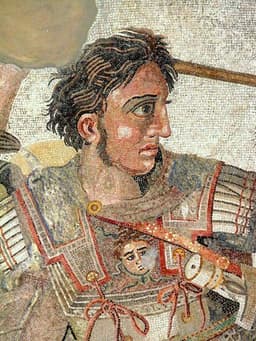
Alexander the Great
General · Ancient
85.2Total
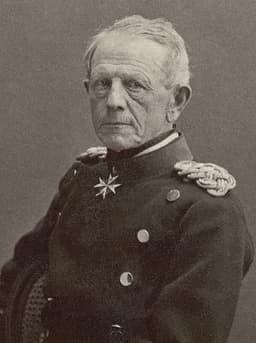
Helmuth von Moltke the Elder
General · Modern
74.8Total
Basic Information
Born
-356
1800
Died
-323
1891
Era
Ancient
Modern
Nationality
Macedon
Germany
Occupation
General
General
Civilization
Western
Western
Score Comparison
Military (10%)
95.0
75.0
Political (20%)
60.0
55.0
Influence (20%)
92.0
88.0
Legacy (20%)
90.0
65.0
Leadership (15%)
80.0
85.0
Strategy (15%)
92.0
80.6
TOTAL
85.2
74.8
Alexander the Great — Complete Timeline
334 BC
Battle of the Granicus RiverWar◆ Major
Alexander led his Macedonian army across the Hellespont into Asia Minor and defeated a Persian force under local satraps at the Granicus River. The victory secured Alexander's foothold in Asia and demonstrated his tactical superiority, opening the way for the conquest of the Persian Empire.
Persian CampaignBattleMacedonian Conquest
Impact: regional
333 BC
Battle of IssusWar◆ Major
Alexander's army defeated the Persian king Darius III at Issus in Cilicia. Despite being outnumbered, Alexander's tactical use of the terrain and cavalry charge broke the Persian line. Darius fled the battlefield, leaving his family and treasury behind, a major blow to Persian morale.
Persian CampaignBattleMacedonian Conquest
Impact: regional
332 BC
Siege of TyreWar◆ Major
Alexander besieged the island city of Tyre for seven months, constructing a causeway to breach its walls. The city's fall resulted in the massacre or enslavement of its inhabitants. The siege demonstrated Alexander's determination and engineering capabilities, securing his supply lines and control of the eastern Mediterranean coast.
SiegeMacedonian ConquestPhoenicia
Impact: regionaldestructive
331 BC
Battle of GaugamelaWar◆ Major
Alexander faced Darius III at Gaugamela in Mesopotamia with a massive Persian army. Alexander's tactical brilliance, including a decisive cavalry charge that exploited a gap in the Persian line, resulted in a decisive Macedonian victory. Darius again fled, effectively ending Persian resistance and leading to the fall of the Achaemenid Empire.
Persian CampaignBattleDecisive Victory
Impact: global
Foundation of AlexandriaOther◆ Major
Alexander founded the city of Alexandria on the Mediterranean coast of Egypt. He personally selected the site and oversaw the initial planning. Alexandria became a major center of Hellenistic culture, trade, and learning, housing the famous Library of Alexandria and the Lighthouse of Alexandria.
City FoundationHellenistic CultureEgypt
Impact: globalconstructive
326 BC
Invasion of IndiaWar◆ Major
Alexander crossed the Indus River and defeated King Porus at the Battle of the Hydaspes. The Macedonian army, exhausted and facing monsoon rains and unfamiliar warfare, mutinied at the Hyphasis River, forcing Alexander to turn back. This campaign marked the easternmost extent of his conquests.
Indian CampaignBattleMutiny
Impact: regional
Helmuth von Moltke the Elder — Complete Timeline
1857 AD
Appointment as Chief of the Prussian General StaffPolitical Action◆ Major
Moltke was appointed Chief of the Prussian General Staff, a position he held for 30 years. He reorganized the staff system, emphasizing strategic planning, railroad logistics, and decentralized command, laying the foundation for Prussian military dominance.
PrussiaMilitary ReformGeneral Staff
Impact: nationalconstructive
1866 AD
Battle of KöniggrätzWar
Moltke commanded Prussian forces to a decisive victory over Austria at K
Austro-Prussian WarGerman UnificationBattle
Impact: regional
1870 AD
Battle of SedanWar
Moltke's strategic planning led to the encirclement and capture of the French army under Napoleon III at Sedan during the Franco-Prussian War. This battle effectively decided the war and led to the fall of the Second French Empire.
Franco-Prussian WarBattleFrench Defeat
Impact: global
Siege of ParisWar◆ Major
Moltke directed the Prussian siege of Paris from September 1870 to January 1871. The siege cut off the city from supplies and forced its surrender, leading to the end of the Franco-Prussian War and the proclamation of the German Empire.
Franco-Prussian WarSiegeGerman Unification
Impact: global
1871 AD
Publication of 'On War' InfluenceCultural◆ Major
Moltke's strategic writings and after-action reports, though not a single book, shaped military doctrine for decades. His emphasis on decentralized command (Auftragstaktik) and railroad logistics became foundational to modern warfare.
Military TheoryDoctrineLegacy
Impact: globalconstructive
Expert Analysis
Alexander the Great vs Helmuth von Moltke the Elder: Historical Comparison
Alexander the Great and Helmuth von Moltke the Elder represent two poles of military genius: one a charismatic conqueror who reshaped the ancient world through personal audacity, the other a modern institutional architect who revolutionized industrial warfare. While Alexander’s sweeping conquests and enduring legend give him the edge, Moltke’s systematic brilliance in command and logistics marks a profound shift in warfare.
Dimension Analysis
**Military: Alexander the Great 96 / Helmuth von Moltke the Elder 81**
Alexander’s unmatched record of battlefield victories against vastly superior numbers, from Granicus to Gaugamela, demonstrates tactical genius and personal courage. Moltke excelled in orchestrated campaigns like the Franco-Prussian War but relied on railroads and telegraphs rather than individual heroics.
**Political: Alexander the Great 65 / Helmuth von Moltke the Elder 69**
Alexander struggled to consolidate his empire, leaving no stable succession and prompting immediate fragmentation. Moltke operated within Bismarck’s political framework, skillfully advising without overstepping, and his victories directly enabled German unification.
**Influence: Alexander the Great 90 / Helmuth von Moltke the Elder 68**
Alexander’s fusion of Hellenistic culture across three continents shaped art, language, and politics for centuries. Moltke’s influence was more limited to European military staff systems and the “German way of war,” though profound within that sphere.
**Legacy: Alexander the Great 90 / Helmuth von Moltke the Elder 75**
Alexander remains a universal archetype of the conquering hero, studied by Napoleon and Caesar alike. Moltke’s legacy is respected among military historians and staff colleges but lacks popular resonance and was later tarnished by association with total war.
**Leadership: Alexander the Great 82 / Helmuth von Moltke the Elder 78**
Alexander led from the front, inspiring loyalty through shared risk and personal charisma. Moltke led from the map room, earning respect through meticulous planning and calm under pressure, but lacked the visceral bond Alexander forged with his men.
Verdict
Alexander the Great leads due to his superior military record, enduring cultural influence, and iconic leadership style, though Moltke’s systemic innovations in command and logistics were more suited to the modern era.
FAQ
Q: Who ranks higher? A: Alexander the Great, by a composite score of 85 to 76, reflecting his unparalleled battlefield success and lasting global legend over Moltke’s narrower but equally brilliant institutional contributions.
Rankings
🥇
Alexander the GreatLeader
Mil: 95.0Pol: 60.0Inf: 92.0
85.2
🥈
Helmuth von Moltke the Elder
Mil: 75.0Pol: 55.0Inf: 88.0
74.8
+10.4 behind
How This Comparison Works
Algorithm
Each figure is scored on 6 dimensions (0—100 scale) based on structured historical data: Military (10%), Political (20%), Influence (20%), Legacy (20%), Leadership (15%), Strategy (15%). The weighted total produces the final ranking.
Data Sources
Scores are computed from structured sub-indicators in the database. Scale factors adjust for era (Ancient ×0.85, Modern ×1.0) and civilization size (Eastern ×1.05, Other ×0.80) to account for differences in population and military scale.
Maximum 3 Figures
Comparisons are limited to 2—3 figures to ensure readability and statistical meaningfulness.
Error Margins
±5 points per dimension — Sub-scores are derived from historical records with inherent uncertainty. Two figures within 5 points on a dimension should be considered roughly equivalent in that area.
Total Score Accuracy
±3 points overall — The weighted combination of 6 dimensions produces a total score with approximately ±3 points of uncertainty. Differences of less than 3 points are not statistically significant— the figures are effectively tied.
Known Limitations
- Historical records are incomplete and uneven across civilizations
- Figures from oral-tradition societies may be underrepresented
- Occupation labels can misclassify multi-role figures
- Scores measure capability and impact, not moral character
- Quantitative scoring is a comparison tool, not absolute truth
Capability Radar
Military (10%) — Battles & Warfare
Battles
98
85
Win Rate
99
95
Expansion
99
85
Political (20%) — Governance & Reform
Reform
75
75
Diplomacy
80
65
Economy
70
60
Influence (20%) — Cultural & Global Reach
Cultural
95
75
Global
95
80
Legacy (20%) — Historical Impact
Historical
98
85
Longevity
95
80
Leadership (15%) — Power & Stability
Tenure
60
70
Stability
55
70
Strategy (15%) — Tactics & Innovation
Strategy
98
95
Tactics
99
90
Reform
85
95
Similar Comparisons
Comments & Discussion
GlobalHistoryNerd6/16/2026
I'm tired of the Alexander worship. Yeah, he won battles against odds, but let's not pretend Gaugamela was some miracle—Darius was a weak commander and the Persian Empire was already rotting. Meanwhile, Moltke orchestrated the complete encirclement and destruction of an entire French army at Sedan using railroads and telegraphs, a feat Alexander couldn't even dream of. The scoring here gives Alexander a 96 military while Moltke gets an 81, but that's pure Eurocentric romanticism—we still fetishize the 'great man' charging on horseback while ignoring the systemic brilliance that actually shaped modern warfare. And don't get me started on Alexander's 'influence' score of 90—it's mostly just colonialist propaganda used to justify Western dominance. Moltke's staff system is studied from Beijing to Brasília today.
HellenicaReader6/16/2026
Arrian's account of Alexander at the Hydaspes River shows a commander who could adapt to unfamiliar terrain and enemy tactics, like using feints against Porus's war elephants—something no Greek had done before. But let's not conflate tactical brilliance with strategic longevity. Plutarch himself notes Alexander's tragic flaw was his inability to delegate or plan for succession, which is why his empire collapsed within a generation. Moltke, by contrast, understood that war is an extension of policy—a concept Clausewitz would appreciate. He served Bismarck as a true staff officer, not a conqueror. Still, the 96 vs 81 military gap is fair if we compare individual battlefield skill. Alexander personally led the Companion Cavalry at Gaugamela; Moltke never fired a shot. Different eras, different metrics.
Historian7886/16/2026
这个评分系统有严重问题。亚历山大军事96分,毛奇只有81分,但我仔细算了算:亚历山大一生打了6场主要会战,对手都是波斯帝国衰落期的将领;毛奇在1866年普奥战争和1870年普法战争中指挥数百万人的军队,通过铁路网络实现战略机动,七天之内动员了三个军团。从复杂性角度,毛奇的指挥系数应该更高。另外,政治分69对65,但毛奇实际上协助俾斯麦完成了德国统一,而亚历山大死后帝国立刻分裂——按中国历史标准,这至少差15分。建议引入‘系统韧性’指标,类似孙武在《孙子兵法》中强调的‘庙算’能力。
Historian5286/16/2026
把亚历山大和毛奇比较很有意思,但我觉得评分忽略了古代中国的标准。亚历山大征服了波斯,但连个稳定的行政体系都没建立,死后就分崩离析了。换成我们中国的视角,这就像项羽——勇猛无敌,但不懂治国,最后被刘邦取代。毛奇倒是有点像曹操,善于利用资源和制度,但他的影响力仅限军事领域。还有啊,亚历山大的‘影响’分90是不是太夸张了?他推广的希腊化文化在中亚确实留下痕迹,但跟秦始皇统一文字度量衡对中国两千年的影响比起来,真不算什么。毛奇更不用说,他的参谋制度虽然厉害,但放到中国历史里,可能还不如戚继光改革明军来得系统。建议评分时多考虑行政继承和制度延续性。