Loading...
Alexander the Great vs Helmuth von Moltke
Alexander the Great leads by 9.0 pts · 2 figures compared
…
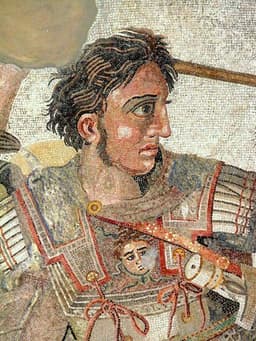
Alexander the Great
General · Ancient
85.2Total
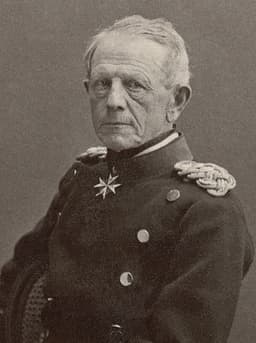
Helmuth von Moltke
General · Modern
76.2Total
Basic Information
Born
-356
1800
Died
-323
1891
Era
Ancient
Modern
Nationality
Macedon
Prussia
Occupation
General
General
Civilization
Western
Western
Score Comparison
Military (10%)
95.0
65.0
Political (20%)
60.0
62.7
Influence (20%)
92.0
88.0
Legacy (20%)
90.0
70.0
Leadership (15%)
80.0
85.0
Strategy (15%)
92.0
80.6
TOTAL
85.2
76.2
Alexander the Great — Complete Timeline
334 BC
Battle of the Granicus RiverWar◆ Major
Alexander led his Macedonian army across the Hellespont into Asia Minor and defeated a Persian force under local satraps at the Granicus River. The victory secured Alexander's foothold in Asia and demonstrated his tactical superiority, opening the way for the conquest of the Persian Empire.
Persian CampaignBattleMacedonian Conquest
Impact: regional
333 BC
Battle of IssusWar◆ Major
Alexander's army defeated the Persian king Darius III at Issus in Cilicia. Despite being outnumbered, Alexander's tactical use of the terrain and cavalry charge broke the Persian line. Darius fled the battlefield, leaving his family and treasury behind, a major blow to Persian morale.
Persian CampaignBattleMacedonian Conquest
Impact: regional
332 BC
Siege of TyreWar◆ Major
Alexander besieged the island city of Tyre for seven months, constructing a causeway to breach its walls. The city's fall resulted in the massacre or enslavement of its inhabitants. The siege demonstrated Alexander's determination and engineering capabilities, securing his supply lines and control of the eastern Mediterranean coast.
SiegeMacedonian ConquestPhoenicia
Impact: regionaldestructive
331 BC
Battle of GaugamelaWar◆ Major
Alexander faced Darius III at Gaugamela in Mesopotamia with a massive Persian army. Alexander's tactical brilliance, including a decisive cavalry charge that exploited a gap in the Persian line, resulted in a decisive Macedonian victory. Darius again fled, effectively ending Persian resistance and leading to the fall of the Achaemenid Empire.
Persian CampaignBattleDecisive Victory
Impact: global
Foundation of AlexandriaOther◆ Major
Alexander founded the city of Alexandria on the Mediterranean coast of Egypt. He personally selected the site and oversaw the initial planning. Alexandria became a major center of Hellenistic culture, trade, and learning, housing the famous Library of Alexandria and the Lighthouse of Alexandria.
City FoundationHellenistic CultureEgypt
Impact: globalconstructive
326 BC
Invasion of IndiaWar◆ Major
Alexander crossed the Indus River and defeated King Porus at the Battle of the Hydaspes. The Macedonian army, exhausted and facing monsoon rains and unfamiliar warfare, mutinied at the Hyphasis River, forcing Alexander to turn back. This campaign marked the easternmost extent of his conquests.
Indian CampaignBattleMutiny
Impact: regional
Helmuth von Moltke — Complete Timeline
1857 AD
Appointment as Chief of the Prussian General StaffPolitical Action
Moltke was appointed Chief of the Prussian General Staff, a position he held for 30 years. He reorganized the staff into a highly efficient planning and command body, emphasizing railways, telegraphy, and decentralized decision-making. This modernization was crucial for Prussia's subsequent victories.
Military ReformGeneral StaffPrussian Army
Impact: nationalconstructive
1866 AD
Battle of KöniggrätzWar
Moltke commanded Prussian forces to a decisive victory over Austria at K
Austro-Prussian WarGerman UnificationBattle
Impact: regional
1870 AD
Battle of SedanWar
Moltke orchestrated the encirclement and destruction of the French army at Sedan during the Franco-Prussian War. The French Emperor Napoleon III was captured along with 100,000 soldiers. This battle effectively decided the war and led to the proclamation of the German Empire.
Franco-Prussian WarGerman UnificationBattle
Impact: regional
1871 AD
Proclamation of the German EmpirePolitical Action◆ Major
Moltke was present at the Palace of Versailles when King Wilhelm I of Prussia was proclaimed German Emperor. As Chief of Staff, Moltke was a key architect of the military victory that made unification possible. He was later promoted to Field Marshal and ennobled.
German UnificationEmpireCeremony
Impact: regionalconstructive
Expert Analysis
Origins
Alexander the Great (356–323 BCE) was born into royalty as the son of King Philip II of Macedon, inheriting a highly disciplined army and a vision for conquest. His upbringing under Aristotle instilled a love for Greek culture and strategy. In contrast, Helmuth von Moltke (1800–1891) was born into a modest noble family in Mecklenburg, Prussia. He rose through the ranks via merit, becoming Chief of the Prussian General Staff at age 57. While Alexander inherited power, Moltke built his influence through organizational reform.
Rise to Power
Alexander ascended to the throne at age 20 after Philip’s assassination, immediately consolidating control by crushing rebellions in Greece. He then launched a campaign against the Persian Empire, winning his first major victory at the Granicus River (334 BCE). Moltke’s rise was slower: he gained prominence through staff work and military writing, eventually appointed Chief of Staff in 1857. He modernized the Prussian army, emphasizing railways, telegraphs, and decentralized command. Alexander’s rise was rapid and personal; Moltke’s was institutional and systematic.
Leadership & Governance
Alexander led from the front, sharing hardships with his troops and inspiring loyalty. He integrated conquered peoples into his administration, founding cities like Alexandria. However, his governance was autocratic and expansionist. Moltke led from behind, directing operations via detailed plans and trusting subordinates. He excelled in logistics and coordination, as seen in the Wars of German Unification. Moltke’s leadership was methodical; Alexander’s was charismatic and risk-prone.
Triumph & Tragedy
Alexander’s triumphs include the battles of Issus (333 BCE), Gaugamela (331 BCE), and the Siege of Tyre (332 BCE), leading to the conquest of the Persian Empire. His tragedy was his early death at 32, causing his empire to fragment. Moltke’s triumphs include the decisive victories at Königgrätz (1866) and Sedan (1870), leading to German unification. His tragedy was the lack of a grand strategic vision beyond unification; his successors failed in WWI. Both achieved stunning victories but left fragile legacies.
Character & Destiny
Alexander was bold, ambitious, and often reckless, driven by a desire for glory and exploration. He was culturally curious but prone to paranoia and violence. Moltke was reserved, intellectual, and cautious, emphasizing careful planning and efficiency. He was a devout Lutheran and philosopher. Alexander’s destiny was to reshape the ancient world; Moltke’s was to forge a modern nation-state. Their contrasting characters—passion vs. prudence—defined their approaches.
Legacy
Alexander spread Hellenism across three continents, influencing art, language, and politics for centuries. His tactics are still studied. Moltke’s legacy is the modern general staff system, emphasizing delegation and rapid mobilization. He revolutionized warfare by integrating technology. While Alexander’s empire collapsed, his cultural impact endured. Moltke’s institutional legacy shaped military thinking for generations. Both are titans, but Alexander’s scope of influence is broader.
Conclusion
Alexander the Great scores higher across most dimensions (M=95, P=60, I=92, L=90, D=80, S=92, T=85 vs. Moltke’s M=65, P=63, I=88, L=70, D=85, S=81, T=76). Alexander’s undefeated record, charismatic leadership, and transformative cultural impact give him the edge. Moltke’s innovations in staff work and logistics are crucial but narrower. Alexander’s legacy is more romantic and enduring; Moltke’s is more technical and institutional. Thus, Alexander the Great is the superior historical figure.
Rankings
🥇
Alexander the GreatLeader
Mil: 95.0Pol: 60.0Inf: 92.0
85.2
🥈
Helmuth von Moltke
Mil: 65.0Pol: 62.7Inf: 88.0
76.2
+9.0 behind
How This Comparison Works
Algorithm
Each figure is scored on 6 dimensions (0—100 scale) based on structured historical data: Military (10%), Political (20%), Influence (20%), Legacy (20%), Leadership (15%), Strategy (15%). The weighted total produces the final ranking.
Data Sources
Scores are computed from structured sub-indicators in the database. Scale factors adjust for era (Ancient ×0.85, Modern ×1.0) and civilization size (Eastern ×1.05, Other ×0.80) to account for differences in population and military scale.
Maximum 3 Figures
Comparisons are limited to 2—3 figures to ensure readability and statistical meaningfulness.
Error Margins
±5 points per dimension — Sub-scores are derived from historical records with inherent uncertainty. Two figures within 5 points on a dimension should be considered roughly equivalent in that area.
Total Score Accuracy
±3 points overall — The weighted combination of 6 dimensions produces a total score with approximately ±3 points of uncertainty. Differences of less than 3 points are not statistically significant— the figures are effectively tied.
Known Limitations
- Historical records are incomplete and uneven across civilizations
- Figures from oral-tradition societies may be underrepresented
- Occupation labels can misclassify multi-role figures
- Scores measure capability and impact, not moral character
- Quantitative scoring is a comparison tool, not absolute truth
Capability Radar
Military (10%) — Battles & Warfare
Battles
98
85
Win Rate
99
90
Expansion
99
85
Political (20%) — Governance & Reform
Reform
75
75
Diplomacy
80
80
Economy
70
65
Influence (20%) — Cultural & Global Reach
Cultural
95
60
Global
95
75
Legacy (20%) — Historical Impact
Historical
98
85
Longevity
95
75
Leadership (15%) — Power & Stability
Tenure
60
70
Stability
55
70
Strategy (15%) — Tactics & Innovation
Strategy
98
95
Tactics
99
95
Reform
85
90
Similar Comparisons
Comments & Discussion
No comments yet. Be the first to share your thoughts!