Loading...
Alexander the Great vs Fuad Chehab
Alexander the Great leads by 35.3 pts · 2 figures compared
…
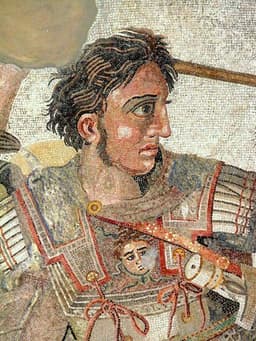
Alexander the Great
General · Ancient
85.2Total
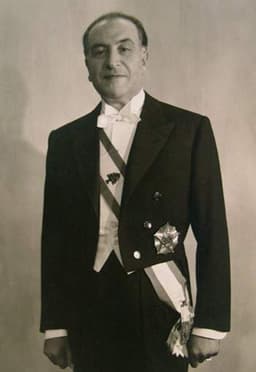
Fuad Chehab
General · Modern
49.9Total
Basic Information
Born
-356
1902
Died
-323
1973
Era
Ancient
Modern
Nationality
Macedon
Lebanon
Occupation
General
General
Civilization
Western
Middle Eastern
Score Comparison
Military (10%)
95.0
10.2
Political (20%)
60.0
70.0
Influence (20%)
92.0
54.1
Legacy (20%)
90.0
44.2
Leadership (15%)
80.0
72.0
Strategy (15%)
92.0
30.3
TOTAL
85.2
49.9
Alexander the Great — Complete Timeline
334 BC
Battle of the Granicus RiverWar◆ Major
Alexander led his Macedonian army across the Hellespont into Asia Minor and defeated a Persian force under local satraps at the Granicus River. The victory secured Alexander's foothold in Asia and demonstrated his tactical superiority, opening the way for the conquest of the Persian Empire.
Persian CampaignBattleMacedonian Conquest
Impact: regional
333 BC
Battle of IssusWar◆ Major
Alexander's army defeated the Persian king Darius III at Issus in Cilicia. Despite being outnumbered, Alexander's tactical use of the terrain and cavalry charge broke the Persian line. Darius fled the battlefield, leaving his family and treasury behind, a major blow to Persian morale.
Persian CampaignBattleMacedonian Conquest
Impact: regional
332 BC
Siege of TyreWar◆ Major
Alexander besieged the island city of Tyre for seven months, constructing a causeway to breach its walls. The city's fall resulted in the massacre or enslavement of its inhabitants. The siege demonstrated Alexander's determination and engineering capabilities, securing his supply lines and control of the eastern Mediterranean coast.
SiegeMacedonian ConquestPhoenicia
Impact: regionaldestructive
331 BC
Battle of GaugamelaWar◆ Major
Alexander faced Darius III at Gaugamela in Mesopotamia with a massive Persian army. Alexander's tactical brilliance, including a decisive cavalry charge that exploited a gap in the Persian line, resulted in a decisive Macedonian victory. Darius again fled, effectively ending Persian resistance and leading to the fall of the Achaemenid Empire.
Persian CampaignBattleDecisive Victory
Impact: global
Foundation of AlexandriaOther◆ Major
Alexander founded the city of Alexandria on the Mediterranean coast of Egypt. He personally selected the site and oversaw the initial planning. Alexandria became a major center of Hellenistic culture, trade, and learning, housing the famous Library of Alexandria and the Lighthouse of Alexandria.
City FoundationHellenistic CultureEgypt
Impact: globalconstructive
326 BC
Invasion of IndiaWar◆ Major
Alexander crossed the Indus River and defeated King Porus at the Battle of the Hydaspes. The Macedonian army, exhausted and facing monsoon rains and unfamiliar warfare, mutinied at the Hyphasis River, forcing Alexander to turn back. This campaign marked the easternmost extent of his conquests.
Indian CampaignBattleMutiny
Impact: regional
Fuad Chehab — Complete Timeline
1958 AD
Launched Chehabist reforms and modernizationReform◆ Major
President Chehab implemented a series of reforms known as Chehabism, including administrative modernization, economic planning, and strengthening state institutions. He established the Central Bank of Lebanon and the Civil Service Board.
ReformModernizationState Building
Impact: nationalconstructive
Elected President of LebanonPolitical Action◆ Major
Fuad Chehab was elected President of Lebanon on September 23, 1958, succeeding Camille Chamoun. His election ended the 1958 crisis and was supported by both Christian and Muslim factions seeking stability.
PresidencyElectionStabilization
Impact: nationalconstructive
Created the Deuxième Bureau intelligence agencyPolitical Action
Chehab expanded the role of the Deuxi
IntelligenceSecurityAuthoritarianism
Impact: national
1960 AD
Presided over the 1960s economic boomOther
Under Chehab's presidency, Lebanon experienced a period of economic growth and stability, with Beirut becoming a major financial and tourism hub. His policies attracted foreign investment and expanded the middle class.
Economic GrowthBeirutProsperity
Impact: nationalconstructive
1964 AD
Refused to amend constitution for a second termPolitical Action
Chehab declined to seek a second term as president, respecting the constitutional limit. He retired from politics in 1964, setting a precedent for peaceful transitions of power in Lebanon.
ConstitutionTerm LimitRetirement
Impact: nationalconstructive
Expert Analysis
Alexander the Great vs Fuad Chehab
# The General and the Guardian
On a sweltering September day in 1958, Fuad Chehab took the oath of office in Beirut, inheriting a nation fractured by sectarian violence and hovering on the edge of civil war. Just over two thousand years earlier, another general had stood on the shores of the Mediterranean, preparing to cross into Asia with an army that would reshape the known world. One man conquered empires; the other tried to save a country from itself. Both were generals. Their paths could not have diverged more dramatically, and their stories reveal something profound about the relationship between military power and political leadership.
Origins
Alexander was born into the furnace of Macedonian ambition. His father, Philip II, had transformed a backward kingdom into a military powerhouse, and the young prince absorbed lessons in warfare and statecraft from his earliest years. Tutored by Aristotle, he drank deeply from the well of Greek culture while his veins ran with the blood of warriors. By sixteen, he was already commanding troops; by twenty, he was king. The world he inherited was one of constant expansion, where glory was measured in conquered cities and subjugated peoples.
Fuad Chehab emerged from an entirely different world. Born in 1902 into a prominent Lebanese Maronite family, he came of age under the Ottoman Empire's dying gasp and the French Mandate that followed. Lebanon was a mosaic of religious communities—Maronites, Sunni Muslims, Shia Muslims, Druze, Greek Orthodox—each with its own loyalties and fears. Chehab chose the military, rising through the French-officered Troupes Spéciales du Levant. When Lebanon gained independence in 1943, he became commander of the tiny Lebanese army, a force designed not for conquest but for internal balance.
Rise to Power
Alexander’s ascent was meteoric and violent. After Philip’s assassination in 336 BCE, the twenty-year-old king moved with terrifying speed: crushing rebellions in Thebes, securing Greece, and then launching the invasion of Persia. Every step was a gamble. At the Granicus River, Issus, and Gaugamela, he faced numerically superior forces and won through tactical brilliance and personal courage. By 330 BCE, he had toppled the Achaemenid Empire, the largest the world had ever seen.
Chehab’s rise was slower, more reluctant. In 1958, Lebanon’s delicate political system collapsed under the weight of the Eisenhower Doctrine, Arab nationalism, and sectarian tensions. President Camille Chamoun’s attempt to amend the constitution for a second term sparked a rebellion. As army commander, Chehab refused to commit troops against the insurgents, arguing that the military should not become a tool of political factions. When Chamoun stepped down, the National Assembly turned to Chehab as the only figure trusted across the sectarian divide. He was elected president on September 23, 1958, not as a conqueror but as a mediator.
Leadership & Governance
Alexander governed as he conquered: through sheer force of will. He adopted Persian court rituals, married a Bactrian princess, and encouraged his officers to take local wives. He founded over seventy cities, spreading Greek language and culture from Egypt to the Indus. His administrative system was pragmatic—leave local satraps in place, install Macedonian overseers, collect taxes. But his leadership style was autocratic and increasingly paranoid. He executed his own generals, demanded divine honors, and drove his army to exhaustion. The man who could win any battle could not win the loyalty of his men forever.
Chehab governed through a philosophy that came to be called Chehabism: a belief that the state must rise above sectarian loyalties. He created the Deuxième Bureau, a military intelligence agency that monitored political opponents, but he also launched sweeping reforms. He modernized the civil service, expanded education, built infrastructure, and implemented economic planning. Beirut boomed in the early 1960s, becoming a financial hub for the Middle East. Unlike Alexander, Chehab did not seek glory; he sought stability. His military background taught him the value of discipline and neutrality, not conquest.
Triumph & Tragedy
Alexander’s greatest triumph was also the seed of his tragedy. By 323 BCE, he had conquered an empire stretching from Greece to India. But he had no plan for succession, no stable administrative structure, no way to hold his creation together. His men mutinied at the Hyphasis River, refusing to march further. He died in Babylon at thirty-two, possibly from fever, poison, or exhaustion. His empire fractured within a generation, torn apart by his generals.
Chehab’s triumph was more modest but more durable. He preserved Lebanon’s fragile unity during a turbulent era, and his economic reforms laid the groundwork for Beirut’s golden age. Yet his reliance on the Deuxième Bureau created a surveillance state that later presidents would weaponize. His refusal to seek a second term in 1964, while principled, left his reforms incomplete. The sectarian tensions he managed but never resolved would explode into civil war just over a decade after his death.
Character & Destiny
Alexander was driven by an insatiable desire for glory. He wept when there were no more worlds to conquer. His personality—brilliant, impulsive, ruthless—was perfectly suited to the age of conquest but disastrous for the age of consolidation. He could inspire men to impossible feats but could not inspire them to build something lasting.
Chehab was driven by a different impulse: duty. He was reserved, almost ascetic, a man who wore his authority lightly. He did not want power; he accepted it as a burden. His personality—cautious, methodical, principled—was suited to preserving what existed but not to transforming what was broken. He could stabilize a crisis but could not heal the deeper wounds.
Legacy
Alexander’s legacy is written across three continents. He spread Hellenism, founded cities, and created the cultural fusion that would produce the Hellenistic world. His tactics are still taught in military academies. He is remembered as a god, a genius, a destroyer.
Chehab’s legacy is quieter but no less real. He gave Lebanon a model of reform and neutrality that still haunts the country’s political imagination. His name is invoked by those who dream of a state above sect. He is remembered as a guardian, not a conqueror.
Conclusion
Standing on the opposite ends of history, these two generals reveal the spectrum of military leadership. Alexander conquered the world and lost it; Chehab preserved a nation and could not save it. One burned too bright, the other too dim. Perhaps the lesson is that generals make poor politicians precisely because they are trained for victory, not governance. But perhaps it is also that the qualities required to win a war—decisiveness, audacity, ruthlessness—are exactly the qualities that can destroy a peace. In the end, both men did what they were made to do. The tragedy is that the world needed them to do something else.
Rankings
🥇
Alexander the GreatLeader
Mil: 95.0Pol: 60.0Inf: 92.0
85.2
🥈
Fuad Chehab
Mil: 10.2Pol: 70.0Inf: 54.1
49.9
+35.3 behind
How This Comparison Works
Algorithm
Each figure is scored on 6 dimensions (0—100 scale) based on structured historical data: Military (10%), Political (20%), Influence (20%), Legacy (20%), Leadership (15%), Strategy (15%). The weighted total produces the final ranking.
Data Sources
Scores are computed from structured sub-indicators in the database. Scale factors adjust for era (Ancient ×0.85, Modern ×1.0) and civilization size (Eastern ×1.05, Other ×0.80) to account for differences in population and military scale.
Maximum 3 Figures
Comparisons are limited to 2—3 figures to ensure readability and statistical meaningfulness.
Error Margins
±5 points per dimension — Sub-scores are derived from historical records with inherent uncertainty. Two figures within 5 points on a dimension should be considered roughly equivalent in that area.
Total Score Accuracy
±3 points overall — The weighted combination of 6 dimensions produces a total score with approximately ±3 points of uncertainty. Differences of less than 3 points are not statistically significant— the figures are effectively tied.
Known Limitations
- Historical records are incomplete and uneven across civilizations
- Figures from oral-tradition societies may be underrepresented
- Occupation labels can misclassify multi-role figures
- Scores measure capability and impact, not moral character
- Quantitative scoring is a comparison tool, not absolute truth
Capability Radar
Military (10%) — Battles & Warfare
Battles
98
5
Win Rate
99
5
Expansion
99
5
Political (20%) — Governance & Reform
Reform
75
65
Diplomacy
80
60
Economy
70
50
Influence (20%) — Cultural & Global Reach
Cultural
95
30
Global
95
25
Legacy (20%) — Historical Impact
Historical
98
35
Longevity
95
30
Leadership (15%) — Power & Stability
Tenure
60
55
Stability
55
45
Strategy (15%) — Tactics & Innovation
Strategy
98
10
Tactics
99
10
Reform
85
20
Similar Comparisons
Comments & Discussion
IRONLANCE6/16/2026
Comparing Alexander to Chehab is like comparing a wildfire to a campfire. Alexander's conquests gave us Hellenistic cities from Egypt to India, but left a trail of destruction and a fractured empire that collapsed the moment he died. Chehab at least tried to build sustainable institutions in Lebanon. One created a legend, the other created stability. I'll take the man who tried to unite a country over the one who burned through civilizations.
数据侦探6/16/2026
拿亚历山大和谢哈布比?这简直是拿航母对比渔船。亚历山大18岁就带着4万马其顿方阵横扫波斯,征服了200万平方公里的土地;而谢哈布当总统时黎巴嫩才1万平方公里,还到处是教派冲突。数据不会说谎:一个是全球征服者,一个是区域调解员。差距太大了,这比较本身就不公平。
ATHENIANGAZE6/16/2026
The comparison misses the fundamental difference in their military philosophy. Alexander revolutionized warfare with his combined arms tactics - the Companion cavalry flanking while phalanxes pinned the enemy. He defeated Darius III at Gaugamela with 47,000 men against perhaps 100,000 Persians. Chehab's military experience was mostly as a French-trained administrator and UN observer. One was a battlefield innovator, the other a peacetime bureaucrat in uniform. Apples and oranges.
贝鲁特守望者6/16/2026
真正了解黎巴嫩的人会告诉你,谢哈布比亚历山大更难得。亚历山大继承的是腓力的职业军队,谢哈布接手的是1958年濒临内战的国家——当时穆斯林和基督徒已经街头火拼。他建立了国家统计局、改革了军队,试图用制度超越教派分歧。虽然他最后还是失败了,但至少他试过。亚历山大没有面对过这种挑战,他只需要砍人。
DELPHICSHADOW6/16/2026
Both were generals who became rulers, but their ambitions reflected different eras. Alexander embodied the classical hero-king: personal glory, divine ambition, the pursuit of immortality through conquest. Chehab represented the 20th-century technocrat-general: institutional building, national unity, constitutional order. Alexander's question was "what can I conquer?" Chehab's was "what can I preserve?" In an age of nuclear weapons and sectarian wars, we need more Chehabs and fewer Alexanders.