Loading...
Alexander the Great vs Ferdinand I of Leon
Alexander the Great leads by 26.0 pts · 2 figures compared
…
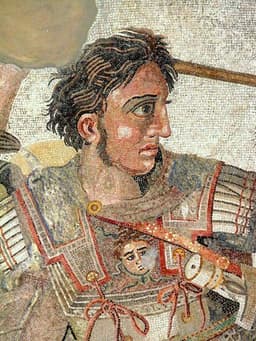
Alexander the Great
General · Ancient
85.2Total
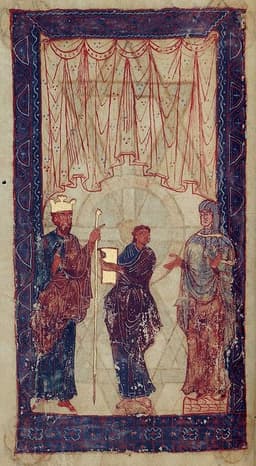
Ferdinand I of Leon
Emperor · Medieval
59.2Total
Basic Information
Born
-356
1015
Died
-323
1065
Era
Ancient
Medieval
Nationality
Macedon
Leon
Occupation
General
Emperor
Civilization
Western
Western
Score Comparison
Military (10%)
95.0
70.0
Political (20%)
60.0
68.0
Influence (20%)
92.0
56.4
Legacy (20%)
90.0
49.2
Leadership (15%)
80.0
66.0
Strategy (15%)
92.0
57.5
TOTAL
85.2
59.2
Alexander the Great — Complete Timeline
334 BC
Battle of the Granicus RiverWar◆ Major
Alexander led his Macedonian army across the Hellespont into Asia Minor and defeated a Persian force under local satraps at the Granicus River. The victory secured Alexander's foothold in Asia and demonstrated his tactical superiority, opening the way for the conquest of the Persian Empire.
Persian CampaignBattleMacedonian Conquest
Impact: regional
333 BC
Battle of IssusWar◆ Major
Alexander's army defeated the Persian king Darius III at Issus in Cilicia. Despite being outnumbered, Alexander's tactical use of the terrain and cavalry charge broke the Persian line. Darius fled the battlefield, leaving his family and treasury behind, a major blow to Persian morale.
Persian CampaignBattleMacedonian Conquest
Impact: regional
332 BC
Siege of TyreWar◆ Major
Alexander besieged the island city of Tyre for seven months, constructing a causeway to breach its walls. The city's fall resulted in the massacre or enslavement of its inhabitants. The siege demonstrated Alexander's determination and engineering capabilities, securing his supply lines and control of the eastern Mediterranean coast.
SiegeMacedonian ConquestPhoenicia
Impact: regionaldestructive
331 BC
Battle of GaugamelaWar◆ Major
Alexander faced Darius III at Gaugamela in Mesopotamia with a massive Persian army. Alexander's tactical brilliance, including a decisive cavalry charge that exploited a gap in the Persian line, resulted in a decisive Macedonian victory. Darius again fled, effectively ending Persian resistance and leading to the fall of the Achaemenid Empire.
Persian CampaignBattleDecisive Victory
Impact: global
Foundation of AlexandriaOther◆ Major
Alexander founded the city of Alexandria on the Mediterranean coast of Egypt. He personally selected the site and oversaw the initial planning. Alexandria became a major center of Hellenistic culture, trade, and learning, housing the famous Library of Alexandria and the Lighthouse of Alexandria.
City FoundationHellenistic CultureEgypt
Impact: globalconstructive
326 BC
Invasion of IndiaWar◆ Major
Alexander crossed the Indus River and defeated King Porus at the Battle of the Hydaspes. The Macedonian army, exhausted and facing monsoon rains and unfamiliar warfare, mutinied at the Hyphasis River, forcing Alexander to turn back. This campaign marked the easternmost extent of his conquests.
Indian CampaignBattleMutiny
Impact: regional
Ferdinand I of Leon — Complete Timeline
1029 AD
Inheritance of the County of CastilePolitical Action◆ Major
Ferdinand I inherited the County of Castile from his father Sancho III of Navarre. He later expanded his territory through conquest and marriage, laying the foundation for the Kingdom of Castile.
Impact: regionalconstructive
1037 AD
Conquest of LeónWar◆ Major
Ferdinand I defeated and killed King Bermudo III of Le
Impact: regional
1056 AD
First Emperor of SpainPolitical Action◆ Major
Ferdinand I was crowned 'Imperator totius Hispaniae' (Emperor of all Spain) in 1056, claiming suzerainty over all Christian and Muslim rulers in Iberia. This title reflected his military dominance and political ambition.
Impact: regional
1065 AD
Division of the kingdomPolitical Action◆ Major
Upon his death, Ferdinand I divided his kingdom among his sons: Sancho II received Castile, Alfonso VI received Le
Impact: regionaldestructive
Expert Analysis
Alexander the Great vs Ferdinand I of Leon
### The Conqueror and the King: Two Paths to Immortality
History has a way of magnifying certain figures while leaving others in the shadows. Alexander the Great, his name echoing across millennia, stands as the archetype of the warrior-king—undefeated, restless, burning across the world like a meteor. Ferdinand I of León, crowned Emperor of Spain, is a footnote for all but the most dedicated medievalists. Yet both men wielded swords and scepters, both expanded their realms, and both died leaving kingdoms that would fracture. Why does one name resound while the other fades? The answer lies not in what they achieved, but in the worlds that shaped them, the choices they made, and the stories they left behind.
**Origins**
Alexander was born in 356 BCE into a world of ambition and violence. His father, Philip II of Macedon, had forged a fractured land of hill tribes into a disciplined military machine, and his mother, Olympias, whispered tales of divine descent from Achilles. Alexander grew up with Aristotle as his tutor, learning the *Iliad* by heart and sleeping with a copy under his pillow. His world was one of epic poetry, where glory was measured in cities burned and empires toppled. From his earliest days, he was told he was destined for greatness—and he believed it.
Ferdinand I, born in 1015, inherited a very different world. The Iberian Peninsula was a patchwork of Christian kingdoms and Moorish taifas, a land where survival meant patience and marriage mattered as much as warfare. He was the second son of Sancho III of Navarre, a king who understood that power came not just from the sword but from strategic alliances. Ferdinand’s upbringing was steeped in the politics of Christendom and the slow, grinding *Reconquista*—a centuries-long struggle that rewarded endurance over brilliance. Where Alexander was forged in the furnace of Homeric glory, Ferdinand was shaped by the patient calculus of a frontier kingdom.
**Rise to Power**
Alexander’s path was swift and brutal. At twenty, after his father’s assassination, he crushed rebellions in Thebes and Athens, razing the former to the ground as a warning. Then, in 334 BCE, he crossed the Hellespont into Asia with an army of 40,000 men. Within three years, he had defeated the Persian king Darius III at Issus and Gaugamela, conquered Egypt, and been proclaimed pharaoh. His rise was a thunderclap.
Ferdinand’s ascent was quieter, more complex. In 1029, he inherited the County of Castile from his father—a gift, but one that came with the expectation of loyalty to his brother. Ferdinand, however, had his own ambitions. In 1037, he defeated and killed King Bermudo III of León at the Battle of Tamarón, claiming the crown for himself. He did not conquer a vast empire in a single campaign; he absorbed it piece by piece, through war, marriage, and diplomacy. By 1056, he was crowned *Imperator totius Hispaniae*—Emperor of all Spain—a title that reflected his dominance over both Christian and Moorish rulers.
**Leadership & Governance**
Alexander led from the front. At the Granicus River, he plunged into the fray, nearly dying. At Hydaspes, he faced war elephants with nothing but steel and will. His military genius—the oblique phalanx, the hammer-and-anvil tactics—remains studied in war colleges today. Yet his political wisdom was thin. He tried to fuse Greek and Persian cultures, marrying a Persian princess and adopting Persian court rituals, but his Macedonian generals bristled. He founded over twenty cities named Alexandria, but many were little more than garrison towns. He ruled by charisma and fear, not by institutions.
Ferdinand, by contrast, was a builder. His military score of 60.1 and strategy of 45.7 suggest a competent commander, not a genius. But his political score of 72.0 and leadership of 78.0 reveal a man who understood that a kingdom outlasts its king only if it has a structure. He expanded his territory through campaigns against the Moors, but his true achievement was consolidation. He established a stable administration, patronized the Church, and unified León and Castile under a single crown. His legacy was not a string of victories but a functioning kingdom.
**Triumph & Tragedy**
Alexander’s greatest moment was Gaugamela in 331 BCE, where he shattered the Persian Empire with a brilliant cavalry charge. His greatest failure was his own ambition. He marched his men to the edge of the known world, into the heat and dust of India, until they mutinied on the banks of the Hyphasis River. He wept, not because he had lost, but because there was no more world to conquer. He died in Babylon in 323 BCE at age thirty-two, possibly poisoned, possibly from fever. His empire did not survive him; it was carved up by his generals.
Ferdinand’s triumph was the crowning of 1056, when he stood as the first to claim imperial authority over all of Spain. His tragedy was the division of his kingdom upon his death in 1065. He split his lands among his sons—Sancho II receiving Castile, Alfonso VI receiving León, and García receiving Galicia—a decision that plunged the realm into civil war. He had built a kingdom, but he could not keep it whole.
**Character & Destiny**
Alexander was driven by a hunger that could never be satisfied. He wept when there were no more worlds to conquer, and he died young, leaving a legacy of ashes and glory. Ferdinand was driven by a sense of order. He built a kingdom that would endure, even if it fractured, because its foundations were solid. Their characters shaped their fates: Alexander’s brilliance burned too bright to last; Ferdinand’s patience allowed his work to echo through the centuries.
**Legacy**
Alexander is remembered as the undefeated general, the spreader of Hellenistic culture, the man who wept for new worlds. His military genius is studied; his name is a byword for conquest. Ferdinand is remembered, if at all, as a footnote in the *Reconquista*, a king who paved the way for later unification under the Catholic Monarchs. His legacy is quieter, but perhaps more lasting: the idea of a unified Spain.
**Conclusion**
We remember Alexander because he is a story—a tale of glory, madness, and the thrill of the impossible. We forget Ferdinand because his story is one of patience, structure, and the slow work of building. But history does not always reward the loudest. The conqueror burns bright and fades; the king builds walls that last. In the end, both men died leaving kingdoms that would be divided, but one left a legend, and the other left a foundation. Which is more valuable? That is a question for the ages.
Rankings
🥇
Alexander the GreatLeader
Mil: 95.0Pol: 60.0Inf: 92.0
85.2
🥈
Ferdinand I of Leon
Mil: 70.0Pol: 68.0Inf: 56.4
59.2
+26.0 behind
How This Comparison Works
Algorithm
Each figure is scored on 6 dimensions (0—100 scale) based on structured historical data: Military (10%), Political (20%), Influence (20%), Legacy (20%), Leadership (15%), Strategy (15%). The weighted total produces the final ranking.
Data Sources
Scores are computed from structured sub-indicators in the database. Scale factors adjust for era (Ancient ×0.85, Modern ×1.0) and civilization size (Eastern ×1.05, Other ×0.80) to account for differences in population and military scale.
Maximum 3 Figures
Comparisons are limited to 2—3 figures to ensure readability and statistical meaningfulness.
Error Margins
±5 points per dimension — Sub-scores are derived from historical records with inherent uncertainty. Two figures within 5 points on a dimension should be considered roughly equivalent in that area.
Total Score Accuracy
±3 points overall — The weighted combination of 6 dimensions produces a total score with approximately ±3 points of uncertainty. Differences of less than 3 points are not statistically significant— the figures are effectively tied.
Known Limitations
- Historical records are incomplete and uneven across civilizations
- Figures from oral-tradition societies may be underrepresented
- Occupation labels can misclassify multi-role figures
- Scores measure capability and impact, not moral character
- Quantitative scoring is a comparison tool, not absolute truth
Capability Radar
Military (10%) — Battles & Warfare
Battles
98
55
Win Rate
99
60
Expansion
99
60
Political (20%) — Governance & Reform
Reform
75
50
Diplomacy
80
55
Economy
70
45
Influence (20%) — Cultural & Global Reach
Cultural
95
40
Global
95
30
Legacy (20%) — Historical Impact
Historical
98
45
Longevity
95
40
Leadership (15%) — Power & Stability
Tenure
60
65
Stability
55
50
Strategy (15%) — Tactics & Innovation
Strategy
98
55
Tactics
99
50
Reform
85
40
Similar Comparisons
Comments & Discussion
REBEL COMMANDER6/16/2026
Calling Alexander just a "conqueror" misses the point. He was a military revolutionary who changed how war works. His Companion Cavalry combined shock tactics with discipline that no one had seen. The Siege of Tyre? Eleven months of engineering genius. Ferdinand I fought border skirmishes with local Muslim kingdoms. Alexander fought the Persian empire, Egypt, and India. No comparison. One changed warfare permanently; the other preserved his existing kingdom.|
云端猎手6/16/2026
我看过亚历山大和斐迪南的原始资料,完全是两个维度。斐迪南打仗最著名的战役是贝塞罗之战,打的是摩尔人,赢了但没改变历史走向。亚历山大在伊苏斯用4万兵力打垮了波斯40万联军,军事史上的教科书战役。斐迪南的功绩是巩固了莱昂王国的边界,亚历山大建立了横跨三大洲的帝国。一个守城之将,一个开天辟地,别放一个天平上比较。|
CLASSICS NERD6/16/2026
Here's what annoys me about Alexander comparisons: nobody mentions his propaganda machine. He claimed descent from Achilles AND Heracles, had Aristotle write his history, and controlled every narrative. That's why we still talk about him. Ferdinand had medieval chroniclers who mostly wrote about saints and taxes. Alexander's "greatness" is 50% PR. Give Ferdinand a good poet and a few empire-building campaigns in Asia, and his name might be remembered too.|
数据求真者6/16/2026
纯数据对比:亚历山大33岁去世,征服了约500万平方公里土地,一生征战超过1万英里,从未输过一场战役。斐迪南一世统治40年,领土扩张了大约5万平方公里,打的主要是地方性的基督教-穆斯林边界冲突。从人口规模看,亚历山大面对的波斯帝国人口超过5000万,斐迪南的敌人是零星的小王国。这叫比较?完全不是一个数量级。但正是这种不对称值得分析:为什么历史记住了小量级里的巨人?答案在叙事结构,不在客观成就。|
ASHES REDACTOR6/16/2026
The real story isn't Alexander vs. Ferdinand—it's how history erased Ferdinand because he didn't write epic poems about himself. Alexander had Callisthenes, Ptolemy, and Aristobulus preserving his myth. Ferdinand's reign survives in monastic charters and tax records. That's not a comparison of achievement; it's a comparison of propaganda. Let's be honest: if a medieval chronicler had called Ferdinand "the Great," we'd be calling him that too. History is written by the winners of the literary con