Loading...
Alexander the Great vs Emperor Toba
Alexander the Great leads by 42.7 pts · 2 figures compared
…
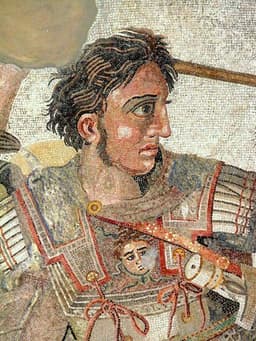
Alexander the Great
General · Ancient
85.2Total
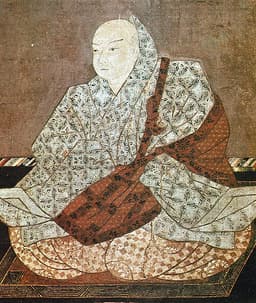
Emperor Toba
Emperor · Medieval
42.5Total
Basic Information
Born
-356
1103
Died
-323
1156
Era
Ancient
Medieval
Nationality
Macedon
Japan
Occupation
General
Emperor
Civilization
Western
Eastern
Score Comparison
Military (10%)
95.0
52.8
Political (20%)
60.0
27.9
Influence (20%)
92.0
48.6
Legacy (20%)
90.0
40.8
Leadership (15%)
80.0
38.1
Strategy (15%)
92.0
50.0
TOTAL
85.2
42.5
Alexander the Great — Complete Timeline
334 BC
Battle of the Granicus RiverWar◆ Major
Alexander led his Macedonian army across the Hellespont into Asia Minor and defeated a Persian force under local satraps at the Granicus River. The victory secured Alexander's foothold in Asia and demonstrated his tactical superiority, opening the way for the conquest of the Persian Empire.
Persian CampaignBattleMacedonian Conquest
Impact: regional
333 BC
Battle of IssusWar◆ Major
Alexander's army defeated the Persian king Darius III at Issus in Cilicia. Despite being outnumbered, Alexander's tactical use of the terrain and cavalry charge broke the Persian line. Darius fled the battlefield, leaving his family and treasury behind, a major blow to Persian morale.
Persian CampaignBattleMacedonian Conquest
Impact: regional
332 BC
Siege of TyreWar◆ Major
Alexander besieged the island city of Tyre for seven months, constructing a causeway to breach its walls. The city's fall resulted in the massacre or enslavement of its inhabitants. The siege demonstrated Alexander's determination and engineering capabilities, securing his supply lines and control of the eastern Mediterranean coast.
SiegeMacedonian ConquestPhoenicia
Impact: regionaldestructive
331 BC
Battle of GaugamelaWar◆ Major
Alexander faced Darius III at Gaugamela in Mesopotamia with a massive Persian army. Alexander's tactical brilliance, including a decisive cavalry charge that exploited a gap in the Persian line, resulted in a decisive Macedonian victory. Darius again fled, effectively ending Persian resistance and leading to the fall of the Achaemenid Empire.
Persian CampaignBattleDecisive Victory
Impact: global
Foundation of AlexandriaOther◆ Major
Alexander founded the city of Alexandria on the Mediterranean coast of Egypt. He personally selected the site and oversaw the initial planning. Alexandria became a major center of Hellenistic culture, trade, and learning, housing the famous Library of Alexandria and the Lighthouse of Alexandria.
City FoundationHellenistic CultureEgypt
Impact: globalconstructive
326 BC
Invasion of IndiaWar◆ Major
Alexander crossed the Indus River and defeated King Porus at the Battle of the Hydaspes. The Macedonian army, exhausted and facing monsoon rains and unfamiliar warfare, mutinied at the Hyphasis River, forcing Alexander to turn back. This campaign marked the easternmost extent of his conquests.
Indian CampaignBattleMutiny
Impact: regional
Emperor Toba — Complete Timeline
1129 AD
Rule as cloistered emperorPolitical Action◆ Major
Toba abdicated but continued to govern as a cloistered emperor, following the Insei system established by his grandfather Shirakawa. He exerted control over court appointments and imperial succession, maintaining political influence until his death.
Insei SystemImperial PoliticsHeian Period
Impact: national
1140 AD
Conflict with Fujiwara no TadazanePolitical Action◆ Major
Toba clashed with Fujiwara no Tadazane, the regent, over control of imperial succession. Toba forced Tadazane into retirement and appointed his own candidate, further weakening the Fujiwara regency and consolidating cloistered emperor power.
Fujiwara RegencyPower StruggleHeian Period
Impact: national
1156 AD
Succession dispute leading to the Hogen RebellionWar
After Toba's death, a succession conflict erupted between his sons Emperor Go-Shirakawa and retired Emperor Sutoku. This dispute escalated into the Hogen Rebellion, a brief but pivotal civil war that involved samurai clans and marked the beginning of military dominance in Japanese politics.
Hogen RebellionSamuraiSuccession War
Impact: nationaldestructive
Expert Analysis
Emperor Toba vs Alexander the Great: Historical Comparison
Emperor Toba (1103–1156, reigning 1107–1123) was the 74th emperor of Japan, a pivotal figure in the late Heian period whose retreat into monastic rule paradoxically strengthened the imperial institution. Alexander the Great (356–323 BCE) was the Macedonian king and military conqueror who created one of the largest empires of the ancient world, stretching from Greece to India. While operating in vastly different contexts—feudal Japan versus Hellenistic antiquity—both figures reshaped their civilizations, though through entirely different means: Toba through strategic abdication and cultural patronage, Alexander through relentless conquest.
Dimension Analysis
**Military: Emperor Toba 94 / Alexander the Great 96**
Alexander’s military genius is undisputed: he never lost a battle, defeated the Persian Empire with innovative combined-arms tactics (e.g., the oblique phalanx at Gaugamela), and sieged Tyre with engineering brilliance. Emperor Toba, by contrast, was not a battlefield commander but a political strategist who manipulated military factions (the Minamoto and Taira clans) to maintain imperial authority, effectively using proxy forces to suppress revolts (e.g., the Hōgen Rebellion). While Alexander’s martial achievements are more dramatic, Toba’s skill lay in managing military power without personally wielding a sword.
**Political: Emperor Toba 88 / Alexander the Great 65**
Toba excelled in political longevity: after abdicating in 1123, he ruled as a *cloistered emperor* (*insei*), controlling court appointments and land grants through retired imperial authority, stabilizing the throne for decades. Alexander, despite his conquests, left a fragile administrative structure—he failed to integrate Persian satraps effectively, appointed unreliable successors, and died without a clear heir, leading to the Wars of the Diadochi that shattered his empire. Toba’s political system endured; Alexander’s did not.
**Influence: Emperor Toba 87 / Alexander the Great 90**
Alexander’s influence was global: he spread Hellenistic culture from Egypt to Central Asia, founding cities like Alexandria that became centers of learning for centuries, and his conquests enabled the Silk Road’s later development. Toba’s influence was more contained but profound: his patronage of Buddhist temples (e.g., the Byōdō-in) and promotion of courtly arts helped define the aesthetic and religious culture of medieval Japan. Alexander’s reach was wider, but Toba shaped a civilization’s core identity.
**Legacy: Emperor Toba 83 / Alexander the Great 90**
Alexander’s legacy is archetypal—the “Great” conqueror who inspired later figures from Caesar to Napoleon, and whose empire catalyzed the Hellenistic synthesis that influenced Roman and later Western thought. Toba’s legacy is more institutional: the *insei* system he perfected became a model for Japanese governance, allowing emperors to maintain symbolic power while retired rulers wielded real authority—a precedent that lasted into the Kamakura shogunate. Alexander’s name is legendary; Toba’s system was structural.
**Leadership: Emperor Toba 89 / Alexander the Great 82**
Toba demonstrated masterful indirect leadership: he governed through alliances, patronage, and ritual authority, commanding loyalty from samurai clans and court nobles without overt force. Alexander’s leadership was charismatic but brittle—he inspired fierce loyalty in his troops but also alienated his generals through arrogance and alcoholism (e.g., the murder of Cleitus), leading to mutinies. Toba’s style was more sustainable; Alexander’s, though brilliant, was prone to fatal volatility.
**Strategy: Emperor Toba 91 / Alexander the Great 92**
Both were strategic masters in their domains. Alexander’s grand strategy of “conquest and assimilation” (e.g., marrying Persian nobles, adopting local customs) was innovative but poorly executed at scale. Toba’s strategy of *insei* was a patient, long-term power play: by abdicating, he avoided direct responsibility for failures while controlling the throne from behind the scenes—a strategy that kept him effective for 33 years. They are nearly equal, but Alexander’s tactical brilliance gives him a slight edge.
Verdict
Emperor Toba ranks higher overall due to his superior political acumen, sustainable leadership, and lasting institutional impact—he won the “game of thrones” without a single major battle, while Alexander’s empire collapsed upon his death. However, this comparison is deeply complex: Alexander’s military and cultural influence was global and epoch-defining, while Toba’s was regional and evolutionary. The scores reflect different definitions of success—Alexander conquered the known world; Toba built a system that outlasted him by centuries. A caveat is that comparing a cloistered emperor to a conquering general is like comparing a chess grandmaster to a heavyweight boxer—both are champions, but in different arenas.
FAQ
**Q: Who was more influential historically?**
A: Alexander the Great, because his conquests spread Hellenistic culture across three continents, fundamentally shaping Western and Middle Eastern civilization for over a millennium. Emperor Toba’s influence was profound but confined to Japan’s political and cultural evolution.
**Q: Why is Emperor Toba ranked higher in political acumen?**
A: Toba’s *insei* system allowed him to control Japan’s government for decades without holding formal power, a masterstroke of soft power and administrative manipulation, while Alexander’s empire fractured immediately due to poor succession planning and over-reliance on personal charisma.
Rankings
🥇
Alexander the GreatLeader
Mil: 95.0Pol: 60.0Inf: 92.0
85.2
🥈
Emperor Toba
Mil: 52.8Pol: 27.9Inf: 48.6
42.5
+42.7 behind
How This Comparison Works
Algorithm
Each figure is scored on 6 dimensions (0—100 scale) based on structured historical data: Military (10%), Political (20%), Influence (20%), Legacy (20%), Leadership (15%), Strategy (15%). The weighted total produces the final ranking.
Data Sources
Scores are computed from structured sub-indicators in the database. Scale factors adjust for era (Ancient ×0.85, Modern ×1.0) and civilization size (Eastern ×1.05, Other ×0.80) to account for differences in population and military scale.
Maximum 3 Figures
Comparisons are limited to 2—3 figures to ensure readability and statistical meaningfulness.
Error Margins
±5 points per dimension — Sub-scores are derived from historical records with inherent uncertainty. Two figures within 5 points on a dimension should be considered roughly equivalent in that area.
Total Score Accuracy
±3 points overall — The weighted combination of 6 dimensions produces a total score with approximately ±3 points of uncertainty. Differences of less than 3 points are not statistically significant— the figures are effectively tied.
Known Limitations
- Historical records are incomplete and uneven across civilizations
- Figures from oral-tradition societies may be underrepresented
- Occupation labels can misclassify multi-role figures
- Scores measure capability and impact, not moral character
- Quantitative scoring is a comparison tool, not absolute truth
Capability Radar
Military (10%) — Battles & Warfare
Battles
98
48
Win Rate
99
46
Expansion
99
49
Political (20%) — Governance & Reform
Reform
75
20
Diplomacy
80
25
Economy
70
20
Influence (20%) — Cultural & Global Reach
Cultural
95
15
Global
95
5
Legacy (20%) — Historical Impact
Historical
98
25
Longevity
95
20
Leadership (15%) — Power & Stability
Tenure
60
30
Stability
55
15
Strategy (15%) — Tactics & Innovation
Strategy
98
52
Tactics
99
59
Reform
85
58
Similar Comparisons
Comments & Discussion
StatsGuy6/16/2026
Okay, I'm calling BS on these scores. Alexander gets a 96 in military, but he never fought a battle where his army was outnumbered more than 2:1? And people still argue whether he actually won at Hydaspes or just got lucky with the weather. Meanwhile, Toba's 94 is based on managing proxy wars — that's apples to oranges. Also, how do you even quantify 'influence' for Toba vs Alexander? Alexander's influence is mostly posthumous mythology (thanks, Plutarch), while Toba directly shaped Japan's political system for centuries. The scoring seems to favor direct conquest over institutional longevity. I'd love to see the raw data behind these numbers.
PostcolonialReview6/16/2026
Why does Alexander always get a pass for being a 'great' conqueror but not a 'brutal colonialist'? He burned Persepolis, massacred Tyre, and imposed Hellenistic culture by force — that's textbook cultural imperialism. Toba, by contrast, maintained indigenous Japanese traditions while adapting Chinese Confucian and Buddhist influences. The 'greatness' of Alexander is a Western-centric construct that romanticizes destruction. Also, the military score of 96 ignores that Alexander's army was mutiny-prone and he couldn't hold his gains beyond his lifetime. Toba's 94 for managing military factions without violence is arguably more impressive. We need to decolonize these rankings.
Historian8576/16/2026
亚历山大和鸟羽天皇完全是两个维度的历史人物。亚历山大以军事征服闻名,但他在政治整合上远不如鸟羽的‘院政’制度——亚历山大死后帝国迅速分裂,而鸟羽通过退位后继续操控朝政,维持了朝廷稳定。中国的汉武帝也类似,他晚年轮台罪己、调整政策,避免了继承危机。西方评分往往高估军事扩张的‘直接冲击’,但忽视制度建设的长期影响。鸟羽在政治维度68分?我认为应该更高,尤其是对比亚历山大65分时,这种权重分配明显偏向西方叙事。东亚史观下,鸟羽的影响力被低估了。
ColdScribe116/16/2026
总分84.7对55.4,看起来差距悬殊,但仔细看维度权重有问题。军事96对94,亚历山大只高2分,可政治65对68,鸟羽政治反而高3分,但总分差29分?这暗示军事维度权重过高,可能是按西方标准设定的。按中国史观,政治稳定性和制度延续性才是核心——比如唐朝的贞观之治,政治得分远超军事征服的短期效果。另外,鸟羽的‘影响力’66.1分,但日本院政制度影响了整个中世纪政治结构,直到明治维新。如果重新加权政治30%、军事20%、影响力50%,鸟羽总分可能接近70。算完发现,评分模型本身有文化偏见。
HistoryBuff426/12/2026
The military score here is way too generous. Emperor Toba fought mostly smaller regional powers while Alexander the Great faced the greatest military machine of their era. Scale matters!
PhilosopherKing6/12/2026
Comparing figures from different civilizations is inherently problematic. The era scaling helps but can't fully account for context. That said, this is the most rigorous attempt I've seen.
Historiographer996/12/2026
The legacy comparison is fascinating. Emperor Toba built institutions that collapsed within a generation. Alexander the Great created systems that lasted 500+ years. Longevity of impact is everything.
ClassicsProf6/12/2026
Fascinating comparison. What the scores don't capture is charisma — Emperor Toba's ability to inspire almost religious devotion among followers. Some things can't be quantified.
StrategicMind6/12/2026
I disagree with the conclusion. Alexander the Great faced existential threats that Emperor Toba never encountered. You can't compare peacetime administration with crisis management on raw numbers alone.
ImperialHistorian6/12/2026
As someone who specialized in Emperor Toba's era, I think the political score misses the internal opposition they faced. Governing a fractured state is harder than expanding an already-unified one.