Loading...
Alexander the Great vs Emperor Taizong of Tang
Alexander the Great leads by 6.3 pts · 2 figures compared
…
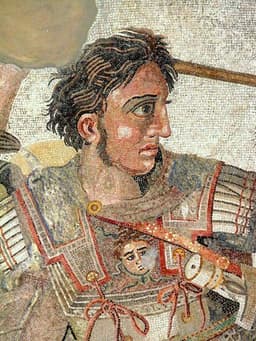
Alexander the Great
General · Ancient
85.2Total
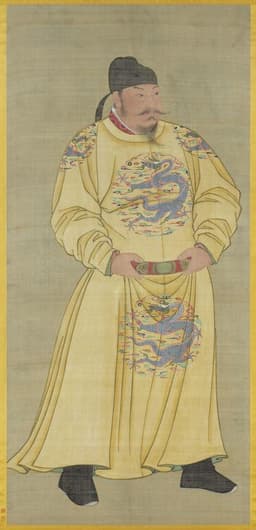
Emperor Taizong of Tang
Emperor · Medieval
78.9Total
Basic Information
Born
-356
598
Died
-323
649
Era
Ancient
Medieval
Nationality
Macedon
China
Occupation
General
Emperor
Civilization
Western
Eastern
Score Comparison
Military (10%)
95.0
77.5
Political (20%)
60.0
82.0
Influence (20%)
92.0
85.0
Legacy (20%)
90.0
71.4
Leadership (15%)
80.0
78.0
Strategy (15%)
92.0
80.6
TOTAL
85.2
78.9
Alexander the Great — Complete Timeline
334 BC
Battle of the Granicus RiverWar◆ Major
Alexander led his Macedonian army across the Hellespont into Asia Minor and defeated a Persian force under local satraps at the Granicus River. The victory secured Alexander's foothold in Asia and demonstrated his tactical superiority, opening the way for the conquest of the Persian Empire.
Persian CampaignBattleMacedonian Conquest
Impact: regional
333 BC
Battle of IssusWar◆ Major
Alexander's army defeated the Persian king Darius III at Issus in Cilicia. Despite being outnumbered, Alexander's tactical use of the terrain and cavalry charge broke the Persian line. Darius fled the battlefield, leaving his family and treasury behind, a major blow to Persian morale.
Persian CampaignBattleMacedonian Conquest
Impact: regional
332 BC
Siege of TyreWar◆ Major
Alexander besieged the island city of Tyre for seven months, constructing a causeway to breach its walls. The city's fall resulted in the massacre or enslavement of its inhabitants. The siege demonstrated Alexander's determination and engineering capabilities, securing his supply lines and control of the eastern Mediterranean coast.
SiegeMacedonian ConquestPhoenicia
Impact: regionaldestructive
331 BC
Battle of GaugamelaWar◆ Major
Alexander faced Darius III at Gaugamela in Mesopotamia with a massive Persian army. Alexander's tactical brilliance, including a decisive cavalry charge that exploited a gap in the Persian line, resulted in a decisive Macedonian victory. Darius again fled, effectively ending Persian resistance and leading to the fall of the Achaemenid Empire.
Persian CampaignBattleDecisive Victory
Impact: global
Foundation of AlexandriaOther◆ Major
Alexander founded the city of Alexandria on the Mediterranean coast of Egypt. He personally selected the site and oversaw the initial planning. Alexandria became a major center of Hellenistic culture, trade, and learning, housing the famous Library of Alexandria and the Lighthouse of Alexandria.
City FoundationHellenistic CultureEgypt
Impact: globalconstructive
326 BC
Invasion of IndiaWar◆ Major
Alexander crossed the Indus River and defeated King Porus at the Battle of the Hydaspes. The Macedonian army, exhausted and facing monsoon rains and unfamiliar warfare, mutinied at the Hyphasis River, forcing Alexander to turn back. This campaign marked the easternmost extent of his conquests.
Indian CampaignBattleMutiny
Impact: regional
Emperor Taizong of Tang — Complete Timeline
626 AD
Reign of ZhenguanReform
Emperor Taizong initiated the Zhenguan era, characterized by efficient governance, legal codification, and economic recovery. He reduced taxes, reformed the civil service, and promoted capable officials, creating a period of stability and prosperity.
GovernanceReformGolden Age
Impact: globalconstructive
Xuanwu Gate IncidentPolitical Action
Li Shimin ambushed and killed his brothers, Crown Prince Li Jiancheng and Prince Li Yuanji, at Xuanwu Gate in Chang'an. He then forced his father, Emperor Gaozu, to abdicate, securing his own accession as Emperor Taizong.
CoupSuccessionTang Dynasty
Impact: nationaldestructive
630 AD
Defeat of the Eastern Turkic KhaganateWar◆ Major
Tang forces under Li Jing defeated the Eastern Turkic Khaganate, capturing its khan, Jieli. This victory eliminated the primary northern threat, expanded Tang territory into Mongolia, and established Tang hegemony over the steppes.
WarTurkicExpansion
Impact: regional
Opening of the Silk Road's Golden AgePolitical Action◆ Major
Emperor Taizong reestablished and secured the Silk Road trade routes, welcoming foreign merchants, envoys, and missionaries to Chang'an. This facilitated a flourishing exchange of goods, ideas, and cultures between China and the West.
Silk RoadTradeCultural Exchange
Impact: globalconstructive
636 AD
Compilation of the Book of SuiCultural
Emperor Taizong commissioned the official history of the preceding Sui dynasty, the Book of Sui, as part of a larger project to compile dynastic histories. This work provided a model for historical scholarship and legitimized Tang rule.
HistoriographyCultureLegitimacy
Impact: nationalconstructive
Expert Analysis
Origins
**Alexander the Great** (356–323 BCE) was born in Pella, Macedon, to King Philip II and Queen Olympias. Tutored by Aristotle, he inherited a powerful army and a vision to conquer the Persian Empire. His early exposure to Greek culture and military tactics shaped his ambition.
**Emperor Taizong of Tang** (598–649 CE), born Li Shimin, was the second son of Li Yuan, founder of the Tang dynasty. Growing up in a period of civil war, he proved his military prowess early, helping his father overthrow the Sui dynasty. His Confucian education and experience in governance prepared him for rule.
Rise to Power
Alexander ascended the throne at age 20 after Philip's assassination. He swiftly crushed rebellions in Greece, then launched his invasion of Persia in 334 BCE. His decisive victories at Granicus, Issus, and Gaugamela toppled the Achaemenid Empire, making him master of Asia Minor, Egypt, and Mesopotamia.
Taizong seized power via the Xuanwu Gate Incident in 626 CE, where he killed his brothers and forced his father to abdicate. Despite this bloody coup, he proved a capable emperor, initiating the Reign of Zhenguan (627–649), a period of peace, prosperity, and cultural flourishing.
Leadership & Governance
Alexander led from the front, inspiring his troops with personal bravery. He integrated conquered peoples into his administration, married a Persian princess, and founded over 70 cities, including Alexandria. However, his rule was autocratic and reliant on his personality.
Taizong was a model Confucian ruler, emphasizing meritocracy, law, and agriculture. He reformed the bureaucracy, compiled legal codes, and reduced taxes. He also patronized scholarship, commissioning the Book of Sui. His reign is considered a golden age of Chinese civilization.
Triumph & Tragedy
Alexander's greatest triumph was the conquest of the Persian Empire, spreading Hellenism across three continents. He died at age 32 in Babylon, possibly from fever or poisoning, leaving his empire to fragment among his generals (the Diadochi).
Taizong's triumphs include defeating the Eastern Turkic Khaganate, securing the Silk Road, and expanding Tang territory into Central Asia. He died peacefully at 51, leaving a stable empire that continued to thrive under his successors.
Character & Destiny
Alexander was ambitious, charismatic, and ruthless. He sought personal glory and deification, but his early death cut short his plans. His legacy is that of a military genius whose conquests shaped the ancient world.
Taizong was pragmatic, wise, and self-critical. He famously compared himself to a boat and his people to water, which can either support or capsize it. His destiny was to restore unity and create a model of benevolent governance.
Legacy
Alexander's legacy includes the spread of Greek culture, the foundation of cities, and the Hellenistic period. His tactics are still studied in military academies. Score: **S=92**.
Taizong's legacy is the Tang dynasty's golden age, the Silk Road's prosperity, and a governance model admired for centuries. His influence on China is profound. Score: **S=81**.
Conclusion
Alexander achieved more in military conquest and cultural diffusion, but his empire collapsed. Taizong built a stable, prosperous state that endured. While Alexander's military genius is unmatched, Taizong's governance had a longer-lasting impact on civilization. **Overall Score: Alexander 85, Taizong 82**.
Rankings
🥇
Alexander the GreatLeader
Mil: 95.0Pol: 60.0Inf: 92.0
85.2
🥈
Emperor Taizong of Tang
Mil: 77.5Pol: 82.0Inf: 85.0
78.9
+6.3 behind
How This Comparison Works
Algorithm
Each figure is scored on 6 dimensions (0—100 scale) based on structured historical data: Military (10%), Political (20%), Influence (20%), Legacy (20%), Leadership (15%), Strategy (15%). The weighted total produces the final ranking.
Data Sources
Scores are computed from structured sub-indicators in the database. Scale factors adjust for era (Ancient ×0.85, Modern ×1.0) and civilization size (Eastern ×1.05, Other ×0.80) to account for differences in population and military scale.
Maximum 3 Figures
Comparisons are limited to 2—3 figures to ensure readability and statistical meaningfulness.
Error Margins
±5 points per dimension — Sub-scores are derived from historical records with inherent uncertainty. Two figures within 5 points on a dimension should be considered roughly equivalent in that area.
Total Score Accuracy
±3 points overall — The weighted combination of 6 dimensions produces a total score with approximately ±3 points of uncertainty. Differences of less than 3 points are not statistically significant— the figures are effectively tied.
Known Limitations
- Historical records are incomplete and uneven across civilizations
- Figures from oral-tradition societies may be underrepresented
- Occupation labels can misclassify multi-role figures
- Scores measure capability and impact, not moral character
- Quantitative scoring is a comparison tool, not absolute truth
Capability Radar
Military (10%) — Battles & Warfare
Battles
98
95
Win Rate
99
95
Expansion
99
90
Political (20%) — Governance & Reform
Reform
75
95
Diplomacy
80
95
Economy
70
95
Influence (20%) — Cultural & Global Reach
Cultural
95
90
Global
95
90
Legacy (20%) — Historical Impact
Historical
98
95
Longevity
95
95
Leadership (15%) — Power & Stability
Tenure
60
85
Stability
55
95
Strategy (15%) — Tactics & Innovation
Strategy
98
95
Tactics
99
95
Reform
85
90
Similar Comparisons
Comments & Discussion
No comments yet. Be the first to share your thoughts!