Loading...
Alexander the Great vs Constantine the Great
Alexander the Great leads by 9.7 pts · 2 figures compared
…
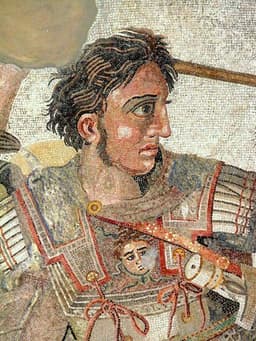
Alexander the Great
General · Ancient
85.2Total
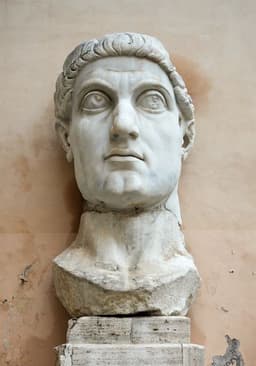
Constantine the Great
Emperor · Ancient
75.5Total
Basic Information
Born
-356
272
Died
-323
337
Era
Ancient
Ancient
Nationality
Macedon
Roman Empire
Occupation
General
Emperor
Civilization
Western
Western
Score Comparison
Military (10%)
95.0
78.0
Political (20%)
60.0
82.0
Influence (20%)
92.0
75.0
Legacy (20%)
90.0
70.0
Leadership (15%)
80.0
80.0
Strategy (15%)
92.0
72.0
TOTAL
85.2
75.5
Alexander the Great — Complete Timeline
334 BC
Battle of the Granicus RiverWar◆ Major
Alexander led his Macedonian army across the Hellespont into Asia Minor and defeated a Persian force under local satraps at the Granicus River. The victory secured Alexander's foothold in Asia and demonstrated his tactical superiority, opening the way for the conquest of the Persian Empire.
Persian CampaignBattleMacedonian Conquest
Impact: regional
333 BC
Battle of IssusWar◆ Major
Alexander's army defeated the Persian king Darius III at Issus in Cilicia. Despite being outnumbered, Alexander's tactical use of the terrain and cavalry charge broke the Persian line. Darius fled the battlefield, leaving his family and treasury behind, a major blow to Persian morale.
Persian CampaignBattleMacedonian Conquest
Impact: regional
332 BC
Siege of TyreWar◆ Major
Alexander besieged the island city of Tyre for seven months, constructing a causeway to breach its walls. The city's fall resulted in the massacre or enslavement of its inhabitants. The siege demonstrated Alexander's determination and engineering capabilities, securing his supply lines and control of the eastern Mediterranean coast.
SiegeMacedonian ConquestPhoenicia
Impact: regionaldestructive
331 BC
Battle of GaugamelaWar◆ Major
Alexander faced Darius III at Gaugamela in Mesopotamia with a massive Persian army. Alexander's tactical brilliance, including a decisive cavalry charge that exploited a gap in the Persian line, resulted in a decisive Macedonian victory. Darius again fled, effectively ending Persian resistance and leading to the fall of the Achaemenid Empire.
Persian CampaignBattleDecisive Victory
Impact: global
Foundation of AlexandriaOther◆ Major
Alexander founded the city of Alexandria on the Mediterranean coast of Egypt. He personally selected the site and oversaw the initial planning. Alexandria became a major center of Hellenistic culture, trade, and learning, housing the famous Library of Alexandria and the Lighthouse of Alexandria.
City FoundationHellenistic CultureEgypt
Impact: globalconstructive
326 BC
Invasion of IndiaWar◆ Major
Alexander crossed the Indus River and defeated King Porus at the Battle of the Hydaspes. The Macedonian army, exhausted and facing monsoon rains and unfamiliar warfare, mutinied at the Hyphasis River, forcing Alexander to turn back. This campaign marked the easternmost extent of his conquests.
Indian CampaignBattleMutiny
Impact: regional
Constantine the Great — Complete Timeline
312 AD
Battle of the Milvian BridgeWar◆ Major
Constantine defeated his rival Maxentius at the Milvian Bridge near Rome. According to tradition, Constantine saw a vision of a cross in the sky with the words 'In this sign, conquer.' The victory made Constantine the sole ruler of the Western Roman Empire and led to his conversion to Christianity.
Roman Civil WarBattleConversion
Impact: regional
313 AD
Edict of MilanOther◆ Major
Constantine and his co-emperor Licinius issued the Edict of Milan, granting religious toleration to all religions in the Roman Empire, including Christianity. The edict ended the persecution of Christians, restored confiscated church property, and established Christianity as a legally recognized religion.
Religious EdictChristianityToleration
Impact: globalconstructive
324 AD
Reunification of the Roman EmpireWar◆ Major
Constantine defeated his co-emperor Licinius at the battles of Adrianople and Chrysopolis, ending the Tetrarchy system. He became the sole ruler of the entire Roman Empire, reuniting the Western and Eastern halves under his control. This reunification was the last time the Roman Empire was united under a single ruler.
Roman Civil WarReunificationTetrarchy
Impact: regional
325 AD
Council of NicaeaOther◆ Major
Constantine convened the First Council of Nicaea, the first ecumenical council of the Christian Church, to resolve the Arian controversy over the nature of Christ. The council produced the Nicene Creed, affirming the divinity of Christ and establishing a unified Christian doctrine. Constantine presided over the council.
Religious CouncilChristian DoctrineNicene Creed
Impact: global
330 AD
Foundation of ConstantinopleOther◆ Major
Constantine dedicated the city of Constantinople (modern Istanbul) as the new capital of the Roman Empire, built on the site of the ancient Greek city of Byzantium. The city was strategically located on the Bosporus strait, controlling trade routes between Europe and Asia. It became the capital of the Eastern Roman Empire for over a thousand years.
City FoundationCapitalByzantine Empire
Impact: globalconstructive
Expert Analysis
Origins
Alexander the Great (356–323 BCE) was born in Pella, Macedon, to King Philip II and Olympias. Tutored by Aristotle, he inherited a unified Greek state and a seasoned army. Constantine the Great (272–337 CE) was born in Naissus, Moesia, to Flavius Constantius and Helena. His father was a Roman emperor, but Constantine rose through military ranks amid the Tetrarchy's civil wars. Both came from privileged backgrounds, but Alexander's preparation was more focused on conquest, while Constantine navigated a complex political landscape.
Rise to Power
Alexander ascended at age 20 after Philip's assassination, immediately securing Macedon and crushing revolts. He then launched the invasion of Persia, winning stunning victories at Granicus (334 BCE) and Issus (333 BCE). Constantine's rise was slower: he was declared emperor by his troops in 306 CE, then defeated Maxentius at the Milvian Bridge (312 CE) under a Christian banner. He later defeated Licinius to reunite the empire in 324 CE. Alexander's rise was rapid and audacious; Constantine's was strategic and incremental.
Leadership & Governance
Alexander was a hands-on commander, leading cavalry charges and sharing hardships. He integrated Persians into his administration and army, founding cities like Alexandria to spread Hellenism. However, his governance was brittle—after his death, his empire fragmented. Constantine centralized power, founding Constantinople as a new capital (330 CE) and reforming the currency and bureaucracy. He convened the Council of Nicaea (325 CE) to unify Christianity, using religion as a political tool. Constantine's institutions outlasted him, while Alexander's did not.
Triumph & Tragedy
Alexander's greatest triumph was Gaugamela (331 BCE), crushing Darius III and ending the Achaemenid Empire. He reached India but his army mutinied at the Hyphasis River, forcing a retreat. He died in Babylon at 32, possibly from fever or poisoning, leaving no heir. Constantine's triumph was the Milvian Bridge, which he attributed to the Christian God. He legalized Christianity with the Edict of Milan (313 CE) and founded Constantinople. His tragedy was family strife: he executed his eldest son Crispus and his wife Fausta. Both died of natural causes, but Alexander's early death cut short his potential.
Character & Destiny
Alexander was ambitious, charismatic, and ruthless—he destroyed Thebes and Tyre, but also married a Persian princess and encouraged cultural fusion. He believed himself divine, seeking to surpass mythical heroes. Constantine was pragmatic and ambitious, using religion to legitimize power. He was a skilled politician but also a brutal family man. Alexander's destiny was to conquer the known world; Constantine's was to transform the Roman Empire into a Christian state. Both changed history, but Alexander's impact was more immediate and personal.
Legacy
Alexander's legacy is the Hellenistic Age: Greek culture spread from Egypt to India, influencing art, science, and language. His military tactics are still studied. Constantine's legacy is Christian Europe: he made Christianity the dominant religion, shaping medieval and modern Western civilization. The Byzantine Empire, which lasted until 1453, was his direct continuation. Numerically, Alexander scores higher overall (M=95, I=92, L=90 vs. Constantine's M=78, P=82, I=75). Alexander's military genius is unmatched, but Constantine's political and religious influence endured longer.
Conclusion
Alexander the Great was the superior military commander and conqueror, with a higher total score (7.6 points ahead). His undefeated record and creation of a vast empire are unparalleled. However, Constantine's transformation of the Roman Empire and Christianity had a more lasting impact on world history. If we value immediate conquest and brilliance, Alexander wins. If we value enduring institutional change, Constantine prevails. On balance, Alexander's achievements are more spectacular, but Constantine's legacy is more profound. Score gap: 9.7 in Alexander's favor.
Rankings
🥇
Alexander the GreatLeader
Mil: 95.0Pol: 60.0Inf: 92.0
85.2
🥈
Constantine the Great
Mil: 78.0Pol: 82.0Inf: 75.0
75.5
+9.7 behind
How This Comparison Works
Algorithm
Each figure is scored on 6 dimensions (0—100 scale) based on structured historical data: Military (10%), Political (20%), Influence (20%), Legacy (20%), Leadership (15%), Strategy (15%). The weighted total produces the final ranking.
Data Sources
Scores are computed from structured sub-indicators in the database. Scale factors adjust for era (Ancient ×0.85, Modern ×1.0) and civilization size (Eastern ×1.05, Other ×0.80) to account for differences in population and military scale.
Maximum 3 Figures
Comparisons are limited to 2—3 figures to ensure readability and statistical meaningfulness.
Error Margins
±5 points per dimension — Sub-scores are derived from historical records with inherent uncertainty. Two figures within 5 points on a dimension should be considered roughly equivalent in that area.
Total Score Accuracy
±3 points overall — The weighted combination of 6 dimensions produces a total score with approximately ±3 points of uncertainty. Differences of less than 3 points are not statistically significant— the figures are effectively tied.
Known Limitations
- Historical records are incomplete and uneven across civilizations
- Figures from oral-tradition societies may be underrepresented
- Occupation labels can misclassify multi-role figures
- Scores measure capability and impact, not moral character
- Quantitative scoring is a comparison tool, not absolute truth
Capability Radar
Military (10%) — Battles & Warfare
Battles
98
85
Win Rate
99
80
Expansion
99
85
Political (20%) — Governance & Reform
Reform
75
95
Diplomacy
80
90
Economy
70
80
Influence (20%) — Cultural & Global Reach
Cultural
95
95
Global
95
95
Legacy (20%) — Historical Impact
Historical
98
95
Longevity
95
95
Leadership (15%) — Power & Stability
Tenure
60
85
Stability
55
70
Strategy (15%) — Tactics & Innovation
Strategy
98
85
Tactics
99
75
Reform
85
90
Similar Comparisons
Comments & Discussion
No comments yet. Be the first to share your thoughts!