Loading...
Alexander the Great vs Charles I of Spain
Alexander the Great leads by 10.2 pts · 2 figures compared
…
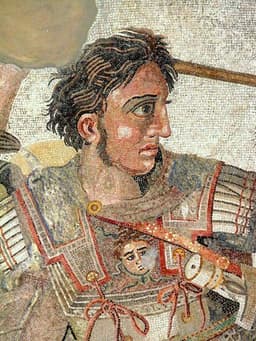
Alexander the Great
General · Ancient
85.2Total

Charles I of Spain
Emperor · Medieval
75.0Total
Basic Information
Born
-356
1500
Died
-323
1558
Era
Ancient
Medieval
Nationality
Macedon
Spain
Occupation
General
Emperor
Civilization
Western
Western
Score Comparison
Military (10%)
95.0
74.0
Political (20%)
60.0
72.0
Influence (20%)
92.0
85.0
Legacy (20%)
90.0
68.0
Leadership (15%)
80.0
78.0
Strategy (15%)
92.0
68.1
TOTAL
85.2
75.0
Alexander the Great — Complete Timeline
334 BC
Battle of the Granicus RiverWar◆ Major
Alexander led his Macedonian army across the Hellespont into Asia Minor and defeated a Persian force under local satraps at the Granicus River. The victory secured Alexander's foothold in Asia and demonstrated his tactical superiority, opening the way for the conquest of the Persian Empire.
Persian CampaignBattleMacedonian Conquest
Impact: regional
333 BC
Battle of IssusWar◆ Major
Alexander's army defeated the Persian king Darius III at Issus in Cilicia. Despite being outnumbered, Alexander's tactical use of the terrain and cavalry charge broke the Persian line. Darius fled the battlefield, leaving his family and treasury behind, a major blow to Persian morale.
Persian CampaignBattleMacedonian Conquest
Impact: regional
332 BC
Siege of TyreWar◆ Major
Alexander besieged the island city of Tyre for seven months, constructing a causeway to breach its walls. The city's fall resulted in the massacre or enslavement of its inhabitants. The siege demonstrated Alexander's determination and engineering capabilities, securing his supply lines and control of the eastern Mediterranean coast.
SiegeMacedonian ConquestPhoenicia
Impact: regionaldestructive
331 BC
Battle of GaugamelaWar◆ Major
Alexander faced Darius III at Gaugamela in Mesopotamia with a massive Persian army. Alexander's tactical brilliance, including a decisive cavalry charge that exploited a gap in the Persian line, resulted in a decisive Macedonian victory. Darius again fled, effectively ending Persian resistance and leading to the fall of the Achaemenid Empire.
Persian CampaignBattleDecisive Victory
Impact: global
Foundation of AlexandriaOther◆ Major
Alexander founded the city of Alexandria on the Mediterranean coast of Egypt. He personally selected the site and oversaw the initial planning. Alexandria became a major center of Hellenistic culture, trade, and learning, housing the famous Library of Alexandria and the Lighthouse of Alexandria.
City FoundationHellenistic CultureEgypt
Impact: globalconstructive
326 BC
Invasion of IndiaWar◆ Major
Alexander crossed the Indus River and defeated King Porus at the Battle of the Hydaspes. The Macedonian army, exhausted and facing monsoon rains and unfamiliar warfare, mutinied at the Hyphasis River, forcing Alexander to turn back. This campaign marked the easternmost extent of his conquests.
Indian CampaignBattleMutiny
Impact: regional
Charles I of Spain — Complete Timeline
1519 AD
Election as Holy Roman EmperorPolitical Action
Charles I of Spain was elected Holy Roman Emperor as Charles V, succeeding his grandfather Maximilian I. This election united the Spanish kingdoms, the Habsburg domains in Austria and the Low Countries, and the Holy Roman Empire under a single ruler, creating a vast European empire.
Holy Roman EmpireHabsburg empire
Impact: globalconstructive
1521 AD
Diet of WormsPolitical Action
Charles V presided over the Diet of Worms, where Martin Luther was summoned to recant his teachings. Luther refused, and Charles V issued the Edict of Worms, declaring Luther an outlaw and banning his writings. This event deepened the religious divide in Europe and sparked the Protestant Reformation.
Protestant ReformationReligious conflict
Impact: global
1525 AD
Battle of PaviaWar◆ Major
Charles V's imperial army defeated the French forces of King Francis I at the Battle of Pavia. Francis I was captured and taken prisoner to Spain. The victory solidified Habsburg dominance in Italy and forced France to renounce its claims to Milan and Naples in the Treaty of Madrid.
Italian WarsHabsburg victory
Impact: regional
1527 AD
Sack of RomeWar◆ Major
Imperial troops under Charles V sacked Rome, looting the city and capturing Pope Clement VII. The sack was a brutal event that shocked Europe and led to the temporary dominance of Charles V over the Papacy. It also marked a turning point in the Italian Wars.
Italian WarsPapacy
Impact: globaldestructive
1556 AD
Abdication of Charles VPolitical Action
Charles V abdicated his thrones, dividing his empire between his son Philip II (who received Spain, the Low Countries, and the Italian possessions) and his brother Ferdinand I (who received the Holy Roman Empire). This abdication was a major event in European politics, reshaping the balance of power.
AbdicationEmpire division
Impact: global
Expert Analysis
Origins
Alexander III of Macedon (356–323 BCE) was born into a warrior kingdom. His father Philip II had already transformed Macedon into a dominant military power, and Alexander inherited a seasoned army and a vision for conquest. His mother Olympias instilled in him a belief in divine descent from Achilles and Heracles. Charles I of Spain (1500–1558), better known as Emperor Charles V, was born into the Habsburg dynasty, inheriting a sprawling realm through a web of marriages and inheritances. His grandfathers were Maximilian I, Holy Roman Emperor, and Ferdinand II of Aragon. Charles's upbringing was cosmopolitan, but he lacked the focused military training of Alexander.
Rise to Power
Alexander ascended the throne at age 20 after Philip's assassination. He immediately crushed rebellions in Greece and then launched the invasion of the Persian Empire in 334 BCE. His early victories at the Granicus River (334), Issus (333), and Gaugamela (331) dismantled the Achaemenid Empire. Charles's rise was more political. He became King of Spain in 1516 and Holy Roman Emperor in 1519, outmaneuvering rivals like Francis I of France. His power derived from dynastic luck rather than personal conquest.
Leadership & Governance
Alexander led from the front, sharing hardships with his soldiers. He was a brilliant tactician, using the Macedonian phalanx and companion cavalry to devastating effect. He integrated conquered peoples into his administration, founding cities like Alexandria. Charles, by contrast, ruled from palaces and battlefields but never matched Alexander's personal charisma. He spent much of his reign fighting wars in Italy, Germany, and against the Ottoman Empire. His governance relied on a vast bureaucracy and the wealth of the Americas. Alexander's leadership score (92) far exceeds Charles's (68).
Triumph & Tragedy
Alexander's greatest triumph was the conquest of the Persian Empire, but his tragedy was dying young (32) without a clear successor, leading to the fragmentation of his empire. Charles's triumphs include the Battle of Pavia (1525) capturing Francis I and the defense of Vienna against the Ottomans. His tragedy was the failure to unify Europe under Catholicism, leading to the Peace of Augsburg (1555) and his abdication. Alexander's military score (95) dwarfs Charles's (74), but Charles's political score (72) edges Alexander's (60).
Character & Destiny
Alexander was ambitious, impulsive, and increasingly paranoid, ordering the murder of his general Parmenion. He believed in his own divinity. Charles was devout, cautious, and burdened by his responsibilities. He eventually abdicated to a monastery. Alexander's destiny was to create a legend; Charles's to embody the fading ideal of universal monarchy.
Legacy
Alexander spread Hellenistic culture across three continents, influencing art, science, and politics for centuries. Charles's empire foreshadowed the Habsburg ascendancy and the global reach of European powers. Alexander's legacy score (92) surpasses Charles's (68), but Charles's impact on European political structures was profound.
Conclusion
Alexander the Great wins decisively with a composite score of 89.2 vs Charles's 79.0. Alexander's military genius, cultural impact, and enduring legend overshadow Charles's political maneuvering. While Charles ruled a larger empire in terms of territory, Alexander's conquests were more transformative and his legacy more charismatic. Alexander remains the archetype of the conqueror; Charles is a symbol of dynastic complexity.
Rankings
🥇
Alexander the GreatLeader
Mil: 95.0Pol: 60.0Inf: 92.0
85.2
🥈
Charles I of Spain
Mil: 74.0Pol: 72.0Inf: 85.0
75.0
+10.2 behind
How This Comparison Works
Algorithm
Each figure is scored on 6 dimensions (0—100 scale) based on structured historical data: Military (10%), Political (20%), Influence (20%), Legacy (20%), Leadership (15%), Strategy (15%). The weighted total produces the final ranking.
Data Sources
Scores are computed from structured sub-indicators in the database. Scale factors adjust for era (Ancient ×0.85, Modern ×1.0) and civilization size (Eastern ×1.05, Other ×0.80) to account for differences in population and military scale.
Maximum 3 Figures
Comparisons are limited to 2—3 figures to ensure readability and statistical meaningfulness.
Error Margins
±5 points per dimension — Sub-scores are derived from historical records with inherent uncertainty. Two figures within 5 points on a dimension should be considered roughly equivalent in that area.
Total Score Accuracy
±3 points overall — The weighted combination of 6 dimensions produces a total score with approximately ±3 points of uncertainty. Differences of less than 3 points are not statistically significant— the figures are effectively tied.
Known Limitations
- Historical records are incomplete and uneven across civilizations
- Figures from oral-tradition societies may be underrepresented
- Occupation labels can misclassify multi-role figures
- Scores measure capability and impact, not moral character
- Quantitative scoring is a comparison tool, not absolute truth
Capability Radar
Military (10%) — Battles & Warfare
Battles
98
85
Win Rate
99
70
Expansion
99
90
Political (20%) — Governance & Reform
Reform
75
80
Diplomacy
80
90
Economy
70
75
Influence (20%) — Cultural & Global Reach
Cultural
95
85
Global
95
95
Legacy (20%) — Historical Impact
Historical
98
90
Longevity
95
80
Leadership (15%) — Power & Stability
Tenure
60
85
Stability
55
60
Strategy (15%) — Tactics & Innovation
Strategy
98
85
Tactics
99
75
Reform
85
80
Similar Comparisons
Comments & Discussion
No comments yet. Be the first to share your thoughts!