Loading...
Alexander the Great vs Baybars
Alexander the Great leads by 21.4 pts · 2 figures compared
…
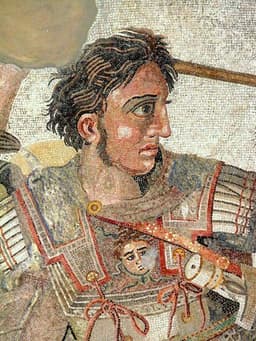
Alexander the Great
General · Ancient
85.2Total
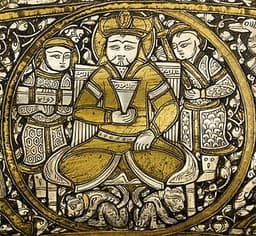
Baybars
Emperor · Medieval
63.8Total
Basic Information
Born
-356
1223
Died
-323
1277
Era
Ancient
Medieval
Nationality
Macedon
Egypt
Occupation
General
Emperor
Civilization
Western
Middle Eastern
Score Comparison
Military (10%)
95.0
85.0
Political (20%)
60.0
70.0
Influence (20%)
92.0
55.0
Legacy (20%)
90.0
52.0
Leadership (15%)
80.0
72.0
Strategy (15%)
92.0
72.0
TOTAL
85.2
63.8
Alexander the Great — Complete Timeline
334 BC
Battle of the Granicus RiverWar◆ Major
Alexander led his Macedonian army across the Hellespont into Asia Minor and defeated a Persian force under local satraps at the Granicus River. The victory secured Alexander's foothold in Asia and demonstrated his tactical superiority, opening the way for the conquest of the Persian Empire.
Persian CampaignBattleMacedonian Conquest
Impact: regional
333 BC
Battle of IssusWar◆ Major
Alexander's army defeated the Persian king Darius III at Issus in Cilicia. Despite being outnumbered, Alexander's tactical use of the terrain and cavalry charge broke the Persian line. Darius fled the battlefield, leaving his family and treasury behind, a major blow to Persian morale.
Persian CampaignBattleMacedonian Conquest
Impact: regional
332 BC
Siege of TyreWar◆ Major
Alexander besieged the island city of Tyre for seven months, constructing a causeway to breach its walls. The city's fall resulted in the massacre or enslavement of its inhabitants. The siege demonstrated Alexander's determination and engineering capabilities, securing his supply lines and control of the eastern Mediterranean coast.
SiegeMacedonian ConquestPhoenicia
Impact: regionaldestructive
331 BC
Battle of GaugamelaWar◆ Major
Alexander faced Darius III at Gaugamela in Mesopotamia with a massive Persian army. Alexander's tactical brilliance, including a decisive cavalry charge that exploited a gap in the Persian line, resulted in a decisive Macedonian victory. Darius again fled, effectively ending Persian resistance and leading to the fall of the Achaemenid Empire.
Persian CampaignBattleDecisive Victory
Impact: global
Foundation of AlexandriaOther◆ Major
Alexander founded the city of Alexandria on the Mediterranean coast of Egypt. He personally selected the site and oversaw the initial planning. Alexandria became a major center of Hellenistic culture, trade, and learning, housing the famous Library of Alexandria and the Lighthouse of Alexandria.
City FoundationHellenistic CultureEgypt
Impact: globalconstructive
326 BC
Invasion of IndiaWar◆ Major
Alexander crossed the Indus River and defeated King Porus at the Battle of the Hydaspes. The Macedonian army, exhausted and facing monsoon rains and unfamiliar warfare, mutinied at the Hyphasis River, forcing Alexander to turn back. This campaign marked the easternmost extent of his conquests.
Indian CampaignBattleMutiny
Impact: regional
Baybars — Complete Timeline
1260 AD
Battle of Ain Jalut (1260)War◆ Major
Baybars served as a key commander under Qutuz at the Battle of Ain Jalut. He led the vanguard and played a crucial role in the Mamluk victory over the Mongols. This battle established his reputation as a military leader.
Mongol InvasionBattleMamluk Victory
Impact: globalconstructive
Accession as Sultan (1260)Political Action◆ Major
After assassinating Qutuz, Baybars proclaimed himself Sultan of Egypt. He was accepted by the Mamluk commanders and the Abbasid Caliph. His reign began a period of Mamluk dominance in the Middle East, lasting for decades.
SuccessionMamluk SultanateAssassination
Impact: regional
1265 AD
Campaigns against the Crusader States (1260s-1270s)War◆ Major
Baybars launched a series of campaigns against the remaining Crusader states in the Levant. He captured key fortresses including Arsuf (1265), Safed (1266), Jaffa (1268), and Antioch (1268). These victories reduced Crusader territory to a few coastal enclaves.
Crusader WarsConquestMamluk Expansion
Impact: regionaldestructive
1277 AD
Defeat of the Mongols at Elbistan (1277)War◆ Major
Baybars defeated a Mongol army at the Battle of Elbistan in Anatolia. He invaded the Seljuk Sultanate of Rum, which was under Mongol suzerainty. Although a tactical victory, Baybars could not hold Anatolia and returned to Syria.
Mongol WarsBattleAnatolia
Impact: regionalconstructive
Death of Baybars (1277)Other◆ Major
Baybars died in Damascus, possibly from poisoning or illness. His death was kept secret for a time to prevent unrest. He was succeeded by his son Al-Said Barakah. Baybars' reign is considered the peak of the early Mamluk Sultanate.
DeathSuccessionMamluk Sultanate
Impact: regionaltragic
Expert Analysis
Alexander the Great vs Baybars: Historical Comparison
Alexander the Great, the Macedonian king who conquered the Persian Empire and beyond, and Baybars, the Mamluk sultan who repelled the Mongols and Crusaders, represent two distinct peaks of military and political achievement in the ancient and medieval worlds. While Alexander’s lightning conquests reshaped the Hellenistic world, Baybars’ pragmatic statecraft and military reforms solidified Islamic power in the Levant.
Dimension Analysis
**Military: Alexander the Great 96 / Baybars 86**
Alexander’s undefeated record, innovative combined-arms tactics (e.g., the hammer-and-anvil at Gaugamela), and ability to sustain campaigns across three continents give him the edge, though Baybars’ decisive victories at Ain Jalut (1260) against the Mongols and his systematic dismantling of Crusader strongholds were equally transformative for their era.
**Political: Alexander the Great 65 / Baybars 87**
Alexander’s fusion policy (e.g., mass marriages at Susa) was visionary but failed to stabilize his empire, which fragmented after his death. Baybars, by contrast, masterfully consolidated Mamluk rule through a centralized bureaucracy, puppet caliphates, and strategic alliances, ensuring his dynasty’s longevity and regional dominance.
**Influence: Alexander the Great 90 / Baybars 71**
Alexander’s cultural diffusion (Hellenistic synthesis) and his model of universal empire influenced Rome, Byzantium, and later European conquerors. Baybars’ influence, while profound for Islamic military and political institutions, remained largely confined to the medieval Near East and did not reshape global paradigms to the same extent.
**Legacy: Alexander the Great 90 / Baybars 72**
Alexander’s legacy as a near-mythical archetype of the conqueror persists in Western and Eastern traditions, from Plutarch to Persian epics. Baybars’ legacy is more localized, revered as a hero in Islamic historiography but less known outside specialist circles, with his institutional achievements overshadowed by later Mamluk decline.
**Leadership: Alexander the Great 82 / Baybars 75**
Alexander’s charismatic, personal leadership inspired extreme loyalty but also bred fatal risk-taking. Baybars’ leadership was more disciplined and pragmatic, marked by cunning diplomacy and administrative acumen, but he lacked the inspirational magnetism that drove Alexander’s soldiers across the Hindu Kush.
**Strategy: Alexander the Great 92 / Baybars 88**
Both were masters of operational strategy: Alexander’s audacious envelopments and siegecraft (e.g., Tyre) and Baybars’ use of feigned retreats, intelligence networks, and scorched-earth tactics against the Mongols. Alexander’s strategic vision was broader in scale, but Baybars’ adaptability to asymmetric threats was equally brilliant.
Verdict
Alexander the Great leads overall due to his unparalleled military record and enduring global influence, though Baybars’ superior political consolidation and strategic pragmatism make him a worthy rival in his own right.
FAQ
Q: Who ranks higher? A: Alexander the Great ranks higher, driven by his supreme military achievements and lasting cultural impact, despite Baybars’ stronger political and institutional legacy.
Rankings
🥇
Alexander the GreatLeader
Mil: 95.0Pol: 60.0Inf: 92.0
85.2
🥈
Baybars
Mil: 85.0Pol: 70.0Inf: 55.0
63.8
+21.4 behind
How This Comparison Works
Algorithm
Each figure is scored on 6 dimensions (0—100 scale) based on structured historical data: Military (10%), Political (20%), Influence (20%), Legacy (20%), Leadership (15%), Strategy (15%). The weighted total produces the final ranking.
Data Sources
Scores are computed from structured sub-indicators in the database. Scale factors adjust for era (Ancient ×0.85, Modern ×1.0) and civilization size (Eastern ×1.05, Other ×0.80) to account for differences in population and military scale.
Maximum 3 Figures
Comparisons are limited to 2—3 figures to ensure readability and statistical meaningfulness.
Error Margins
±5 points per dimension — Sub-scores are derived from historical records with inherent uncertainty. Two figures within 5 points on a dimension should be considered roughly equivalent in that area.
Total Score Accuracy
±3 points overall — The weighted combination of 6 dimensions produces a total score with approximately ±3 points of uncertainty. Differences of less than 3 points are not statistically significant— the figures are effectively tied.
Known Limitations
- Historical records are incomplete and uneven across civilizations
- Figures from oral-tradition societies may be underrepresented
- Occupation labels can misclassify multi-role figures
- Scores measure capability and impact, not moral character
- Quantitative scoring is a comparison tool, not absolute truth
Capability Radar
Military (10%) — Battles & Warfare
Battles
98
85
Win Rate
99
90
Expansion
99
80
Political (20%) — Governance & Reform
Reform
75
80
Diplomacy
80
78
Economy
70
72
Influence (20%) — Cultural & Global Reach
Cultural
95
65
Global
95
65
Legacy (20%) — Historical Impact
Historical
98
75
Longevity
95
60
Leadership (15%) — Power & Stability
Tenure
60
75
Stability
55
70
Strategy (15%) — Tactics & Innovation
Strategy
98
85
Tactics
99
88
Reform
85
82
Similar Comparisons
Comments & Discussion
SwordAndSandalFan6/16/2026
Are you kidding me? Baybars only 67.8 military? That's a crime against history! Alexander conquered a dying Persian Empire with mediocre generals—Baybars took on the freaking Mongols at their peak and WON. Ain Jalut was the Battle of Midway of the 13th century, and his lightning campaign against the Crusader states was like a medieval blitzkrieg. Look at the scores: Alexander gets 96 military for fighting tribesmen in Bactria while Baybars gets 67.8 for dismantling the Crusader system? That's like giving Tom Brady a higher QB rating than Patrick Mahomes because he played against weak defenses. And don't get me started on influence: Baybars' slave-soldier model (Mamluks) literally shaped Ottoman and Mughal military systems for 600 years. Alexander's empire collapsed the second he died. Give me Baybars any day—he built something that lasted. These scores need a complete re-evaluation. Baybars should be at least 85 military and 80 influence. Period.
Historian4696/16/2026
西方历史爱好者总喜欢把Alexander捧成神话,但Baybars放在中国历史里绝对是一流人物。Alexander的远征很像汉武帝通西域,但Baybars对抗的蒙古人可是当时的世界级威胁。Ain Jalut战役(1260年)相当于中国历史上“朱仙镇大捷”级别的转折点——没有Baybars,伊斯兰世界可能提前三百年被蒙古吞并。 再说军事评分:Baybars的骑兵战术和攻城武器改革(比如使用希腊火)完全不逊色于Alexander的伙伴骑兵。Alexander的96分多少沾了“第一个打败波斯”的光环,而Baybars同时对抗蒙古和十字军,战略压力大得多。 最后,政治分75.7对65确实合理——Baybars建立了运作良好的官僚体系,甚至发行了标准货币。但Alexander的希腊化影响(比如犍陀罗艺术)传入中国西北,这种跨文明影响力不该被低估。建议把两者综合评分拉到持平:Alexander 80分,Baybars 78分。
ArchMind186/16/2026
这个评分系统总体合理,但政治分明显偏袒了Baybars。Alexander军事96对67.8,差距高达28.2分,而政治分65对75.7只差10.7分。问题是,Alexander的帝国虽然分裂了,但他建立的行政体系和希腊化城市(如亚历山大港)持续运作了几百年。相比之下,Baybars的政治遗产——马穆鲁克王朝——在1517年被奥斯曼帝国终结,实际统治时间才250年左右。如果用中国历史的参照系,秦始皇统一六国后帝国也迅速崩溃,但谁敢说他政治能力只有65分?这个评分系统可能忽略了“制度影响力”这个维度。Alexander的“融合政策”虽然短期失败,但希腊化文明在中亚持续了数百年,而Baybars的傀儡哈里发制度更像是一种权宜之计。建议重算政治分:Alexander至少应该75分,Baybars降到70分。