Loading...
Alexander Lukashenko vs Ignacio Comonfort
Ignacio Comonfort leads by 4.5 pts · 2 figures compared
…

Alexander Lukashenko
Politician · Modern
43.9Total
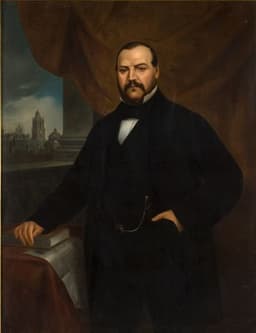
Ignacio Comonfort
Politician · Modern
48.4Total
Basic Information
Born
1954
1812
Died
—
1863
Era
Modern
Modern
Nationality
Belarus
Mexico
Occupation
Politician
Politician
Civilization
Western
Western
Score Comparison
Military (10%)
10.0
14.9
Political (20%)
37.9
61.3
Influence (20%)
51.0
49.4
Legacy (20%)
41.7
42.5
Leadership (15%)
68.0
62.2
Strategy (15%)
38.6
54.3
TOTAL
43.9
48.4
Alexander Lukashenko — Complete Timeline
1994 AD
Elected President of BelarusPolitical Action◆ Major
Alexander Lukashenko won the first presidential election of independent Belarus with 80% of the vote. He campaigned on an anti-corruption platform and promised to restore ties with Russia. His election marked the beginning of an authoritarian regime that would last for decades.
Election VictoryAuthoritarian RegimePost-Soviet Transition
Impact: national
1996 AD
Established Authoritarian RulePolitical Action◆ Major
Lukashenko held a controversial referendum that extended his presidential term and expanded his powers, effectively dissolving the parliament. The referendum was widely criticized as unconstitutional by international observers. This consolidated his authoritarian control over Belarus.
Constitutional CrisisPower ConsolidationAuthoritarianism
Impact: nationaldestructive
1999 AD
Forged Union State with RussiaPolitical Action◆ Major
Lukashenko signed the Treaty on the Creation of a Union State of Russia and Belarus, aiming for closer political and economic integration. The union has remained largely symbolic, with limited implementation. It strengthened Lukashenko's ties with Moscow and provided economic support.
International TreatyRussia-Belarus RelationsIntegration
Impact: regionalconstructive
2020 AD
Suppressed 2020 Presidential Election ProtestsPolitical Action◆ Major
Following a disputed presidential election in August 2020, massive protests erupted across Belarus. Lukashenko's government violently suppressed the demonstrations, arresting thousands and using force against protesters. The crackdown drew international condemnation and sanctions.
Election FraudProtest SuppressionHuman Rights Violations
Impact: nationaldestructive
2021 AD
Survived Assassination AttemptPolitical Action
Belarusian authorities claimed to have foiled an assassination plot against Lukashenko, allegedly involving US intelligence agencies. The incident was used to justify a crackdown on opposition figures. The claims were met with skepticism internationally, with some viewing it as a pretext for repression.
Assassination PlotPolitical RepressionDisinformation
Impact: national
Ignacio Comonfort — Complete Timeline
1855 AD
Served as Minister of War under AlvarezPolitical Action
Comonfort served as Minister of War in the interim government of Juan
ReformaMinister of WarÁlvarez
Impact: nationalconstructive
Became President of MexicoPolitical Action◆ Major
Comonfort succeeded
PresidencyReformaLey Lerdo
Impact: nationalconstructive
1857 AD
Issued the Plan of TacubayaPolitical Action
Comonfort issued the Plan of Tacubaya, which repudiated the liberal Constitution of 1857. This act triggered the War of the Reform, as conservatives and liberals clashed over the constitution's validity.
War of the ReformPlan of TacubayaConstitution of 1857
Impact: nationaldestructive
1858 AD
Overthrown and ExiledPolitical Action◆ Major
Comonfort was overthrown by conservative forces led by F
OverthrowExileConservative Coup
Impact: nationaltragic
Expert Analysis
Origins
Alexander Lukashenko was born in 1954 in Kopys, a rural town in the Vitebsk Region of Belarus. He grew up without a father and was raised by his mother, a dairy worker. He studied history at the Mogilev State University and later worked as a teacher and in agricultural management. His early career included serving as a border guard and directing a state farm, which gave him a grassroots understanding of rural Soviet life.
Ignacio Comonfort was born in 1812 in Puebla, Mexico, to a well-to-do family. He studied at the College of San Ildefonso but left to join the military. He served in various administrative roles, including as a customs official and later as a congressman. Comonfort's background was steeped in the liberal reforms that emerged after Mexico's independence, and he was influenced by the ideas of secularization and federalism.
Rise to Power
Lukashenko rose to prominence in 1994 when he was elected president of Belarus with 80% of the vote. He campaigned as an anti-corruption populist, appealing to rural and industrial workers disenchanted with post-Soviet chaos. His victory was swift, but he quickly centralized power through a 1996 referendum that extended his term and dissolved parliament, creating a rubber-stamp legislature.
Comonfort's rise was gradual. He served as Minister of War under President Juan Álvarez after the Revolution of Ayutla (1855) and succeeded Álvarez as interim president in 1855. He continued the liberal Reforma, enacting laws to reduce church and military power. His presidency was marked by a balancing act between liberals and conservatives, but he lacked a strong popular base.
Leadership & Governance
Lukashenko leads with an iron fist. He maintains control through widespread surveillance, a loyal security apparatus, and state-controlled media. His governance is characterized by a cult of personality and suppression of dissent. For example, the 2020 presidential election protests were brutally crushed, with thousands arrested and international condemnation. Economically, he preserved Soviet-style state ownership, resisting privatization, which kept unemployment low but stifled growth.
Comonfort governed as a moderate reformist. He enacted the Ley Lerdo (forcing corporate land sales) and the Ley Iglesias (regulating church fees), but faced opposition from conservatives and radical liberals. His leadership score of 62.2 reflects his attempts at consensus, but his indecisiveness led to the Plan of Tacubaya (1857), where he repudiated the liberal constitution he had sworn to uphold, triggering the War of the Reform.
Triumph & Tragedy
Lukashenko's triumphs include maintaining independence from Russia while securing economic subsidies, and surviving multiple assassination attempts. His tragedy is the international isolation and economic stagnation of Belarus, with a legacy of human rights abuses. The 2020 protests damaged his legitimacy, with scores of 10.0 in military and 38.6 in strategy reflecting his reliance on coercion over competence.
Comonfort's triumph was advancing the Reforma, which laid groundwork for secular governance. His tragedy was the War of the Reform, a devastating civil war. He was overthrown in 1858 and exiled, dying in 1863. His political score of 61.3 shows his skill in maneuvering, but his legacy score of 42.5 is marred by his reversal on the constitution.
Character & Destiny
Lukashenko is authoritarian and paranoid, often called "Europe's last dictator." His character shaped a fate of increasing repression and isolation. His survival instinct and political cunning (political score 37.9) kept him in power, but at the cost of Belarus's development.
Comonfort was a moderate who lacked conviction. He tried to please both sides, ending up pleasing none. His indecision during the 1857 crisis led to his downfall. Historians view him as a well-intentioned but weak leader, unable to steer Mexico through turbulent times.
Legacy
Lukashenko's legacy is a Belarus trapped in authoritarianism, with little political freedom. He has outlasted many Western leaders, but his country remains one of Europe's poorest. The 2020 protests showed a desire for change, but his grip remains tight. His influence score of 51.0 reflects his impact on Belarusian identity, albeit negative.
Comonfort's legacy is mixed. The Reforma laws he championed eventually triumphed under Benito Juárez, but Comonfort is remembered as the president who betrayed the constitution. His moderate reforms set the stage for later liberal dominance, but his personal legacy is overshadowed by the civil war he unleashed.
Conclusion
While Comonfort scores higher overall (48.4 vs. 43.9), Lukashenko's impact on Belarus is more direct and lasting. Comonfort's reforms were important but were carried forward by others; Lukashenko single-handedly shaped modern Belarus's authoritarian system. However, Comonfort's political acumen (61.3 vs 37.9) and strategic thinking (54.3 vs 38.6) were superior. In terms of historical impact, Comonfort's actions inadvertently led to the liberal victory in Mexico, while Lukashenko's rule has left Belarus in a state of arrested development. Therefore, Comonfort's influence on his nation's trajectory is greater, as his era set the stage for Mexico's modernization, whereas Lukashenko's legacy is one of stagnation.
Rankings
🥇
Ignacio ComonfortLeader
Mil: 14.9Pol: 61.3Inf: 49.4
48.4
🥈
Alexander Lukashenko
Mil: 10.0Pol: 37.9Inf: 51.0
43.9
+4.5 behind
How This Comparison Works
Algorithm
Each figure is scored on 6 dimensions (0—100 scale) based on structured historical data: Military (10%), Political (20%), Influence (20%), Legacy (20%), Leadership (15%), Strategy (15%). The weighted total produces the final ranking.
Data Sources
Scores are computed from structured sub-indicators in the database. Scale factors adjust for era (Ancient ×0.85, Modern ×1.0) and civilization size (Eastern ×1.05, Other ×0.80) to account for differences in population and military scale.
Maximum 3 Figures
Comparisons are limited to 2—3 figures to ensure readability and statistical meaningfulness.
Error Margins
±5 points per dimension — Sub-scores are derived from historical records with inherent uncertainty. Two figures within 5 points on a dimension should be considered roughly equivalent in that area.
Total Score Accuracy
±3 points overall — The weighted combination of 6 dimensions produces a total score with approximately ±3 points of uncertainty. Differences of less than 3 points are not statistically significant— the figures are effectively tied.
Known Limitations
- Historical records are incomplete and uneven across civilizations
- Figures from oral-tradition societies may be underrepresented
- Occupation labels can misclassify multi-role figures
- Scores measure capability and impact, not moral character
- Quantitative scoring is a comparison tool, not absolute truth
Capability Radar
Military (10%) — Battles & Warfare
Battles
0
20
Win Rate
0
25
Expansion
0
5
Political (20%) — Governance & Reform
Reform
15
55
Diplomacy
40
45
Economy
30
30
Influence (20%) — Cultural & Global Reach
Cultural
15
20
Global
20
15
Legacy (20%) — Historical Impact
Historical
20
35
Longevity
30
20
Leadership (15%) — Power & Stability
Tenure
85
40
Stability
20
20
Strategy (15%) — Tactics & Innovation
Strategy
0
20
Tactics
0
15
Reform
5
10
Similar Comparisons
Comments & Discussion
No comments yet. Be the first to share your thoughts!