Loading...
Alexander Jagiellon vs Napoleon Bonaparte
Napoleon Bonaparte leads by 29.1 pts · 2 figures compared
…
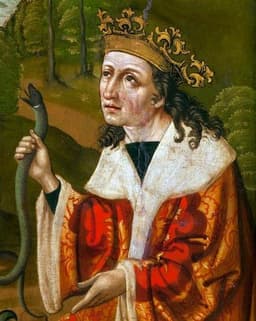
Alexander Jagiellon
Emperor · Medieval
41.8Total

Napoleon Bonaparte
General · Modern
70.9Total
Basic Information
Born
1461
1769
Died
1506
1821
Era
Medieval
Modern
Nationality
Poland
France
Occupation
Emperor
General
Civilization
Western
Western
Score Comparison
Military (10%)
22.6
94.0
Political (20%)
37.9
72.0
Influence (20%)
49.4
40.0
Legacy (20%)
40.8
80.0
Leadership (15%)
58.8
78.0
Strategy (15%)
25.0
90.0
TOTAL
41.8
70.9
Alexander Jagiellon — Complete Timeline
1500 AD
War with MuscovyWar◆ Major
Alexander Jagiellon, as Grand Duke of Lithuania, fought a war against Ivan III of Muscovy. The conflict ended with the Truce of 1503, which ceded significant Lithuanian territories to Muscovy, including Chernigov and Starodub.
MuscovyTerritorial LossEastern Europe
Impact: regionaldestructive
1501 AD
Union of MielnikPolitical Action
Alexander Jagiellon signed the Union of Mielnik, which attempted to create a closer union between Poland and Lithuania. The agreement was never fully implemented but represented an early effort to formalize the relationship between the two states.
UnionPoland-LithuaniaDiplomacy
Impact: regional
Coronation as King of PolandPolitical Action
Alexander Jagiellon was crowned King of Poland following the death of his brother John I Albert. His reign was marked by conflict with the Polish nobility, who sought to limit royal power through the Mielnik Privileges.
CoronationSuccessionNobility
Impact: national
Granting of the Mielnik PrivilegesPolitical Action◆ Major
Alexander Jagiellon was forced to grant the Mielnik Privileges, which gave the Polish Senate significant control over royal decisions. This weakened the monarchy and strengthened the nobility's political influence.
NobilityConstitutional ReformRoyal Power
Impact: nationaldestructive
Napoleon Bonaparte — Complete Timeline
1799 AD
Coup of 18 BrumaireOther◆ Major
Napoleon Bonaparte, with support from his brother Lucien and key political figures, overthrew the Directory in a bloodless coup. He established the Consulate with himself as First Consul, effectively becoming the ruler of France. This event ended the French Revolution's most unstable period.
French RevolutionCoupRise to Power
Impact: regional
1804 AD
Promulgation of the Napoleonic CodeOther◆ Major
Napoleon enacted the Civil Code of the French, known as the Napoleonic Code, a comprehensive set of laws that replaced the fragmented feudal legal systems. The code established legal equality, protected property rights, and secularized law. It became the basis for legal systems in many European and world countries.
Legal ReformNapoleonic CodeCivil Law
Impact: globalconstructive
1805 AD
Battle of AusterlitzWar◆ Major
Napoleon's Grande Arm
Napoleonic WarsBattleDecisive Victory
Impact: global
1812 AD
Invasion of RussiaWar◆ Major
Napoleon led the Grande Arm
Napoleonic WarsInvasionDisaster
Impact: globaldestructive
1815 AD
Battle of WaterlooWar◆ Major
Napoleon's French army was defeated by the combined forces of the Duke of Wellington's Anglo-Allied army and Gebhard Leberecht von Bl
Napoleonic WarsBattleFinal Defeat
Impact: globaldestructive
Expert Analysis
alexander-jagiellon-vs-napoleon-bonaparte
# The Conqueror and the Conciliator
On a June morning in 1815, Napoleon Bonaparte watched his Imperial Guard march up the muddy slope of Mont-Saint-Jean, their bearskin caps silhouetted against the gray Belgian sky. Less than three centuries earlier, another ruler—Alexander Jagiellon—had stood in a very different kind of defeat, watching the smoke rise from Smolensk as Muscovite banners fluttered over a city he would never reclaim. Both men were monarchs. Both faced enemies at the gates. Yet one forged an empire that still shapes European law, while the other faded into a footnote of dynastic decline. What separates a titan from a footnote? The answer lies not merely in talent, but in the relentless pressure of history itself.
Origins
Napoleon Bonaparte was born in 1769 on Corsica, an island that had been French for barely a year. His family was minor nobility—impoverished, ambitious, and resentful of French domination. This outsider status became his engine. At the military school of Brienne, he was mocked for his accent and small stature, but he devoured books on artillery and military history with a hunger that his aristocratic classmates lacked. Corsica taught him that power belonged to those who seized it.
Alexander Jagiellon, born in 1461, inherited a very different world. He was the fourth son of Casimir IV, King of Poland and Grand Duke of Lithuania—a scion of the Jagiellonian dynasty that had married its way across Central Europe. His childhood was not one of struggle but of expectation. The Polish-Lithuanian Commonwealth was a sprawling, fragile union of nobles who jealously guarded their privileges. Where Napoleon learned to command through sheer will, Alexander learned to negotiate, to placate, to survive within a system that could destroy a king as easily as it crowned him.
Rise to Power
Napoleon’s ascent was a thunderbolt. In 1795, at age twenty-six, he saved the French Revolutionary government from a royalist uprising with a “whiff of grapeshot”—cannon fire into a Parisian mob. By 1796, he commanded the Army of Italy and turned a starving, ragged force into a conquering legion, winning six battles in a single month. His 1798 Egyptian campaign was a disaster strategically but a masterpiece of self-promotion; he returned to France in 1799 as the man who could restore order. In the coup of 18 Brumaire, he made himself First Consul. Five years later, he crowned himself Emperor.
Alexander’s path was slower, and less his own making. He became Grand Duke of Lithuania in 1492 after his father’s death, but only because his older brothers took Poland and Hungary. When his brother John I Albert died in 1501, Alexander was elected King of Poland—but at a price. The Polish Senate forced him to sign the Union of Mielnik, which gave nobles unprecedented control over royal appointments and taxation. He did not seize power; power was handed to him, wrapped in chains.
Leadership & Governance
Napoleon governed as he fought: with speed, centralization, and audacity. His Napoleonic Code of 1804 standardized French law, abolished feudal privileges, and enshrined merit over birth. It spread across Europe like a legal gospel. He reformed education, built roads, and created the Bank of France. His military genius—scoring 93 in strategy, 94 in military command—rested on speed, massed artillery, and the corps system that allowed his armies to live off the land. He won at Austerlitz in 1805 by luring his enemies into a trap, then crushing their center. He was, by any measure, a political and military revolutionary.
Alexander Jagiellon governed from weakness. The Mielnik Privileges of 1501 made him a constitutional monarch in name only; the Senate controlled war, peace, and finance. His military score of 16.7 reflects a reign of constant retreat. In 1500, Ivan III of Muscovy invaded Lithuania, and Alexander’s army was crushed at the Vedrosha River. He lost Smolensk, a city that had been a Jagiellonian stronghold. He tried diplomacy—marrying Ivan’s daughter Helena in 1495—but the marriage brought no peace. His political score of 48.9 shows a man who could not bend events to his will.
Triumph & Tragedy
Napoleon’s triumph was absolute: by 1810, he ruled directly or indirectly over 70 million Europeans, from Madrid to Warsaw. His tragedy was equally absolute. In 1812, he invaded Russia with 600,000 men; fewer than 100,000 returned. The retreat was a horror of frostbite, starvation, and Cossack raids. He was exiled to Elba in 1814, escaped, ruled for a Hundred Days, and fell forever at Waterloo in 1815. His final years on Saint Helena were a slow, bitter death from stomach cancer—or, as he believed, poison.
Alexander’s triumph was survival itself. He managed to hold the Polish-Lithuanian union together despite military disasters and noble rebellion. His tragedy was that he achieved nothing more. He died in 1506, at age forty-five, possibly poisoned by his own courtiers. The Teutonic Knights and Muscovy continued to gnaw at Lithuania’s borders. His reign was a holding action, not a conquest.
Character & Destiny
Napoleon believed he was the instrument of fate. “I am not a man,” he once said, “but a thing.” His relentless ambition, his contempt for obstacles, his ability to inspire fanatical loyalty—these traits built an empire. But they also blinded him. He could not stop, could not compromise, could not accept limits. His total score of 82.4 reflects a man who was brilliant, but whose brilliance contained the seeds of his destruction.
Alexander was a conciliator in an age that demanded a conqueror. He was prudent, patient, and willing to bargain—but the Polish nobility saw this as weakness. His total score of 48.7 is not merely lower; it is the score of a man trapped by his own system. He could not reform because reform required power, and power required the nobles’ consent. He was a prisoner of the very throne he sat upon.
Legacy
Napoleon’s legacy is everywhere. The Napoleonic Code governs law from France to Louisiana to Japan. His military innovations shaped Clausewitz and modern warfare. His name is synonymous with ambition and genius. He is remembered as both a liberator and a tyrant, but never forgotten.
Alexander Jagiellon is remembered, if at all, as the king who lost Smolensk. His Union of Mielnik was a step toward the Polish-Lithuanian Commonwealth’s later “Golden Liberty,” but it also weakened the monarchy fatally. In Polish history, he is a footnote between stronger brothers and more decisive successors. His legacy score of 53.9 is a verdict: he preserved, but did not create.
Conclusion
Napoleon and Alexander both inherited thrones. But Napoleon built his from nothing, while Alexander received his already crumbling. One was a storm; the other, a dam that held for a time but could not stop the flood. Their difference is not merely in talent—though Napoleon’s genius is undeniable—but in the eras that shaped them. Napoleon’s France was a revolutionary furnace that could forge new men; Alexander’s Poland was a medieval mosaic of entrenched powers that resisted change. The conqueror and the conciliator both faced the same question: can one man bend history? Napoleon proved that the answer is yes—but only for a moment. Alexander proved that sometimes, the most honest answer is no.
Rankings
🥇
Napoleon BonaparteLeader
Mil: 94.0Pol: 72.0Inf: 40.0
70.9
🥈
Alexander Jagiellon
Mil: 22.6Pol: 37.9Inf: 49.4
41.8
+29.1 behind
How This Comparison Works
Algorithm
Each figure is scored on 6 dimensions (0—100 scale) based on structured historical data: Military (10%), Political (20%), Influence (20%), Legacy (20%), Leadership (15%), Strategy (15%). The weighted total produces the final ranking.
Data Sources
Scores are computed from structured sub-indicators in the database. Scale factors adjust for era (Ancient ×0.85, Modern ×1.0) and civilization size (Eastern ×1.05, Other ×0.80) to account for differences in population and military scale.
Maximum 3 Figures
Comparisons are limited to 2—3 figures to ensure readability and statistical meaningfulness.
Error Margins
±5 points per dimension — Sub-scores are derived from historical records with inherent uncertainty. Two figures within 5 points on a dimension should be considered roughly equivalent in that area.
Total Score Accuracy
±3 points overall — The weighted combination of 6 dimensions produces a total score with approximately ±3 points of uncertainty. Differences of less than 3 points are not statistically significant— the figures are effectively tied.
Known Limitations
- Historical records are incomplete and uneven across civilizations
- Figures from oral-tradition societies may be underrepresented
- Occupation labels can misclassify multi-role figures
- Scores measure capability and impact, not moral character
- Quantitative scoring is a comparison tool, not absolute truth
Capability Radar
Military (10%) — Battles & Warfare
Battles
15
95
Win Rate
10
90
Expansion
10
95
Political (20%) — Governance & Reform
Reform
30
95
Diplomacy
40
80
Economy
30
85
Influence (20%) — Cultural & Global Reach
Cultural
20
85
Global
15
90
Legacy (20%) — Historical Impact
Historical
25
95
Longevity
20
90
Leadership (15%) — Power & Stability
Tenure
50
85
Stability
25
70
Strategy (15%) — Tactics & Innovation
Strategy
15
95
Tactics
10
98
Reform
10
92
Similar Comparisons
Comments & Discussion
CANNON_COUNTER6/17/2026
Sure, Napoleon was a tactical genius, but comparing him to Alexander Jagiellon is like comparing a Swiss watch to a sundial. Alexander inherited a massive, unwieldy Commonwealth and did nothing with it—lost Smolensk, couldn't hold off Ivan III, and died leaving a fragmented state. Napoleon created the Napoleonic Code, reorganized Central Europe, and still influences modern law. Alexander's legacy? A footnote about a dynasty that married smart but fought poorly. One built; one crumbled. Facts don
锈剑看客6/17/2026
拿破仑赢在时势与个人天才,但别把亚历山大·雅盖隆当成废物。他可是立陶宛大公,波兰国王,统治着当时欧洲最大的国家之一。问题是他生不逢时,面对莫斯科的崛起和奥斯曼的威胁,手里没多少牌。拿破仑输在滑铁卢,亚历山大输在资源不足。如果交换时代,拿破仑照样会被莫斯科的寒冬耗死,而亚历山大也许能用外交手腕稳住局面。历史不是直线,是匹瞎马。