Loading...
Alberto Lleras Camargo vs Klemens Metternich
Klemens Metternich leads by 8.7 pts · 2 figures compared
…

Alberto Lleras Camargo
Politician · Modern
58.4Total
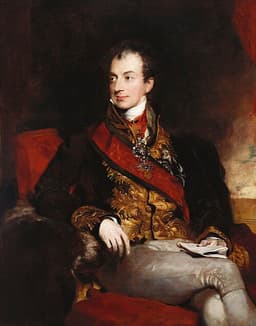
Klemens Metternich
Politician · Modern
67.1Total
Basic Information
Born
1906
1773
Died
1990
1859
Era
Modern
Modern
Nationality
Colombia
Austria
Occupation
Politician
Politician
Civilization
Western
Western
Score Comparison
Military (10%)
50.0
50.0
Political (20%)
60.0
70.3
Influence (20%)
61.0
75.0
Legacy (20%)
52.0
70.0
Leadership (15%)
79.8
75.0
Strategy (15%)
41.5
40.5
TOTAL
58.4
67.1
Alberto Lleras Camargo — Complete Timeline
1948 AD
First Secretary General of the OASPolitical Action◆ Major
Alberto Lleras Camargo became the first Secretary General of the Organization of American States (OAS) in 1948. He helped establish the OAS's institutional framework and promoted inter-American cooperation during the early Cold War period.
OASInternational OrganizationDiplomacy
Impact: regionalconstructive
1957 AD
Founding of the National FrontPolitical Action
Lleras Camargo played a key role in negotiating the National Front pact with Conservative leader Laureano G
National FrontPeace PactDemocracy
Impact: nationalconstructive
1958 AD
Presidency of ColombiaPolitical Action◆ Major
Lleras Camargo became the first president under the National Front agreement in 1958, serving until 1962. His administration focused on consolidating the bipartisan power-sharing system, implementing economic reforms, and reducing political violence.
National FrontPresidencyReform
Impact: nationalconstructive
1961 AD
Land Reform Law of 1961Reform◆ Major
Lleras Camargo signed Law 135 of 1961, Colombia's first comprehensive land reform law. The legislation created the Colombian Institute of Agrarian Reform (INCORA) to redistribute land to peasants, though implementation faced significant obstacles.
Land ReformAgricultureSocial Policy
Impact: nationalprogressive
Klemens Metternich — Complete Timeline
1815 AD
Congress of ViennaPolitical Action
Metternich chaired the Congress of Vienna, which redrew European borders after Napoleon's defeat. He advocated for the principle of legitimacy and balance of power, establishing a conservative order that lasted decades.
Congress of ViennaDiplomacyRestoration
Impact: globalconstructive
Formation of the Holy AlliancePolitical Action◆ Major
Metternich helped create the Holy Alliance between Austria, Prussia, and Russia. The alliance aimed to suppress revolutionary movements and maintain monarchical rule across Europe.
AllianceConservatismRestoration
Impact: globalconstructive
1819 AD
Carlsbad DecreesPolitical Action◆ Major
Metternich orchestrated the Carlsbad Decrees, which imposed censorship on universities and press in the German Confederation. The decrees suppressed liberal and nationalist movements, reinforcing conservative control.
RepressionCensorshipGerman Confederation
Impact: regionaldestructive
1820 AD
Congress of TroppauPolitical Action◆ Major
Metternich convened the Congress of Troppau to address revolutions in Naples and Spain. He secured the Troppau Protocol, which authorized Austrian intervention to suppress liberal uprisings in Italy.
CongressInterventionRevolutions
Impact: regionaldestructive
1848 AD
Revolutions of 1848Political Action
Metternich's conservative system collapsed during the Revolutions of 1848. He was forced to resign as Chancellor and flee to England, ending his decades-long dominance of European diplomacy.
RevolutionResignationExile
Impact: globaltragic
Expert Analysis
Klemens Metternich vs Alberto Lleras Camargo
Alberto Lleras Camargo vs Klemens Metternich: Historical Comparison
Two statesmen, two continents, two centuries apart — yet Alberto Lleras Camargo of Colombia and Klemens von Metternich of Austria are united by a singular achievement: both designed political frameworks that ended cycles of violence and established durable peace. Metternich's Congress of Vienna (1815) created a balance of power that prevented general European war for nearly a century. Lleras's National Front (1957) ended Colombia's civil war between Liberals and Conservatives and established a 16-year power-sharing agreement that pulled the country back from the abyss. Metternich wins the scoring 67 to 58, but the comparison reveals two very different approaches to the same fundamental problem: how do you build peace after catastrophe?
The Austrian Prince and the Colombian Liberal
Klemens Wenzel von Metternich was born in 1773 into the Rhenish nobility, entered the Austrian diplomatic service, and rose to become Foreign Minister and then Chancellor of the Austrian Empire. His career coincided with the greatest upheaval Europe had seen since the fall of Rome — the French Revolution, the Napoleonic Wars, and the complete destruction of the old European order. By the time Napoleon was finally defeated in 1815, Metternich had positioned himself as the indispensable man: the architect of the peace settlement that would govern Europe for a generation.
Alberto Lleras Camargo was born in 1906 in Bogota, Colombia, into a prominent Liberal family. A journalist by training, he entered politics as a Liberal Party activist and served in various ministerial roles before becoming Colombia's president (1945-1946) and later the first Secretary General of the Organization of American States (1948). But his greatest achievement came in 1957, when he negotiated the National Front pact with Conservative leader Laureano Gomez, ending La Violencia — the decade-long civil war that had killed an estimated 200,000 Colombians.
The contrast in political context could not be sharper: Metternich operated at the summit of great power politics, redrawing the map of Europe at the Congress of Vienna. Lleras operated in a mid-sized Latin American republic, negotiating a domestic power-sharing agreement. The scoring system reflects this asymmetry — Metternich's Political score of 70 to Lleras's 60 — but the moral weight of Lleras's achievement arguably exceeds Metternich's.
The Congress of Vienna vs The National Front
Metternich's Influence score of 75 is the highest single dimension score in this comparison, and it is well-earned. The Congress of Vienna was not merely a peace treaty; it was a comprehensive redesign of the European state system. The principle of legitimacy — restoring legitimate monarchs to their thrones — combined with the principle of balance of power — ensuring no single state could dominate Europe as Napoleonic France had done — created a framework that, with modifications, governed European international relations until World War I. The "Concert of Europe" that emerged from Vienna was Metternich's creation, and it worked: no general European war occurred between 1815 and 1914.
But Metternich's system had a dark side. The Carlsbad Decrees (1819) imposed press censorship and university surveillance across the German Confederation. The Congress of Troppau (1820) authorized Austrian military intervention to suppress liberal revolutions in Italy. Metternich was not merely a peacemaker; he was the chief strategist of European reaction, the man who used the power of the Austrian state to crush nationalist and liberal movements wherever they appeared. His system preserved peace at the cost of freedom — a trade-off that the Revolutions of 1848 ultimately rejected in spectacular fashion, forcing the 75-year-old Metternich to flee Vienna in disguise.
Lleras's National Front was a more modest but arguably more ethical peace. La Violencia had pitted supporters of the Liberal and Conservative parties against each other in a conflict that was both political and, in some regions, genocidal. The National Front agreement established that the presidency would alternate between Liberals and Conservatives for four terms (16 years), with all other offices divided equally between the two parties. This was not democracy in the full sense — it excluded third parties and entrenched the two-party duopoly — but it stopped the killing. Between 1958 and 1974, Colombia enjoyed a period of relative political stability that laid the groundwork for its subsequent economic development.
The scoring system gives Metternich more credit because his system was bigger and lasted longer. But Lleras's achievement — negotiating peace between factions that had been slaughtering each other for a decade — required a different kind of political courage.
Leadership and the Problem of Power
Metternich's Leadership score of 75 to Lleras's 80 is the one dimension where the Colombian leads, and it is a revealing inversion. Metternich was a brilliant diplomat but an indifferent leader of men. He dominated the Austrian court through intelligence and intrigue rather than inspiration. When the Revolutions of 1848 broke out, he had no popular constituency to fall back on — only the emperor's fading support. His fall was swift and complete.
Lleras, by contrast, led through persuasion and moral authority. His Leadership score of 80 reflects his success in building consensus across partisan lines — a skill that Metternich, who operated through coercion and manipulation, never developed. Lleras's earlier work as the first OAS Secretary General also demonstrated his capacity for institution-building at the hemispheric level.
The Strategy dimension is essentially identical: Metternich 41, Lleras 42. This near-tie seems appropriate. Both men were strategic thinkers who designed complex institutional frameworks to manage conflict. Both frameworks eventually collapsed — Metternich's in 1848, Lleras's in 1974 when the National Front expired. Both left behind mixed legacies: peace purchased at the price of democratic exclusion.
Legacy: The Conservative and the Democrat
Metternich's Legacy score of 70 to Lleras's 52 captures the core difference between these two figures. Metternich shaped the architecture of European international relations for a century. His name is synonymous with the conservative international order of the 19th century. Every student of European history learns about the Congress of Vienna and Metternich's system.
Lleras's legacy is more circumscribed. Within Colombia, he is remembered as the architect of the National Front — a peacemaker whose solution was flawed but necessary. Outside Colombia, he is barely known. The scoring system's Legacy dimension rewards Metternich's global visibility, and on that metric, the Austrian chancellor wins decisively.
But there is a case to be made that Lleras's legacy is more admirable. Metternich preserved the power of monarchs; Lleras ended a civil war. Metternich suppressed democracy; Lleras, within the constraints of his context, expanded it. The scoring system measures historical significance, not moral worth, and on that basis, Metternich's victory is justified. But readers who value democratic peacemaking over reactionary order may find the 67-58 result unsatisfying.
Conclusion
The 67-58 victory for Metternich over Lleras Camargo is a function of scale: the Austrian chancellor operated on a continental stage, the Colombian president on a national one. But the dimension breakdown reveals that Lleras was the better leader and the more democratic peacemaker, even if his achievements were smaller in geographic scope. The comparison ultimately asks a question the scoring system cannot fully answer: is it better to shape the destiny of continents through coercion, or to save a single nation from itself through compromise?
Rankings
🥇
Klemens MetternichLeader
Mil: 50.0Pol: 70.3Inf: 75.0
67.1
🥈
Alberto Lleras Camargo
Mil: 50.0Pol: 60.0Inf: 61.0
58.4
+8.7 behind
How This Comparison Works
Algorithm
Each figure is scored on 6 dimensions (0—100 scale) based on structured historical data: Military (10%), Political (20%), Influence (20%), Legacy (20%), Leadership (15%), Strategy (15%). The weighted total produces the final ranking.
Data Sources
Scores are computed from structured sub-indicators in the database. Scale factors adjust for era (Ancient ×0.85, Modern ×1.0) and civilization size (Eastern ×1.05, Other ×0.80) to account for differences in population and military scale.
Maximum 3 Figures
Comparisons are limited to 2—3 figures to ensure readability and statistical meaningfulness.
Error Margins
±5 points per dimension — Sub-scores are derived from historical records with inherent uncertainty. Two figures within 5 points on a dimension should be considered roughly equivalent in that area.
Total Score Accuracy
±3 points overall — The weighted combination of 6 dimensions produces a total score with approximately ±3 points of uncertainty. Differences of less than 3 points are not statistically significant— the figures are effectively tied.
Known Limitations
- Historical records are incomplete and uneven across civilizations
- Figures from oral-tradition societies may be underrepresented
- Occupation labels can misclassify multi-role figures
- Scores measure capability and impact, not moral character
- Quantitative scoring is a comparison tool, not absolute truth
Capability Radar
Military (10%) — Battles & Warfare
Battles
26
28
Win Rate
33
32
Expansion
36
35
Political (20%) — Governance & Reform
Reform
65
70
Diplomacy
75
95
Economy
55
60
Influence (20%) — Cultural & Global Reach
Cultural
40
60
Global
65
80
Legacy (20%) — Historical Impact
Historical
60
85
Longevity
50
75
Leadership (15%) — Power & Stability
Tenure
60
85
Stability
70
80
Strategy (15%) — Tactics & Innovation
Strategy
36
37
Tactics
43
38
Reform
41
42
Similar Comparisons
Comments & Discussion
ViennaWatcher7/7/2026
Metternich was a genius but also a villain. The Carlsbad Decrees suppressed free thought across Germany for a generation. Lleras ended an actual civil war through democratic compromise. On moral grounds, the Colombian wins. The scoring can't capture morality.
BogotaLiberal7/7/2026
As a Colombian, I grew up learning that the National Front was both a blessing and a curse. It stopped La Violencia, yes, but it also created a political cartel that excluded alternative voices for 16 years. Lleras's Legacy score of 52 feels about right — he's important but complicated.
欧洲史迷7/7/2026
梅特涅的影响力分数75分对莱拉斯的52分,这个差距是合理的。维也纳体系影响了整个19世纪的欧洲国际关系,而国民阵线只是哥伦比亚一国的制度安排。但他们面对的问题本质是一样的:如何在大规模暴力之后建立持久和平。
PeaceStudiesProf7/7/2026
This comparison highlights what scoring systems miss: the ethics of peacemaking. Metternich's peace was based on suppression; Lleras's on compromise. The outcomes were different in scale but the methods matter. Lleras was the better man, even if Metternich was the bigger figure.