Loading...
This comparison has not been analyzed yet.
One-time AI generation (~1 minute). Scores and timeline are already available below.
Alberto Fernandez vs Yves Leterme
Alberto Fernandez leads by 3.1 pts · 2 figures compared
…

Alberto Fernandez
Politician · Modern
46.4Total
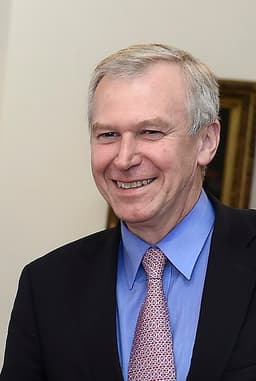
Yves Leterme
Politician · Modern
43.3Total
Basic Information
Born
1959
1960
Died
—
—
Era
Modern
Modern
Nationality
Argentina
Belgium
Occupation
Politician
Politician
Civilization
Western
Western
Score Comparison
Military (10%)
49.5
50.0
Political (20%)
39.4
36.5
Influence (20%)
49.4
47.1
Legacy (20%)
39.2
37.5
Leadership (15%)
62.2
48.4
Strategy (15%)
40.6
44.4
TOTAL
46.4
43.3
Alberto Fernandez — Complete Timeline
2019 AD
Election as President of ArgentinaPolitical Action◆ Major
Alberto Fern
ElectionPolitical Change
Impact: national
2020 AD
COVID-19 Pandemic LockdownPolitical Action◆ Major
Fernández implemented one of the world's longest and strictest COVID-19 lockdowns in March 2020. The quarantine lasted over 200 days, aiming to slow virus spread but causing severe economic contraction and social unrest.
PandemicPublic Health
Impact: national
Restructuring of Foreign DebtPolitical Action◆ Major
Fernández's government successfully restructured $65 billion in foreign sovereign debt with private creditors. The deal reduced interest payments and extended maturities, providing fiscal relief amid economic crisis.
DebtEconomic Policy
Impact: nationalconstructive
2023 AD
Defeat in 2023 Primary ElectionsPolitical Action◆ Major
Fernández's coalition suffered a heavy defeat in the August 2023 primary elections, with the Peronist candidate Sergio Massa winning only 27% of the vote. This signaled the collapse of Fernández's political support.
ElectionPolitical Defeat
Impact: nationaltragic
Yves Leterme — Complete Timeline
2008 AD
Prime Minister of Belgium (first term)Political Action◆ Major
Yves Leterme became Prime Minister of Belgium, leading a coalition government. His tenure was marked by political instability due to the ongoing linguistic conflict between Flemish and French-speaking parties.
Prime MinisterBelgian Politics
Impact: national
Resignation over Fortis affairPolitical Action◆ Major
Prime Minister Yves Leterme resigned after the Supreme Court revealed that his government had attempted to influence a judicial decision regarding the sale of Fortis bank. The resignation was accepted by the king, but Leterme later returned as PM.
ResignationScandalFortis
Impact: nationaldestructive
2010 AD
Resignation over political crisisPolitical Action◆ Major
Prime Minister Yves Leterme resigned again after the Open VLD party left the coalition over the unresolved linguistic dispute in the Brussels-Halle-Vilvoorde constituency. This triggered a 541-day political crisis without a government.
ResignationPolitical CrisisLinguistic Conflict
Impact: nationaldestructive
This comparison has not been analyzed yet.
One-time AI generation (~1 minute). Scores and timeline are already available below.
Rankings
🥇
Alberto FernandezLeader
Mil: 49.5Pol: 39.4Inf: 49.4
46.4
🥈
Yves Leterme
Mil: 50.0Pol: 36.5Inf: 47.1
43.3
+3.1 behind
How This Comparison Works
Algorithm
Each figure is scored on 6 dimensions (0—100 scale) based on structured historical data: Military (10%), Political (20%), Influence (20%), Legacy (20%), Leadership (15%), Strategy (15%). The weighted total produces the final ranking.
Data Sources
Scores are computed from structured sub-indicators in the database. Scale factors adjust for era (Ancient ×0.85, Modern ×1.0) and civilization size (Eastern ×1.05, Other ×0.80) to account for differences in population and military scale.
Maximum 3 Figures
Comparisons are limited to 2—3 figures to ensure readability and statistical meaningfulness.
Error Margins
±5 points per dimension — Sub-scores are derived from historical records with inherent uncertainty. Two figures within 5 points on a dimension should be considered roughly equivalent in that area.
Total Score Accuracy
±3 points overall — The weighted combination of 6 dimensions produces a total score with approximately ±3 points of uncertainty. Differences of less than 3 points are not statistically significant— the figures are effectively tied.
Known Limitations
- Historical records are incomplete and uneven across civilizations
- Figures from oral-tradition societies may be underrepresented
- Occupation labels can misclassify multi-role figures
- Scores measure capability and impact, not moral character
- Quantitative scoring is a comparison tool, not absolute truth
Capability Radar
Military (10%) — Battles & Warfare
Battles
27
30
Win Rate
34
29
Expansion
34
36
Political (20%) — Governance & Reform
Reform
30
20
Diplomacy
35
25
Economy
25
20
Influence (20%) — Cultural & Global Reach
Cultural
20
10
Global
15
10
Legacy (20%) — Historical Impact
Historical
20
15
Longevity
15
10
Leadership (15%) — Power & Stability
Tenure
40
30
Stability
20
10
Strategy (15%) — Tactics & Innovation
Strategy
35
40
Tactics
39
43
Reform
43
45
Similar Comparisons
Comments & Discussion
No comments yet. Be the first to share your thoughts!