Loading...
Analysis will be generated on first visit.
Scores and timeline are available below. The page will refresh automatically when ready.
Albert of Brandenburg vs Napoleon Bonaparte
Napoleon Bonaparte leads by 22.3 pts · 2 figures compared
…

Albert of Brandenburg
Emperor · Medieval
60.1Total
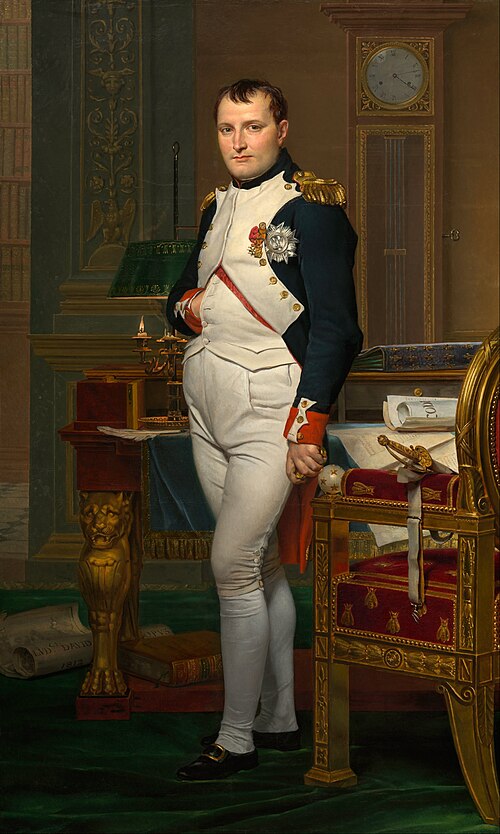
Napoleon Bonaparte
General · Modern
82.4Total
Basic Information
Born
1490
1769
Died
1545
1821
Era
Medieval
Modern
Nationality
Brandenburg
France
Occupation
Emperor
General
Civilization
Western
Western
Score Comparison
Military (10%)
14.5
94.0
Political (20%)
63.0
75.0
Influence (20%)
69.9
82.0
Legacy (20%)
58.4
78.0
Leadership (15%)
75.2
80.0
Strategy (15%)
60.5
93.0
TOTAL
60.1
82.4
Rankings
🥇
Napoleon BonaparteLeader
Mil: 94.0Pol: 75.0Inf: 82.0
82.4
🥈
Albert of Brandenburg
Mil: 14.5Pol: 63.0Inf: 69.9
60.1
+22.3 behind
How This Comparison Works
Algorithm
Each figure is scored on 6 dimensions (0—100 scale) based on structured historical data: Military (10%), Political (20%), Influence (20%), Legacy (20%), Leadership (15%), Strategy (15%). The weighted total produces the final ranking.
Data Sources
Scores are computed from structured sub-indicators in the database. Scale factors adjust for era (Ancient ×0.85, Modern ×1.0) and civilization size (Eastern ×1.05, Other ×0.80) to account for differences in population and military scale.
Maximum 3 Figures
Comparisons are limited to 2—3 figures to ensure readability and statistical meaningfulness.
Error Margins
±5 points per dimension — Sub-scores are derived from historical records with inherent uncertainty. Two figures within 5 points on a dimension should be considered roughly equivalent in that area.
Total Score Accuracy
±3 points overall — The weighted combination of 6 dimensions produces a total score with approximately ±3 points of uncertainty. Differences of less than 3 points are not statistically significant— the figures are effectively tied.
Known Limitations
- Historical records are incomplete and uneven across civilizations
- Figures from oral-tradition societies may be underrepresented
- Occupation labels can misclassify multi-role figures
- Scores measure capability and impact, not moral character
- Quantitative scoring is a comparison tool, not absolute truth
Capability Radar
Military (10%) — Battles & Warfare
Battles
7
95
Win Rate
7
90
Expansion
15
95
Political (20%) — Governance & Reform
Reform
20
95
Diplomacy
30
80
Economy
25
85
Influence (20%) — Cultural & Global Reach
Cultural
20
85
Global
35
90
Legacy (20%) — Historical Impact
Historical
45
95
Longevity
30
90
Leadership (15%) — Power & Stability
Tenure
40
85
Stability
15
70
Strategy (15%) — Tactics & Innovation
Strategy
13
95
Tactics
18
98
Reform
18
92
Analysis will be generated on first visit.
Scores and timeline are available below. The page will refresh automatically when ready.
Albert of Brandenburg — Complete Timeline
1513 AD
Appointed Archbishop of MagdeburgPolitical Action◆ Major
Albert was appointed Archbishop of Magdeburg at age 23, a position that made him a prince-elector of the Holy Roman Empire. This appointment was part of a pluralism of benefices that concentrated significant ecclesiastical and political power in his hands.
ArchbishopEcclesiastical Power
Impact: regional
1514 AD
Became Archbishop-Elector of MainzPolitical Action◆ Major
Albert was appointed Archbishop-Elector of Mainz, the highest-ranking ecclesiastical prince in the Holy Roman Empire. This position gave him a vote in imperial elections and control over the largest archdiocese in Germany, making him a key figure in imperial politics.
Archbishop-ElectorMainz
Impact: regional
1517 AD
Authorized the Sale of IndulgencesPolitical Action◆ Major
Albert authorized the sale of indulgences in his territories to repay debts incurred from his appointments. This practice, promoted by Johann Tetzel, sparked Martin Luther's Ninety-five Theses and the beginning of the Protestant Reformation.
Indulgence TradeReformation
Impact: globaldestructive
1520 AD
Patronized the Arts and HumanismCultural
Albert was a patron of the arts and humanist scholarship, commissioning works from artists like Albrecht D
PatronageRenaissance
Impact: regionalconstructive
1521 AD
Opposed the ReformationPolitical Action◆ Major
Albert opposed the Protestant Reformation and remained a staunch Catholic. He supported the Edict of Worms, which banned Luther's teachings, and used his influence to suppress Protestantism in his territories, though with limited success.
Catholic OppositionReformation
Impact: regional
Similar Comparisons
Comments & Discussion
No comments yet. Be the first to share your thoughts!