Loading...
Analysis will be generated on first visit.
Scores and timeline are available below. The page will refresh automatically when ready.
Albert Kesselring vs Julius Caesar
Julius Caesar leads by 9.7 pts · 2 figures compared
…

Albert Kesselring
General · Modern
73.6Total
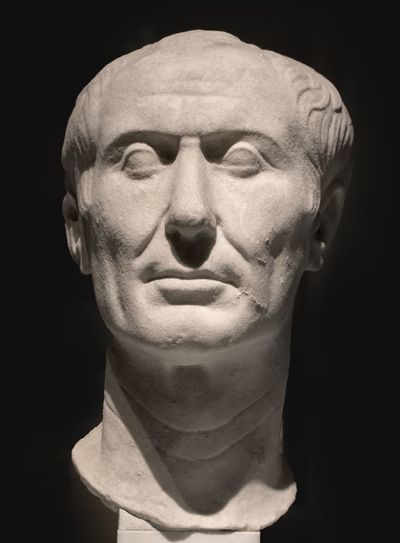
Julius Caesar
General · Ancient
83.3Total
Basic Information
Born
1885
-100
Died
1960
-44
Era
Modern
Ancient
Nationality
Germany
Roman Republic
Occupation
General
General
Civilization
Western
Western
Score Comparison
Military (10%)
63.7
88.0
Political (20%)
81.1
78.0
Influence (20%)
74.4
85.0
Legacy (20%)
70.0
82.0
Leadership (15%)
81.5
82.0
Strategy (15%)
66.3
88.0
TOTAL
73.6
83.3
Rankings
🥇
Julius CaesarLeader
Mil: 88.0Pol: 78.0Inf: 85.0
83.3
🥈
Albert Kesselring
Mil: 63.7Pol: 81.1Inf: 74.4
73.6
+9.7 behind
How This Comparison Works
Algorithm
Each figure is scored on 6 dimensions (0—100 scale) based on structured historical data: Military (10%), Political (20%), Influence (20%), Legacy (20%), Leadership (15%), Strategy (15%). The weighted total produces the final ranking.
Data Sources
Scores are computed from structured sub-indicators in the database. Scale factors adjust for era (Ancient ×0.85, Modern ×1.0) and civilization size (Eastern ×1.05, Other ×0.80) to account for differences in population and military scale.
Maximum 3 Figures
Comparisons are limited to 2—3 figures to ensure readability and statistical meaningfulness.
Error Margins
±5 points per dimension — Sub-scores are derived from historical records with inherent uncertainty. Two figures within 5 points on a dimension should be considered roughly equivalent in that area.
Total Score Accuracy
±3 points overall — The weighted combination of 6 dimensions produces a total score with approximately ±3 points of uncertainty. Differences of less than 3 points are not statistically significant— the figures are effectively tied.
Known Limitations
- Historical records are incomplete and uneven across civilizations
- Figures from oral-tradition societies may be underrepresented
- Occupation labels can misclassify multi-role figures
- Scores measure capability and impact, not moral character
- Quantitative scoring is a comparison tool, not absolute truth
Capability Radar
Military (10%) — Battles & Warfare
Battles
75
95
Win Rate
65
92
Expansion
30
97
Political (20%) — Governance & Reform
Reform
20
90
Diplomacy
55
85
Economy
25
82
Influence (20%) — Cultural & Global Reach
Cultural
30
88
Global
45
94
Legacy (20%) — Historical Impact
Historical
55
95
Longevity
40
96
Leadership (15%) — Power & Stability
Tenure
60
75
Stability
40
60
Strategy (15%) — Tactics & Innovation
Strategy
78
94
Tactics
80
96
Reform
40
88
Analysis will be generated on first visit.
Scores and timeline are available below. The page will refresh automatically when ready.
Albert Kesselring — Complete Timeline
1940 AD
Command of Luftflotte 2 in the Battle of BritainWar◆ Major
Kesselring commanded Luftflotte 2 during the Battle of Britain. His air fleet conducted bombing raids against British airfields and cities. The Luftwaffe failed to achieve air superiority, leading to the cancellation of Operation Sea Lion, the planned invasion of Britain.
World War IIAir WarBattle of Britain
Impact: globaldestructive
1943 AD
Supreme Commander in ItalyWar◆ Major
Kesselring was appointed Commander-in-Chief of German forces in Italy after the Allied invasion. He organized a successful defensive campaign, delaying the Allied advance up the Italian peninsula. His strategy included the use of fortified lines and delaying actions.
World War IIItalian CampaignDefense
Impact: regional
1944 AD
Defense of the Gustav Line and Monte CassinoWar◆ Major
Kesselring commanded the defense of the Gustav Line, anchored by Monte Cassino. German forces held off repeated Allied assaults for months. The battle resulted in the destruction of the Monte Cassino abbey and heavy casualties on both sides before the line was finally breached.
World War IIItalian CampaignBattle
Impact: regionaldestructive
1945 AD
Surrender and War Crimes TrialPolitical Action◆ Major
Kesselring surrendered his forces in Italy in May 1945. He was tried by a British military court for war crimes, including the Ardeatine massacre and the shooting of partisans. He was sentenced to death, but the sentence was commuted to life imprisonment. He was released in 1952.
World War IIWar Crimes TrialPost-War
Impact: nationaltragic
Similar Comparisons
Comments & Discussion
No comments yet. Be the first to share your thoughts!