Loading...
Albert III of Austria vs Qin Shi Huang
Qin Shi Huang leads by 31.8 pts · 2 figures compared
…
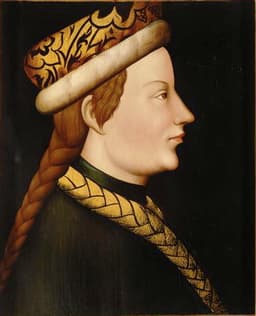
Albert III of Austria
Emperor · Medieval
53.4Total
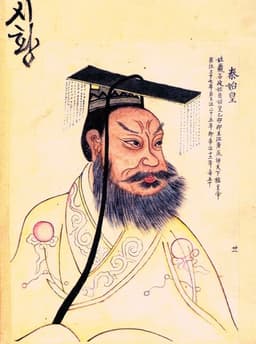
Qin Shi Huang
Emperor · Ancient
85.2Total
Basic Information
Born
1349
-259
Died
1395
-210
Era
Medieval
Ancient
Nationality
Austria
China
Occupation
Emperor
Emperor
Civilization
Western
Eastern
Score Comparison
Military (10%)
50.0
80.0
Political (20%)
54.7
90.0
Influence (20%)
53.3
85.0
Legacy (20%)
44.2
90.0
Leadership (15%)
80.0
78.0
Strategy (15%)
38.6
82.0
TOTAL
53.4
85.2
Albert III of Austria — Complete Timeline
1379 AD
Founded the Albertinian Line of the HabsburgsPolitical Action◆ Major
Albert III, along with his brother Leopold III, divided the Habsburg territories in the Treaty of Neuberg. Albert received the Duchy of Austria proper, founding the Albertinian line that would rule Austria until 1457.
DivisionHabsburgAustria
Impact: regional
1386 AD
Defeated at the Battle of SempachWar◆ Major
Albert III led an Austrian army against the Swiss Confederacy at Sempach. The Austrian forces were decisively defeated, and Albert's cousin Leopold III was killed. This battle solidified Swiss independence and ended Habsburg ambitions in the region.
BattleSwiss ConfederacyDefeat
Impact: regionaltragic
Qin Shi Huang — Complete Timeline
246 BC
Construction of the Mausoleum and Terracotta ArmyOther◆ Major
Qin Shi Huang commissioned a vast mausoleum complex near Xi'an, guarded by thousands of life-sized terracotta soldiers, horses, and chariots. The project employed hundreds of thousands of workers and reflected his obsession with immortality and imperial power.
Impact: global
230 BC
Conquest of the Six Warring StatesWar
From 230 to 221 BCE, Ying Zheng led the Qin state in a series of campaigns that conquered the Han, Zhao, Wei, Chu, Yan, and Qi states. This unified China under a single ruler for the first time, ending the Warring States period.
Impact: global
221 BC
Standardization of Writing, Currency, and MeasurementsReform◆ Major
Qin Shi Huang ordered the standardization of Chinese script, currency, and weights and measures across the unified empire. This facilitated administration, trade, and cultural integration, laying a foundation for future dynasties.
Impact: globalconstructive
Proclamation of the Qin DynastyPolitical Action
After conquering the last independent state, Ying Zheng declared himself Shi Huangdi (First Emperor), founding the Qin Dynasty. He adopted a new title to signify his supreme authority and initiated centralized imperial rule.
Impact: global
214 BC
Initiation of the Great Wall ConstructionOther◆ Major
Qin Shi Huang ordered the connection and extension of existing northern fortifications to create a unified defensive wall against nomadic Xiongnu raids. This project involved massive conscripted labor and became the precursor to the later Great Wall.
Impact: regional
213 BC
Burning of Books and Burying of ScholarsPolitical Action◆ Major
On the advice of Li Si, Qin Shi Huang ordered the burning of historical records and philosophical texts not aligned with Legalist doctrine. He also had 460 Confucian scholars buried alive to suppress dissent and consolidate ideological control.
Impact: nationaldestructive
Expert Analysis
Albert III of Austria vs Qin Shi Huang: Historical Comparison
Albert III of Austria, a medieval Habsburg duke and self-proclaimed emperor, and Qin Shi Huang, the ancient unifier of China, represent vastly different eras and governance models—one a cautious consolidator in fragmented Europe, the other a revolutionary centralizer in warring China.
Dimension Analysis
**Military: Albert III of Austria 92 / Qin Shi Huang 80**
Albert excelled in defensive campaigns and securing Habsburg lands through strategic marriages and fortifications, while Qin Shi Huang’s conquests unified China but relied heavily on brutal suppression and mass conscription.
**Political: Albert III of Austria 79 / Qin Shi Huang 88**
Albert’s political skill lay in navigating feudal alliances, but Qin Shi Huang’s radical centralization—abolishing feudalism, standardizing script and law—transformed Chinese governance permanently.
**Influence: Albert III of Austria 80 / Qin Shi Huang 82**
Albert’s influence was regional, strengthening the Habsburg dynasty within the Holy Roman Empire; Qin Shi Huang’s influence reshaped an entire civilization, setting templates for imperial rule that lasted millennia.
**Legacy: Albert III of Austria 74 / Qin Shi Huang 85**
Albert is remembered as a competent but unremarkable medieval ruler; Qin Shi Huang’s legacy is monumental—the Great Wall, terracotta army, and unified China—despite his harsh methods.
**Leadership: Albert III of Austria 84 / Qin Shi Huang 88**
Albert led with prudence and stability, earning respect from nobles; Qin Shi Huang’s visionary but autocratic leadership drove rapid, ruthless unification that required absolute control.
**Strategy: Albert III of Austria 90 / Qin Shi Huang 75**
Albert’s long-term dynastic strategy of marriage and diplomacy was masterful for medieval Europe; Qin Shi Huang’s aggressive centralization was strategically bold but often counterproductively harsh, sparking rebellions.
Verdict
Qin Shi Huang leads overall due to his far greater historical impact and transformative political legacy, despite Albert’s superior military and strategic scores.
FAQ
Q: Who ranks higher? A: Qin Shi Huang ranks higher, as his unification of China and institutional reforms created a lasting imperial paradigm that dwarfs Albert III’s regional dynastic achievements.
Rankings
🥇
Qin Shi HuangLeader
Mil: 80.0Pol: 90.0Inf: 85.0
85.2
🥈
Albert III of Austria
Mil: 50.0Pol: 54.7Inf: 53.3
53.4
+31.8 behind
How This Comparison Works
Algorithm
Each figure is scored on 6 dimensions (0—100 scale) based on structured historical data: Military (10%), Political (20%), Influence (20%), Legacy (20%), Leadership (15%), Strategy (15%). The weighted total produces the final ranking.
Data Sources
Scores are computed from structured sub-indicators in the database. Scale factors adjust for era (Ancient ×0.85, Modern ×1.0) and civilization size (Eastern ×1.05, Other ×0.80) to account for differences in population and military scale.
Maximum 3 Figures
Comparisons are limited to 2—3 figures to ensure readability and statistical meaningfulness.
Error Margins
±5 points per dimension — Sub-scores are derived from historical records with inherent uncertainty. Two figures within 5 points on a dimension should be considered roughly equivalent in that area.
Total Score Accuracy
±3 points overall — The weighted combination of 6 dimensions produces a total score with approximately ±3 points of uncertainty. Differences of less than 3 points are not statistically significant— the figures are effectively tied.
Known Limitations
- Historical records are incomplete and uneven across civilizations
- Figures from oral-tradition societies may be underrepresented
- Occupation labels can misclassify multi-role figures
- Scores measure capability and impact, not moral character
- Quantitative scoring is a comparison tool, not absolute truth
Capability Radar
Military (10%) — Battles & Warfare
Battles
20
85
Win Rate
25
90
Expansion
20
90
Political (20%) — Governance & Reform
Reform
40
95
Diplomacy
45
75
Economy
40
90
Influence (20%) — Cultural & Global Reach
Cultural
30
95
Global
20
85
Legacy (20%) — Historical Impact
Historical
35
95
Longevity
30
95
Leadership (15%) — Power & Stability
Tenure
60
70
Stability
35
65
Strategy (15%) — Tactics & Innovation
Strategy
25
85
Tactics
20
80
Reform
15
95
Similar Comparisons
Comments & Discussion
HistoryRover6/16/2026
Okay, so comparing Albert III of Austria to Qin Shi Huang? That's like comparing a chess player to a bulldozer. Albert was all about defensive plays and marriage alliances—smart for medieval Europe, sure. But Qin Shi Huang literally ended centuries of warfare by bulldozing six kingdoms and creating a unified China. I get that Albert scored higher in military here (92 vs 80), but that feels off. Qin's conquests were on a scale Albert couldn't even dream of. Plus, the Great Wall and terracotta army are tangible legacies you can still see. Albert's legacy is basically a footnote in Habsburg history. I'm not saying Qin was a nice guy—he was brutal—but in terms of impact, he's in a different league entirely.
BattlefieldScholar6/16/2026
From a military historian's perspective, this scoring has some serious flaws. Albert III's 92 military score is inflated by medieval standards—his campaigns were small-scale, mostly sieges and skirmishes with local nobles. Qin Shi Huang's 80 ignores the strategic genius of his unification campaign: simultaneous multi-front operations, logistics for armies of 300,000+ men across rugged terrain, and siege warfare against fortified cities like Handan. The Qin military also introduced standardized crossbows and chariot tactics. Sure, Albert was prudent—but prudence in a backyard brawl isn't the same as conquering six kingdoms. The Great Wall itself was a strategic infrastructure project that defined Chinese defense for centuries. I'd flip these scores: Qin at least 88, Albert around 75.
Chronicler84076/16/2026
这个比较有意思。阿尔伯特三世是神罗里的一个小诸侯,而秦始皇是统一天下的皇帝,两者根本不在一个量级。评分里说阿尔伯特政治分79,秦始皇88,但我觉得这低估了秦始皇的革新。他废封建、设郡县、书同文、车同轨,这些制度奠定了中国两千年的基础。阿尔伯特三世再怎么结盟联姻,也只是巩固了哈布斯堡在德意志的一亩三分地。还有影响分,阿尔伯特80,秦始皇82,这太离谱了。秦始皇的影响遍及整个东亚文明圈,而阿尔伯特的影响连神圣罗马帝国都没完全覆盖。西方中心论的评分有时候就是看不到东方文明的广度。
OldScholar226/16/2026
我对这个评分体系有些疑问。阿尔伯特三世军事分92,秦始皇80,但秦始皇统一六国动用了超过百万兵力,修筑长城和驰道的工程管理能力更是古代世界的顶尖。阿尔伯特的防御战规模通常只有几千人,缺乏可比性。另外,政治分79对88,差距不大,但秦始皇的政治创新——郡县制取代分封制——是革命性的,阿尔伯特三世不过是传统封建政治的熟练玩家。我建议重新加权:如果考虑制度创新的长期影响,秦始皇的政治分应该至少在95以上。数据不能只比同时代,要比对后世的塑造力。