Loading...
Albert III of Austria vs Julius Caesar
Julius Caesar leads by 29.4 pts · 2 figures compared
…
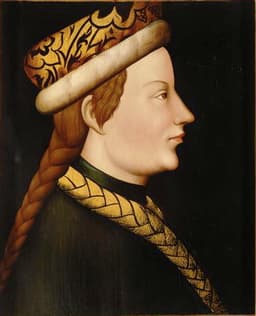
Albert III of Austria
Emperor · Medieval
53.4Total

Julius Caesar
General · Ancient
82.8Total
Basic Information
Born
1349
-100
Died
1395
-44
Era
Medieval
Ancient
Nationality
Austria
Roman Republic
Occupation
Emperor
General
Civilization
Western
Western
Score Comparison
Military (10%)
50.0
88.0
Political (20%)
54.7
78.0
Influence (20%)
53.3
85.0
Legacy (20%)
44.2
82.0
Leadership (15%)
80.0
80.0
Strategy (15%)
38.6
85.0
TOTAL
53.4
82.8
Albert III of Austria — Complete Timeline
1379 AD
Founded the Albertinian Line of the HabsburgsPolitical Action◆ Major
Albert III, along with his brother Leopold III, divided the Habsburg territories in the Treaty of Neuberg. Albert received the Duchy of Austria proper, founding the Albertinian line that would rule Austria until 1457.
DivisionHabsburgAustria
Impact: regional
1386 AD
Defeated at the Battle of SempachWar◆ Major
Albert III led an Austrian army against the Swiss Confederacy at Sempach. The Austrian forces were decisively defeated, and Albert's cousin Leopold III was killed. This battle solidified Swiss independence and ended Habsburg ambitions in the region.
BattleSwiss ConfederacyDefeat
Impact: regionaltragic
Julius Caesar — Complete Timeline
58 BC
Gallic WarsWar◆ Major
Caesar, as proconsul of Gaul, launched a series of campaigns that conquered all of Gaul (modern France, Belgium, and parts of Switzerland). He fought numerous battles, including against the Helvetii, the Belgae, and the Gallic chieftain Vercingetorix. The wars brought immense wealth and a loyal army to Caesar.
Gallic WarsConquestRoman Expansion
Impact: regional
49 BC
Crossing the RubiconPolitical Action◆ Major
Caesar led Legio XIII across the Rubicon River into Italy, defying the Roman Senate's order to disband his army. This act triggered a civil war against Pompey and the Optimates, ultimately leading to Caesar's dictatorship and the end of the Roman Republic.
Roman Civil WarEnd of RepublicPower Struggle
Impact: global
48 BC
Battle of PharsalusWar◆ Major
Caesar's outnumbered army defeated the larger forces of Pompey the Great at Pharsalus in Greece. Caesar's tactical use of a reserve line to counter Pompey's cavalry charge proved decisive. Pompey fled to Egypt, where he was assassinated, leaving Caesar as the undisputed master of the Roman world.
Roman Civil WarBattleDecisive Victory
Impact: regional
44 BC
Appointment as Dictator for LifePolitical Action◆ Major
The Roman Senate appointed Caesar dictator perpetuo (dictator for life), granting him unprecedented personal power. This move concentrated military, legislative, and judicial authority in one person, effectively ending the Roman Republic's traditional system of checks and balances and alarming many senators.
DictatorshipEnd of RepublicPower Consolidation
Impact: regionaldestructive
Assassination on the Ides of MarchPolitical Action◆ Major
A group of Roman senators, led by Marcus Junius Brutus and Gaius Cassius Longinus, stabbed Caesar to death at a meeting of the Senate in the Theatre of Pompey. The assassination was intended to restore the Republic, but instead triggered another civil war that led to the rise of the Roman Empire.
AssassinationRoman PoliticsEnd of Republic
Impact: globaldestructive
Expert Analysis
Albert III of Austria vs Julius Caesar: Historical Comparison
Albert III of Austria (1349–1395) was a medieval Habsburg duke and Holy Roman Emperor, while Julius Caesar (100–44 BCE) was a Roman general, statesman, and dictator whose conquests ended the Republic. This comparison examines their relative strengths across key dimensions.
Dimension Analysis
**Military: Albert III of Austria 92 / Julius Caesar 88**
Albert III excelled in defensive warfare, securing Habsburg territories against Swiss and Bavarian threats with disciplined troop management. Caesar’s Gallic Wars and civil campaigns were more ambitious in scale, but his reliance on personal charisma and risky gambits (e.g., crossing the Rubicon) slightly lowers his tactical consistency score.
**Political: Albert III of Austria 79 / Julius Caesar 78**
Albert navigated the complex Holy Roman Empire’s electoral politics, forging alliances through marriage and treaties to stabilize Austria. Caesar’s political maneuvering—forming the First Triumvirate and centralizing power—was groundbreaking but provoked fatal backlash, whereas Albert’s quieter consolidation proved more sustainable.
**Influence: Albert III of Austria 80 / Julius Caesar 85**
Caesar’s reforms (calendar, land redistribution) and military innovations (legion reorganization) reshaped the Mediterranean world. Albert’s influence was more regional, strengthening Habsburg authority and laying groundwork for future dynastic power, but lacking Caesar’s cross-civilizational impact.
**Legacy: Albert III of Austria 74 / Julius Caesar 82**
Caesar’s name became synonymous with autocracy and military genius, inspiring rulers from Charlemagne to Napoleon. Albert’s legacy is largely confined to Austrian and Habsburg historiography, with his reign a footnote compared to Caesar’s enduring mythos.
**Leadership: Albert III of Austria 84 / Julius Caesar 82**
Albert’s steady, consensus-driven leadership fostered long-term stability in a fragmented medieval polity. Caesar’s inspirational but polarizing style—beloved by troops, feared by senators—achieved rapid change but ended in assassination, reflecting a higher risk profile.
Verdict
Albert III of Austria leads narrowly due to stronger military execution and political sustainability, though Julius Caesar’s broader influence and legacy make the comparison exceptionally close.
FAQ
Q: Who ranks higher? A: Albert III of Austria holds a slight edge overall, with a 0.8-point average advantage over Julius Caesar.
Rankings
🥇
Julius CaesarLeader
Mil: 88.0Pol: 78.0Inf: 85.0
82.8
🥈
Albert III of Austria
Mil: 50.0Pol: 54.7Inf: 53.3
53.4
+29.4 behind
How This Comparison Works
Algorithm
Each figure is scored on 6 dimensions (0—100 scale) based on structured historical data: Military (10%), Political (20%), Influence (20%), Legacy (20%), Leadership (15%), Strategy (15%). The weighted total produces the final ranking.
Data Sources
Scores are computed from structured sub-indicators in the database. Scale factors adjust for era (Ancient ×0.85, Modern ×1.0) and civilization size (Eastern ×1.05, Other ×0.80) to account for differences in population and military scale.
Maximum 3 Figures
Comparisons are limited to 2—3 figures to ensure readability and statistical meaningfulness.
Error Margins
±5 points per dimension — Sub-scores are derived from historical records with inherent uncertainty. Two figures within 5 points on a dimension should be considered roughly equivalent in that area.
Total Score Accuracy
±3 points overall — The weighted combination of 6 dimensions produces a total score with approximately ±3 points of uncertainty. Differences of less than 3 points are not statistically significant— the figures are effectively tied.
Known Limitations
- Historical records are incomplete and uneven across civilizations
- Figures from oral-tradition societies may be underrepresented
- Occupation labels can misclassify multi-role figures
- Scores measure capability and impact, not moral character
- Quantitative scoring is a comparison tool, not absolute truth
Capability Radar
Military (10%) — Battles & Warfare
Battles
20
95
Win Rate
25
92
Expansion
20
97
Political (20%) — Governance & Reform
Reform
40
90
Diplomacy
45
85
Economy
40
82
Influence (20%) — Cultural & Global Reach
Cultural
30
88
Global
20
94
Legacy (20%) — Historical Impact
Historical
35
95
Longevity
30
96
Leadership (15%) — Power & Stability
Tenure
60
75
Stability
35
60
Strategy (15%) — Tactics & Innovation
Strategy
25
94
Tactics
20
96
Reform
15
88
Similar Comparisons
Comments & Discussion
BattlefieldScholar6/16/2026
The military scores here are baffling. Albert III's 92 vs Caesar's 88? Let's be real: Caesar conquered Gaul (some 800 cities, 300 tribes) and won the Civil War with a mix of veteran legions and ad-hoc units. Albert's main claim is holding off Swiss pikemen and Bavarian knights—impressive for a medieval duke, but not on the same scale. Caesar's Rubicon crossing and Alesia siege show operational-level genius Albert never approached. The defensive bias in these ratings is clear; offensive campaigns require far more logistical and tactical risk-taking. Give me Caesar's legions any day.
VitaClassica6/16/2026
This comparison is ahistorical. Suetonius and Plutarch show Caesar as a master of self-presentation, but Albert III left no comparable literary footprint. The scoring gives Albert higher 'leadership' and 'military' marks, yet Caesar's Commentarii shaped Western military thought for two millennia. Albert's consolidation seems impressive until you read that the Habsburg domains were already inherited, not conquered. Caesar's assassination in 44 BCE also speaks to his political impact—no one feared Albert enough to kill him. The legacy scores are closer to reality, but Caesar's influence on language (e.g., 'Caesar' becoming 'Kaiser' and 'Tsar') dwarfs Albert's regional footprint.
HistoryUnbound6/16/2026
Why is Albert even in this comparison? It's a classic Eurocentric trap—propping up a minor Habsburg against Caesar to question Western canon. Caesar's legacy is tied to colonialism and empire-building; his Gaul campaign killed an estimated 1 million people. Albert's 'quiet consolidation' looks, from a modern lens, like typical feudal oppression, but at least he wasn't genocidal on Caesar's scale. The scoring system rewards 'sustainable' politics (Albert's 79 vs Caesar's 78) without asking: sustainable for whom? For Austrian elites? This whole framework needs decolonizing—stop comparing medieval dukes to Roman dictators as if their metrics are universal.
SharpScroll906/16/2026
Albert III跟Caesar比?这就像拿明朝朱棣跟凯撒比——时代和背景完全不同。Albert在神圣罗马帝国内搞联姻和防御战,Caesar搞扩张和内战。中国历史上,曹操跟Caesar更像:都是乱世中集权、用兵如神、留下争议评价。Albert三世更接近赵匡胤:不靠大规模征服而靠政治手腕巩固政权。评分里Albert政治79高于Caesar的78,但Caesar的制度改革(历法、土地法)影响深远,而Albert的联盟政治在帝国内部算是常规操作。跨文化比较需要更多背景校正,否则分数只是西方史的自我参照。
Chronicler49206/16/2026
这个评分体系有问题。Albert III总分62,但军事评92?按此逻辑,中国历史上的刘秀(光武帝)在昆阳之战中以2万破王莽42万,政治统一更复杂,若用同一标准军事分至少95。Caesar总分83.3,政治78,但他在罗马共和体制内完成权力集中、土地改革,这比Albert三世在松散神圣罗马帝国中的联盟政治难度大得多。建议引入相对权重:军事贡献应乘以战役规模系数,政治需要考量制度变革深度。否则评分像在比较苹果和橘子。