Loading...
Albert I of Germany vs Henry II of Castile
Henry II of Castile leads by 1.2 pts · 2 figures compared
…

Albert I of Germany
Emperor · Medieval
46.1Total
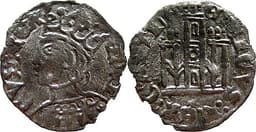
Henry II of Castile
Emperor · Medieval
47.3Total
Basic Information
Born
1255
1334
Died
1308
1379
Era
Medieval
Medieval
Nationality
Holy Roman Empire
Castile
Occupation
Emperor
Emperor
Civilization
Western
Western
Score Comparison
Military (10%)
55.0
25.0
Political (20%)
37.9
40.8
Influence (20%)
50.2
51.8
Legacy (20%)
41.7
45.8
Leadership (15%)
51.9
55.3
Strategy (15%)
41.7
60.0
TOTAL
46.1
47.3
Albert I of Germany — Complete Timeline
1298 AD
Election as King of GermanyPolitical Action◆ Major
Following the death of Adolf of Nassau at the Battle of G
ElectionHabsburg Restoration
Impact: national
1301 AD
Conflict with the Rhineland ElectorsWar◆ Major
Albert I waged war against the archbishops of Mainz, Cologne, and Trier, who formed a coalition against him. He defeated them, asserting royal authority over the ecclesiastical princes.
WarEcclesiastical Princes
Impact: regional
1308 AD
Assassination by John ParricidaPolitical Action
Albert I was murdered by his nephew John Parricida, whom he had deprived of his inheritance. The assassination occurred near Windisch, Switzerland, and led to a period of instability.
AssassinationDynastic Feud
Impact: nationaltragic
Henry II of Castile — Complete Timeline
1369 AD
Battle of MontielWar◆ Major
Henry of Trastamara defeated the forces of Peter I at the Battle of Montiel. After the battle, Henry captured and killed Peter, ending the First Castilian Civil War and securing his claim to the throne.
BattleCivil WarCastile
Impact: nationaldestructive
Coronation as King of CastilePolitical Action◆ Major
Henry of Trastamara was crowned King of Castile after killing his half-brother Peter I. His coronation established the Trastamara dynasty, which would rule Castile and later Aragon for the next century.
CoronationTrastamaraCastile
Impact: national
Alliance with FrancePolitical Action◆ Major
Henry II formed a lasting alliance with France, supporting French interests in the Hundred Years' War against England. This alliance provided Castile with French military support and strengthened the Franco-Castilian axis.
AllianceFranceCastile
Impact: regionalconstructive
1370 AD
Reforms to the NobilityReform
Henry II redistributed lands and titles to his supporters, creating a new nobility loyal to the Trastamara dynasty. These reforms strengthened royal authority but also entrenched the power of the new noble class.
ReformNobilityCastile
Impact: nationalconstructive
Expert Analysis
Origins
Albert I of Germany was born in 1255, the eldest son of Rudolf I of Habsburg, the first Habsburg King of Germany. Raised in the Habsburg domains in Swabia and Austria, Albert inherited his father's ambition to consolidate royal power. His early years were marked by the struggle to secure the Habsburg hereditary lands, particularly the Duchy of Austria, which Rudolf had acquired in 1278. Albert's education focused on military and administrative skills, preparing him for kingship.
Henry II of Castile, born in 1334, was the illegitimate son of King Alfonso XI of Castile and Leonor de Guzmán. His early life was overshadowed by his half-brother Peter I, the legitimate heir. Henry grew up in the turbulent Castilian court, witnessing the favoritism shown to his mother's family. This fostered a deep resentment that drove him to challenge Peter's rule. Henry's formative experiences included exile in France and Portugal, where he built alliances with the French monarchy and mercenary companies.
Rise to Power
Albert I's rise began with his father's death in 1291. Despite being Rudolf's designated successor, the electors chose Adolf of Nassau as king, fearing Habsburg power. Albert bided his time, strengthening his position as Duke of Austria. In 1298, Adolf was deposed and killed at the Battle of Göllheim, where Albert's forces played a key role. Albert was then elected King of Germany on July 27, 1298, and crowned at Aachen on August 24. His election ended a period of disputed succession, but he faced immediate opposition from the Rhineland electors.
Henry II's path to power was more violent. He rebelled against Peter I in 1354, but was defeated and fled to France. With French support, he invaded Castile in 1366, forcing Peter to flee. However, Edward the Black Prince intervened on Peter's behalf, defeating Henry at the Battle of Nájera in 1367. Henry regrouped, allied with Bertrand du Guesclin, and defeated Peter at the Battle of Montiel on March 14, 1369. After the battle, Henry personally killed Peter, ending the First Castilian Civil War. He was crowned king on April 5, 1369.
Leadership & Governance
Albert I governed as a medieval king focused on centralizing authority. He waged war against the archbishops of Mainz, Cologne, and Trier, who formed a coalition against him. Albert defeated them at the Battle of Göllheim in 1298, asserting royal authority over the ecclesiastical princes. He also intervened in Thuringia and Bohemia, but his efforts to expand Habsburg influence often met resistance. Albert's political score of 37.9 reflects his limited success in building lasting institutions.
Henry II prioritized consolidating power through patronage. He redistributed lands and titles to his supporters, creating a new nobility loyal to the Trastamara dynasty. He formed a lasting alliance with France, supporting French interests in the Hundred Years' War against England. This alliance provided Castile with French subsidies and military support. Henry also reformed the administration, strengthening the monarchy's control over the nobility. His leadership score of 55.3 indicates a more effective governance style compared to Albert's 51.9.
Triumph & Tragedy
Albert I's greatest success was securing the German throne and defeating the Rhineland electors. However, his reign was marred by conflict with the Papacy and the Swiss Confederacy. His attempt to collect taxes in Switzerland led to the Swiss rebellion, which he failed to suppress. His greatest failure was alienating his nephew John Parricida, whom he deprived of his inheritance. On May 1, 1308, John assassinated Albert near Windisch, Switzerland, ending his reign abruptly. Albert's military score of 55.0 reflects his mixed record.
Henry II's triumph was establishing the Trastamara dynasty, which ruled Castile until 1504. His victory at Montiel and the elimination of Peter I ended the civil war. However, his reign was marked by continued conflict with Portugal and the Muslim kingdom of Granada. He also faced internal rebellions from nobles who felt betrayed by his land redistribution. His military score of 25.0 is low, but his political score of 40.8 shows some skill in diplomacy. The alliance with France was a lasting achievement.
Character & Destiny
Albert I was ambitious and determined, but his harsh treatment of rivals created enemies. His decision to deprive John Parricida of his inheritance proved fatal. Chroniclers describe him as prudent but unforgiving. His character shaped his destiny: his relentless pursuit of power led to his assassination. Historical assessments note that his reign was too short to leave a lasting mark.
Henry II was pragmatic and ruthless, willing to kill his half-brother to secure the throne. He was also a skilled diplomat, forging alliances with France and the Papacy. His character allowed him to survive multiple defeats and ultimately triumph. However, his reliance on patronage created a nobility that would later challenge his successors. Henry's influence score of 51.8 reflects his ability to shape events.
Legacy
Albert I's legacy is mixed. His reign strengthened the Habsburg position in Austria, but his assassination prevented any major reforms. The Habsburgs would eventually become a dominant European dynasty, but Albert's direct impact was minimal. His legacy score of 41.7 reflects this.
Henry II's legacy is more substantial. The Trastamara dynasty ruled Castile for over a century, overseeing the conquest of Granada and the unification of Spain. His alliance with France influenced the Hundred Years' War. Henry's reforms to the nobility strengthened the monarchy in the short term but sowed seeds of future conflict. His legacy score of 45.8 is slightly higher than Albert's.
Conclusion
Henry II of Castile had a greater impact than Albert I of Germany. Despite Albert's higher military score (55.0 vs 25.0), Henry's political maneuvering and dynasty-building were more consequential. Henry's total score of 47.3 edges Albert's 46.1. While Albert's assassination cut his reign short, Henry's establishment of the Trastamara dynasty shaped Spanish history for generations. Henry's alliance with France and his victory in the Castilian Civil War had lasting effects on European politics. Therefore, Henry II of Castile was the more impactful ruler.
Rankings
🥇
Henry II of CastileLeader
Mil: 25.0Pol: 40.8Inf: 51.8
47.3
🥈
Albert I of Germany
Mil: 55.0Pol: 37.9Inf: 50.2
46.1
+1.2 behind
How This Comparison Works
Algorithm
Each figure is scored on 6 dimensions (0—100 scale) based on structured historical data: Military (10%), Political (20%), Influence (20%), Legacy (20%), Leadership (15%), Strategy (15%). The weighted total produces the final ranking.
Data Sources
Scores are computed from structured sub-indicators in the database. Scale factors adjust for era (Ancient ×0.85, Modern ×1.0) and civilization size (Eastern ×1.05, Other ×0.80) to account for differences in population and military scale.
Maximum 3 Figures
Comparisons are limited to 2—3 figures to ensure readability and statistical meaningfulness.
Error Margins
±5 points per dimension — Sub-scores are derived from historical records with inherent uncertainty. Two figures within 5 points on a dimension should be considered roughly equivalent in that area.
Total Score Accuracy
±3 points overall — The weighted combination of 6 dimensions produces a total score with approximately ±3 points of uncertainty. Differences of less than 3 points are not statistically significant— the figures are effectively tied.
Known Limitations
- Historical records are incomplete and uneven across civilizations
- Figures from oral-tradition societies may be underrepresented
- Occupation labels can misclassify multi-role figures
- Scores measure capability and impact, not moral character
- Quantitative scoring is a comparison tool, not absolute truth
Capability Radar
Military (10%) — Battles & Warfare
Battles
30
45
Win Rate
35
40
Expansion
40
30
Political (20%) — Governance & Reform
Reform
30
30
Diplomacy
40
55
Economy
30
25
Influence (20%) — Cultural & Global Reach
Cultural
25
30
Global
15
20
Legacy (20%) — Historical Impact
Historical
30
40
Longevity
20
35
Leadership (15%) — Power & Stability
Tenure
45
50
Stability
20
20
Strategy (15%) — Tactics & Innovation
Strategy
25
40
Tactics
30
35
Reform
20
20
Similar Comparisons
Comments & Discussion
No comments yet. Be the first to share your thoughts!