Loading...
Al-Walid I vs Romanos I Lekapenos
Al-Walid I leads by 18.6 pts · 2 figures compared
…
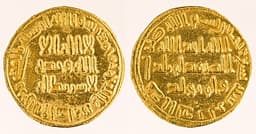
Al-Walid I
Emperor · Medieval
68.6Total
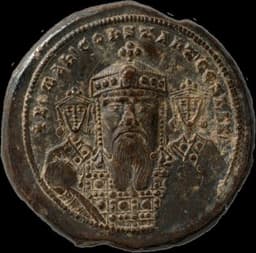
Romanos I Lekapenos
Emperor · Medieval
50.0Total
Basic Information
Born
668
870
Died
715
948
Era
Medieval
Medieval
Nationality
Umayyad Caliphate
Byzantine Empire
Occupation
Emperor
Emperor
Civilization
Middle Eastern
Western
Score Comparison
Military (10%)
76.0
30.0
Political (20%)
70.0
68.0
Influence (20%)
88.0
52.5
Legacy (20%)
40.0
46.7
Leadership (15%)
80.0
40.0
Strategy (15%)
65.4
60.0
TOTAL
68.6
50.0
Al-Walid I — Complete Timeline
700 AD
Patronage of Arabic language and administrationReform◆ Major
Al-Walid I made Arabic the official language of administration across the caliphate, replacing Greek and Persian. This standardized governance and promoted the spread of Arabic culture and Islam.
LanguageAdministrationArabization
Impact: globalprogressive
705 AD
Expansion of the Umayyad CaliphateWar
Al-Walid I oversaw the expansion of the Umayyad Caliphate to its greatest territorial extent. Conquests included Transoxiana, Sindh, and parts of Spain, making the caliphate one of the largest empires in history.
ConquestExpansionEmpire
Impact: global
706 AD
Construction of the Great Mosque of DamascusCultural◆ Major
Al-Walid I commissioned the construction of the Umayyad Mosque in Damascus, transforming a Christian basilica into a grand mosque. It became a masterpiece of Islamic architecture and a major pilgrimage site.
ArchitectureMosqueDamascus
Impact: globalconstructive
Romanos I Lekapenos — Complete Timeline
920 AD
Military Campaigns against the Arabs (920s-940s)War◆ Major
Romanos I led successful campaigns against the Abbasid Caliphate, recapturing several fortresses in eastern Anatolia. His general John Kourkouas achieved notable victories, including the capture of Melitene in 934.
Byzantine-Arab WarsMilitary Campaign
Impact: regional
Accession as Co-Emperor (920)Political Action◆ Major
Romanos I Lekapenos, a naval admiral, was appointed co-emperor by the young Constantine VII. He gradually sidelined Constantine and became the de facto ruler. His rise marked the beginning of the Lekapenos dynasty's dominance.
AccessionCo-Emperor
Impact: regional
927 AD
Peace Treaty with Bulgaria (927)Political Action◆ Major
Romanos I negotiated a peace treaty with Tsar Peter I of Bulgaria, ending decades of war. The treaty included a marriage alliance between Peter and Romanos' granddaughter Maria. This brought stability to the Balkan frontier.
TreatyDiplomacyByzantine-Bulgarian Relations
Impact: regionalconstructive
944 AD
Overthrow and Exile (944)Political Action◆ Major
Romanos I was overthrown by his own sons Stephen and Constantine, who forced him to become a monk. He was exiled to the island of Prote and died in 948. His sons were soon overthrown by Constantine VII.
CoupExile
Impact: regionaltragic
Expert Analysis
Origins
Al-Walid I was born in 668 in Medina, the son of Caliph Abd al-Malik. His early life was shaped by the Umayyad court, where he received education in Islamic jurisprudence and governance. His father centralized power and established Arabic as the administrative language, a policy Al-Walid would continue. Romanos I Lekapenos, born around 870 in the Armenian theme of Lykandos, came from a military family. He rose through the Byzantine navy, becoming a high-ranking admiral. His Armenian heritage and naval expertise distinguished him from the Macedonian dynasty.
Rise to Power
Al-Walid became caliph in 705 after his father's death, inheriting a stable state. He immediately expanded the empire: in 711, his general Tariq ibn Ziyad invaded Visigothic Hispania, while other forces conquered Transoxiana and Sindh by 714. Romanos I's rise was more gradual. He served as admiral under Emperor Alexander, and after Alexander's death in 913, he became the regent for the young Constantine VII. In 920, he married his daughter to Constantine and was crowned co-emperor, effectively ruling until 944.
Leadership & Governance
Al-Walid I centralized administration by making Arabic the official language (circa 700), replacing Greek and Persian. He also commissioned the Great Mosque of Damascus (706-715), transforming a Christian basilica into a masterpiece of Islamic architecture. His governance emphasized infrastructure and cultural unity. Romanos I, by contrast, focused on diplomatic stability. He negotiated a 30-year peace with Bulgaria in 927 through a marriage alliance between his granddaughter and Tsar Peter I. He also reformed the Byzantine military, promoting capable generals like John Kourkouas, who won victories in the East.
Triumph & Tragedy
Al-Walid's greatest triumph was the territorial expansion: the Umayyad Caliphate reached its largest extent, from Spain to India. His patronage of the Great Mosque of Damascus left a permanent architectural legacy. However, his overextension strained resources, and after his death in 715, the empire faced revolts. Romanos I's triumph was securing peace with Bulgaria, allowing the Byzantine Empire to focus on the East. His military campaigns recaptured key fortresses. Yet his tragedy came from within: his own sons overthrew him in 944, forcing him into exile on the island of Prote, where he died in 948.
Character & Destiny
Al-Walid was an energetic and pious ruler, known for his devotion to Islam and public works. His character drove expansion, but also created administrative challenges. Romanos I was pragmatic and cautious, often prioritizing diplomacy over warfare. His rise from admiral to co-emperor showed ambition, but his inability to manage his sons' ambitions led to his downfall. Historical assessments note that Al-Walid scored 76.0 in military and 80.0 in leadership, while Romanos I scored 30.0 and 40.0 respectively, reflecting their different approaches.
Legacy
Al-Walid I's legacy is the physical and administrative consolidation of the Umayyad Caliphate. The Great Mosque of Damascus remains a landmark, and Arabic became the lingua franca of the Islamic world. His conquests spread Islam and Arabic culture. Romanos I's legacy is more subtle: his peace with Bulgaria allowed the Byzantine Empire to recover, and his administrative reforms strengthened the state. He is remembered as a capable regent, but his influence is overshadowed by the Macedonian dynasty. In scoring, Al-Walid I's influence score is 88.0, while Romanos I's is 52.5.
Conclusion
Al-Walid I had a greater impact than Romanos I Lekapenos. His territorial expansion and cultural patronage reshaped the medieval world, while Romanos I's achievements were largely defensive and temporary. Al-Walid's total score of 68.6 reflects his multifaceted legacy, compared to Romanos I's 50.0. The 18.6-point gap is justified: Al-Walid's empire influenced regions from Spain to Central Asia, while Romanos I's influence was confined to Byzantium's survival. Al-Walid I's leadership and strategy scores (80.0 and 65.4) exceed Romanos I's (40.0 and 60.0), cementing his position as the more consequential figure.
Rankings
🥇
Al-Walid ILeader
Mil: 76.0Pol: 70.0Inf: 88.0
68.6
🥈
Romanos I Lekapenos
Mil: 30.0Pol: 68.0Inf: 52.5
50.0
+18.6 behind
How This Comparison Works
Algorithm
Each figure is scored on 6 dimensions (0—100 scale) based on structured historical data: Military (10%), Political (20%), Influence (20%), Legacy (20%), Leadership (15%), Strategy (15%). The weighted total produces the final ranking.
Data Sources
Scores are computed from structured sub-indicators in the database. Scale factors adjust for era (Ancient ×0.85, Modern ×1.0) and civilization size (Eastern ×1.05, Other ×0.80) to account for differences in population and military scale.
Maximum 3 Figures
Comparisons are limited to 2—3 figures to ensure readability and statistical meaningfulness.
Error Margins
±5 points per dimension — Sub-scores are derived from historical records with inherent uncertainty. Two figures within 5 points on a dimension should be considered roughly equivalent in that area.
Total Score Accuracy
±3 points overall — The weighted combination of 6 dimensions produces a total score with approximately ±3 points of uncertainty. Differences of less than 3 points are not statistically significant— the figures are effectively tied.
Known Limitations
- Historical records are incomplete and uneven across civilizations
- Figures from oral-tradition societies may be underrepresented
- Occupation labels can misclassify multi-role figures
- Scores measure capability and impact, not moral character
- Quantitative scoring is a comparison tool, not absolute truth
Capability Radar
Military (10%) — Battles & Warfare
Battles
75
45
Win Rate
80
50
Expansion
85
35
Political (20%) — Governance & Reform
Reform
85
55
Diplomacy
70
65
Economy
80
50
Influence (20%) — Cultural & Global Reach
Cultural
85
30
Global
70
25
Legacy (20%) — Historical Impact
Historical
80
45
Longevity
75
35
Leadership (15%) — Power & Stability
Tenure
80
60
Stability
75
55
Strategy (15%) — Tactics & Innovation
Strategy
75
55
Tactics
70
40
Reform
65
30
Similar Comparisons
Comments & Discussion
No comments yet. Be the first to share your thoughts!