Loading...
Analysis will be generated on first visit.
Scores and timeline are available below. The page will refresh automatically when ready.
Al-Suyuti vs Napoleon Bonaparte
Napoleon Bonaparte leads by 19.7 pts · 2 figures compared
…

Al-Suyuti
Politician · Medieval
62.7Total
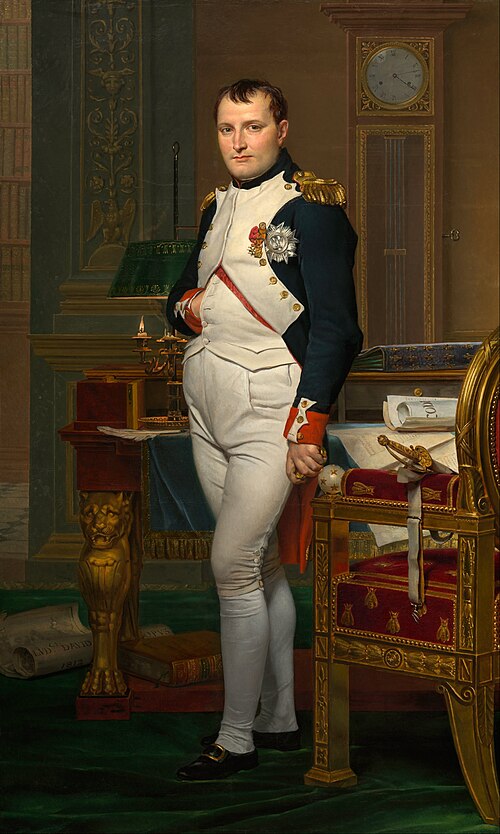
Napoleon Bonaparte
General · Modern
82.4Total
Basic Information
Born
1445
1769
Died
1505
1821
Era
Medieval
Modern
Nationality
Mamluk Sultanate
France
Occupation
Politician
General
Civilization
Middle Eastern
Western
Score Comparison
Military (10%)
34.6
94.0
Political (20%)
53.0
75.0
Influence (20%)
74.3
82.0
Legacy (20%)
68.3
78.0
Leadership (15%)
81.5
80.0
Strategy (15%)
52.6
93.0
TOTAL
62.7
82.4
Rankings
🥇
Napoleon BonaparteLeader
Mil: 94.0Pol: 75.0Inf: 82.0
82.4
🥈
Al-Suyuti
Mil: 34.6Pol: 53.0Inf: 74.3
62.7
+19.7 behind
How This Comparison Works
Algorithm
Each figure is scored on 6 dimensions (0—100 scale) based on structured historical data: Military (10%), Political (20%), Influence (20%), Legacy (20%), Leadership (15%), Strategy (15%). The weighted total produces the final ranking.
Data Sources
Scores are computed from structured sub-indicators in the database. Scale factors adjust for era (Ancient ×0.85, Modern ×1.0) and civilization size (Eastern ×1.05, Other ×0.80) to account for differences in population and military scale.
Maximum 3 Figures
Comparisons are limited to 2—3 figures to ensure readability and statistical meaningfulness.
Error Margins
±5 points per dimension — Sub-scores are derived from historical records with inherent uncertainty. Two figures within 5 points on a dimension should be considered roughly equivalent in that area.
Total Score Accuracy
±3 points overall — The weighted combination of 6 dimensions produces a total score with approximately ±3 points of uncertainty. Differences of less than 3 points are not statistically significant— the figures are effectively tied.
Known Limitations
- Historical records are incomplete and uneven across civilizations
- Figures from oral-tradition societies may be underrepresented
- Occupation labels can misclassify multi-role figures
- Scores measure capability and impact, not moral character
- Quantitative scoring is a comparison tool, not absolute truth
Capability Radar
Military (10%) — Battles & Warfare
Battles
28
95
Win Rate
29
90
Expansion
33
95
Political (20%) — Governance & Reform
Reform
10
95
Diplomacy
10
80
Economy
10
85
Influence (20%) — Cultural & Global Reach
Cultural
70
85
Global
60
90
Legacy (20%) — Historical Impact
Historical
70
95
Longevity
70
90
Leadership (15%) — Power & Stability
Tenure
10
85
Stability
10
70
Strategy (15%) — Tactics & Innovation
Strategy
33
95
Tactics
36
98
Reform
39
92
Analysis will be generated on first visit.
Scores and timeline are available below. The page will refresh automatically when ready.
Al-Suyuti — Complete Timeline
1490 AD
Wrote 'The Perfect Guide in the Sciences of the Quran' (Al-Itqan fi 'ulum al-Qur'an)Cultural◆ Major
Al-Suyuti completed a comprehensive encyclopedia of Quranic sciences, covering exegesis, abrogation, and textual criticism. The work systematized the field and became a standard textbook in Islamic seminaries.
Quranic StudiesEncyclopediaIslamic Scholarship
Impact: regional
Claimed to be the Mujaddid (renewer) of the 9th Islamic centuryCultural
Al-Suyuti declared himself the mujaddid (renewer of religion) for the 9th century AH, based on a hadith that a renewer would appear at the turn of each century. This claim was controversial and criticized by some contemporaries.
MujaddidControversySelf-claim
Impact: regional
1495 AD
Wrote 'The History of the Caliphs' (Tarikh al-khulafa')Cultural◆ Major
Al-Suyuti compiled a history of the caliphs from Abu Bakr to the Abbasid caliphs of his time. The work includes biographical entries and political events, focusing on the legitimacy of the caliphate.
HistoriographyCaliphateBiography
Impact: regional
1500 AD
Wrote 'The Flowers of the Gardens in the Virtues of the Prophet' (Al-Khasa'is al-kubra)Cultural
Al-Suyuti compiled a work on the miracles and virtues of the Prophet Muhammad, collecting hadiths and stories about his life. The book became popular among Sufi circles for its devotional content.
Prophetic BiographyMiraclesDevotion
Impact: regional
1501 AD
Retired from public life and refused to teach at the Sultan's requestPolitical Action
Al-Suyuti refused an invitation from the Mamluk sultan to teach at the newly built madrasa, citing his desire for independence. He retreated to his home on Rawda Island, focusing on writing until his death.
RetirementIndependenceMamluk Sultanate
Similar Comparisons
Comments & Discussion
No comments yet. Be the first to share your thoughts!