Loading...
Al-Saffah vs Richard the Lionheart
Al-Saffah leads by 8.2 pts · 2 figures compared
…
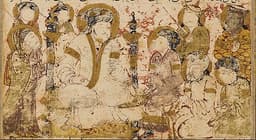
Al-Saffah
Emperor · Medieval
60.0Total

Richard the Lionheart
Emperor · Medieval
51.8Total
Basic Information
Born
721
1157
Died
754
1199
Era
Medieval
Medieval
Nationality
Abbasid Caliphate
England
Occupation
Emperor
Emperor
Civilization
Middle Eastern
Western
Score Comparison
Military (10%)
65.0
70.0
Political (20%)
68.0
32.2
Influence (20%)
59.0
56.7
Legacy (20%)
56.0
52.0
Leadership (15%)
58.8
51.9
Strategy (15%)
57.5
50.0
TOTAL
60.0
51.8
Al-Saffah — Complete Timeline
750 AD
Proclamation as CaliphPolitical Action
Al-Saffah was proclaimed the first Abbasid caliph in Kufa after the Abbasid Revolution overthrew the Umayyads. His title 'al-Saffah' means 'the Shedder of Blood', reflecting the violent transition.
CaliphateRevolutionAbbasid
Impact: global
Massacre of the UmayyadsPolitical Action◆ Major
Al-Saffah ordered the systematic elimination of the Umayyad family to prevent any restoration. Most Umayyad princes were killed, though one, Abd al-Rahman I, escaped to Spain and founded the Emirate of Cordoba.
MassacreUmayyadPurge
Impact: globaldestructive
Establishment of the Abbasid CaliphatePolitical Action
Al-Saffah established the Abbasid Caliphate, moving the capital from Damascus to a new city near Kufa. This shift marked the beginning of a new era in Islamic history, with a focus on Persian influence and Baghdad.
CaliphateCapitalIslamic History
Impact: global
Richard the Lionheart — Complete Timeline
1191 AD
Siege of AcreWar◆ Major
Richard I led English forces in the siege of Acre during the Third Crusade. After the city surrendered, Richard ordered the execution of 2,700 Muslim prisoners when Saladin failed to meet ransom terms. The victory secured a key port for the crusaders.
Third CrusadeSiegeExecution
Impact: regionaldestructive
Battle of ArsufWar◆ Major
Richard I defeated Saladin's forces at Arsuf in Palestine. Richard's disciplined infantry and cavalry repelled repeated Muslim attacks. The victory allowed the crusaders to secure the coast and march toward Jerusalem without further major engagements.
Third CrusadeBattleSaladin
Impact: regional
1192 AD
Treaty of JaffaPolitical Action◆ Major
Richard I and Saladin signed a three-year truce at Jaffa. The treaty granted crusader control of the coastal strip from Tyre to Jaffa and guaranteed safe passage for Christian pilgrims to Jerusalem. Richard then departed for Europe.
Third CrusadeTreatyTruce
Impact: regionalconstructive
Capture and Imprisonment in AustriaPolitical Action◆ Major
Richard I was captured near Vienna by Duke Leopold V of Austria, whom he had insulted during the crusade. Leopold handed Richard to Emperor Henry VI. Richard was imprisoned until 1194, when England paid a ransom of 150,000 marks.
ImprisonmentRansomAustria
Impact: regionaltragic
Expert Analysis
Origins
**Al-Saffah** (full name Abu al-Abbas Abdullah ibn Muhammad al-Saffah) was born around 721 CE into the Hashimite clan of the Quraysh tribe. His family claimed descent from Abbas ibn Abd al-Muttalib, an uncle of the Prophet Muhammad. Growing up in the Umayyad Caliphate, he witnessed the growing discontent against Umayyad rule, particularly among non-Arab Muslims (mawali) and Shia factions who felt marginalized. His early life was shaped by the Abbasid propaganda network centered in Khurasan, led by his half-brother Ibrahim and the skilled general Abu Muslim.
**Richard the Lionheart** was born on September 8, 1157, in Oxford, England, as the third son of King Henry II of England and Eleanor of Aquitaine. He was raised in his mother's court in Poitiers, where he received a knightly education focused on martial skills. Richard was more French than English, spending little time in England before his kingship. His early life was marked by conflicts with his brothers and father over inheritance, leading to rebellions in 1173 and 1183.
Rise to Power
**Al-Saffah** rose through the Abbasid Revolution (746-750). The Abbasids capitalized on Umayyad weaknesses: ethnic discrimination, heavy taxation, and lavish lifestyles. The turning point came in 747 when Abu Muslim raised the black banners of the Abbasids in Khurasan. After a series of battles, the Abbasid army defeated the Umayyads at the Battle of the Zab in 750. Al-Saffah was proclaimed caliph in Kufa on November 28, 750, after his brother Ibrahim died in Umayyad captivity. His title "al-Saffah" means "the Shedder of Blood," reflecting his ruthless consolidation.
**Richard the Lionheart** became King of England on July 6, 1189, after the death of his father Henry II. Richard had already rebelled against Henry twice, allying with King Philip II of France. Upon accession, he immediately began preparations for the Third Crusade, selling offices and lands to raise funds. He left England in December 1189, never to return. His rise was less about political maneuvering and more about military ambition; he saw kingship as a means to lead a crusade.
Leadership & Governance
**Al-Saffah** as caliph focused on consolidating Abbasid power. He moved the capital from Damascus to a new city near Kufa, later completed by his brother al-Mansur as Baghdad. He implemented a more inclusive administration, appointing Persians like the Barmakids to high offices, which broadened the caliphate's base. However, his reign was short (750-754) and dominated by eliminating rivals. He ordered the massacre of Umayyad princes, with only Abd al-Rahman I escaping to Spain. Al-Saffah's leadership score of 58.8 reflects his effective but brutal consolidation.
**Richard the Lionheart** ruled England largely through deputies, spending only six months in the country. His governance score of 32.2 is low because he taxed heavily for the crusade and left a kingdom in debt. As a military leader, he excelled: his leadership score of 51.9 is modest, but his military score of 70.0 is high. He commanded respect through personal bravery and tactical skill, but his absence led to administrative decay. His style was feudal: he expected loyalty but offered little in return.
Triumph & Tragedy
**Al-Saffah**'s greatest triumph was founding the Abbasid Caliphate, which lasted until 1258 and became a golden age of Islamic culture. He successfully eliminated the Umayyad threat, ensuring his dynasty's survival. His tragedy was dying of smallpox in 754 after only four years, leaving his brother to build the lasting institutions. The massacre of Umayyads also created a lasting rift, as Abd al-Rahman I established a rival caliphate in Cordoba.
**Richard the Lionheart**'s greatest triumph was his performance in the Third Crusade. He won the Battle of Arsuf in 1191, demonstrating superior tactics. The Treaty of Jaffa in 1192 secured crusader control of the coast and access to Jerusalem. His tragedy was his capture on the way home in 1192, imprisoned by Duke Leopold of Austria until a huge ransom was paid in 1194. This drained England's treasury and weakened royal authority. He died in 1199 from a crossbow wound at the siege of Chalus, a minor castle.
Character & Destiny
**Al-Saffah** was calculating and ruthless. His decision to massacre the Umayyads shows a cold pragmatism to prevent restoration. He was also paranoid, suspecting even his allies; he reportedly had Abu Muslim executed later. His character shaped a short but decisive reign that set the Abbasid template.
**Richard** was chivalric but impulsive. His courage was legendary, but his arrogance led to insults that caused his capture (he had insulted Leopold during the crusade). He prioritized personal glory over governance. His destiny was to be a romantic figure of crusading, but his actual impact on England was minimal and often negative.
Legacy
**Al-Saffah**'s legacy is the Abbasid Caliphate, which fostered the translation movement, scientific advances, and the rise of Baghdad. His political score of 68.0 reflects the durable institutions he and his successors built. The Abbasid legacy influenced Islam and the world for centuries.
**Richard**'s legacy is more symbolic. He is remembered as a warrior king, but his actual achievements are limited. His military score of 70.0 is high, but his political score of 32.2 is low. He left England with a weaker crown and no lasting administrative reforms. His influence score of 56.7 stems from his role in crusader mythology.
Conclusion
Al-Saffah had greater historical impact than Richard the Lionheart. With a total score of 60.0 versus Richard's 51.8, Al-Saffah's founding of the Abbasid Caliphate created a political entity that shaped the Islamic world for centuries. Richard's crusading, while famous, had limited long-term effects; the Third Crusade did not recapture Jerusalem, and his reign left England in debt. Al-Saffah's political and leadership scores (68.0 and 58.8) exceed Richard's (32.2 and 51.9), reflecting more effective governance. While Richard was a superior military commander (70.0 vs 65.0), Al-Saffah's strategic foundation of a dynasty outweighs tactical victories. In the balance of history, the founder of a civilization outranks a transient warrior.
Rankings
🥇
Al-SaffahLeader
Mil: 65.0Pol: 68.0Inf: 59.0
60.0
🥈
Richard the Lionheart
Mil: 70.0Pol: 32.2Inf: 56.7
51.8
+8.2 behind
How This Comparison Works
Algorithm
Each figure is scored on 6 dimensions (0—100 scale) based on structured historical data: Military (10%), Political (20%), Influence (20%), Legacy (20%), Leadership (15%), Strategy (15%). The weighted total produces the final ranking.
Data Sources
Scores are computed from structured sub-indicators in the database. Scale factors adjust for era (Ancient ×0.85, Modern ×1.0) and civilization size (Eastern ×1.05, Other ×0.80) to account for differences in population and military scale.
Maximum 3 Figures
Comparisons are limited to 2—3 figures to ensure readability and statistical meaningfulness.
Error Margins
±5 points per dimension — Sub-scores are derived from historical records with inherent uncertainty. Two figures within 5 points on a dimension should be considered roughly equivalent in that area.
Total Score Accuracy
±3 points overall — The weighted combination of 6 dimensions produces a total score with approximately ±3 points of uncertainty. Differences of less than 3 points are not statistically significant— the figures are effectively tied.
Known Limitations
- Historical records are incomplete and uneven across civilizations
- Figures from oral-tradition societies may be underrepresented
- Occupation labels can misclassify multi-role figures
- Scores measure capability and impact, not moral character
- Quantitative scoring is a comparison tool, not absolute truth
Capability Radar
Military (10%) — Battles & Warfare
Battles
60
75
Win Rate
65
70
Expansion
70
30
Political (20%) — Governance & Reform
Reform
55
15
Diplomacy
60
45
Economy
45
20
Influence (20%) — Cultural & Global Reach
Cultural
45
60
Global
50
55
Legacy (20%) — Historical Impact
Historical
65
70
Longevity
55
65
Leadership (15%) — Power & Stability
Tenure
40
40
Stability
35
25
Strategy (15%) — Tactics & Innovation
Strategy
55
65
Tactics
50
85
Reform
40
20
Similar Comparisons
Comments & Discussion
No comments yet. Be the first to share your thoughts!