Loading...
Al-Qaim vs Li Xuan
Li Xuan leads by 3.3 pts · 2 figures compared
…

Al-Qaim
Emperor · Medieval
37.6Total
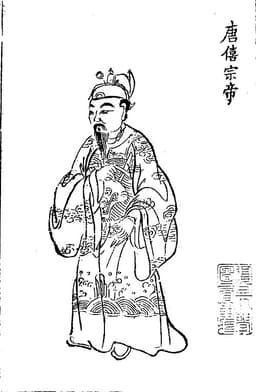
Li Xuan
Emperor · Medieval
40.9Total
Basic Information
Born
1001
862
Died
1075
888
Era
Medieval
Medieval
Nationality
Abbasid Caliphate
China
Occupation
Emperor
Emperor
Civilization
Middle Eastern
Eastern
Score Comparison
Military (10%)
10.2
50.0
Political (20%)
32.1
35.0
Influence (20%)
47.1
46.3
Legacy (20%)
37.5
37.5
Leadership (15%)
44.5
39.0
Strategy (15%)
39.6
38.6
TOTAL
37.6
40.9
Al-Qaim — Complete Timeline
1055 AD
Seljuk Entry into BaghdadPolitical Action
Seljuk Sultan Tughril entered Baghdad and was received by Caliph Al-Qaim. Tughril expelled the Buyid emirs and was granted the title 'Sultan', marking the beginning of Seljuk dominance over the Abbasid caliphate.
Seljuk TakeoverBuyid FallPower Shift
Impact: regional
1058 AD
Conflict with Al-BasasiriWar◆ Major
The Fatimid-backed general Al-Basasiri captured Baghdad and forced Caliph Al-Qaim to flee. Al-Basasiri had the khutba read in the name of the Fatimid caliph. The Seljuks recaptured Baghdad in 1059 and restored Al-Qaim.
Civil WarFatimid InterventionBaghdad
Impact: regionaldestructive
1063 AD
Marriage of Al-Qaim's Daughter to TughrilPolitical Action◆ Major
Caliph Al-Qaim gave his daughter in marriage to Sultan Tughril, formalizing the alliance between the Abbasid caliphate and the Seljuk Empire. This marriage symbolized the caliph's acceptance of Seljuk suzerainty.
Diplomatic MarriageSeljuk-Abbasid Alliance
Impact: regional
Li Xuan — Complete Timeline
880 AD
Fled Chang'an to ChengduPolitical Action
When Huang Chao's rebel army approached the Tang capital Chang'an, Li Xuan (Tang Xizong) abandoned the city and fled to Chengdu in Sichuan. This flight left the capital undefended and marked the collapse of central authority during the Huang Chao Rebellion.
FlightHuang Chao RebellionCapital Lost
Impact: nationaltragic
885 AD
Recalled to Chang'an After Huang Chao's DefeatPolitical Action◆ Major
After Huang Chao was defeated by the Shatuo Turk Li Keyong and other warlords, Li Xuan returned to Chang'an. However, the city was in ruins and the Tang court was now dependent on regional military governors, further weakening imperial power.
ReturnWarlord EraTang Decline
Impact: national
Expert Analysis
Origins
Al-Qaim (r. 1031–1075) was born in 1001 into the Abbasid caliphate, a dynasty that had long lost temporal power. His father was Caliph Al-Qadir. Al-Qaim grew up in Baghdad, surrounded by the declining Buyid emirs who controlled the caliphate. He received a traditional Islamic education, but his political role was largely ceremonial.
Li Xuan (r. 873–888), known as Emperor Xizong of Tang, was born in 862. He was the fifth son of Emperor Yizong. At age 11, he was placed on the throne by eunuchs after his father's death. His upbringing was isolated in the palace, with little exposure to governance. The Tang dynasty was already weakened by regional warlords and popular unrest.
Rise to Power
Al-Qaim became caliph in 1031 after his father's death. His early reign was dominated by the Buyids, but in 1055, the Seljuk sultan Tughril entered Baghdad. Al-Qaim received Tughril, who expelled the Buyids and was granted the title 'Sultan'. This marked the beginning of Seljuk dominance over the caliphate. Al-Qaim's power was further reduced, but he retained religious authority.
Li Xuan ascended the throne in 873 at age 11, controlled by eunuchs. In 874, the Huang Chao rebellion began, devastating large parts of China. By 880, Huang Chao's army approached Chang'an. Li Xuan fled to Chengdu in 881, leaving the capital to be sacked. He remained in exile until 885, when Tang forces with Shatuo Turk allies defeated Huang Chao. Li Xuan returned to a ruined capital, but his authority was shattered.
Leadership & Governance
Al-Qaim's leadership was passive. He accepted Seljuk suzerainty to preserve the caliphate's religious role. He married his daughter to Tughril, formalizing the alliance. However, in 1058, the Fatimid-backed general Al-Basasiri captured Baghdad, forcing Al-Qaim to flee. He was restored a year later by the Seljuks. His governance score (44.5) reflects his ability to maintain the caliphate's symbolic power despite military weakness (10.2).
Li Xuan was a weak ruler dominated by eunuchs. He failed to suppress the Huang Chao rebellion, leading to the collapse of central authority. His flight to Chengdu demonstrated his lack of military capability (50.0) and political acumen (35.0). He relied on warlords like Li Keyong, who later became independent. His leadership score (39.0) is lower than Al-Qaim's, as he lost control of the empire.
Triumph & Tragedy
Al-Qaim's triumph was preserving the Abbasid caliphate through the Seljuk takeover. He maintained the caliph as a religious figurehead, which lasted for centuries. His tragedy was the loss of temporal power and the humiliation of being driven from Baghdad by Al-Basasiri. He died in 1075, with the caliphate now a puppet of the Seljuks.
Li Xuan's triumph was returning to Chang'an after Huang Chao's defeat, albeit briefly. However, his tragedy was the irreversible decline of the Tang dynasty. The rebellion destroyed the economy and central control. Li Xuan died in 888, leaving the empire to fragment into warlord states. His legacy score (37.5) is equal to Al-Qaim's, but his total score (40.9) is slightly higher due to better military and strategy scores.
Character & Destiny
Al-Qaim was cautious and pragmatic. He accepted his reduced role to ensure the caliphate's survival. His character allowed him to navigate between Buyids, Seljuks, and Fatimids, but he lacked the ambition to restore caliphal power. His destiny was to be a symbol rather than a ruler.
Li Xuan was young and inexperienced, easily manipulated by eunuchs. His flight from Chang'an showed a lack of resolve. He failed to unite the empire against rebellion, leading to its collapse. His character was defined by weakness, and his destiny was to preside over the Tang's demise.
Legacy
Al-Qaim's legacy is the model of the caliph as a religious figurehead under military rulers. This arrangement persisted through the Seljuk, Mongol, and Ottoman eras. His influence score (47.1) reflects the caliphate's continued prestige. However, his political score (32.1) is low due to his subordination.
Li Xuan's legacy is the end of the Tang dynasty. His reign accelerated the fragmentation of China into the Five Dynasties and Ten Kingdoms period. His influence score (46.3) is similar to Al-Qaim's, but his impact is negative, as he presided over decline. The Tang's collapse led to centuries of division until the Song reunification.
Conclusion
Li Xuan has a higher total score (40.9 vs 37.6), but this is due to his military and strategy scores, which reflect his role in a rebellion, not effective action. Al-Qaim had greater long-term impact by preserving the caliphate's religious authority, which lasted for centuries. Li Xuan's reign marked the end of a dynasty, but his personal agency was minimal. Al-Qaim's political score (32.1) and leadership score (44.5) are higher than Li Xuan's (35.0 and 39.0), showing better governance relative to his constraints. Therefore, Al-Qaim had greater impact on history, maintaining an institution that shaped the Islamic world for centuries after his death.
Rankings
🥇
Li XuanLeader
Mil: 50.0Pol: 35.0Inf: 46.3
40.9
🥈
Al-Qaim
Mil: 10.2Pol: 32.1Inf: 47.1
37.6
+3.3 behind
How This Comparison Works
Algorithm
Each figure is scored on 6 dimensions (0—100 scale) based on structured historical data: Military (10%), Political (20%), Influence (20%), Legacy (20%), Leadership (15%), Strategy (15%). The weighted total produces the final ranking.
Data Sources
Scores are computed from structured sub-indicators in the database. Scale factors adjust for era (Ancient ×0.85, Modern ×1.0) and civilization size (Eastern ×1.05, Other ×0.80) to account for differences in population and military scale.
Maximum 3 Figures
Comparisons are limited to 2—3 figures to ensure readability and statistical meaningfulness.
Error Margins
±5 points per dimension — Sub-scores are derived from historical records with inherent uncertainty. Two figures within 5 points on a dimension should be considered roughly equivalent in that area.
Total Score Accuracy
±3 points overall — The weighted combination of 6 dimensions produces a total score with approximately ±3 points of uncertainty. Differences of less than 3 points are not statistically significant— the figures are effectively tied.
Known Limitations
- Historical records are incomplete and uneven across civilizations
- Figures from oral-tradition societies may be underrepresented
- Occupation labels can misclassify multi-role figures
- Scores measure capability and impact, not moral character
- Quantitative scoring is a comparison tool, not absolute truth
Capability Radar
Military (10%) — Battles & Warfare
Battles
10
5
Win Rate
10
5
Expansion
5
0
Political (20%) — Governance & Reform
Reform
10
5
Diplomacy
10
5
Economy
10
5
Influence (20%) — Cultural & Global Reach
Cultural
10
10
Global
10
5
Legacy (20%) — Historical Impact
Historical
15
15
Longevity
10
10
Leadership (15%) — Power & Stability
Tenure
15
20
Stability
5
5
Strategy (15%) — Tactics & Innovation
Strategy
10
5
Tactics
10
5
Reform
5
0
Similar Comparisons
Comments & Discussion
No comments yet. Be the first to share your thoughts!