Loading...
Al-Qahir vs Pepin the Short
Al-Qahir leads by 3.6 pts · 2 figures compared
…
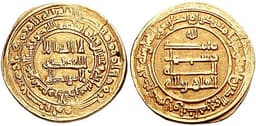
Al-Qahir
Emperor · Medieval
56.5Total
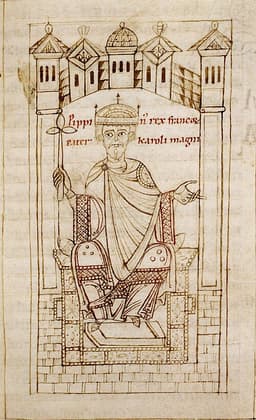
Pepin the Short
Emperor · Medieval
52.9Total
Basic Information
Born
899
714
Died
950
768
Era
Medieval
Medieval
Nationality
Abbasid Caliphate
Frankish Empire
Occupation
Emperor
Emperor
Civilization
Middle Eastern
Western
Score Comparison
Military (10%)
33.0
70.0
Political (20%)
64.5
53.8
Influence (20%)
55.6
55.0
Legacy (20%)
57.3
40.0
Leadership (15%)
62.2
53.2
Strategy (15%)
60.0
60.7
TOTAL
56.5
52.9
Al-Qahir — Complete Timeline
932 AD
Accession of Al-QahirPolitical Action◆ Major
Al-Qahir became caliph after the assassination of his brother Al-Muqtadir. His reign was brief and marked by tyranny and paranoia, as he executed many officials and family members to secure his position.
AccessionTyrannyPurge
Impact: nationaldestructive
934 AD
Deposition and Blinding of Al-QahirPolitical Action◆ Major
Al-Qahir was deposed by court officials and military commanders after only two years. He was blinded and imprisoned, later living as a beggar in Baghdad. This event highlighted the powerlessness of the caliph against the military.
DepositionBlindingFall
Impact: nationaltragic
Life as a BeggarOther
After his deposition and blinding, Al-Qahir was released from prison and lived as a beggar in the streets of Baghdad. He was occasionally recognized and given alms by former subjects, a stark contrast to his former status.
BeggarHumiliationPost-Caliph
tragic
Pepin the Short — Complete Timeline
751 AD
Anointment as King of the FranksPolitical Action
Pepin deposed the last Merovingian king, Childeric III, with the support of Pope Zachary. He was anointed king by Boniface, establishing the Carolingian dynasty and legitimizing his rule through papal approval.
Carolingian DynastyPapacyAnointment
Impact: regionalconstructive
755 AD
Siege of PaviaWar
Pepin besieged the Lombard capital of Pavia, forcing King Aistulf to surrender and cede territories. This campaign secured Frankish dominance in Italy and fulfilled Pepin's alliance with the papacy.
Lombard WarItalySiege
Impact: regional
756 AD
Donation of PepinPolitical Action◆ Major
Pepin granted the Pope control over territories in central Italy, including Ravenna and the Pentapolis, after defeating the Lombards. This created the Papal States and established the temporal power of the papacy.
Papal StatesLombardsDonation
Impact: regionalconstructive
Expert Analysis
Origins
Al-Qahir was born in the late 9th century as the son of Caliph al-Mu'tadid, growing up in the opulent but volatile Abbasid court in Baghdad. He was overshadowed by his brother al-Muqtadir, who became caliph in 908. Little is known of his early life, but he was part of a family where palace intrigue and sudden shifts in power were common. His education likely included Quranic studies, law, and the art of governance, but his character was shaped by the brutal competition for succession.
Pepin the Short was born in 714 into the powerful Carolingian family, serving as Mayor of the Palace under the Merovingian kings. His father, Charles Martel, had saved Europe from the Umayyad invasion at the Battle of Tours (732). Pepin grew up in a militaristic Frankish society, learning warfare and diplomacy. He was educated in Latin and Christian theology, preparing him to legitimize his family's de facto rule through papal support.
Rise to Power
Al-Qahir rose to power in 932 after the assassination of his brother al-Muqtadir by courtiers. The vizier Ibn Muqla orchestrated the coup, expecting Al-Qahir to be a puppet. Instead, Al-Qahir quickly turned paranoid, executing many officials and alienating the military. His reign lasted only two years (932-934) before he was deposed by the same factions that elevated him. He was blinded and imprisoned, later released to beg in Baghdad.
Pepin the Short's rise was more calculated. In 751, with the support of Pope Zachary, he deposed the last Merovingian king, Childeric III, and was anointed king of the Franks by Boniface. This alliance with the papacy legitimized the Carolingian dynasty. Pepin then spent his reign consolidating power, expanding Frankish territory, and defending the pope against the Lombards. His turning point was the Donation of Pepin (756), granting lands in Italy to the papacy, establishing the Papal States.
Leadership & Governance
Al-Qahir's leadership was marked by tyranny and inefficiency. He executed officials based on suspicion, undermined the bureaucracy, and failed to secure loyalty. His military score of 33.0 reflects his inability to maintain order. He had no significant reforms or administrative achievements. His political score of 64.5 is inflated by his brief tenure, but his governance was chaotic, leading to his swift downfall.
Pepin the Short governed as a strong military leader and diplomat. He scored 70.0 in military, reflecting his campaigns against the Lombards and Saxons. He reorganized the Frankish army and administration, promoting the use of cavalry and fortifications. He also fostered the Carolingian Renaissance, patronizing monasteries and learning. His political score of 53.8 is lower, but his leadership was effective: he secured the dynasty's future, culminating in his son Charlemagne's coronation.
Triumph & Tragedy
Al-Qahir's greatest triumph was simply becoming caliph, but that was short-lived. His tragedy was his downfall: blinded and reduced to begging, he lost all power and dignity. He is a cautionary tale of how paranoia and cruelty can destroy a ruler. His legacy score of 57.3 is modest, as he is remembered mainly for his failed reign.
Pepin's greatest triumph was the Donation of Pepin, which created the Papal States and secured the pope's temporal power for centuries. He also successfully defended the papacy from the Lombards, cementing the Frankish-papal alliance. His tragedy was his relatively short reign (751-768); he died before fully consolidating his achievements, leaving the task to Charlemagne. His legacy score of 40.0 is lower, but his impact was foundational for medieval Europe.
Character & Destiny
Al-Qahir's character was defined by suspicion and brutality. His paranoia led to the execution of potential rivals, but also alienated his supporters. His destiny was sealed by his inability to trust or delegate. Historical assessments view him as a failed ruler who squandered his opportunity.
Pepin the Short was pragmatic and diplomatic. He used his alliance with the papacy to legitimize his rule and expand his power. His character was less flamboyant than his son's, but he was a capable administrator and military leader. His destiny was to be the bridge between the Merovingian and Carolingian empires, setting the stage for Charlemagne's greatness.
Legacy
Al-Qahir's legacy is minimal. He is a footnote in Abbasid history, remembered for his blinding and begging. His reign had no lasting reforms or cultural contributions. The Abbasid caliphate continued to decline after him, eventually falling to the Buyids in 945.
Pepin the Short's legacy is immense. He established the Carolingian dynasty, which would dominate Europe for centuries. The Donation of Pepin created the Papal States, influencing church-state relations until 1870. He also laid the administrative and military foundations for Charlemagne's empire. His reign marked the end of the Merovingian era and the beginning of a new Frankish hegemony.
Conclusion
Despite Al-Qahir's higher overall score (56.5 vs 52.9), Pepin the Short had far greater historical impact. Al-Qahir's score is inflated by his brief position as caliph, but his reign was a failure that ended in tragedy. Pepin's influence shaped medieval Europe through his dynasty and the Papal States. While Al-Qahir is a cautionary tale, Pepin is a foundational figure. Therefore, Pepin the Short is the more significant historical figure.
Rankings
🥇
Al-QahirLeader
Mil: 33.0Pol: 64.5Inf: 55.6
56.5
🥈
Pepin the Short
Mil: 70.0Pol: 53.8Inf: 55.0
52.9
+3.6 behind
How This Comparison Works
Algorithm
Each figure is scored on 6 dimensions (0—100 scale) based on structured historical data: Military (10%), Political (20%), Influence (20%), Legacy (20%), Leadership (15%), Strategy (15%). The weighted total produces the final ranking.
Data Sources
Scores are computed from structured sub-indicators in the database. Scale factors adjust for era (Ancient ×0.85, Modern ×1.0) and civilization size (Eastern ×1.05, Other ×0.80) to account for differences in population and military scale.
Maximum 3 Figures
Comparisons are limited to 2—3 figures to ensure readability and statistical meaningfulness.
Error Margins
±5 points per dimension — Sub-scores are derived from historical records with inherent uncertainty. Two figures within 5 points on a dimension should be considered roughly equivalent in that area.
Total Score Accuracy
±3 points overall — The weighted combination of 6 dimensions produces a total score with approximately ±3 points of uncertainty. Differences of less than 3 points are not statistically significant— the figures are effectively tied.
Known Limitations
- Historical records are incomplete and uneven across civilizations
- Figures from oral-tradition societies may be underrepresented
- Occupation labels can misclassify multi-role figures
- Scores measure capability and impact, not moral character
- Quantitative scoring is a comparison tool, not absolute truth
Capability Radar
Military (10%) — Battles & Warfare
Battles
33
55
Win Rate
32
65
Expansion
38
65
Political (20%) — Governance & Reform
Reform
59
70
Diplomacy
62
65
Economy
63
55
Influence (20%) — Cultural & Global Reach
Cultural
67
50
Global
78
60
Legacy (20%) — Historical Impact
Historical
73
75
Longevity
77
70
Leadership (15%) — Power & Stability
Tenure
58
60
Stability
66
60
Strategy (15%) — Tactics & Innovation
Strategy
41
60
Tactics
42
50
Reform
48
70
Similar Comparisons
Comments & Discussion
No comments yet. Be the first to share your thoughts!