Loading...
Al-Mustansir vs Qin Shi Huang
Qin Shi Huang leads by 29.6 pts · 2 figures compared
…
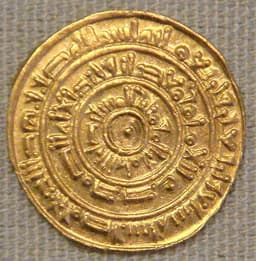
Al-Mustansir
Emperor · Medieval
55.6Total
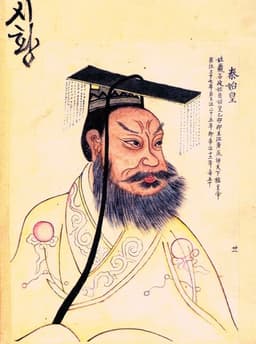
Qin Shi Huang
Emperor · Ancient
85.2Total
Basic Information
Born
1192
-259
Died
1242
-210
Era
Medieval
Ancient
Nationality
Abbasid Caliphate
China
Occupation
Emperor
Emperor
Civilization
Middle Eastern
Eastern
Score Comparison
Military (10%)
20.0
80.0
Political (20%)
68.0
90.0
Influence (20%)
55.0
85.0
Legacy (20%)
58.0
90.0
Leadership (15%)
71.0
78.0
Strategy (15%)
45.0
82.0
TOTAL
55.6
85.2
Al-Mustansir — Complete Timeline
1227 AD
Foundation of the Mustansiriya MadrasaCultural◆ Major
Al-Mustansir established the Mustansiriya Madrasa in Baghdad, a major educational institution that taught Islamic law, medicine, mathematics, and literature. It became one of the most prominent centers of learning in the medieval Islamic world, operating for centuries.
Impact: regionalconstructive
Qin Shi Huang — Complete Timeline
246 BC
Construction of the Mausoleum and Terracotta ArmyOther◆ Major
Qin Shi Huang commissioned a vast mausoleum complex near Xi'an, guarded by thousands of life-sized terracotta soldiers, horses, and chariots. The project employed hundreds of thousands of workers and reflected his obsession with immortality and imperial power.
Impact: global
230 BC
Conquest of the Six Warring StatesWar
From 230 to 221 BCE, Ying Zheng led the Qin state in a series of campaigns that conquered the Han, Zhao, Wei, Chu, Yan, and Qi states. This unified China under a single ruler for the first time, ending the Warring States period.
Impact: global
221 BC
Standardization of Writing, Currency, and MeasurementsReform◆ Major
Qin Shi Huang ordered the standardization of Chinese script, currency, and weights and measures across the unified empire. This facilitated administration, trade, and cultural integration, laying a foundation for future dynasties.
Impact: globalconstructive
Proclamation of the Qin DynastyPolitical Action
After conquering the last independent state, Ying Zheng declared himself Shi Huangdi (First Emperor), founding the Qin Dynasty. He adopted a new title to signify his supreme authority and initiated centralized imperial rule.
Impact: global
214 BC
Initiation of the Great Wall ConstructionOther◆ Major
Qin Shi Huang ordered the connection and extension of existing northern fortifications to create a unified defensive wall against nomadic Xiongnu raids. This project involved massive conscripted labor and became the precursor to the later Great Wall.
Impact: regional
213 BC
Burning of Books and Burying of ScholarsPolitical Action◆ Major
On the advice of Li Si, Qin Shi Huang ordered the burning of historical records and philosophical texts not aligned with Legalist doctrine. He also had 460 Confucian scholars buried alive to suppress dissent and consolidate ideological control.
Impact: nationaldestructive
Expert Analysis
al-mustansir-vs-qin-shi-huang
# The Emperor and the Scholar: Two Visions of Power
On a winter morning in 221 BC, Ying Zheng stood before the assembled nobles of a conquered China and declared himself Shi Huangdi—the First Emperor. His voice echoed across a land that had known nothing but war for centuries. Eighteen years later, a Mongol army would sack Baghdad, and the last great Abbasid caliph would die beneath their hooves. Between these two moments, separated by nearly fifteen hundred years and half a world, two rulers built their legacies on opposite foundations: one on the iron of conquest, the other on the ink of scholarship.
Origins
Qin Shi Huang was born into violence. In 259 BC, the Warring States period had torn China apart for two centuries. His father, King Zhuangxiang of Qin, ruled a state that had already begun to eclipse its rivals. The boy grew up in a court where survival meant cunning, where the whispers of eunuchs and the sharp edges of swords decided fates. He learned early that trust was a luxury and absolute control the only security.
Al-Mustansir entered a different world. Born in 1192, he was a prince of the Abbasid Caliphate, a dynasty that had ruled the Islamic world for nearly five centuries. But the caliphate was a shadow of its former glory. The Seljuks had stripped it of temporal power; the Crusaders had carved out kingdoms in its heartland. What remained was a fragile vessel of religious authority, floating on the memory of Harun al-Rashid. Where Qin Shi Huang inherited a war machine, Al-Mustansir inherited a prayer book.
Rise to Power
Qin Shi Huang’s path was forged in blood. At thirteen, he became king of Qin. For the first eight years, he ruled through regents, but by 238 BC, he had seized control and began the systematic conquest that would define his reign. From 230 to 221 BC, his armies swept through the six remaining states—Han, Zhao, Wei, Chu, Yan, and Qi—with a methodical brutality that left no room for mercy. Each victory was a step toward a singular vision: one China, one emperor.
Al-Mustansir’s rise was quieter. He became caliph in 1226, inheriting a title that commanded respect but little else. The Abbasid caliphs had long been figureheads, their authority limited to Baghdad and its immediate surroundings. His greatest challenge was not conquering enemies but reviving a fading institution. He could not march armies; he could only build something that would outlast the swords of his rivals.
Leadership & Governance
The differences between these two rulers are starkest in how they governed. Qin Shi Huang was a revolutionary. In 221 BC, he ordered the standardization of writing, currency, and measurements across his new empire. He connected the northern fortifications into what would become the Great Wall, a project that began in 214 BC and consumed countless lives. He imposed a single legal code, a single script, and a single set of weights—a level of uniformity that China had never known.
But his methods were terrifying. In 213 BC, on the advice of his chancellor Li Si, he ordered the burning of historical records and philosophical texts that did not align with Legalist doctrine. Scholars who resisted were buried alive. This was governance through fear, a system designed to erase the past and control the future. His military score of 80 and political score of 88 reflect a man who understood power but not humanity.
Al-Mustansir chose a different path. In 1227, he founded the Mustansiriya Madrasa in Baghdad, an institution that taught Islamic law, medicine, mathematics, and astronomy. It was one of the largest and most advanced centers of learning in the medieval world. Where Qin Shi Huang burned books, Al-Mustansir built libraries. His political score of 66.6 and legacy score of 68.5 may seem modest, but they measure a different kind of achievement: the preservation of knowledge in an age of chaos.
Triumph & Tragedy
Qin Shi Huang’s greatest triumph was the unification of China. No one before him had achieved it; no one after him would undo it. His mausoleum, commissioned in 246 BC, remains one of the most astonishing archaeological discoveries in history—thousands of life-sized terracotta soldiers, each with a unique face, standing guard for eternity. It is a monument to his ambition and his paranoia.
His tragedy was his obsession. He spent his final years searching for an elixir of immortality, consuming mercury pills that likely killed him. He died in 210 BC at the age of forty-nine, his dynasty crumbling within three years of his death. The empire he built survived, but the man who built it was consumed by his own contradictions.
Al-Mustansir’s triumph was the madrasa. It became a beacon for scholars across the Islamic world, a place where Sunni and Shia, jurist and scientist, could study side by side. His tragedy was timing. In 1242, he died, and just sixteen years later, the Mongols under Hulagu Khan sacked Baghdad, burning the libraries and slaughtering the scholars. The Mustansiriya survived, but the world that created it was gone.
Character & Destiny
Qin Shi Huang was a man of absolute will. He saw the world as raw material to be shaped, and he shaped it with an iron hand. His decisions were driven by fear—fear of rebellion, fear of death, fear of being forgotten. That fear made him brilliant and monstrous. He unified China, but he also created a template for tyranny that would echo through the centuries.
Al-Mustansir was a man of quiet conviction. He understood that power without knowledge is hollow. In a world where caliphs were puppets, he chose to build something that could not be destroyed by armies. His destiny was to be a footnote in history, overshadowed by the Mongol catastrophe, but his madrasa would influence Islamic education for centuries.
Legacy
Qin Shi Huang is remembered as the First Emperor. His name is synonymous with unity and terror, with the Great Wall and the Terracotta Army. His influence score of 82 and leadership score of 88 place him among the most consequential rulers in history. But his legacy is complicated: he gave China its identity, but he also gave it a warning about the cost of absolute power.
Al-Mustansir is remembered by scholars, not conquerors. His madrasa still stands in Baghdad, a testament to a time when the city was the center of the world’s learning. His scores are lower, but they measure a different kind of greatness—the kind that does not conquer but cultivates.
Conclusion
Two rulers, two worlds. One built an empire with swords and fire; the other built a school with ink and patience. Qin Shi Huang’s China rose from the ashes of war and became a civilization. Al-Mustansir’s Baghdad fell to the Mongols and became a memory. But both understood something essential: that power, whether wielded through armies or ideas, must be built to last. The First Emperor built walls; the caliph built minds. In the end, it is not the walls that survive, but the ideas they were meant to protect.
Rankings
🥇
Qin Shi HuangLeader
Mil: 80.0Pol: 90.0Inf: 85.0
85.2
🥈
Al-Mustansir
Mil: 20.0Pol: 68.0Inf: 55.0
55.6
+29.6 behind
How This Comparison Works
Algorithm
Each figure is scored on 6 dimensions (0—100 scale) based on structured historical data: Military (10%), Political (20%), Influence (20%), Legacy (20%), Leadership (15%), Strategy (15%). The weighted total produces the final ranking.
Data Sources
Scores are computed from structured sub-indicators in the database. Scale factors adjust for era (Ancient ×0.85, Modern ×1.0) and civilization size (Eastern ×1.05, Other ×0.80) to account for differences in population and military scale.
Maximum 3 Figures
Comparisons are limited to 2—3 figures to ensure readability and statistical meaningfulness.
Error Margins
±5 points per dimension — Sub-scores are derived from historical records with inherent uncertainty. Two figures within 5 points on a dimension should be considered roughly equivalent in that area.
Total Score Accuracy
±3 points overall — The weighted combination of 6 dimensions produces a total score with approximately ±3 points of uncertainty. Differences of less than 3 points are not statistically significant— the figures are effectively tied.
Known Limitations
- Historical records are incomplete and uneven across civilizations
- Figures from oral-tradition societies may be underrepresented
- Occupation labels can misclassify multi-role figures
- Scores measure capability and impact, not moral character
- Quantitative scoring is a comparison tool, not absolute truth
Capability Radar
Military (10%) — Battles & Warfare
Battles
5
85
Win Rate
5
90
Expansion
5
90
Political (20%) — Governance & Reform
Reform
70
95
Diplomacy
40
75
Economy
50
90
Influence (20%) — Cultural & Global Reach
Cultural
70
95
Global
50
85
Legacy (20%) — Historical Impact
Historical
65
95
Longevity
60
95
Leadership (15%) — Power & Stability
Tenure
60
70
Stability
30
65
Strategy (15%) — Tactics & Innovation
Strategy
5
85
Tactics
5
80
Reform
5
95
Similar Comparisons
Comments & Discussion
BLOOD_IRON_SAGE6/17/2026
Qin Shi Huang built his empire on severed heads and scorched earth, while Al-Mustansir thought a library could hold back the Mongols. The First Emperor standardized writing, currency, and weights across a unified China—actual power. The Caliph funded scholars and translations, which is lovely, but useless when nomads are at your gate. One man conquered the world; the other couldn't even save his city. Easy choice for the iron fist.
书虫暴君6/17/2026
拿阿拔斯末代哈里发跟秦始皇比?闹呢。老秦在公元前三世纪就统一度量、书同文、车同轨,把六国贵族脑袋砍了挂城墙上,这叫铁血统治。穆斯台绥尔呢?花大钱养学者,结果蒙古铁蹄一到,书全扔底格里斯河,墨水把河水都染黑了。读书有用,但不能当武器。孔武有力才能守住江山,文绉绉的只会亡国。
DATABENDER_20996/17/2026
The comparison is flawed because of survivorship bias. We know Qin Shi Huang as a “unifier” because Sima Qian’s biased records survived—but his book-burning and scholar-burying were acts of cultural genocide. Al-Mustansir’s Mustansiriya Madrasa literally preserved global knowledge from Greece, India, Persia. If the Mongols hadn't sacked Baghdad, his model might have shaped a more humane world. The First Emperor was a megalomaniac with a PR win; the Caliph was a visionary who lost to bad luck.
古籍护法6/17/2026
你们就知道吹秦始皇统一中国,但你们想过没有,他焚书坑儒那套把多少古代典籍烧得干干净净?《尚书》《诗经》的原始版本全没了,全靠后来汉儒凭记忆重编。穆斯台绥尔建的穆斯坦绥里耶大学,保存了亚里士多德、盖伦的原著,还翻译了印度的数学著作。一个是毁灭知识的暴君,一个是守护文明的学者,我选后者。
STEEL_AND_SAND6/17/2026
Qin Shi Huang didn't just conquer—he built a machine. The Terracotta Army wasn't art; it was an insurance policy for the afterlife. Standardizing axle widths so carts could travel on uniform roads? That's engineering genius. Al-Mustansir funded poetry and prayer. Beautiful, but useless when Genghis's grandsons show up with siege towers. One ruler thought three centuries ahead; the other barely saw the next season. Practicality beats idealism in the real world.
冷眼史官6/17/2026
你们忽略了一个关键:秦始皇的暴政是短期的,但他的大一统框架撑了两千年。秦制给中国打下的母版,到今天还有痕迹。穆斯台绥尔呢?他的帝国在蒙古人