Loading...
Al-Mustansir vs Julius Caesar
Julius Caesar leads by 27.2 pts · 2 figures compared
…
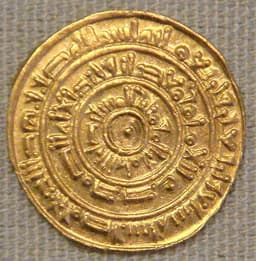
Al-Mustansir
Emperor · Medieval
55.6Total

Julius Caesar
General · Ancient
82.8Total
Basic Information
Born
1192
-100
Died
1242
-44
Era
Medieval
Ancient
Nationality
Abbasid Caliphate
Roman Republic
Occupation
Emperor
General
Civilization
Middle Eastern
Western
Score Comparison
Military (10%)
20.0
88.0
Political (20%)
68.0
78.0
Influence (20%)
55.0
85.0
Legacy (20%)
58.0
82.0
Leadership (15%)
71.0
80.0
Strategy (15%)
45.0
85.0
TOTAL
55.6
82.8
Al-Mustansir — Complete Timeline
1227 AD
Foundation of the Mustansiriya MadrasaCultural◆ Major
Al-Mustansir established the Mustansiriya Madrasa in Baghdad, a major educational institution that taught Islamic law, medicine, mathematics, and literature. It became one of the most prominent centers of learning in the medieval Islamic world, operating for centuries.
Impact: regionalconstructive
Julius Caesar — Complete Timeline
58 BC
Gallic WarsWar◆ Major
Caesar, as proconsul of Gaul, launched a series of campaigns that conquered all of Gaul (modern France, Belgium, and parts of Switzerland). He fought numerous battles, including against the Helvetii, the Belgae, and the Gallic chieftain Vercingetorix. The wars brought immense wealth and a loyal army to Caesar.
Gallic WarsConquestRoman Expansion
Impact: regional
49 BC
Crossing the RubiconPolitical Action◆ Major
Caesar led Legio XIII across the Rubicon River into Italy, defying the Roman Senate's order to disband his army. This act triggered a civil war against Pompey and the Optimates, ultimately leading to Caesar's dictatorship and the end of the Roman Republic.
Roman Civil WarEnd of RepublicPower Struggle
Impact: global
48 BC
Battle of PharsalusWar◆ Major
Caesar's outnumbered army defeated the larger forces of Pompey the Great at Pharsalus in Greece. Caesar's tactical use of a reserve line to counter Pompey's cavalry charge proved decisive. Pompey fled to Egypt, where he was assassinated, leaving Caesar as the undisputed master of the Roman world.
Roman Civil WarBattleDecisive Victory
Impact: regional
44 BC
Appointment as Dictator for LifePolitical Action◆ Major
The Roman Senate appointed Caesar dictator perpetuo (dictator for life), granting him unprecedented personal power. This move concentrated military, legislative, and judicial authority in one person, effectively ending the Roman Republic's traditional system of checks and balances and alarming many senators.
DictatorshipEnd of RepublicPower Consolidation
Impact: regionaldestructive
Assassination on the Ides of MarchPolitical Action◆ Major
A group of Roman senators, led by Marcus Junius Brutus and Gaius Cassius Longinus, stabbed Caesar to death at a meeting of the Senate in the Theatre of Pompey. The assassination was intended to restore the Republic, but instead triggered another civil war that led to the rise of the Roman Empire.
AssassinationRoman PoliticsEnd of Republic
Impact: globaldestructive
Expert Analysis
Al-Mustansir vs Julius Caesar
# The Crossroads of Power: Caesar’s Sword and Al-Mustansir’s Ink
On the Ides of March, 44 BCE, a Roman dictator fell to twenty-three dagger wounds on the floor of the Senate chamber. His blood pooled around the feet of his assassins, men who called themselves liberators. Twelve hundred years later and two thousand miles to the east, in Baghdad, a caliph named Al-Mustansir presided over the opening of a madrasa that would become the intellectual heart of the Islamic world. One man changed history through conquest; the other through knowledge. Both wielded power, but in radically different ways. Their lives, separated by centuries and civilizations, pose a question that still haunts us: What makes a leader’s legacy endure—the sword or the pen?
Origins
Julius Caesar was born into the chaos of the late Roman Republic, a world of civil wars, crumbling traditions, and ambitious nobles who saw the state as a ladder to personal glory. His family, the Julii, claimed descent from the goddess Venus—a pedigree that mattered in Rome’s honor-obsessed society. Yet they were not wealthy. Caesar grew up in a Rome where political power was bought with gold and military might, where the Senate’s authority was fraying under the weight of empire. From his earliest years, he absorbed the lesson that survival meant rising above the pack, and that in Rome, the pack devoured the weak.
Al-Mustansir, by contrast, was born into the twilight of the Abbasid Caliphate in 1192. His world was one of inherited legitimacy, where the caliph was both spiritual leader and political symbol, but where real power had long since slipped away to Turkic warlords and foreign invaders. Baghdad, once the jewel of the world, was a city under siege—not by armies, but by decay. The great conquests of Harun al-Rashid were distant memories. Al-Mustansir’s inheritance was not a republic to be conquered, but a fragile institution to be preserved.
Rise to Power
Caesar’s path to supremacy was forged on battlefields across Europe, North Africa, and the Middle East. His military genius first emerged in Gaul, where between 58 and 50 BCE he subdued hundreds of tribes, crossed the Rhine into Germany, and even launched invasions of Britain. Each campaign brought him wealth, loyal soldiers, and a reputation that made the Senate tremble. The turning point came in 49 BCE, when he crossed the Rubicon River with a single legion, defying the Senate’s order to disband his army. “The die is cast,” he reportedly said, and with those words, he ignited a civil war that would end the Republic.
Al-Mustansir’s rise was quieter, but no less significant. He became caliph in 1226, inheriting a title that was more ceremonial than powerful. The Abbasid caliphs of his era were figureheads, their authority recognized in name but not in deed. Yet Al-Mustansir understood that influence does not always require an army. His great turning point came in 1227, when he founded the Mustansiriya Madrasa in Baghdad. This was not merely a school; it was a statement of intent. In an age when the Mongols were gathering on the horizon and the Crusaders still held lands in the Levant, Al-Mustansir chose to invest in the one resource that could outlast any empire: knowledge.
Leadership & Governance
Caesar governed like a storm. He centralized power, reformed the calendar, granted citizenship to provincials, and launched massive public works. His military strategy was based on speed, discipline, and the personal loyalty of his troops—men who fought not for Rome, but for Caesar. He was ruthless when necessary—his siege of Alesia in 52 BCE trapped a Gallic army of 80,000 and starved them into submission—but also pragmatic. He pardoned former enemies, including Brutus, who would later stab him. His political wisdom lay in his ability to see that the old Republic was dying, and that only a strong hand could hold the empire together.
Al-Mustansir’s governance was built on a different foundation. The Mustansiriya Madrasa taught not only Islamic law but also medicine, mathematics, and astronomy. It attracted scholars from across the Muslim world and became a model for universities centuries later. His political score of 66.6 reflects a leader who worked within the constraints of his time, using cultural patronage rather than military force to project power. He could not match Caesar’s strategic brilliance—his military score of 37.0 is a reminder of the Abbasids’ weakness—but he understood that a library could be more powerful than a legion. When the Mongols sacked Baghdad in 1258, just sixteen years after his death, the Mustansiriya Madrasa was one of the few institutions to survive. Its walls held knowledge that the invaders could not burn.
Triumph & Tragedy
Caesar’s greatest triumph was his conquest of Gaul, which added a vast, wealthy province to Rome and made him the most powerful man in the Republic. His greatest tragedy was his assassination on the Ides of March, 44 BCE, just as he was planning a campaign against Parthia. He died at the height of his power, betrayed by men he had trusted. His murder did not restore the Republic; it plunged Rome into another civil war, from which his adopted heir, Octavian, emerged as the first emperor.
Al-Mustansir’s triumph was the Mustansiriya Madrasa, a monument to learning that still stands today in Baghdad. His tragedy was that he could not save his civilization from the storm to come. The Mongols under Hulagu Khan destroyed much of Baghdad in 1258, slaughtering hundreds of thousands and ending the Abbasid Caliphate. Al-Mustansir died in 1242, spared the sight of his city’s ruin but aware, perhaps, that his efforts to preserve knowledge were a race against time.
Character & Destiny
Caesar was driven by an insatiable ambition. He believed in his own destiny, cultivated an image of invincibility, and took risks that would have destroyed lesser men. His character was both his strength and his flaw: it gave him the nerve to cross the Rubicon, but it also blinded him to the hatred he inspired. He famously dismissed his bodyguard, saying, “It is better to die once than to live in constant fear of death.” That arrogance cost him his life.
Al-Mustansir was a different kind of leader—cautious, patient, and focused on the long game. He understood that the Abbasid Caliphate could not match the Mongols or the Crusaders in battle, so he chose to fortify its mind. His character was shaped by the knowledge that his power was symbolic, not absolute. He built not for himself, but for the future. In that sense, his destiny was quieter but perhaps more profound: he ensured that even when Baghdad fell, its ideas would survive.
Legacy
Caesar’s legacy is written in blood and stone. His name became synonymous with imperial power—the word “kaiser” and “tsar” both derive from “Caesar.” His reforms laid the groundwork for the Roman Empire, which lasted another five centuries in the West and a thousand years in the East. Yet his ambition also destroyed the Republic, a loss that historians still debate.
Al-Mustansir’s legacy is written in ink. The Mustansiriya Madrasa influenced the development of universities across the Islamic world and, eventually, Europe. His commitment to education in an age of violence stands as a reminder that civilization is not built by conquerors alone. While Caesar’s empire crumbled, the knowledge Al-Mustansir protected outlived both the Abbasids and the Mongols.
Conclusion
Standing before the Mustansiriya Madrasa today, one sees a building that has survived invasions, wars, and centuries of neglect. Standing before the ruins of the Roman Forum, one sees the ghost of a man who changed the world through sheer force of will. Caesar and Al-Mustansir represent two poles of leadership: the conqueror who reshapes the world in his image, and the builder who plants seeds for a future he will never see. Neither path is superior—both are necessary. But perhaps Al-Mustansir’s story carries a quieter lesson for our own age: that in the end, the sword may win the battle, but the pen writes the history that survives.
Rankings
🥇
Julius CaesarLeader
Mil: 88.0Pol: 78.0Inf: 85.0
82.8
🥈
Al-Mustansir
Mil: 20.0Pol: 68.0Inf: 55.0
55.6
+27.2 behind
How This Comparison Works
Algorithm
Each figure is scored on 6 dimensions (0—100 scale) based on structured historical data: Military (10%), Political (20%), Influence (20%), Legacy (20%), Leadership (15%), Strategy (15%). The weighted total produces the final ranking.
Data Sources
Scores are computed from structured sub-indicators in the database. Scale factors adjust for era (Ancient ×0.85, Modern ×1.0) and civilization size (Eastern ×1.05, Other ×0.80) to account for differences in population and military scale.
Maximum 3 Figures
Comparisons are limited to 2—3 figures to ensure readability and statistical meaningfulness.
Error Margins
±5 points per dimension — Sub-scores are derived from historical records with inherent uncertainty. Two figures within 5 points on a dimension should be considered roughly equivalent in that area.
Total Score Accuracy
±3 points overall — The weighted combination of 6 dimensions produces a total score with approximately ±3 points of uncertainty. Differences of less than 3 points are not statistically significant— the figures are effectively tied.
Known Limitations
- Historical records are incomplete and uneven across civilizations
- Figures from oral-tradition societies may be underrepresented
- Occupation labels can misclassify multi-role figures
- Scores measure capability and impact, not moral character
- Quantitative scoring is a comparison tool, not absolute truth
Capability Radar
Military (10%) — Battles & Warfare
Battles
5
95
Win Rate
5
92
Expansion
5
97
Political (20%) — Governance & Reform
Reform
70
90
Diplomacy
40
85
Economy
50
82
Influence (20%) — Cultural & Global Reach
Cultural
70
88
Global
50
94
Legacy (20%) — Historical Impact
Historical
65
95
Longevity
60
96
Leadership (15%) — Power & Stability
Tenure
60
75
Stability
30
60
Strategy (15%) — Tactics & Innovation
Strategy
5
94
Tactics
5
96
Reform
5
88
Similar Comparisons
Comments & Discussion
QUAESTOR OF IRONY6/16/2026
The problem with comparing a Roman conqueror to a medieval caliph is that Caesar actually *won*. Al-Mustansir presided over an empire already in its death throes, while Caesar was cutting through Gaul like butter. Let's not romanticize the "ink vs sword" dichotomy—Caesar's literary works *on his conquests* are what made his legacy, not his charities or his togas. Without *Commentarii*, we'd just know him as another dead dictator.|
军团克星6/16/2026
拿凯撒和穆斯坦绥尔比?凯撒亲手终结了罗马共和,还杀了100万高卢人,这叫“征服”?穆斯坦绥尔呢,蒙古人打到家门口时他只会躲在巴格达写诗。真正的硬汉该学学埃及的马穆鲁克,别拿学堂当稻草人挡箭。|
STYLE OVER SUBSTANCE6/16/2026
The only reason Al-Mustansir gets a footnote in history is that his madrasa survived the Mongol sack of Baghdad in 1258. That's not legacy, that's luck. Caesar's military innovations—like building siege works on the scale of engineering marvels in Alesia—actually changed how wars were fought for centuries. A library is just a room; a legion reforms an empire.|
读书不如挥剑6/16/2026
历史最爱这碗毒鸡汤:笔比剑强。可现实是,凯撒的剑铸就了罗马帝国千年的骨架,而穆斯坦绥尔的书院连巴格达都保不住。1258年蒙古人一来,那些本本全扔进了底格里斯河,墨水比血还淡。有话直说:不守城的学问,就是死人前的遗书。|
DIGITAL SARMATIAN6/16/2026
Quantitatively, Caesar conquered Gaul (about 5 million inhabitants) in 8 years with 12 legions; Al-Mustansir's "empire" was a shrunken rump state where the caliph couldn't even control his own viziers. The madrasa system educated maybe a few thousand scholars annually. Population growth, tax revenue, territorial expansion—on every measurable scale, Caesar's impact dwarfs Al-Mustansir's. Ink is lovely. But swords pay the contractors.|
巴格达过客6/16/2026
我不贬低穆斯坦绥尔,但他活在凯撒的阴影下简直离谱。凯撒39岁就征服高卢,49岁成为终身独裁官;穆斯坦绥尔35岁修了个学校,46岁在蒙古马蹄声中咽气。一个靠自己打天下,一个靠祖上余晖撑门面。要想在我这儿平起平坐,先把耶路撒冷打下来再说。