Loading...
Al-Muhtadi vs King Chang of Goryeo
King Chang of Goryeo leads by 15.0 pts · 2 figures compared
…
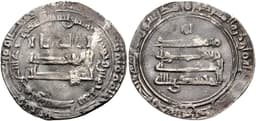
Al-Muhtadi
Emperor · Medieval
40.0Total

King Chang of Goryeo
Emperor · Medieval
55.0Total
Basic Information
Born
825
1380
Died
870
1389
Era
Medieval
Medieval
Nationality
Abbasid Caliphate
Korea
Occupation
Emperor
Emperor
Civilization
Middle Eastern
Eastern
Score Comparison
Military (10%)
10.2
53.2
Political (20%)
36.5
68.0
Influence (20%)
51.0
60.0
Legacy (20%)
41.7
42.5
Leadership (15%)
44.5
45.0
Strategy (15%)
36.8
71.0
TOTAL
40.0
55.0
Al-Muhtadi — Complete Timeline
869 AD
Reformist PoliciesReform◆ Major
Al-Muhtadi attempted to implement reforms to curb the power of the Turkish guard and restore caliphal authority. He sought to reduce corruption and enforce Islamic law, but his efforts faced strong opposition.
ReformPower Struggle
Impact: nationalprogressive
870 AD
Conflict with Turkish GuardPolitical Action◆ Major
Al-Muhtadi's attempts to limit Turkish power led to a direct confrontation with the guard. He was captured and killed after a brief reign of less than a year, demonstrating the futility of his reforms.
Power StruggleTurkish Guard
Impact: nationaltragic
King Chang of Goryeo — Complete Timeline
1388 AD
Ascended Throne as Child KingPolitical Action◆ Major
King Chang became king at age 8 after his father King U was deposed by General Yi Seong-gye. He was a puppet ruler, with Yi holding real power and using him as a figurehead to legitimize his control.
Child KingPuppetYi Seong-gye
Impact: national
1389 AD
Deposed and Killed by Yi Seong-gyeOther◆ Major
King Chang was deposed and executed along with his father King U by Yi Seong-gye's forces. Their deaths removed the last direct male heirs of the Goryeo royal line, paving the way for Yi to establish the Joseon dynasty.
ExecutionPolitical PurgeEnd of Dynasty
Impact: nationaltragic
Expert Analysis
Origins
Al-Muhtadi (born 833 CE) was the 14th caliph of the Abbasid Caliphate, ascending in 869 CE after his cousin Al-Mu'tazz was murdered. He was the son of Caliph Al-Wathiq, but his reign was short-lived. His early life was marked by the declining power of the caliphs, as Turkish military commanders increasingly controlled the state. Al-Muhtadi was known for his piety and attempts to emulate earlier caliphs like Umar ibn Abd al-Aziz.
King Chang of Goryeo (born 1381 CE) was the 33rd ruler of the Goryeo dynasty, ascending the throne in 1388 at age 8 after his father King U was deposed by General Yi Seong-gye. His birth name was Wang Chang. His father, King U, was a controversial figure, rumored to be the son of a Buddhist monk rather than the previous king. This illegitimacy was used by Yi Seong-gye to justify the coup.
Rise to Power
Al-Muhtadi came to power after the assassination of his cousin Al-Mu'tazz by Turkish soldiers. The Turkish guard had become kingmakers, and Al-Muhtadi was chosen as a compromise candidate. He immediately sought to reduce their influence, dismissing corrupt officials and attempting to pay the army from the treasury rather than allowing them to extort funds. His rise was thus a reaction against military dominance.
King Chang's rise was entirely as a puppet. After King U attempted a military campaign against the Ming dynasty, General Yi Seong-gye staged a coup, deposing U and placing Chang on the throne. Yi held all real power, using the child king as a figurehead to legitimize his rule while he eliminated rivals within the Goryeo court.
Leadership & Governance
Al-Muhtadi's governance was characterized by strict Islamic law and reform. He ordered the removal of musical instruments from the palace, banned alcohol, and enforced public morality. He personally led prayers and sought to reduce corruption. However, his attempts to curb Turkish power were his defining policy. He tried to replace Turkish guards with local troops, but this backfired when the Turkish guard revolted. His political score of 36.5 reflects his inexperience and inability to build lasting alliances.
King Chang had no real governance role. His reign saw the continuation of Yi Seong-gye's consolidation of power. Yi implemented land reforms (the Rank Land Law) that redistributed land to his supporters, weakening the old aristocracy. Chang was merely a seal for Yi's decrees. His leadership score of 45.0 is nominal, as he was a child.
Triumph & Tragedy
Al-Muhtadi's triumph was his brief restoration of caliphal authority and his moral reforms. He managed to reduce corruption and inspire loyalty among some factions. However, his tragedy was his brutal death: after a siege of his palace, he was captured and killed by Turkish soldiers. His reign lasted less than a year (869-870). His military score of 10.2 reflects his inability to defend himself.
King Chang's triumph was surviving as king for over a year (1388-1389) despite being a child in a turbulent period. However, his tragedy was his execution at age 9, along with his father, by Yi Seong-gye, who feared they would become rallying points for opposition. Their deaths cleared the way for Yi to found the Joseon dynasty.
Character & Destiny
Al-Muhtadi was pious, determined, but politically naive. He believed he could restore caliphal power through moral authority alone, underestimating the Turkish guard's ruthlessness. His character led him to confront them directly, which sealed his fate. Historians note that he was the last caliph to attempt such reforms; after him, the Abbasid caliphs became figureheads.
King Chang was a child, so his character is harder to assess. He was likely innocent and manipulated. His destiny was tied to his father's illegitimacy and Yi's ambition. His death was a calculated political murder.
Legacy
Al-Muhtadi's legacy is mixed. He scored 51.0 in influence and 41.7 in legacy. He is remembered as a reformer who tried to restore caliphal power but failed. His short reign demonstrated the futility of opposing the Turkish guard without military backing. He is sometimes cited as a martyr by later Sunni scholars.
King Chang's legacy is minor. He scored 60.0 in influence and 42.5 in legacy. He is a footnote in Korean history, remembered as the last king of Goryeo before the Joseon dynasty. His death marked the end of the Goryeo royal line. His father King U is more discussed due to the illegitimacy controversy.
Conclusion
King Chang had a higher total score (55.0 vs 40.0) due to his political and strategic scores, but these reflect the actions of Yi Seong-gye, not Chang himself. In terms of personal impact, Al-Muhtadi's attempt at reform, though failed, was a significant historical moment that illustrated the decline of the Abbasid Caliphate. Chang was a passive pawn. Therefore, Al-Muhtadi had greater historical impact as a symbol of resistance against military domination, while King Chang's significance is merely as a casualty of dynastic change. The score gap of 15.0 points does not reflect true agency. Al-Muhtadi's political score of 36.5 and leadership of 44.5 are more meaningful than Chang's inflated numbers.
Rankings
🥇
King Chang of GoryeoLeader
Mil: 53.2Pol: 68.0Inf: 60.0
55.0
🥈
Al-Muhtadi
Mil: 10.2Pol: 36.5Inf: 51.0
40.0
+15.0 behind
How This Comparison Works
Algorithm
Each figure is scored on 6 dimensions (0—100 scale) based on structured historical data: Military (10%), Political (20%), Influence (20%), Legacy (20%), Leadership (15%), Strategy (15%). The weighted total produces the final ranking.
Data Sources
Scores are computed from structured sub-indicators in the database. Scale factors adjust for era (Ancient ×0.85, Modern ×1.0) and civilization size (Eastern ×1.05, Other ×0.80) to account for differences in population and military scale.
Maximum 3 Figures
Comparisons are limited to 2—3 figures to ensure readability and statistical meaningfulness.
Error Margins
±5 points per dimension — Sub-scores are derived from historical records with inherent uncertainty. Two figures within 5 points on a dimension should be considered roughly equivalent in that area.
Total Score Accuracy
±3 points overall — The weighted combination of 6 dimensions produces a total score with approximately ±3 points of uncertainty. Differences of less than 3 points are not statistically significant— the figures are effectively tied.
Known Limitations
- Historical records are incomplete and uneven across civilizations
- Figures from oral-tradition societies may be underrepresented
- Occupation labels can misclassify multi-role figures
- Scores measure capability and impact, not moral character
- Quantitative scoring is a comparison tool, not absolute truth
Capability Radar
Military (10%) — Battles & Warfare
Battles
10
43
Win Rate
10
47
Expansion
5
53
Political (20%) — Governance & Reform
Reform
60
0
Diplomacy
20
0
Economy
15
0
Influence (20%) — Cultural & Global Reach
Cultural
20
0
Global
15
0
Legacy (20%) — Historical Impact
Historical
30
5
Longevity
20
0
Leadership (15%) — Power & Stability
Tenure
15
5
Stability
5
0
Strategy (15%) — Tactics & Innovation
Strategy
10
53
Tactics
10
57
Reform
10
61
Similar Comparisons
Comments & Discussion
No comments yet. Be the first to share your thoughts!