Loading...
Al-Amin vs Qin Shi Huang
Qin Shi Huang leads by 45.3 pts · 2 figures compared
…

Al-Amin
Emperor · Medieval
39.9Total
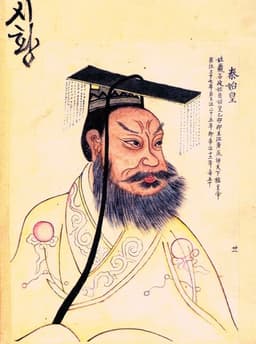
Qin Shi Huang
Emperor · Ancient
85.2Total
Basic Information
Born
787
-259
Died
813
-210
Era
Medieval
Ancient
Nationality
Abbasid Caliphate
China
Occupation
Emperor
Emperor
Civilization
Middle Eastern
Eastern
Score Comparison
Military (10%)
50.0
80.0
Political (20%)
30.7
90.0
Influence (20%)
47.9
85.0
Legacy (20%)
38.3
90.0
Leadership (15%)
33.6
78.0
Strategy (15%)
36.8
82.0
TOTAL
39.9
85.2
Al-Amin — Complete Timeline
811 AD
Fourth Fitna (Civil War)War
Al-Amin's reign was dominated by the Fourth Fitna, a civil war against his brother al-Mamun. The conflict began when al-Amin tried to remove al-Mamun from succession, leading to a devastating war that weakened the Abbasid Caliphate.
Impact: regionaldestructive
812 AD
Siege of BaghdadWar◆ Major
Al-Mamun's forces, led by Tahir ibn Husayn, besieged Baghdad in 812-813. The siege lasted over a year, causing widespread destruction and famine. Al-Amin was captured and executed in 813, ending his caliphate.
Impact: regionaltragic
813 AD
Execution of Al-AminPolitical Action◆ Major
After the fall of Baghdad, al-Amin was captured by Tahir's forces. He was executed on al-Mamun's orders, marking the end of the civil war and the beginning of al-Mamun's sole rule.
Impact: nationaltragic
Qin Shi Huang — Complete Timeline
246 BC
Construction of the Mausoleum and Terracotta ArmyOther◆ Major
Qin Shi Huang commissioned a vast mausoleum complex near Xi'an, guarded by thousands of life-sized terracotta soldiers, horses, and chariots. The project employed hundreds of thousands of workers and reflected his obsession with immortality and imperial power.
Impact: global
230 BC
Conquest of the Six Warring StatesWar
From 230 to 221 BCE, Ying Zheng led the Qin state in a series of campaigns that conquered the Han, Zhao, Wei, Chu, Yan, and Qi states. This unified China under a single ruler for the first time, ending the Warring States period.
Impact: global
221 BC
Standardization of Writing, Currency, and MeasurementsReform◆ Major
Qin Shi Huang ordered the standardization of Chinese script, currency, and weights and measures across the unified empire. This facilitated administration, trade, and cultural integration, laying a foundation for future dynasties.
Impact: globalconstructive
Proclamation of the Qin DynastyPolitical Action
After conquering the last independent state, Ying Zheng declared himself Shi Huangdi (First Emperor), founding the Qin Dynasty. He adopted a new title to signify his supreme authority and initiated centralized imperial rule.
Impact: global
214 BC
Initiation of the Great Wall ConstructionOther◆ Major
Qin Shi Huang ordered the connection and extension of existing northern fortifications to create a unified defensive wall against nomadic Xiongnu raids. This project involved massive conscripted labor and became the precursor to the later Great Wall.
Impact: regional
213 BC
Burning of Books and Burying of ScholarsPolitical Action◆ Major
On the advice of Li Si, Qin Shi Huang ordered the burning of historical records and philosophical texts not aligned with Legalist doctrine. He also had 460 Confucian scholars buried alive to suppress dissent and consolidate ideological control.
Impact: nationaldestructive
Expert Analysis
al-amin-vs-qin-shi-huang
The First Emperor and the Forgotten Caliph
History loves a winner, but it also loves a cautionary tale. In the year 221 BC, a young king named Ying Zheng stood atop the smoldering ruins of centuries of war and declared himself Shi Huangdi, the First Emperor of China. He had conquered six kingdoms, unified a fractured world, and set in motion a system of governance that would outlast his dynasty by two millennia. Just over a millennium later, in 813 AD, another ruler, the Caliph al-Amin of the Abbasid Empire, was dragged from his hiding place in a besieged Baghdad and executed on the orders of his own brother. One man forged an empire; the other lost one. What separates a titan from a footnote is not merely luck, but the interplay of character, circumstance, and the terrifying weight of choice.
Origins
Qin Shi Huang was born into a world of chaos. The Warring States period had torn China apart for centuries, a brutal age of shifting alliances and endless bloodshed. As a prince of the Qin state—a frontier kingdom known for its harsh laws and pragmatic military—he was raised not in the comforts of a golden palace but in the shadow of constant war. His father was a king, but his mother was a former concubine, and his early years were marked by political intrigue and the ever-present threat of assassination. This environment forged a mind that saw order as the only antidote to chaos, and control as the only path to survival.
Al-Amin, by contrast, was born into the apex of Abbasid power. His father, Caliph Harun al-Rashid, presided over the golden age of Baghdad—a city of scholars, poets, and immense wealth. Al-Amin was the son of an Arab mother, a fact that tied him to the old tribal aristocracy, while his half-brother al-Mamun was born to a Persian concubine. This difference in bloodlines would prove fatal. Al-Amin inherited the caliphate not because of merit, but because of a succession plan that Harun had drawn up, only to watch it unravel. He was a prince of privilege, raised in a world that had already solved the problem of survival.
Rise to Power
For Qin Shi Huang, power was something to be seized through relentless effort. At the age of 13, he ascended the throne of Qin, but real power remained in the hands of regents and his mother’s lover, Lao Ai. It was not until a palace coup in 238 BC, when he was 21, that Ying Zheng personally crushed the rebellion and took control. From that moment, he moved with surgical precision. Between 230 and 221 BC, he unleashed a series of campaigns that devoured the six rival states one by one—Han, Zhao, Wei, Chu, Yan, and finally Qi. Each conquest was a lesson in strategy, logistics, and the ruthless application of force. He did not inherit an empire; he built it with his own hands.
Al-Amin’s rise was far simpler: he was named caliph upon his father’s death in 809 AD. The succession had been arranged, but it was a fragile arrangement. Harun had divided the empire: al-Amin would rule from Baghdad, while al-Mamun governed the eastern provinces from Khurasan. The plan required cooperation, but al-Amin, egged on by his Arab advisors, saw his brother as a threat. He began to strip al-Mamun of his rights, demanding that the eastern provinces be placed under his direct control. In 811 AD, al-Mamun declared war. Al-Amin had not earned his throne through struggle, and he had no idea how to defend it.
Leadership & Governance
Qin Shi Huang’s governance was a revolution. After unification in 221 BC, he did not simply rest on his laurels. He imposed a single written script across the empire, standardized currency and weights and measures, and built a network of roads and canals to bind the realm together. He ordered the construction of the Great Wall, linking existing fortifications into a defensive barrier against northern nomads. His legalist philosophy, guided by the minister Li Si, prioritized state power over individual freedom. Laws were harsh, punishments severe, but the system worked. For the first time, a man from the coast could trade with a man from the mountains using the same coins and the same characters. It was a brutal form of unity, but it was unity nonetheless.
Al-Amin, by contrast, governed as a figurehead. He surrounded himself with sycophants and tribal loyalists who whispered that his brother was a usurper. He made no major reforms, no lasting contributions to law or infrastructure. His only significant act was to provoke a civil war he could not win. When al-Mamun’s general Tahir ibn Husayn marched on Baghdad in 812, al-Amin’s forces crumbled. The siege lasted over a year, and the city—once the jewel of the world—was reduced to starvation and ruin. Al-Amin had no strategy, no military genius, and no political wisdom. He had only a title, and titles are worthless without the will to back them.
Triumph & Tragedy
Qin Shi Huang’s greatest triumph was the sheer audacity of his vision. He did not just conquer China; he invented Imperial China. His mausoleum, guarded by the Terracotta Army—thousands of life-sized soldiers, each with a unique face—was a monument to his belief that even death could not end his rule. Yet his tragedy was equally immense. His obsession with immortality led him to consume mercury pills, likely hastening his death in 210 BC at the age of 49. His dynasty collapsed within four years of his passing, undone by the very harshness he had imposed. The man who unified China could not unify his own legacy.
Al-Amin’s triumph is difficult to find. Perhaps it was his survival of the early years of his reign, a brief moment when the empire was at peace. But his tragedy is stark: he was executed in 813 AD, his head paraded through Baghdad on a spear. His brother al-Mamun would go on to become one of the great Abbasid caliphs, patron of the House of Wisdom and a champion of learning. Al-Amin’s name is remembered only as a warning—a ruler who had everything and threw it all away.
Character & Destiny
Qin Shi Huang was a man of iron will and paranoia. He believed that history began with him, ordering the burning of all books that did not glorify his reign and the burying of scholars who disagreed. He was a micromanager, personally reviewing thousands of official documents each day. His character was shaped by the fear of chaos, and that fear drove him to extremes. Yet it also drove him to greatness. He understood that to create something new, you must first destroy the old.
Al-Amin was a man of entitlement and indecision. He had never known defeat, and so he did not know how to fight. When the crisis came, he vacillated between aggression and surrender, trusting in advisors who were themselves incompetent. His character was shaped by privilege, and privilege left him unprepared. He could not imagine losing, and so he did.
Legacy
Qin Shi Huang’s legacy is written in the very bones of China. The standardization he imposed, the roads he built, the wall he began—all became the foundation for every dynasty that followed. He is remembered as both a tyrant and a unifier, a figure who embodies the terrible price of order. His tomb remains unopened, a mystery that still guards his secrets.
Al-Amin’s legacy is a footnote in Abbasid history. He is remembered as the caliph who lost the civil war, the brother who failed. His name appears in chronicles as a lesson in the dangers of hubris and the folly of divided loyalties. No monuments stand to him, no reforms bear his name. He is, in the end, a whisper.
Conclusion
Standing before the Terracotta Army, one feels the weight of Qin Shi Huang’s ambition—a man who tried to conquer death itself. Walking through the ruins of medieval Baghdad, one searches for al-Amin and finds only silence. The difference between them is not merely talent or luck, but the willingness to act when history demands it. Qin Shi Huang understood that power is a burden to be carried, not a throne to be sat upon. Al-Amin learned too late that a crown is only as strong as the hand that wears it. In the end, one emperor built an empire that would define a civilization; the other lost an empire that barely remembers his name.
Rankings
🥇
Qin Shi HuangLeader
Mil: 80.0Pol: 90.0Inf: 85.0
85.2
🥈
Al-Amin
Mil: 50.0Pol: 30.7Inf: 47.9
39.9
+45.3 behind
How This Comparison Works
Algorithm
Each figure is scored on 6 dimensions (0—100 scale) based on structured historical data: Military (10%), Political (20%), Influence (20%), Legacy (20%), Leadership (15%), Strategy (15%). The weighted total produces the final ranking.
Data Sources
Scores are computed from structured sub-indicators in the database. Scale factors adjust for era (Ancient ×0.85, Modern ×1.0) and civilization size (Eastern ×1.05, Other ×0.80) to account for differences in population and military scale.
Maximum 3 Figures
Comparisons are limited to 2—3 figures to ensure readability and statistical meaningfulness.
Error Margins
±5 points per dimension — Sub-scores are derived from historical records with inherent uncertainty. Two figures within 5 points on a dimension should be considered roughly equivalent in that area.
Total Score Accuracy
±3 points overall — The weighted combination of 6 dimensions produces a total score with approximately ±3 points of uncertainty. Differences of less than 3 points are not statistically significant— the figures are effectively tied.
Known Limitations
- Historical records are incomplete and uneven across civilizations
- Figures from oral-tradition societies may be underrepresented
- Occupation labels can misclassify multi-role figures
- Scores measure capability and impact, not moral character
- Quantitative scoring is a comparison tool, not absolute truth
Capability Radar
Military (10%) — Battles & Warfare
Battles
20
85
Win Rate
15
90
Expansion
5
90
Political (20%) — Governance & Reform
Reform
10
95
Diplomacy
10
75
Economy
15
90
Influence (20%) — Cultural & Global Reach
Cultural
15
95
Global
10
85
Legacy (20%) — Historical Impact
Historical
20
95
Longevity
10
95
Leadership (15%) — Power & Stability
Tenure
20
70
Stability
10
65
Strategy (15%) — Tactics & Innovation
Strategy
10
85
Tactics
15
80
Reform
5
95
Similar Comparisons
Comments & Discussion
QinConqueror6/17/2026
Calling al-Amin a "forgotten Caliph" misses the point. He wasn't forgotten; he was a cautionary tale about what happens when you inherit wealth without wisdom. Qin Shi Huang built an empire from scratch, unifying weights, measures, and even axle lengths—practical, obsessive, and brilliant. Al-Amin was handed the Abbasid golden age and pissed it away on poetry and pleasure. One man carved order from chaos; the other let chaos eat his inheritance. History didn't forget al-Amin—it judged him.
沙漠之狐6/17/2026
拿秦始皇和阿明比?简直是侮辱兵马俑。秦始皇修长城、统一文字,活人殉葬都挡不住他成神;阿明呢?他连巴格达的供水系统都守不住,被弟弟追着满城跑。秦朝二世而亡,但帝国骨架撑了两千年。阿明死后,哈里发只是个笑话。不是所有失败者都是悲剧英雄,阿明就是个权二代废物。
SkepticalScribe6/17/2026
The comparison is absurd on its face. We have massive historical documentation for Qin—sturdy bamboo slips, inscriptions, even detailed Sima Qian records. For al-Amin? Mostly Baghdad gossip from rival court historians and some scattered numismatic evidence. We're comparing a well-known historical figure to a political rumor. Qin's unification is verifiable; al-Amin's "decadence" is propaganda from his brother's regime. This isn't history—it's a morality play with a convenient villain.
战场老兵6/17/2026
军事上没得比。秦始皇用商鞅之法打造了铁血秦军,弩兵、车兵配合得天衣无缝,统一战争里干翻六国精锐。阿明呢?他手下军队四分五裂,连自己的禁卫军都哗变了。更可笑的是,他被抓时躲在妓院地窖里,还带着一箱金子贿赂士兵。秦始皇别说藏,他连死后身边都布满了水银机关。一个战死沙场都不配。
ClassicsGuy6/17/2026
Forget the political legacies—compare the cultural footprint. Qin gave us the Terracotta Army, one of the most staggering archaeological discoveries of all time. Al-Amin gave us... what? A few lines of court poetry? The Abbasid literary boom happened under his brother al-Ma'mun. Qin's reign produced a physical, visceral connection to ancient China that we can still touch today. Al-Amin is just a cautionary footnote. Some people build monuments; others just leave smoke.