Loading...
This comparison has not been analyzed yet.
One-time AI generation (~1 minute). Scores and timeline are already available below.
Ako Roshi leader vs Aman Andom
Ako Roshi leader leads by 8.0 pts · 2 figures compared
…

Ako Roshi leader
General · Modern
46.0Total
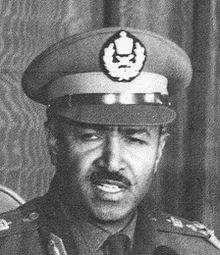
Aman Andom
General · Modern
38.0Total
Basic Information
Born
1659
1924
Died
1703
—
Era
Modern
Modern
Nationality
Japan
Ethiopia
Occupation
General
General
Civilization
Eastern
Other
Score Comparison
Military (10%)
50.0
22.6
Political (20%)
25.0
29.3
Influence (20%)
61.0
52.5
Legacy (20%)
50.0
40.0
Leadership (15%)
30.0
34.6
Strategy (15%)
50.0
30.3
TOTAL
46.0
38.0
Ako Roshi leader — Complete Timeline
1701 AD
Planning the Revenge of Lord AsanoPolitical Action◆ Major
After Lord Asano was forced to commit seppuku for assaulting Kira Yoshinaka, Oishi Kuranosuke (Ako Roshi leader) organized the 47 ronin to avenge their lord. He spent over a year planning the attack, feigning dissipation to avoid suspicion.
47 RoninRevengeBushido
Impact: national
1703 AD
Attack on Kira Yoshinaka's MansionWar◆ Major
Oishi led 46 ronin in a coordinated night attack on Kira Yoshinaka's mansion in Edo. They killed Kira and his guards, then presented his head at Lord Asano's grave. The attack was meticulously planned and executed with minimal casualties.
47 RoninAttackRevenge
Impact: national
Seppuku of the 47 RoninPolitical Action◆ Major
The shogunate ordered the 47 ronin to commit seppuku for violating the law by taking revenge without official permission. Oishi and his men died honorably, becoming symbols of loyalty and bushido. Their graves at Sengaku-ji became a pilgrimage site.
47 RoninSeppukuLoyalty
Impact: nationaltragic
Aman Andom — Complete Timeline
1974 AD
Appointed Head of State after Haile Selassie's overthrowPolitical Action◆ Major
Following the Derg's coup that deposed Emperor Haile Selassie, Aman Andom was appointed as the first post-imperial head of state of Ethiopia. He served as Chairman of the Provisional Military Administrative Council (Derg) for a brief period.
Ethiopian RevolutionDergTransition
Impact: national
Conflict with the Derg over execution of former officialsPolitical Action◆ Major
Aman Andom opposed the Derg's decision to execute 60 former imperial officials without trial. His refusal to authorize the executions led to a power struggle within the military council, isolating him from the radical faction led by Mengistu Haile Mariam.
DergPolitical PurgeHuman Rights
Impact: nationaldestructive
Killed during a confrontation with Derg forcesPolitical Action◆ Major
After being dismissed from his position, Aman Andom barricaded himself in his home. Derg forces stormed the residence, and Andom was killed in the ensuing gunfight. His death marked the consolidation of power by the radical faction of the Derg.
DergPolitical ViolenceDeath
Impact: nationaltragic
This comparison has not been analyzed yet.
One-time AI generation (~1 minute). Scores and timeline are already available below.
Rankings
🥇
Ako Roshi leaderLeader
Mil: 50.0Pol: 25.0Inf: 61.0
46.0
🥈
Aman Andom
Mil: 22.6Pol: 29.3Inf: 52.5
38.0
+8.0 behind
How This Comparison Works
Algorithm
Each figure is scored on 6 dimensions (0—100 scale) based on structured historical data: Military (10%), Political (20%), Influence (20%), Legacy (20%), Leadership (15%), Strategy (15%). The weighted total produces the final ranking.
Data Sources
Scores are computed from structured sub-indicators in the database. Scale factors adjust for era (Ancient ×0.85, Modern ×1.0) and civilization size (Eastern ×1.05, Other ×0.80) to account for differences in population and military scale.
Maximum 3 Figures
Comparisons are limited to 2—3 figures to ensure readability and statistical meaningfulness.
Error Margins
±5 points per dimension — Sub-scores are derived from historical records with inherent uncertainty. Two figures within 5 points on a dimension should be considered roughly equivalent in that area.
Total Score Accuracy
±3 points overall — The weighted combination of 6 dimensions produces a total score with approximately ±3 points of uncertainty. Differences of less than 3 points are not statistically significant— the figures are effectively tied.
Known Limitations
- Historical records are incomplete and uneven across civilizations
- Figures from oral-tradition societies may be underrepresented
- Occupation labels can misclassify multi-role figures
- Scores measure capability and impact, not moral character
- Quantitative scoring is a comparison tool, not absolute truth
Capability Radar
Military (10%) — Battles & Warfare
Battles
15
10
Win Rate
20
10
Expansion
5
5
Political (20%) — Governance & Reform
Reform
5
10
Diplomacy
15
20
Economy
5
10
Influence (20%) — Cultural & Global Reach
Cultural
55
15
Global
40
10
Legacy (20%) — Historical Impact
Historical
50
20
Longevity
45
10
Leadership (15%) — Power & Stability
Tenure
10
15
Stability
10
5
Strategy (15%) — Tactics & Innovation
Strategy
30
15
Tactics
35
15
Reform
5
10
Similar Comparisons
Comments & Discussion
No comments yet. Be the first to share your thoughts!