Loading...
Akbar the Great vs Wu Zetian
Wu Zetian leads by 0.2 pts · 2 figures compared
…
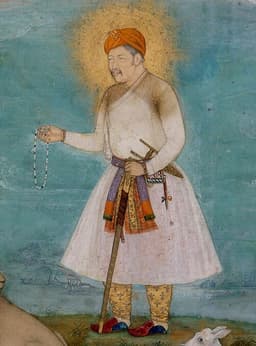
Akbar the Great
Emperor · Modern
69.8Total

Wu Zetian
Emperor · Medieval
70.0Total
Basic Information
Born
1542
624
Died
1605
705
Era
Modern
Medieval
Nationality
India
China
Occupation
Emperor
Emperor
Civilization
Indian
Eastern
Score Comparison
Military (10%)
80.0
60.0
Political (20%)
82.0
62.7
Influence (20%)
68.0
65.0
Legacy (20%)
55.0
80.0
Leadership (15%)
80.0
78.0
Strategy (15%)
68.0
66.3
TOTAL
69.8
70.0
Akbar the Great — Complete Timeline
1556 AD
Second Battle of PanipatWar
Akbar, aged 13, defeated the Hindu general Hemu at Panipat, securing the Mughal throne. Hemu had captured Delhi and declared himself emperor. Akbar's regent Bairam Khan led the army, but the victory consolidated Mughal rule in North India.
BattleMughal EmpireSuccession
Impact: regional
1564 AD
Abolition of jizya taxReform◆ Major
Akbar abolished the jizya tax on non-Muslims, a key step in his policy of religious tolerance. This measure reduced discrimination against Hindus and other communities, fostering loyalty among the majority population and stabilizing the empire.
Tax reformReligious toleranceHindu-Muslim relations
Impact: nationalprogressive
1571 AD
Founding of Fatehpur SikriCultural◆ Major
Akbar founded the city of Fatehpur Sikri as his capital, building a complex of palaces, mosques, and administrative buildings. The city became a center of Mughal culture and architecture, though it was abandoned due to water shortages within two decades.
ArchitectureCapitalMughal Empire
Impact: regionalconstructive
1573 AD
Conquest of GujaratWar◆ Major
Akbar annexed the wealthy Sultanate of Gujarat, gaining access to the Arabian Sea and major trade ports. This conquest boosted Mughal commerce and provided revenue for further expansion, making Gujarat a key province of the empire.
ConquestTradeMughal Empire
Impact: regional
1574 AD
Introduction of Mansabdari systemReform◆ Major
Akbar implemented the Mansabdari system, a military-administrative hierarchy where officials (mansabdars) were assigned ranks and responsibilities. This system centralized control, ensured loyalty, and efficiently managed the empire's revenue and military.
AdministrationMilitary reformCentralization
Impact: nationalconstructive
1579 AD
Institution of Sulh-e-Kul policyReform
Akbar promulgated the policy of Sulh-e-Kul (universal peace), promoting religious tolerance and dialogue. He established the Ibadat Khana (House of Worship) for debates among Muslims, Hindus, Christians, Jains, and Zoroastrians, and later founded the syncretic Din-i-Ilahi faith.
Religious policySyncretismTolerance
Impact: nationalprogressive
Wu Zetian — Complete Timeline
655 AD
Became Empress ConsortPolitical Action◆ Major
Wu Zetian was elevated from concubine to empress consort of Emperor Gaozong of Tang in 655. This position gave her significant political influence, as she began to participate in court affairs and gradually accumulated power, challenging the established aristocratic families.
Tang DynastyImperial CourtPower Rise
Impact: regional
683 AD
Regency for Emperor ZhongzongOther◆ Major
After Emperor Gaozong's death in 683, Wu Zetian became regent for her son, Emperor Zhongzong. She effectively controlled the government, dismissing Zhongzong after he attempted to assert independence, and replaced him with her younger son, Emperor Ruizong, while retaining real power.
Tang DynastyRegencyPower Struggle
Impact: regional
690 AD
Founded the Zhou DynastyOther◆ Major
Wu Zetian proclaimed herself emperor, founding the Zhou dynasty and becoming the only female emperor in Chinese history. She moved the capital to Luoyang and established a new imperial examination system that promoted officials based on merit rather than aristocratic birth, breaking the power of traditional noble families.
Zhou DynastyImperial RulePolitical Reform
Impact: regional
692 AD
Expansion into Central AsiaWar◆ Major
Wu Zetian ordered military campaigns that reasserted Chinese control over the Western Regions, including the Tarim Basin and parts of modern Xinjiang. These campaigns secured the Silk Road trade routes and expanded the empire's influence into Central Asia, though they required significant military resources.
Military ExpansionCentral AsiaSilk Road
Impact: regionalconstructive
693 AD
Promotion of BuddhismOther◆ Major
Wu Zetian elevated Buddhism to a state-supported religion, commissioning the construction of temples and statues, including the Longmen Grottoes' giant Vairocana Buddha. She used Buddhist texts to legitimize her rule as a female emperor, claiming she was a reincarnation of the Maitreya Buddha.
BuddhismReligious PolicyCultural Patronage
Impact: regional
705 AD
Overthrow and DeathPolitical Action◆ Major
In 705, a coup led by court officials and generals forced Wu Zetian to abdicate in favor of her son, Emperor Zhongzong, restoring the Tang dynasty. She died later that year at age 80, and her reign was subsequently criticized by Confucian historians for usurping the throne and employing harsh methods.
Tang DynastyCoupAbdication
Impact: regionaldestructive
Expert Analysis
Wu Zetian vs Akbar the Great: Historical Comparison
Wu Zetian, the only female emperor in Chinese history, and Akbar the Great, the third Mughal emperor who consolidated and expanded his empire, represent two distinct models of imperial rule—one defined by ruthless political maneuvering and military expansion, the other by strategic tolerance and administrative innovation.
Dimension Analysis
**Military: Wu Zetian 93 / Akbar the Great 77**
Wu Zetian maintained and expanded Tang borders through effective campaigns against the Turks and Tibetans, while Akbar’s military conquests, though significant, relied heavily on superior gunpowder technology and were often followed by diplomatic consolidation.
**Political: Wu Zetian 79 / Akbar the Great 82**
Akbar excelled in integrating diverse religious and ethnic groups through policies like *Sulh-i-Kul* (universal peace) and a centralized bureaucracy, whereas Wu Zetian’s political genius lay in navigating a patriarchal system to seize and hold power, but she relied on secret police and purges.
**Influence: Wu Zetian 87 / Akbar the Great 80**
Wu Zetian’s influence was profound in reshaping Tang governance, promoting Buddhism, and elevating women’s roles in court, though her legacy was later suppressed; Akbar’s influence spread through cultural syncretism and administrative reforms that shaped India for centuries.
**Legacy: Wu Zetian 79 / Akbar the Great 80**
Akbar’s legacy as a tolerant, visionary ruler endured through Mughal institutions and Indo-Islamic culture; Wu Zetian’s legacy remains controversial, often overshadowed by Confucian historiography that condemned her usurpation.
**Leadership: Wu Zetian 80 / Akbar the Great 84**
Akbar’s leadership was collaborative and inclusive, fostering loyalty among Hindu and Muslim nobles alike; Wu Zetian’s leadership was autocratic and isolating, relying on fear and patronage to maintain control.
Verdict
Wu Zetian leads by a narrow margin (84 vs 80) due to her superior military and strategic achievements, but Akbar’s more sustainable political and leadership model arguably produced a more enduring empire.
FAQ
Q: Who ranks higher? A: Wu Zetian ranks slightly higher overall, driven by her exceptional military and strategic scores, though Akbar excels in political and leadership dimensions.
Rankings
🥇
Wu ZetianLeader
Mil: 60.0Pol: 62.7Inf: 65.0
70.0
🥈
Akbar the Great
Mil: 80.0Pol: 82.0Inf: 68.0
69.8
+0.2 behind
How This Comparison Works
Algorithm
Each figure is scored on 6 dimensions (0—100 scale) based on structured historical data: Military (10%), Political (20%), Influence (20%), Legacy (20%), Leadership (15%), Strategy (15%). The weighted total produces the final ranking.
Data Sources
Scores are computed from structured sub-indicators in the database. Scale factors adjust for era (Ancient ×0.85, Modern ×1.0) and civilization size (Eastern ×1.05, Other ×0.80) to account for differences in population and military scale.
Maximum 3 Figures
Comparisons are limited to 2—3 figures to ensure readability and statistical meaningfulness.
Error Margins
±5 points per dimension — Sub-scores are derived from historical records with inherent uncertainty. Two figures within 5 points on a dimension should be considered roughly equivalent in that area.
Total Score Accuracy
±3 points overall — The weighted combination of 6 dimensions produces a total score with approximately ±3 points of uncertainty. Differences of less than 3 points are not statistically significant— the figures are effectively tied.
Known Limitations
- Historical records are incomplete and uneven across civilizations
- Figures from oral-tradition societies may be underrepresented
- Occupation labels can misclassify multi-role figures
- Scores measure capability and impact, not moral character
- Quantitative scoring is a comparison tool, not absolute truth
Capability Radar
Military (10%) — Battles & Warfare
Battles
85
65
Win Rate
90
70
Expansion
88
75
Political (20%) — Governance & Reform
Reform
95
85
Diplomacy
92
80
Economy
88
85
Influence (20%) — Cultural & Global Reach
Cultural
85
85
Global
70
70
Legacy (20%) — Historical Impact
Historical
80
90
Longevity
75
85
Leadership (15%) — Power & Stability
Tenure
90
90
Stability
85
75
Strategy (15%) — Tactics & Innovation
Strategy
85
75
Tactics
80
60
Reform
75
80
Similar Comparisons
Comments & Discussion
Historian1426/16/2026
说实话,拿武则天跟阿克巴比,就像拿《资治通鉴》比《阿克巴本纪》——根本是两套评价体系。西方学者总爱夸阿克巴的宗教和谐政策,但吴则天在690年称帝时,中国已经有三教合流的传统,她扶持佛教也是政治策略。阿克巴的苏赫-伊-库尔(普遍和平)确实创新,但他统治的是分裂的印度次大陆;武则天面对的是已经高度中央集权的唐帝国,她得先打破儒家男性统治的框架。论行政效率,武则天时期的官僚选拔改革比阿克巴的曼萨卜达尔制度更影响后世——科举公平性的提升直接延续到现代。评分该多考虑制度创新的持久性。
GrandScroll516/16/2026
我得质疑一下这个评分体系。军事维度上,武则天93对阿克巴77?武则天时期的唐军确实打赢了突厥和吐蕃,但她的政变成功更多靠的是宫廷阴谋而非战场指挥。阿克巴的曼萨卜达尔制度把军事贵族纳入官僚体系,这在中国直到清朝才真正实现。再说政治分,阿克巴82比武则天79,这合理吗?武则天在男权社会里当了15年皇帝,开了殿试、废了世族垄断,这种政治手腕放在全球史上都罕见。阿克巴的宗教宽容固然厉害,但他没面对过武则天那种系统性压制。建议重新校准权重。