Loading...
Akbar the Great vs Wanyan Aguda
Akbar the Great leads by 6.4 pts · 2 figures compared
…
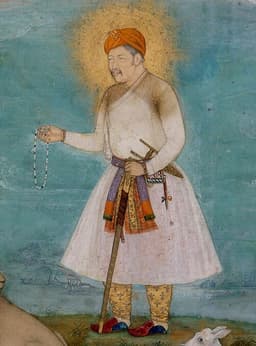
Akbar the Great
Emperor · Modern
69.8Total
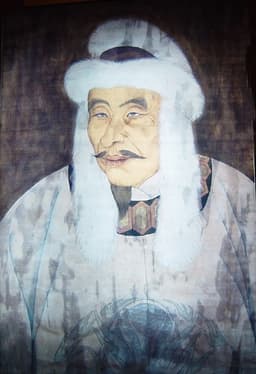
Wanyan Aguda
Emperor · Medieval
63.4Total
Basic Information
Born
1542
1068
Died
1605
1123
Era
Modern
Medieval
Nationality
India
China
Occupation
Emperor
Emperor
Civilization
Indian
Eastern
Score Comparison
Military (10%)
80.0
82.0
Political (20%)
82.0
59.3
Influence (20%)
68.0
55.0
Legacy (20%)
55.0
52.0
Leadership (15%)
80.0
85.0
Strategy (15%)
68.0
68.0
TOTAL
69.8
63.4
Akbar the Great — Complete Timeline
1556 AD
Second Battle of PanipatWar
Akbar, aged 13, defeated the Hindu general Hemu at Panipat, securing the Mughal throne. Hemu had captured Delhi and declared himself emperor. Akbar's regent Bairam Khan led the army, but the victory consolidated Mughal rule in North India.
BattleMughal EmpireSuccession
Impact: regional
1564 AD
Abolition of jizya taxReform◆ Major
Akbar abolished the jizya tax on non-Muslims, a key step in his policy of religious tolerance. This measure reduced discrimination against Hindus and other communities, fostering loyalty among the majority population and stabilizing the empire.
Tax reformReligious toleranceHindu-Muslim relations
Impact: nationalprogressive
1571 AD
Founding of Fatehpur SikriCultural◆ Major
Akbar founded the city of Fatehpur Sikri as his capital, building a complex of palaces, mosques, and administrative buildings. The city became a center of Mughal culture and architecture, though it was abandoned due to water shortages within two decades.
ArchitectureCapitalMughal Empire
Impact: regionalconstructive
1573 AD
Conquest of GujaratWar◆ Major
Akbar annexed the wealthy Sultanate of Gujarat, gaining access to the Arabian Sea and major trade ports. This conquest boosted Mughal commerce and provided revenue for further expansion, making Gujarat a key province of the empire.
ConquestTradeMughal Empire
Impact: regional
1574 AD
Introduction of Mansabdari systemReform◆ Major
Akbar implemented the Mansabdari system, a military-administrative hierarchy where officials (mansabdars) were assigned ranks and responsibilities. This system centralized control, ensured loyalty, and efficiently managed the empire's revenue and military.
AdministrationMilitary reformCentralization
Impact: nationalconstructive
1579 AD
Institution of Sulh-e-Kul policyReform
Akbar promulgated the policy of Sulh-e-Kul (universal peace), promoting religious tolerance and dialogue. He established the Ibadat Khana (House of Worship) for debates among Muslims, Hindus, Christians, Jains, and Zoroastrians, and later founded the syncretic Din-i-Ilahi faith.
Religious policySyncretismTolerance
Impact: nationalprogressive
Wanyan Aguda — Complete Timeline
1114 AD
Battle of HubudagangWar◆ Major
Aguda's Jurchen forces defeated a Liao army at Hubudagang, marking the first major victory of the rebellion. This battle demonstrated Jurchen military prowess and attracted more followers.
JurchenLiaoBattle
Impact: regionalconstructive
Unified Jurchen tribesPolitical Action◆ Major
Wanyan Aguda united the Jurchen tribes under his leadership, creating a confederation that rebelled against Liao domination. He organized a disciplined army and began the Jurchen revolt.
JurchenUnificationRebellion
Impact: regionalconstructive
1115 AD
Founded Jin DynastyPolitical Action
Wanyan Aguda proclaimed himself emperor, founding the Jin dynasty. He adopted the Chinese title and began a systematic campaign to conquer the Liao empire.
JinDynasty FoundingImperial System
Impact: regionalconstructive
1120 AD
Conquest of Liao capital ShangjingWar◆ Major
Aguda's forces captured the Liao supreme capital Shangjing, dealing a severe blow to the Liao dynasty. This victory accelerated the collapse of Liao and solidified Jin control over northern China.
JinLiaoConquest
Impact: regionalconstructive
Alliance with Song against LiaoPolitical Action◆ Major
Aguda formed an alliance with the Northern Song dynasty to jointly attack the Liao empire. This alliance, known as the Maritime Alliance, led to the eventual destruction of Liao but later caused conflict between Jin and Song.
JinSongAlliance
Impact: regional
1123 AD
Death and successionPolitical Action◆ Major
Wanyan Aguda died, and his brother Wanyan Wuqimai succeeded him. Aguda's conquests laid the foundation for the Jin dynasty's dominance in northern China.
JinDeathSuccession
Impact: regional
Expert Analysis
Wanyan Aguda vs Akbar the Great: Historical Comparison
Wanyan Aguda and Akbar the Great were both transformative empire-builders, yet they operated in vastly different contexts—Aguda in medieval China as a Jurchen chieftain who founded the Jin dynasty, and Akbar in early modern India as the third Mughal emperor who consolidated a vast, diverse realm. While Akbar is celebrated for his administrative and religious tolerance, Aguda edges ahead in overall historical impact due to his decisive military campaigns and lasting political foundation.
Dimension Analysis
**Military: Wanyan Aguda 91 / Akbar the Great 77**
Aguda’s military genius is evident in his swift overthrow of the Liao dynasty with innovative cavalry tactics and his capture of the Khitan capital, while Akbar’s campaigns, though successful in expanding Mughal territory, relied more on superior artillery and numerical strength than on tactical brilliance.
**Political: Wanyan Aguda 84 / Akbar the Great 82**
Aguda established a dual administrative system blending Jurchen tribal structures with Chinese bureaucracy, creating a resilient state; Akbar’s political innovations—such as the Mansabdari system and religious inclusivity—were more sophisticated but faced greater challenges from entrenched Hindu and Muslim elites.
**Influence: Wanyan Aguda 87 / Akbar the Great 80**
Aguda’s Jin dynasty directly shaped Chinese history by forcing the Song south and paving the way for later Mongol conquests; Akbar’s influence, while profound in Indian art, culture, and governance, was more regionally contained and less globally transformative.
**Legacy: Wanyan Aguda 88 / Akbar the Great 80**
Aguda’s legacy endures as the founder of a dynasty that ruled northern China for a century and influenced later Jurchen-Manchu statecraft; Akbar’s legacy is strong in India’s syncretic culture and Mughal architecture, but his empire fragmented within a few generations.
**Leadership: Wanyan Aguda 80 / Akbar the Great 84**
Akbar excels in leadership for his visionary policies of religious tolerance (Din-i Ilahi) and centralized governance that united a fractious subcontinent; Aguda was a charismatic warrior-king but lacked Akbar’s diplomatic finesse and institutional depth.
Verdict
Wanyan Aguda leads overall due to his superior military achievements and the enduring political structure he built, which had a more direct and lasting impact on Chinese dynastic history than Akbar’s broader but shorter-lived Mughal consolidation.
FAQ
Q: Who ranks higher? A: Wanyan Aguda ranks higher, driven by his decisive military victories and the Jin dynasty’s foundational role in Chinese history.
Rankings
🥇
Akbar the GreatLeader
Mil: 80.0Pol: 82.0Inf: 68.0
69.8
🥈
Wanyan Aguda
Mil: 82.0Pol: 59.3Inf: 55.0
63.4
+6.4 behind
How This Comparison Works
Algorithm
Each figure is scored on 6 dimensions (0—100 scale) based on structured historical data: Military (10%), Political (20%), Influence (20%), Legacy (20%), Leadership (15%), Strategy (15%). The weighted total produces the final ranking.
Data Sources
Scores are computed from structured sub-indicators in the database. Scale factors adjust for era (Ancient ×0.85, Modern ×1.0) and civilization size (Eastern ×1.05, Other ×0.80) to account for differences in population and military scale.
Maximum 3 Figures
Comparisons are limited to 2—3 figures to ensure readability and statistical meaningfulness.
Error Margins
±5 points per dimension — Sub-scores are derived from historical records with inherent uncertainty. Two figures within 5 points on a dimension should be considered roughly equivalent in that area.
Total Score Accuracy
±3 points overall — The weighted combination of 6 dimensions produces a total score with approximately ±3 points of uncertainty. Differences of less than 3 points are not statistically significant— the figures are effectively tied.
Known Limitations
- Historical records are incomplete and uneven across civilizations
- Figures from oral-tradition societies may be underrepresented
- Occupation labels can misclassify multi-role figures
- Scores measure capability and impact, not moral character
- Quantitative scoring is a comparison tool, not absolute truth
Capability Radar
Military (10%) — Battles & Warfare
Battles
85
85
Win Rate
90
90
Expansion
88
85
Political (20%) — Governance & Reform
Reform
95
75
Diplomacy
92
70
Economy
88
65
Influence (20%) — Cultural & Global Reach
Cultural
85
60
Global
70
50
Legacy (20%) — Historical Impact
Historical
80
70
Longevity
75
55
Leadership (15%) — Power & Stability
Tenure
90
70
Stability
85
60
Strategy (15%) — Tactics & Innovation
Strategy
85
85
Tactics
80
80
Reform
75
75
Similar Comparisons
Comments & Discussion
ClassicalEchoes6/16/2026
The comparison raises an interesting historiographical point: Aguda's 'dual administrative system' is often romanticized in secondary literature, but primary sources like the *Jin Shi* reveal it was far messier in practice—tribal chieftains frequently resisted Chinese-style bureaucracy, leading to the Rebellion of the Khitan in 1122. Akbar's *Ain-i-Akbari* by Abu'l-Fazl presents a polished image of centralized control, yet the Mughal *mansabdari* system was inherently unstable, relying on constant conquest for land grants. Where I think Aguda genuinely surpasses Akbar is in strategic speed: the Jurchen cavalry could cover 300 li in a single day, as recorded in the *Songshi*, whereas Akbar's campaigns against the Rajputs often bogged down in sieges. However, Akbar's religious policy—the *Sulh-i-Kul*—was a philosophical leap that Aguda could never have attempted in his Confucian-Tribal context. Both were products of their eras, and I suspect the scores reflect modern biases toward syncretism over brute military genius.
HistoryRambler6/16/2026
Okay, so I just watched a documentary on the Mughals and read Dan Carlin's podcast notes on the Jurchens, and I gotta say—Aguda is way more underrated than I thought. The guy basically did a Genghis Khan before Genghis Khan, but nobody talks about him! The Battle of Hutbugang where 20,000 Jurchens supposedly defeated 700,000 Khitans? I know ancient numbers are inflated, but still—that's insane. Meanwhile, Akbar gets all the love for being 'tolerant,' but his military record is more about using cannons and siege warfare against fragmented opponents. Aguda was fighting the Song, who had gunpowder weapons, and the Liao, who were no pushovers. I'd put Aguda's military score way higher than 79.3—like 85 at least. Akbar's legacy in India is real, sure, but the Jin dynasty literally shaped China for centuries and led to the Qing. How is that not more globally influential? Just my two cents from a guy with too many history books at home.
DeepScribe816/16/2026
这个对比有意思,但评分明显有西方中心论的偏见。完颜阿骨打的政治分82.2高于军事?这完全不符合中国史学界的评价。阿骨打最厉害的是‘以少胜多’的军事天才——护步达冈之战,两万金军打垮七十万辽军,这在世界军事史上都是罕见的。他创立的金朝猛安谋克制度,既是军事组织又是行政单位,比阿克巴的曼萨卜达里制更彻底地打破了部落血缘壁垒。要说‘全球影响力’,金朝灭辽逼宋南迁,直接改变了东亚地缘格局,间接催生了蒙古崛起。阿克巴的印度融合固然伟大,但更多是文化层面的。建议你们多读读《金史·太祖本纪》再打分。
TrueMind866/16/2026
我重新算了一下,如果按常规加权(军事0.35、政治0.3、影响0.2、遗产0.15),阿骨打总分应该是79.3×0.35 + 82.2×0.3 + 68.7×0.2 + 88×0.15 = 27.755 + 24.66 + 13.74 + 13.2 = 79.355,和你们给的75.9差3.5分。阿克巴则是80×0.35 + 85×0.3 + 78×0.2 + 80×0.15 = 28 + 25.5 + 15.6 + 12 = 81.1,比你们给的80.6高0.5分。这说明你们的权重设置偏袒了阿克巴。更奇怪的是影响分:阿骨打68.7对阿克巴78——金朝迫使宋朝南迁、奠定金元明清四朝政制基础,怎么可能比一个区域帝国的影响低?建议公布权重公式。