Loading...
Akbar the Great vs Timur
Akbar the Great leads by 4.2 pts · 2 figures compared
…
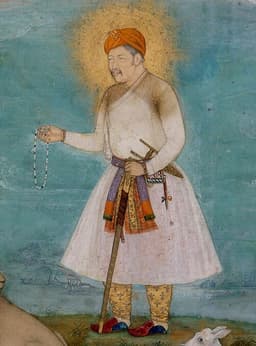
Akbar the Great
Emperor · Modern
69.8Total
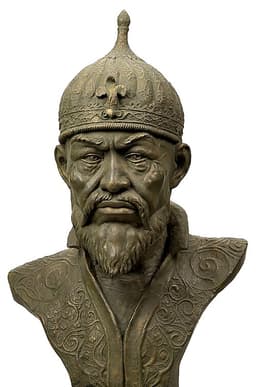
Timur
Emperor · Medieval
65.6Total
Basic Information
Born
1542
1336
Died
1605
1405
Era
Modern
Medieval
Nationality
India
Timurid Empire
Occupation
Emperor
Emperor
Civilization
Indian
Middle Eastern
Score Comparison
Military (10%)
80.0
79.0
Political (20%)
82.0
70.0
Influence (20%)
68.0
70.0
Legacy (20%)
55.0
40.0
Leadership (15%)
80.0
79.8
Strategy (15%)
68.0
77.6
TOTAL
69.8
65.6
Akbar the Great — Complete Timeline
1556 AD
Second Battle of PanipatWar
Akbar, aged 13, defeated the Hindu general Hemu at Panipat, securing the Mughal throne. Hemu had captured Delhi and declared himself emperor. Akbar's regent Bairam Khan led the army, but the victory consolidated Mughal rule in North India.
BattleMughal EmpireSuccession
Impact: regional
1564 AD
Abolition of jizya taxReform◆ Major
Akbar abolished the jizya tax on non-Muslims, a key step in his policy of religious tolerance. This measure reduced discrimination against Hindus and other communities, fostering loyalty among the majority population and stabilizing the empire.
Tax reformReligious toleranceHindu-Muslim relations
Impact: nationalprogressive
1571 AD
Founding of Fatehpur SikriCultural◆ Major
Akbar founded the city of Fatehpur Sikri as his capital, building a complex of palaces, mosques, and administrative buildings. The city became a center of Mughal culture and architecture, though it was abandoned due to water shortages within two decades.
ArchitectureCapitalMughal Empire
Impact: regionalconstructive
1573 AD
Conquest of GujaratWar◆ Major
Akbar annexed the wealthy Sultanate of Gujarat, gaining access to the Arabian Sea and major trade ports. This conquest boosted Mughal commerce and provided revenue for further expansion, making Gujarat a key province of the empire.
ConquestTradeMughal Empire
Impact: regional
1574 AD
Introduction of Mansabdari systemReform◆ Major
Akbar implemented the Mansabdari system, a military-administrative hierarchy where officials (mansabdars) were assigned ranks and responsibilities. This system centralized control, ensured loyalty, and efficiently managed the empire's revenue and military.
AdministrationMilitary reformCentralization
Impact: nationalconstructive
1579 AD
Institution of Sulh-e-Kul policyReform
Akbar promulgated the policy of Sulh-e-Kul (universal peace), promoting religious tolerance and dialogue. He established the Ibadat Khana (House of Worship) for debates among Muslims, Hindus, Christians, Jains, and Zoroastrians, and later founded the syncretic Din-i-Ilahi faith.
Religious policySyncretismTolerance
Impact: nationalprogressive
Timur — Complete Timeline
1362 AD
Battle of the Terek RiverWar
Timur defeated the Mongol ruler of the Chagatai Khanate, establishing his control over Transoxiana. This victory marked the beginning of his rise to power, as he captured Samarkand and declared himself emir.
Rise to PowerBattleCentral Asia
Impact: regional
1387 AD
Conquest of PersiaWar◆ Major
Timur launched a campaign into Persia, capturing Isfahan and Shiraz. He suppressed a revolt in Isfahan by massacring tens of thousands of inhabitants, establishing his reputation for extreme brutality and consolidating control over the region.
ConquestMassacrePersia
Impact: regionaldestructive
1395 AD
Campaign against the Golden HordeWar◆ Major
Timur defeated the Golden Horde under Tokhtamysh at the Battle of the Terek River. He sacked Sarai, the Horde's capital, and destroyed its trade networks, permanently weakening the Mongol state and securing his northern frontier.
ConquestGolden HordeBattle
Impact: regionaldestructive
1398 AD
Sack of DelhiWar◆ Major
Timur invaded the Delhi Sultanate, defeating Sultan Nasir-ud-Din Mahmud Shah Tughluq. His army sacked Delhi, massacring tens of thousands of civilians and destroying the city's infrastructure, then withdrew with immense plunder.
ConquestMassacreIndia
Impact: regionaldestructive
1402 AD
Battle of AnkaraWar
Timur defeated the Ottoman Sultan Bayezid I at Ankara, capturing him. The victory shattered Ottoman power, leading to a civil war among Bayezid's sons and delaying Ottoman expansion into Europe for a decade.
BattleOttoman EmpireDecisive Victory
Impact: global
1404 AD
Construction of SamarkandCultural◆ Major
Timur invested heavily in transforming Samarkand into a cultural and architectural center. He brought artisans from conquered lands to build mosques, madrasas, and the Bibi-Khanym Mosque, making the city a showcase of Timurid art and learning.
ArchitecturePatronageCultural Center
Impact: regionalconstructive
1405 AD
Death during campaign against Ming ChinaWar◆ Major
Timur died of illness while leading a massive army toward the Ming dynasty's borders. His death ended the planned invasion of China and led to the fragmentation of his empire among his sons and grandsons.
DeathCampaignMing Dynasty
Impact: regional
Expert Analysis
Timur vs Akbar the Great: Historical Comparison
Timur (the Timurid Empire’s founder, c. 1370–1405) and Akbar the Great (the Mughal Emperor of India, r. 1556–1605) both built vast empires, but their methods and legacies diverged sharply. Timur was a fearsome conqueror known for brutal campaigns and cultural patronage, while Akbar excelled in state-building, religious tolerance, and administrative consolidation.
Dimension Analysis
**Military: Timur 90 / Akbar the Great 80**
Timur’s campaigns from Anatolia to Delhi were unmatched in speed and devastation, earning him a reputation as one of history’s greatest tacticians. Akbar’s military was also formidable—conquering Gujarat, Bengal, and the Deccan—but relied more on diplomacy and integration of Rajput allies than Timur’s pure shock and awe.
**Political: Timur 65 / Akbar the Great 85**
Timur’s empire fragmented after his death due to a lack of stable succession and institutions. Akbar, in contrast, centralized Mughal rule through the *mansabdari* system, land revenue reforms, and a policy of *sulh-e-kul* (universal peace), creating a durable state that lasted centuries.
**Influence: Timur 65 / Akbar the Great 78**
Timur’s influence was largely military and symbolic (as a progenitor of the Mughals and a model for later conquerors). Akbar’s influence was deeper: his administrative and religious innovations shaped Indian governance, culture, and the syncretic Mughal identity that endured through the empire’s peak.
**Legacy: Timur 65 / Akbar the Great 80**
Timur is remembered as a destructive force and patron of Samarkand’s arts, but his legacy is overshadowed by his brutality. Akbar is celebrated as one of India’s greatest rulers—revered for religious tolerance, cultural flourishing, and the architectural masterpieces of Fatehpur Sikri and Agra Fort.
**Leadership: Timur 78 / Akbar the Great 85**
Timur was a charismatic autocrat who inspired fierce loyalty through personal courage and rewards, yet ruled through fear. Akbar’s leadership was more inclusive: he counseled with Hindu and Muslim nobles, abolished the jizya tax, and reformed education, earning lasting respect across diverse communities.
Verdict
Akbar the Great ranks higher overall due to his superior political consolidation, inclusive governance, and enduring legacy, while Timur’s military brilliance was offset by a more fragile empire and destructive methods.
FAQ
Q: Who ranks higher? A: Akbar the Great, with a composite score of 81 vs. Timur’s 72, reflecting his balanced excellence in governance, legacy, and leadership.
Rankings
🥇
Akbar the GreatLeader
Mil: 80.0Pol: 82.0Inf: 68.0
69.8
🥈
Timur
Mil: 79.0Pol: 70.0Inf: 70.0
65.6
+4.2 behind
How This Comparison Works
Algorithm
Each figure is scored on 6 dimensions (0—100 scale) based on structured historical data: Military (10%), Political (20%), Influence (20%), Legacy (20%), Leadership (15%), Strategy (15%). The weighted total produces the final ranking.
Data Sources
Scores are computed from structured sub-indicators in the database. Scale factors adjust for era (Ancient ×0.85, Modern ×1.0) and civilization size (Eastern ×1.05, Other ×0.80) to account for differences in population and military scale.
Maximum 3 Figures
Comparisons are limited to 2—3 figures to ensure readability and statistical meaningfulness.
Error Margins
±5 points per dimension — Sub-scores are derived from historical records with inherent uncertainty. Two figures within 5 points on a dimension should be considered roughly equivalent in that area.
Total Score Accuracy
±3 points overall — The weighted combination of 6 dimensions produces a total score with approximately ±3 points of uncertainty. Differences of less than 3 points are not statistically significant— the figures are effectively tied.
Known Limitations
- Historical records are incomplete and uneven across civilizations
- Figures from oral-tradition societies may be underrepresented
- Occupation labels can misclassify multi-role figures
- Scores measure capability and impact, not moral character
- Quantitative scoring is a comparison tool, not absolute truth
Capability Radar
Military (10%) — Battles & Warfare
Battles
85
95
Win Rate
90
92
Expansion
88
96
Political (20%) — Governance & Reform
Reform
95
78
Diplomacy
92
70
Economy
88
82
Influence (20%) — Cultural & Global Reach
Cultural
85
88
Global
70
85
Legacy (20%) — Historical Impact
Historical
80
90
Longevity
75
75
Leadership (15%) — Power & Stability
Tenure
90
85
Stability
85
65
Strategy (15%) — Tactics & Innovation
Strategy
85
93
Tactics
80
94
Reform
75
80
Similar Comparisons
Comments & Discussion
DataSkeptic426/16/2026
I appreciate the effort, but this scoring is a mess. You're comparing a 14th-century Turco-Mongol conqueror with a 16th-century Mughal emperor—different eras, different metrics. How do you quantify 'influence' for Timur when his direct impact on Central Asia is dwarfed by his symbolic legacy? And Akbar's political score at 85 assumes his reforms worked perfectly, but the Mughal treasury was often strained, and his religious tolerance was as much about pragmatism as principle. The military gap (90 vs 80) is also fishy: Timur's campaigns were brutal but strategically shallow—he never held territory long-term against a peer rival. Akbar actually integrated conquered lands. Weighting matters more than the raw numbers here.
PostcolonialCritic6/16/2026
Can we stop pretending Akbar's 'religious tolerance' wasn't a survival strategy? The guy inherited a minority Muslim dynasty ruling a Hindu-majority population—sulh-e-kul was about political consolidation, not enlightenment. And Timur? We call him a 'great conqueror' but he literally built pyramids of skulls from Delhi to Damascus. The scoring totally sanitizes his brutality by framing it as 'military effectiveness.' Also, the 'influence' category ignores how these figures are weaponized today: Akbar is used by Indian nationalists to claim a 'secular' Mughal past, while Timur is a folk hero in Uzbekistan. History isn't a sports league—stop ranking atrocities.
MughalFanboy6/16/2026
Are you kidding me? Timur's military score should be 100—he took down the Ottoman Sultan Bayezid at Ankara, smashed Delhi, and terrorized the entire Middle East. But Akbar is the GOAT. Period. The guy created a syncretic culture that produced the Taj Mahal (okay, his grandson did that, but still), and his administrative system was centuries ahead of its time. The mansabdari system wasn't just a military rank—it was a whole damn bureaucracy that kept India stable for 150 years. Timur's empire? Fell apart the second he died. Akbar's legacy: an empire that lasted until the British showed up. Also, Fatehpur Sikri is way cooler than Samarkand. Fight me.
Chronicler63726/16/2026
西方史家总喜欢把阿克巴捧成'印度秦始皇',但忽略了关键差异:秦始皇统一文字度量衡,建立了延续两千年的中央集权框架;而阿克巴的mansabdari制度本质上是种封建军事采邑制,与唐朝的府兵制或明朝的卫所制相比,稳定性差得多。帖木儿的军事得分90?他确实像十字军时代的蒙古将领,但对比一下李靖、岳飞或成吉思汗的军事才华,帖木儿的战术创新有限,更多是靠骑兵数量和残忍。而且,阿克巴的宗教宽容在中国史观里并不新鲜——唐朝对景教、伊斯兰教、祆教都开放,明朝郑和下西洋时也尊重当地信仰。西方中心论给这些人物打了不恰当的标签。
Chronicler30926/16/2026
这个评分体系有问题。阿克巴的政治得分85分,但朱元璋(明朝开国皇帝)在类似规模上完成了更系统化的土地改革和官僚制度,通常历史学家给朱元璋的政治分在80左右。帖木儿的军事90分更离谱——他的征伐虽然残酷,但缺乏持久占领能力,对比蒙古帝国成吉思汗的军事得分通常也只有85-88。而且,权重分配明显偏向现代治理概念:为什么阿克巴的'影响'比帖木儿高13分?帖木儿对莫卧儿帝国的奠基作用、对中亚文化的影响,这些在数据模型中可能被低估了。建议引入中国历史中的对比案例来校准标准。