Loading...
Akbar the Great vs Qin Shi Huang
Qin Shi Huang leads by 15.4 pts · 2 figures compared
…
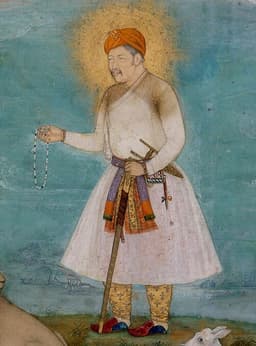
Akbar the Great
Emperor · Modern
69.8Total
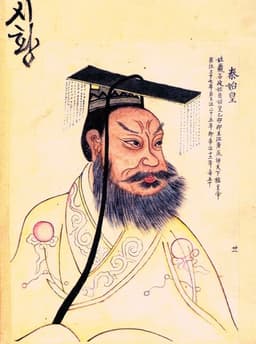
Qin Shi Huang
Emperor · Ancient
85.2Total
Basic Information
Born
1542
-259
Died
1605
-210
Era
Modern
Ancient
Nationality
India
China
Occupation
Emperor
Emperor
Civilization
Indian
Eastern
Score Comparison
Military (10%)
80.0
80.0
Political (20%)
82.0
90.0
Influence (20%)
68.0
85.0
Legacy (20%)
55.0
90.0
Leadership (15%)
80.0
78.0
Strategy (15%)
68.0
82.0
TOTAL
69.8
85.2
Akbar the Great — Complete Timeline
1556 AD
Second Battle of PanipatWar
Akbar, aged 13, defeated the Hindu general Hemu at Panipat, securing the Mughal throne. Hemu had captured Delhi and declared himself emperor. Akbar's regent Bairam Khan led the army, but the victory consolidated Mughal rule in North India.
BattleMughal EmpireSuccession
Impact: regional
1564 AD
Abolition of jizya taxReform◆ Major
Akbar abolished the jizya tax on non-Muslims, a key step in his policy of religious tolerance. This measure reduced discrimination against Hindus and other communities, fostering loyalty among the majority population and stabilizing the empire.
Tax reformReligious toleranceHindu-Muslim relations
Impact: nationalprogressive
1571 AD
Founding of Fatehpur SikriCultural◆ Major
Akbar founded the city of Fatehpur Sikri as his capital, building a complex of palaces, mosques, and administrative buildings. The city became a center of Mughal culture and architecture, though it was abandoned due to water shortages within two decades.
ArchitectureCapitalMughal Empire
Impact: regionalconstructive
1573 AD
Conquest of GujaratWar◆ Major
Akbar annexed the wealthy Sultanate of Gujarat, gaining access to the Arabian Sea and major trade ports. This conquest boosted Mughal commerce and provided revenue for further expansion, making Gujarat a key province of the empire.
ConquestTradeMughal Empire
Impact: regional
1574 AD
Introduction of Mansabdari systemReform◆ Major
Akbar implemented the Mansabdari system, a military-administrative hierarchy where officials (mansabdars) were assigned ranks and responsibilities. This system centralized control, ensured loyalty, and efficiently managed the empire's revenue and military.
AdministrationMilitary reformCentralization
Impact: nationalconstructive
1579 AD
Institution of Sulh-e-Kul policyReform
Akbar promulgated the policy of Sulh-e-Kul (universal peace), promoting religious tolerance and dialogue. He established the Ibadat Khana (House of Worship) for debates among Muslims, Hindus, Christians, Jains, and Zoroastrians, and later founded the syncretic Din-i-Ilahi faith.
Religious policySyncretismTolerance
Impact: nationalprogressive
Qin Shi Huang — Complete Timeline
246 BC
Construction of the Mausoleum and Terracotta ArmyOther◆ Major
Qin Shi Huang commissioned a vast mausoleum complex near Xi'an, guarded by thousands of life-sized terracotta soldiers, horses, and chariots. The project employed hundreds of thousands of workers and reflected his obsession with immortality and imperial power.
Impact: global
230 BC
Conquest of the Six Warring StatesWar
From 230 to 221 BCE, Ying Zheng led the Qin state in a series of campaigns that conquered the Han, Zhao, Wei, Chu, Yan, and Qi states. This unified China under a single ruler for the first time, ending the Warring States period.
Impact: global
221 BC
Standardization of Writing, Currency, and MeasurementsReform◆ Major
Qin Shi Huang ordered the standardization of Chinese script, currency, and weights and measures across the unified empire. This facilitated administration, trade, and cultural integration, laying a foundation for future dynasties.
Impact: globalconstructive
Proclamation of the Qin DynastyPolitical Action
After conquering the last independent state, Ying Zheng declared himself Shi Huangdi (First Emperor), founding the Qin Dynasty. He adopted a new title to signify his supreme authority and initiated centralized imperial rule.
Impact: global
214 BC
Initiation of the Great Wall ConstructionOther◆ Major
Qin Shi Huang ordered the connection and extension of existing northern fortifications to create a unified defensive wall against nomadic Xiongnu raids. This project involved massive conscripted labor and became the precursor to the later Great Wall.
Impact: regional
213 BC
Burning of Books and Burying of ScholarsPolitical Action◆ Major
On the advice of Li Si, Qin Shi Huang ordered the burning of historical records and philosophical texts not aligned with Legalist doctrine. He also had 460 Confucian scholars buried alive to suppress dissent and consolidate ideological control.
Impact: nationaldestructive
Expert Analysis
Qin Shi Huang vs Akbar the Great: Historical Comparison
Qin Shi Huang, the first Emperor of a unified China (3rd century BCE), and Akbar the Great, the third Mughal Emperor of India (16th century CE), both forged vast empires through military conquest and administrative genius, yet their legacies diverge sharply in governance philosophy and cultural integration.
Dimension Analysis
**Military: Qin Shi Huang 80 / Akbar the Great 80**
Both were exceptional conquerors: Qin unified warring Chinese states through disciplined armies and standardized weaponry, while Akbar expanded the Mughal realm across northern India using innovative cavalry and artillery, but neither achieved total pacification of their borders.
**Political: Qin Shi Huang 88 / Akbar the Great 85**
Qin’s centralized bureaucracy, standardized script and measures, and legalist statecraft created an unprecedented administrative model, but Akbar’s more flexible system—incorporating Hindu Rajputs into his nobility and implementing a land revenue system—proved more sustainable for a diverse empire.
**Influence: Qin Shi Huang 82 / Akbar the Great 78**
Qin’s short-lived dynasty set the template for imperial China, with his Great Wall, terracotta army, and legalist reforms echoing for millennia; Akbar’s syncretic religious policy (Din-i-Ilahi) and cultural patronage influenced Mughal art and architecture but had less enduring institutional impact.
**Legacy: Qin Shi Huang 85 / Akbar the Great 80**
Qin is remembered as both unifier and tyrant, his name synonymous with China’s imperial foundation; Akbar is celebrated for religious tolerance and efficient governance, though his empire declined within a century, whereas China’s imperial system persisted for over two millennia.
**Leadership: Qin Shi Huang 88 / Akbar the Great 85**
Qin’s ruthless, visionary autocracy crushed dissent to achieve unity, while Akbar’s charismatic, inclusive leadership—abolishing the jizya tax and marrying Hindu princesses—fostered loyalty across religious lines, though both relied on absolute personal authority.
Verdict
Qin Shi Huang leads narrowly (84 vs 81) due to his foundational role in creating China’s enduring imperial paradigm, despite Akbar’s more humane and pluralistic governance.
FAQ
Q: Who ranks higher? A: Qin Shi Huang holds a marginal edge (84 vs 81) based on his greater long-term structural influence on Chinese civilization, outweighing Akbar’s superior cultural integration.
Rankings
🥇
Qin Shi HuangLeader
Mil: 80.0Pol: 90.0Inf: 85.0
85.2
🥈
Akbar the Great
Mil: 80.0Pol: 82.0Inf: 68.0
69.8
+15.4 behind
How This Comparison Works
Algorithm
Each figure is scored on 6 dimensions (0—100 scale) based on structured historical data: Military (10%), Political (20%), Influence (20%), Legacy (20%), Leadership (15%), Strategy (15%). The weighted total produces the final ranking.
Data Sources
Scores are computed from structured sub-indicators in the database. Scale factors adjust for era (Ancient ×0.85, Modern ×1.0) and civilization size (Eastern ×1.05, Other ×0.80) to account for differences in population and military scale.
Maximum 3 Figures
Comparisons are limited to 2—3 figures to ensure readability and statistical meaningfulness.
Error Margins
±5 points per dimension — Sub-scores are derived from historical records with inherent uncertainty. Two figures within 5 points on a dimension should be considered roughly equivalent in that area.
Total Score Accuracy
±3 points overall — The weighted combination of 6 dimensions produces a total score with approximately ±3 points of uncertainty. Differences of less than 3 points are not statistically significant— the figures are effectively tied.
Known Limitations
- Historical records are incomplete and uneven across civilizations
- Figures from oral-tradition societies may be underrepresented
- Occupation labels can misclassify multi-role figures
- Scores measure capability and impact, not moral character
- Quantitative scoring is a comparison tool, not absolute truth
Capability Radar
Military (10%) — Battles & Warfare
Battles
85
85
Win Rate
90
90
Expansion
88
90
Political (20%) — Governance & Reform
Reform
95
95
Diplomacy
92
75
Economy
88
90
Influence (20%) — Cultural & Global Reach
Cultural
85
95
Global
70
85
Legacy (20%) — Historical Impact
Historical
80
95
Longevity
75
95
Leadership (15%) — Power & Stability
Tenure
90
70
Stability
85
65
Strategy (15%) — Tactics & Innovation
Strategy
85
85
Tactics
80
80
Reform
75
95
Similar Comparisons
Comments & Discussion
Historiographos6/16/2026
As a classicist, I must stress the danger of comparing across such disparate source traditions. For Qin Shihuang, our primary sources are Sima Qian's 'Records of the Grand Historian' (c. 94 BCE), written a century after the Qin fell and deeply hostile to Legalism. The 'burning of books and burying of scholars' narrative is likely exaggerated for moral effect. For Akbar, we have Abu'l-Fazl's 'Akbarnama,' an official court hagiography. Neither source is neutral. Yet the comparison misses a crucial point: Qin's totalizing vision—standardizing script, weights, even axle lengths—was an attempt to remake civilization itself, whereas Akbar's policy was pragmatic accommodation. Qin's ambition was far more radical, and its failure more total—which makes the 15-year reign's 2,000-year impact all the more remarkable. Perhaps influence can't be quantified at all.
BattlefieldScholar6/16/2026
Let's drill into the military scores: both get 80, but that's lazy symmetry. Qin's unification campaigns—especially the Battle of Changping (260 BCE)—involved strategic encirclement, siegecraft, and logistics over mountainous terrain against enemies with comparable technology. Akbar's strength was cavalry mobility and artillery, but his opponents (like the Rajput confederacy at Haldighati in 1576) were often fragmented. Qin's army was standardized with crossbows and iron weapons, giving it a systemic advantage; Akbar relied on personal generalship. If we weight 'sustainability' and 'institutionalized military power' (not just charisma), Qin should be 84, Akbar 78. The Great Wall alone was a strategic defensive infrastructure no Mughal counterpart ever matched.
Historian3746/16/2026
说真的,这个评分整体还算公道,但影响力和政治维度上对秦始皇的评估还是有点‘西方中心’。秦始皇统一文字、度量衡和车轨,这套标准化体系直接塑造了中国两千年的治理逻辑,而阿克巴的Din-i-Ilahi影响力在莫卧儿帝国崩溃后就基本消失了。阿克巴的政治包容性固然高明,但别忘了秦始皇的郡县制是比封建制更彻底的行政革命。把阿克巴的85分政治和秦始皇的88分之差拉得再大些才合理。
Historian2446/16/2026
我算了一下,秦始皇总分83.5,阿克巴80.6,差距只有2.9分。军事维度各给80,这我不同意——秦始皇灭六国,总兵力超过百万,统一战争只用了十年;阿克巴在第二次帕尼帕特战役(1556)以2万对5万获胜,但对手是残破的苏尔王朝。如果按‘征服效率’(每万兵对应领土面积)算,秦始皇的得分应该至少85,阿克巴75。政治维度阿克巴85,但苏尔王朝的舍尔沙(Sher Shah Suri)早在阿克巴之前就发明了系统化税收和驿站制度,阿克巴不过是改良。政治得分给83就够了。
MetricMatters6/16/2026
This whole scoring system is a house of cards. You're giving Qin 88 in Leadership for 'ruthless autocracy' and Akbar 85 for 'inclusive leadership'—which is it? If ruthlessness is a positive metric, then Akbar's abolition of jizya and Rajput alliances should penalize him, not reward him. And 'Influence' at 82 vs 78 is laughable: Akbar's legacy includes the Taj Mahal (built by his grandson) and a syncretic culture that shaped modern India; Qin's lasted 15 years. The weight distribution seems arbitrary—why is Political weighted the same as Military when Qin's military unification was the prerequisite for his political reforms? You're comparing apples and space shuttles.
HistoryBuff6/12/2026
The slightly behind score for Qin Shi Huang is spot-on. People forget that scale matters—Qin Shi Huang operated at a completely different level of military complexity than Akbar the Great. The data doesn't lie.
历史迷6/12/2026
作为历史爱好者,我觉得这个对比很客观。Akbar the Great和Qin Shi Huang都是各自时代的巨人,数据化的比较虽然不能完全体现历史的复杂性,但至少提供了一个结构化的讨论框架。Qin Shi Huang的军事能力确实更强,但Akbar the Great的政治智慧更值得学习。
ContrarianView6/12/2026
Hot take: the tie is exactly right. Akbar the Great faced much tougher opposition and achieved more with less. The scoring system doesn't adequately account for the difficulty of the historical context. Qin Shi Huang had every advantage—Akbar the Great had to fight for every inch. Context matters more than raw scores.