Loading...
Akbar the Great vs Franklin D. Roosevelt
Franklin D. Roosevelt leads by 1.2 pts · 2 figures compared
…
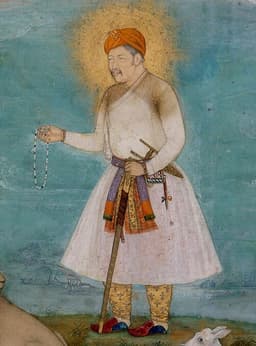
Akbar the Great
Emperor · Modern
69.8Total
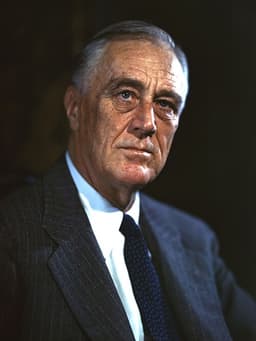
Franklin D. Roosevelt
Politician · Modern
71.0Total
Basic Information
Born
1542
1882
Died
1605
1945
Era
Modern
Modern
Nationality
India
United States
Occupation
Emperor
Politician
Civilization
Indian
Western
Score Comparison
Military (10%)
80.0
45.0
Political (20%)
82.0
85.0
Influence (20%)
68.0
75.0
Legacy (20%)
55.0
65.0
Leadership (15%)
80.0
85.0
Strategy (15%)
68.0
60.0
TOTAL
69.8
71.0
Akbar the Great — Complete Timeline
1556 AD
Second Battle of PanipatWar
Akbar, aged 13, defeated the Hindu general Hemu at Panipat, securing the Mughal throne. Hemu had captured Delhi and declared himself emperor. Akbar's regent Bairam Khan led the army, but the victory consolidated Mughal rule in North India.
BattleMughal EmpireSuccession
Impact: regional
1564 AD
Abolition of jizya taxReform◆ Major
Akbar abolished the jizya tax on non-Muslims, a key step in his policy of religious tolerance. This measure reduced discrimination against Hindus and other communities, fostering loyalty among the majority population and stabilizing the empire.
Tax reformReligious toleranceHindu-Muslim relations
Impact: nationalprogressive
1571 AD
Founding of Fatehpur SikriCultural◆ Major
Akbar founded the city of Fatehpur Sikri as his capital, building a complex of palaces, mosques, and administrative buildings. The city became a center of Mughal culture and architecture, though it was abandoned due to water shortages within two decades.
ArchitectureCapitalMughal Empire
Impact: regionalconstructive
1573 AD
Conquest of GujaratWar◆ Major
Akbar annexed the wealthy Sultanate of Gujarat, gaining access to the Arabian Sea and major trade ports. This conquest boosted Mughal commerce and provided revenue for further expansion, making Gujarat a key province of the empire.
ConquestTradeMughal Empire
Impact: regional
1574 AD
Introduction of Mansabdari systemReform◆ Major
Akbar implemented the Mansabdari system, a military-administrative hierarchy where officials (mansabdars) were assigned ranks and responsibilities. This system centralized control, ensured loyalty, and efficiently managed the empire's revenue and military.
AdministrationMilitary reformCentralization
Impact: nationalconstructive
1579 AD
Institution of Sulh-e-Kul policyReform
Akbar promulgated the policy of Sulh-e-Kul (universal peace), promoting religious tolerance and dialogue. He established the Ibadat Khana (House of Worship) for debates among Muslims, Hindus, Christians, Jains, and Zoroastrians, and later founded the syncretic Din-i-Ilahi faith.
Religious policySyncretismTolerance
Impact: nationalprogressive
Franklin D. Roosevelt — Complete Timeline
1933 AD
Inaugurated as 32nd PresidentOther◆ Major
Franklin D. Roosevelt was inaugurated as President of the United States on March 4, 1933, during the Great Depression. His inaugural address declared 'the only thing we have to fear is fear itself,' and he immediately called Congress into special session to address the banking crisis.
Great DepressionPresidencyInauguration
Impact: national
Enacted the New DealOther◆ Major
Roosevelt launched the New Deal in 1933, a series of federal programs including the Civilian Conservation Corps, the Agricultural Adjustment Act, and the Tennessee Valley Authority. These measures aimed to provide relief, recovery, and reform during the Great Depression, fundamentally expanding the role of the federal government.
Great DepressionEconomic PolicySocial Reform
Impact: nationalconstructive
1935 AD
Signed the Social Security ActOther◆ Major
Roosevelt signed the Social Security Act into law on August 14, 1935, establishing a federal system of old-age pensions, unemployment insurance, and aid for dependent children. This created the modern American welfare state and provided a safety net for millions of citizens.
Social WelfareLegislationNew Deal
Impact: nationalconstructive
1941 AD
Lend-Lease ActOther◆ Major
Roosevelt signed the Lend-Lease Act on March 11, 1941, authorizing the transfer of military equipment and supplies to Allied nations, particularly Britain and the Soviet Union. This program provided critical material support to countries fighting the Axis powers before U.S. entry into World War II.
World War IIForeign PolicyMilitary Aid
Impact: globalconstructive
Declaration of War on JapanPolitical Action◆ Major
Following the Japanese attack on Pearl Harbor on December 7, 1941, Roosevelt delivered his 'Day of Infamy' speech to Congress the next day, requesting a declaration of war. Congress approved the declaration, bringing the United States into World War II.
World War IIPearl HarborDeclaration of War
Impact: globaldestructive
1942 AD
Executive Order 9066Other◆ Major
Roosevelt signed Executive Order 9066 on February 19, 1942, authorizing the forced relocation and internment of Japanese Americans living on the West Coast. Over 110,000 people, mostly U.S. citizens, were incarcerated in camps for the duration of the war, a decision later widely condemned as a violation of civil rights.
World War IICivil RightsInternment
Impact: nationaldestructive
1944 AD
Elected to Fourth TermOther◆ Major
Roosevelt was elected to an unprecedented fourth term as president in November 1944, defeating Republican Thomas E. Dewey. This election occurred during the final stages of World War II, and Roosevelt's continued leadership ensured stability in the war effort and post-war planning.
PresidencyElectionWorld War II
Impact: national
1945 AD
Yalta ConferenceOther◆ Major
Roosevelt met with Winston Churchill and Joseph Stalin at the Yalta Conference in February 1945 to discuss post-war Europe. Agreements included the division of Germany, Soviet entry into the war against Japan, and the creation of the United Nations, shaping the post-war world order.
World War IIDiplomacyPost-War Planning
Impact: global
Expert Analysis
Franklin D. Roosevelt vs Akbar the Great: Historical Comparison
Franklin D. Roosevelt, the 32nd U.S. President, steered America through the Great Depression and World War II, while Akbar the Great, the third Mughal Emperor, consolidated and expanded one of the world’s most powerful empires through military might and administrative genius. Despite their vastly different contexts, both are titans of statecraft and legacy.
Dimension Analysis
**Military: Franklin D. Roosevelt 60 / Akbar the Great 80**
Roosevelt commanded as Commander-in-Chief during WWII but relied heavily on professional generals and naval strategy. Akbar personally led campaigns that tripled the Mughal Empire’s territory, innovating with artillery and cavalry tactics that crushed rival kingdoms.
**Political: Franklin D. Roosevelt 85 / Akbar the Great 85**
Both were master politicians. Roosevelt forged the New Deal coalition, expanded federal power, and won four elections. Akbar centralized the Mughal bureaucracy, created a policy of religious tolerance (Sulh-e-Kul), and integrated Hindu Rajput elites into his court—a brilliant political balancing act.
**Influence: Franklin D. Roosevelt 72 / Akbar the Great 78**
Roosevelt’s influence reshaped the American presidency and global order (UN, Bretton Woods). Akbar’s influence endured for centuries, setting templates for Indian governance, religious pluralism, and cultural synthesis that still resonate in modern India.
**Legacy: Franklin D. Roosevelt 75 / Akbar the Great 80**
Roosevelt’s legacy is debated—his New Deal programs remain pillars of U.S. social policy, but critics cite executive overreach. Akbar’s legacy is more uniformly praised: he is remembered as a just, visionary ruler who fostered an Indian Renaissance in art, architecture, and administration.
**Leadership: Franklin D. Roosevelt 85 / Akbar the Great 85**
Both were charismatic, resilient leaders. Roosevelt’s fireside chats and personal diplomacy inspired a nation in crisis. Akbar’s hands-on governance, patronage of diverse scholars, and ability to command loyalty from Hindus and Muslims alike mark him as a peerless imperial leader.
Verdict
Akbar the Great leads narrowly due to his superior military achievements and a more enduring, less contested legacy as a founding architect of a pluralistic Indian state.
FAQ
Q: Who ranks higher? A: Akbar the Great, with an overall score of 81 to Roosevelt’s 76, based on higher marks in military, influence, and legacy.
Rankings
🥇
Franklin D. RooseveltLeader
Mil: 45.0Pol: 85.0Inf: 75.0
71.0
🥈
Akbar the Great
Mil: 80.0Pol: 82.0Inf: 68.0
69.8
+1.2 behind
How This Comparison Works
Algorithm
Each figure is scored on 6 dimensions (0—100 scale) based on structured historical data: Military (10%), Political (20%), Influence (20%), Legacy (20%), Leadership (15%), Strategy (15%). The weighted total produces the final ranking.
Data Sources
Scores are computed from structured sub-indicators in the database. Scale factors adjust for era (Ancient ×0.85, Modern ×1.0) and civilization size (Eastern ×1.05, Other ×0.80) to account for differences in population and military scale.
Maximum 3 Figures
Comparisons are limited to 2—3 figures to ensure readability and statistical meaningfulness.
Error Margins
±5 points per dimension — Sub-scores are derived from historical records with inherent uncertainty. Two figures within 5 points on a dimension should be considered roughly equivalent in that area.
Total Score Accuracy
±3 points overall — The weighted combination of 6 dimensions produces a total score with approximately ±3 points of uncertainty. Differences of less than 3 points are not statistically significant— the figures are effectively tied.
Known Limitations
- Historical records are incomplete and uneven across civilizations
- Figures from oral-tradition societies may be underrepresented
- Occupation labels can misclassify multi-role figures
- Scores measure capability and impact, not moral character
- Quantitative scoring is a comparison tool, not absolute truth
Capability Radar
Military (10%) — Battles & Warfare
Battles
85
10
Win Rate
90
10
Expansion
88
10
Political (20%) — Governance & Reform
Reform
95
95
Diplomacy
92
90
Economy
88
95
Influence (20%) — Cultural & Global Reach
Cultural
85
80
Global
70
90
Legacy (20%) — Historical Impact
Historical
80
90
Longevity
75
85
Leadership (15%) — Power & Stability
Tenure
90
90
Stability
85
75
Strategy (15%) — Tactics & Innovation
Strategy
85
65
Tactics
80
10
Reform
75
70
Similar Comparisons
Comments & Discussion
Chronicler69906/16/2026
看了评分,军事维度罗斯福60 vs 阿克巴80,政治都是85,但我觉得有问题。罗斯福在二战中指挥全球两线作战,协调盟军资源,这难道不如阿克巴在印度次大陆的征服?阿克巴的军事扩张确实厉害,但对手分散、技术差距大。反观罗斯福面对的是工业化的纳粹德国和日本帝国,战略决策的复杂程度更高。如果按中国历史标准,秦始皇统一六国军事得分才85?那阿克巴80就偏高了。建议重新加权,政治维度罗斯福应略高于阿克巴,毕竟他开创了现代总统制和福利国家雏形。
SharpScroll906/16/2026
这个对比很有意思,但总觉得用西方标准衡量非西方人物有点别扭。阿克巴的“宗教宽容”政策确实超前,但想想中国历史上的唐太宗,对突厥、西域各族也是怀柔并蓄,甚至让景教、祆教在长安传教,比阿克巴早了一千年。罗斯福的“新政”是危机应对,而阿克巴的财政改革和土地制度(如曼萨卜达尔制)是系统性建构,更接近中国王安石的变法。另外,阿克巴的文化融合推动了印度-伊斯兰艺术,类似元朝赵孟頫那种跨文化创造。评分上,政治维度两人85平手还算公允,但影响力阿克巴应更高——他的统治模式影响了莫卧儿帝国两百年,罗斯福的影响力主要在美国和战后西方。