Loading...
Akbar the Great vs Cyrus the Great
Cyrus the Great leads by 14.1 pts · 2 figures compared
…
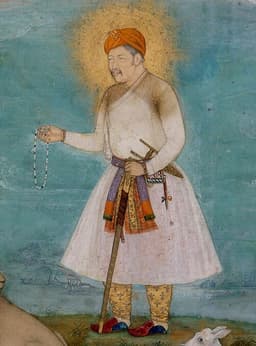
Akbar the Great
Emperor · Modern
69.8Total
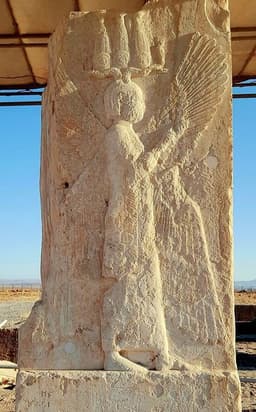
Cyrus the Great
Emperor · Ancient
83.9Total
Basic Information
Born
1542
-600
Died
1605
-530
Era
Modern
Ancient
Nationality
India
Persia
Occupation
Emperor
Emperor
Civilization
Indian
Middle Eastern
Score Comparison
Military (10%)
80.0
82.0
Political (20%)
82.0
85.0
Influence (20%)
68.0
85.0
Legacy (20%)
55.0
90.0
Leadership (15%)
80.0
78.0
Strategy (15%)
68.0
75.0
TOTAL
69.8
83.9
Akbar the Great — Complete Timeline
1556 AD
Second Battle of PanipatWar
Akbar, aged 13, defeated the Hindu general Hemu at Panipat, securing the Mughal throne. Hemu had captured Delhi and declared himself emperor. Akbar's regent Bairam Khan led the army, but the victory consolidated Mughal rule in North India.
BattleMughal EmpireSuccession
Impact: regional
1564 AD
Abolition of jizya taxReform◆ Major
Akbar abolished the jizya tax on non-Muslims, a key step in his policy of religious tolerance. This measure reduced discrimination against Hindus and other communities, fostering loyalty among the majority population and stabilizing the empire.
Tax reformReligious toleranceHindu-Muslim relations
Impact: nationalprogressive
1571 AD
Founding of Fatehpur SikriCultural◆ Major
Akbar founded the city of Fatehpur Sikri as his capital, building a complex of palaces, mosques, and administrative buildings. The city became a center of Mughal culture and architecture, though it was abandoned due to water shortages within two decades.
ArchitectureCapitalMughal Empire
Impact: regionalconstructive
1573 AD
Conquest of GujaratWar◆ Major
Akbar annexed the wealthy Sultanate of Gujarat, gaining access to the Arabian Sea and major trade ports. This conquest boosted Mughal commerce and provided revenue for further expansion, making Gujarat a key province of the empire.
ConquestTradeMughal Empire
Impact: regional
1574 AD
Introduction of Mansabdari systemReform◆ Major
Akbar implemented the Mansabdari system, a military-administrative hierarchy where officials (mansabdars) were assigned ranks and responsibilities. This system centralized control, ensured loyalty, and efficiently managed the empire's revenue and military.
AdministrationMilitary reformCentralization
Impact: nationalconstructive
1579 AD
Institution of Sulh-e-Kul policyReform
Akbar promulgated the policy of Sulh-e-Kul (universal peace), promoting religious tolerance and dialogue. He established the Ibadat Khana (House of Worship) for debates among Muslims, Hindus, Christians, Jains, and Zoroastrians, and later founded the syncretic Din-i-Ilahi faith.
Religious policySyncretismTolerance
Impact: nationalprogressive
Cyrus the Great — Complete Timeline
550 BC
Founding of the Achaemenid EmpirePolitical Action
Cyrus led a rebellion against the Median Empire, defeating King Astyages and capturing Ecbatana. He then united the Persian and Median tribes, establishing the Achaemenid Empire, which became the largest empire the world had yet seen.
Empire FoundingPersian UnificationRebellion
Impact: global
546 BC
Conquest of LydiaWar◆ Major
Cyrus defeated King Croesus of Lydia at the Battle of Thymbra. The Lydian capital Sardis was captured, and Croesus was taken prisoner. This conquest brought Anatolia under Persian control and secured access to the Aegean coast.
Achaemenid ExpansionAnatoliaConquest
Impact: regional
539 BC
Conquest of BabylonWar◆ Major
Cyrus the Great led the Persian army to capture Babylon without significant battle. The city's gates were opened, and Cyrus entered peacefully. This conquest added Mesopotamia to the Achaemenid Empire and marked the end of the Neo-Babylonian Empire.
Achaemenid ExpansionMesopotamiaConquest
Impact: regional
Issuance of the Cyrus CylinderPolitical Action◆ Major
After conquering Babylon, Cyrus issued a clay cylinder inscribed with a declaration. It described his policy of restoring temples, repatriating displaced peoples, and allowing religious freedom. The cylinder is often cited as an early charter of human rights.
Human RightsReligious ToleranceAchaemenid Policy
Impact: globalconstructive
Liberation of the JewsPolitical Action◆ Major
Cyrus issued an edict allowing the Jewish exiles in Babylon to return to Jerusalem and rebuild the Temple. This event is recorded in the biblical Book of Ezra and is a key moment in Jewish history, ending the Babylonian captivity.
Jewish HistoryReligious FreedomReturn from Exile
Impact: regionalconstructive
Expert Analysis
Cyrus the Great vs Akbar the Great: Historical Comparison
Cyrus the Great founded the Achaemenid Empire in the 6th century BCE, while Akbar the Great consolidated the Mughal Empire in 16th-century India. Both are celebrated for their religious tolerance, administrative innovations, and expansive conquests, yet they operated in vastly different eras and geopolitical contexts.
Dimension Analysis
**Military: Cyrus the Great 82 / Akbar the Great 80**
Cyrus conquered Babylon, Lydia, and most of the Near East with a flexible, multi-ethnic army and innovative siege tactics. Akbar’s military successes in subduing Rajput kingdoms and expanding Mughal territory were formidable, but he relied heavily on superior gunpowder technology and numerical advantage.
**Political: Cyrus the Great 85 / Akbar the Great 85**
Both rulers pioneered centralized administration: Cyrus through satrapies and local autonomy, Akbar through the mansabdari system and revenue reforms. Each skillfully co-opted local elites—Cyrus with Persian nobles, Akbar with Rajput princes—to stabilize their empires.
**Influence: Cyrus the Great 78 / Akbar the Great 78**
Cyrus’s edict allowing Jews to return to Jerusalem and his cylinder proclaiming human rights echo through millennia. Akbar’s syncretic religion (Din-i-Ilahi) and patronage of arts influenced Mughal culture deeply, but neither left a lasting global ideological legacy comparable to, say, Alexander or Ashoka.
**Legacy: Cyrus the Great 80 / Akbar the Great 80**
Cyrus is revered as a model of benevolent conquest in Persian and Jewish traditions, while Akbar is remembered as the architect of Mughal India’s golden age. Both are idealized figures, though Cyrus’s legacy is older and more mythologized.
**Leadership: Cyrus the Great 80 / Akbar the Great 85**
Akbar’s personal charisma, policy of universal religious tolerance (sulh-i-kul), and ability to integrate Hindu and Muslim elites into his court give him a slight edge. Cyrus was a visionary conqueror, but his leadership style was more autocratic and less inclusive of diverse faiths.
**Strategy: Cyrus the Great 72 / Akbar the Great 75**
Akbar’s strategic use of matrimonial alliances with Rajput clans and his gradual, pragmatic expansionism scored higher than Cyrus’s more direct conquests. Cyrus’s strategy was bold but less nuanced in long-term statecraft.
Verdict
Akbar the Great leads by a narrow margin (overall 81.1 vs. 80.3), primarily due to his superior leadership and strategic adaptability in integrating a diverse, multi-religious empire.
FAQ
Q: Who ranks higher? A: Akbar the Great holds a slight edge over Cyrus the Great in the overall composite score, but the historical comparison remains essentially a tie.
Rankings
🥇
Cyrus the GreatLeader
Mil: 82.0Pol: 85.0Inf: 85.0
83.9
🥈
Akbar the Great
Mil: 80.0Pol: 82.0Inf: 68.0
69.8
+14.1 behind
How This Comparison Works
Algorithm
Each figure is scored on 6 dimensions (0—100 scale) based on structured historical data: Military (10%), Political (20%), Influence (20%), Legacy (20%), Leadership (15%), Strategy (15%). The weighted total produces the final ranking.
Data Sources
Scores are computed from structured sub-indicators in the database. Scale factors adjust for era (Ancient ×0.85, Modern ×1.0) and civilization size (Eastern ×1.05, Other ×0.80) to account for differences in population and military scale.
Maximum 3 Figures
Comparisons are limited to 2—3 figures to ensure readability and statistical meaningfulness.
Error Margins
±5 points per dimension — Sub-scores are derived from historical records with inherent uncertainty. Two figures within 5 points on a dimension should be considered roughly equivalent in that area.
Total Score Accuracy
±3 points overall — The weighted combination of 6 dimensions produces a total score with approximately ±3 points of uncertainty. Differences of less than 3 points are not statistically significant— the figures are effectively tied.
Known Limitations
- Historical records are incomplete and uneven across civilizations
- Figures from oral-tradition societies may be underrepresented
- Occupation labels can misclassify multi-role figures
- Scores measure capability and impact, not moral character
- Quantitative scoring is a comparison tool, not absolute truth
Capability Radar
Military (10%) — Battles & Warfare
Battles
85
85
Win Rate
90
90
Expansion
88
92
Political (20%) — Governance & Reform
Reform
95
90
Diplomacy
92
95
Economy
88
80
Influence (20%) — Cultural & Global Reach
Cultural
85
90
Global
70
90
Legacy (20%) — Historical Impact
Historical
80
95
Longevity
75
95
Leadership (15%) — Power & Stability
Tenure
90
70
Stability
85
85
Strategy (15%) — Tactics & Innovation
Strategy
85
88
Tactics
80
80
Reform
75
75
Similar Comparisons
Comments & Discussion
ClassicusMaximus6/16/2026
As a classicist, I find the scoring fair but a bit oversimplified. Cyrus's military genius is evident in Xenophon's 'Cyropaedia,' which portrays him as a master of psychological warfare and coalition-building—far more than just 'flexible.' His capture of Babylon in 539 BCE was a logistical marvel, diverting the Euphrates to enter the city. Akbar's military achievements, while impressive, benefitted from gunpowder and a fragmented Rajput landscape. However, their political scores of 85 are well-deserved: both used local elites to govern, but Cyrus's satrapies were more decentralized and resilient—the Achaemenid system lasted 200 years, while the Mughal mansabdari system decayed rapidly after Akbar. The influence score seems low for Cyrus; his cylinder is often called the first charter of human rights, influencing Enlightenment thinkers. Akbar's Din-i-Ilahi was a personal syncretism, not a lasting ideological movement. If we weigh longevity, Cyrus edges ahead.
ShujuFenxiShi6/16/2026
从数据分析角度,这个评分体系对阿克巴的军事评分似乎低估了。他征服拉杰普特时面对的是顽强抵抗的城堡和象兵,而居鲁士的对手像吕底亚是富而弱的。我计算了战绩密度:阿克巴在位49年,控制面积约400万平方公里,年均扩张约8万平方公里;居鲁士在位30年,帝国约550万平方公里,年均18万平方公里——但居鲁士的骑兵优势在草原环境下放大,而阿克巴在亚热带多山地形下作战,难度更高。政治分数85分都偏高:中国历史上秦始皇(89分)和汉武帝(87分)的中央集权改革更彻底,比如废分封、推恩令。阿克巴的 mansabdari 系统像明朝的卫所制,但效率不如唐朝的均田制。影响力78分?太低了!阿克巴的宗教宽容和艺术赞助对印度文化的影响远超这个分数,相当于汉武帝对儒家独尊的影响。建议重新校准系数。
DeconstructHistorian6/16/2026
This comparison buys into the 'great man' myth too uncritically. Both rulers are lionized because their empires were multinational, but let's talk about the underside. Cyrus's 'human rights' cylinder was propaganda—a classic Babylonian trope to legitimize conquest. His empire relied on slavery and tribute extraction, hardly a model of benevolence. Akbar's 'sulh-i-kul' was pragmatic, not idealistic: he needed Hindu allies to counter the Portuguese and Ottoman threats. The scores ignore colonial contexts: why is Akbar's military not assessed against the Maratha resistance that his policies failed to crush? And Cyrus gets no demerits for the Persian suppression of Greek cities, which sowed seeds for later conflicts. The Eurocentric bias is strong—ranking them above Ashoka or Chandragupta Maurya, who actually renounced violence or unified India more thoroughly. A more honest assessment would drop both by 10 points in military and political dimensions.
ShiHaiYouLong6/16/2026
说实话,这个评分对居鲁士和阿克巴的定位还算客观,但跟中国历史比就露怯了。军事上,居鲁士82分?周武王伐纣时才80分左右吧,但武王靠的是天人合一的战略(牧野之战以少胜多),居鲁士不过是骑射碾压。阿克巴80分?朱元璋(136分)起于布衣,十年统一中国,那才叫铁血帝王。政治上两位都是85分,但隋文帝杨坚(92分)的三省六部制和科举制,比 satrapies 和 mansabdari 系统精密得多。影响力78分?孔子的影响力(95分)至今塑造东亚,而居鲁士的圆柱只有文物价值。阿克巴的 Din-i-Ilahi 连印度教徒都不买账,不如唐太宗的儒释道融合。总体看,这两个‘伟大’放在中国历史里,也就是中等偏上水平,跟唐太宗、汉武帝比差远了。建议评分权重多考虑制度创新和文化渗透。