Loading...
Akbar the Great vs Cleopatra VII
Akbar the Great leads by 22.6 pts · 2 figures compared
…
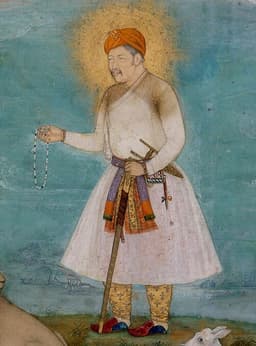
Akbar the Great
Emperor · Modern
69.8Total
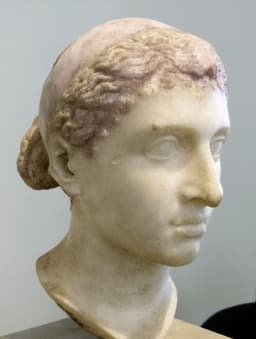
Cleopatra VII
Politician · Ancient
47.2Total
Basic Information
Born
1542
-69
Died
1605
-30
Era
Modern
Ancient
Nationality
India
Egypt
Occupation
Emperor
Politician
Civilization
Indian
Middle Eastern
Score Comparison
Military (10%)
80.0
20.0
Political (20%)
82.0
45.0
Influence (20%)
68.0
40.0
Legacy (20%)
55.0
80.0
Leadership (15%)
80.0
40.0
Strategy (15%)
68.0
25.0
TOTAL
69.8
47.2
Akbar the Great — Complete Timeline
1556 AD
Second Battle of PanipatWar
Akbar, aged 13, defeated the Hindu general Hemu at Panipat, securing the Mughal throne. Hemu had captured Delhi and declared himself emperor. Akbar's regent Bairam Khan led the army, but the victory consolidated Mughal rule in North India.
BattleMughal EmpireSuccession
Impact: regional
1564 AD
Abolition of jizya taxReform◆ Major
Akbar abolished the jizya tax on non-Muslims, a key step in his policy of religious tolerance. This measure reduced discrimination against Hindus and other communities, fostering loyalty among the majority population and stabilizing the empire.
Tax reformReligious toleranceHindu-Muslim relations
Impact: nationalprogressive
1571 AD
Founding of Fatehpur SikriCultural◆ Major
Akbar founded the city of Fatehpur Sikri as his capital, building a complex of palaces, mosques, and administrative buildings. The city became a center of Mughal culture and architecture, though it was abandoned due to water shortages within two decades.
ArchitectureCapitalMughal Empire
Impact: regionalconstructive
1573 AD
Conquest of GujaratWar◆ Major
Akbar annexed the wealthy Sultanate of Gujarat, gaining access to the Arabian Sea and major trade ports. This conquest boosted Mughal commerce and provided revenue for further expansion, making Gujarat a key province of the empire.
ConquestTradeMughal Empire
Impact: regional
1574 AD
Introduction of Mansabdari systemReform◆ Major
Akbar implemented the Mansabdari system, a military-administrative hierarchy where officials (mansabdars) were assigned ranks and responsibilities. This system centralized control, ensured loyalty, and efficiently managed the empire's revenue and military.
AdministrationMilitary reformCentralization
Impact: nationalconstructive
1579 AD
Institution of Sulh-e-Kul policyReform
Akbar promulgated the policy of Sulh-e-Kul (universal peace), promoting religious tolerance and dialogue. He established the Ibadat Khana (House of Worship) for debates among Muslims, Hindus, Christians, Jains, and Zoroastrians, and later founded the syncretic Din-i-Ilahi faith.
Religious policySyncretismTolerance
Impact: nationalprogressive
Cleopatra VII — Complete Timeline
48 BC
Alliance with Julius CaesarPolitical Action◆ Major
Cleopatra allied with Julius Caesar during the Roman civil war. She had herself smuggled into his palace in Alexandria rolled in a carpet. Caesar supported her claim to the throne, defeating her brother Ptolemy XIII and restoring her as co-ruler of Egypt.
Impact: regional
47 BC
Birth of CaesarionPolitical Action◆ Major
Cleopatra gave birth to Ptolemy XV Caesar (Caesarion), claiming he was Julius Caesar's son. This birth strengthened her political position and provided a potential heir to both Egypt and Rome, though Caesar never officially acknowledged him as his heir.
Impact: regional
41 BC
Alliance with Mark AntonyPolitical Action◆ Major
Cleopatra formed a political and romantic alliance with Mark Antony, a Roman triumvir. She provided him with financial and military support for his campaigns in the East. Their relationship produced three children and solidified her control over Egypt.
Impact: regional
31 BC
Battle of ActiumWar
The combined naval forces of Cleopatra and Mark Antony were decisively defeated by Octavian's fleet under Agrippa at Actium in Greece. Cleopatra fled with her ships, and Antony followed, leading to their eventual downfall and Octavian's rise as Augustus.
Impact: globaltragic
30 BC
Death of CleopatraPolitical Action
After Octavian's forces captured Alexandria, Cleopatra died by suicide, traditionally said to be from the bite of an asp. Her death ended the Ptolemaic dynasty and Egypt became a Roman province, marking the end of Hellenistic Egypt's independence.
Impact: globaltragic
Expert Analysis
Cleopatra VII vs Akbar the Great
### The Queen and the Emperor: Two Paths to Power in a World of Empires
On a summer morning in 31 BCE, Cleopatra VII stood on the deck of her flagship, watching the sea turn red off the coast of Actium. Her ships, laden with treasure, were meant to secure Egypt’s future. Instead, they became her cage. Across the centuries and continents, in 1556, a thirteen-year-old boy named Akbar mounted a war elephant at Panipat, his army outnumbered, his throne stolen. One leader fled a battle she could not win; the other charged into one he was not supposed to survive. Why did Cleopatra, the brilliant diplomat, lose everything, while Akbar, the warrior-king, built an empire that would last two hundred years? The answer lies not in luck, but in the soil where they were planted, and the storms they chose to ride.
### Origins
Cleopatra was born into a dying dynasty. The Ptolemies, Greek rulers of Egypt, had spent generations feuding among themselves—murdering siblings, marrying cousins, and slowly losing control of their kingdom. By 69 BCE, Rome had become the Mediterranean’s undisputed power, and Egypt was a client state, independent only by Roman sufferance. Cleopatra inherited a throne that was already a shadow. She was educated in diplomacy, languages, and the arts of survival, but she was also a woman in a world of Roman generals who saw her kingdom as a prize.
Akbar, by contrast, was born into an empire in the making. His grandfather Babur had founded the Mughal dynasty in India only sixteen years before Akbar’s birth in 1542. The Mughals were invaders from Central Asia, but they were also builders. Akbar’s father, Humayun, lost the throne to Afghan rebels and spent years in exile, leaving Akbar as a child-king in a precarious position. Yet the Mughal project was young, ambitious, and hungry. Unlike Cleopatra, who had to defend an ancient realm from a superpower, Akbar had to create a new one from a patchwork of warring kingdoms. His canvas was blank; hers was already crumbling.
### Rise to Power
Cleopatra’s rise was a masterclass in political cunning. At eighteen, she became co-ruler with her younger brother Ptolemy XIII, who was also her husband—a typical Ptolemaic arrangement. When her brother’s advisors pushed her out, she raised an army in Syria and prepared for civil war. But she knew she could not win alone. In 48 BCE, as Julius Caesar arrived in Alexandria, she had herself rolled into a carpet and smuggled into his presence. The gamble worked. Caesar backed her, and she became sole ruler of Egypt—but at a price. She was now Caesar’s ally, and Rome’s client. Her throne rested on Roman power.
Akbar’s rise was more straightforward, but no less dramatic. At thirteen, he inherited a kingdom that was slipping away. The Hindu general Hemu had captured Delhi and declared himself emperor. Akbar’s regent, Bairam Khan, urged the boy to march. At the Second Battle of Panipat in 1556, Akbar’s outnumbered forces faced Hemu’s war elephants. Mid-battle, an arrow struck Hemu in the eye, and his army collapsed. Akbar, barely a teenager, had won. He did not owe his throne to a foreign patron; he seized it with steel and gunpowder.
### Leadership & Governance
Here, the two rulers diverge most sharply. Cleopatra was a diplomat, not a warrior. Her military score of 25 reflects a queen who never commanded an army in the field. Instead, she wielded charm, wealth, and political intelligence. She bore Caesar a son, Caesarion, and later allied with Mark Antony, the Roman general who controlled the eastern Mediterranean. She funded his campaigns, supplied his ships, and dreamed of a joint empire that would rival Rome. But her power was always borrowed. She could persuade, but she could not conquer.
Akbar, with a military score of 80, was a conqueror first. He personally led campaigns that annexed Gujarat in 1573, Bengal, and the Rajput kingdoms. Yet his genius was that he did not stop at war. He abolished the jizya tax on non-Muslims in 1564, married Hindu princesses without forcing conversion, and in 1579 declared the policy of *Sulh-e-Kul*—universal peace. He built a new capital at Fatehpur Sikri in 1571, a city of red sandstone that blended Persian, Hindu, and Islamic architecture. His Mansabdari system, introduced in 1574, created a meritocratic bureaucracy that tied military service to land revenue. Cleopatra ruled through personal alliances; Akbar ruled through institutions.
### Triumph & Tragedy
Cleopatra’s greatest triumph was also her greatest tragedy. In 41 BCE, she met Mark Antony in Tarsus, arriving on a golden barge with purple sails and silver oars. She seduced him, and together they formed a political and romantic partnership that seemed to promise a new order. But in 31 BCE, at the Battle of Actium, their combined fleet was crushed by Octavian’s admiral Agrippa. Cleopatra fled, and Antony followed. A year later, with Octavian’s army at the gates of Alexandria, she died by suicide—traditionally, from the bite of an asp. Her son Caesarion was executed. Egypt became a Roman province.
Akbar’s triumphs were many, but he too knew tragedy. His son Salim (later Emperor Jahangir) rebelled against him, and Akbar spent his final years watching his dynasty fracture. Yet he died in 1605, still emperor of a vast and stable realm. His tragedy was not defeat, but the limits of his vision: his policy of religious tolerance was remarkable, but it did not survive him unblemished. Still, he died in bed, not by a serpent’s fang.
### Character & Destiny
Cleopatra’s character was forged in vulnerability. She was brilliant, multilingual, and ruthless—she had her own siblings killed to secure power. But she operated in a world where Roman men held the real power. She could charm Caesar, seduce Antony, but she could never build an army that could match Rome’s legions. Her destiny was to be the last act of a Greek dynasty in an Egyptian land, crushed by the machine of empire.
Akbar’s character was forged in confidence. He was curious, tolerant, and ambitious—he invited Jesuit priests to his court and debated theology with Hindus, Muslims, and Zoroastrians. He could be cruel, ordering executions when necessary, but he also abolished forced conversions. He believed he could build a new civilization, and he almost did. His destiny was to be the architect of an Indian golden age.
### Legacy
Cleopatra’s legacy is myth. She is remembered as a femme fatale, a tragic queen, a symbol of exotic beauty and doomed ambition. But the historical Cleopatra was a skilled politician who fought to preserve her kingdom against impossible odds. Her influence score of 60 is modest, but her cultural impact is immeasurable. She has been painted, written, and filmed more than almost any ancient ruler.
Akbar’s legacy is substance. He is remembered as Akbar the Great, the emperor who unified India, who built a tolerant state, who created institutions that lasted centuries. His legacy score of 80 reflects a ruler whose reforms shaped the subcontinent. The Mansabdari system influenced British colonial administration. His policy of *Sulh-e-Kul* remains a touchstone for Indian secularism. He is not a myth; he is a foundation.
### Conclusion
Cleopatra and Akbar both faced a world of empires. One tried to dance with the lion; the other became the lion. Cleopatra’s story is a tragedy of intelligence without power, of a woman who could charm the world but could not conquer it. Akbar’s story is a triumph of power tempered by wisdom, of a conqueror who learned that ruling hearts matters more than ruling lands. Their differences are not just personal—they are structural. Cleopatra inherited a kingdom that was already lost; Akbar inherited a kingdom that was waiting to be born. One died clutching a serpent; the other died grasping an empire. History remembers both, but it honors the builder, not the beseiged.
Rankings
🥇
Akbar the GreatLeader
Mil: 80.0Pol: 82.0Inf: 68.0
69.8
🥈
Cleopatra VII
Mil: 20.0Pol: 45.0Inf: 40.0
47.2
+22.6 behind
How This Comparison Works
Algorithm
Each figure is scored on 6 dimensions (0—100 scale) based on structured historical data: Military (10%), Political (20%), Influence (20%), Legacy (20%), Leadership (15%), Strategy (15%). The weighted total produces the final ranking.
Data Sources
Scores are computed from structured sub-indicators in the database. Scale factors adjust for era (Ancient ×0.85, Modern ×1.0) and civilization size (Eastern ×1.05, Other ×0.80) to account for differences in population and military scale.
Maximum 3 Figures
Comparisons are limited to 2—3 figures to ensure readability and statistical meaningfulness.
Error Margins
±5 points per dimension — Sub-scores are derived from historical records with inherent uncertainty. Two figures within 5 points on a dimension should be considered roughly equivalent in that area.
Total Score Accuracy
±3 points overall — The weighted combination of 6 dimensions produces a total score with approximately ±3 points of uncertainty. Differences of less than 3 points are not statistically significant— the figures are effectively tied.
Known Limitations
- Historical records are incomplete and uneven across civilizations
- Figures from oral-tradition societies may be underrepresented
- Occupation labels can misclassify multi-role figures
- Scores measure capability and impact, not moral character
- Quantitative scoring is a comparison tool, not absolute truth
Capability Radar
Military (10%) — Battles & Warfare
Battles
85
20
Win Rate
90
15
Expansion
88
10
Political (20%) — Governance & Reform
Reform
95
40
Diplomacy
92
85
Economy
88
55
Influence (20%) — Cultural & Global Reach
Cultural
85
80
Global
70
85
Legacy (20%) — Historical Impact
Historical
80
85
Longevity
75
90
Leadership (15%) — Power & Stability
Tenure
90
60
Stability
85
35
Strategy (15%) — Tactics & Innovation
Strategy
85
30
Tactics
80
25
Reform
75
10
Similar Comparisons
Comments & Discussion
Pharaoh's Gambit6/16/2026
Calling this a comparison of "two paths to power" is ahistorical nonsense. Cleopatra didn't choose to flee Actium—she had no fleet left after her allies defected. Her real mistake was betting on Roman civil wars, which always favor the land army. Akbar inherited Babur's military machine and a fractured but wealthy subcontinent. Compare apples to oranges: one ruler navigated a collapsing client-state within an imperial system, the other built an empire from scratch with gunpowder and cavalry.
亚历山大之羡6/16/2026
说“阿克巴冲锋而克利奥帕特拉逃跑”?这完全是性别偏见和军事浪漫主义。她逃跑是理性止损:保存舰队和国库,试图从印度或红海重整旗鼓。阿克巴在帕尼帕特赢的是地方军阀,不是屋大维那样的帝国机器。更关键的是—阿克巴能娶印度公主巩固联盟,克利奥帕特拉只能嫁给弟弟或罗马人。这不是勇气差异,是结构性约束的绝对不平等。真正的教训是:女人领导的弱国永远没有豪赌的资格。
Data Skeptic6/16/2026
Your "analysis" cherry-picks battles to fit a narrative. Cleopatra ruled Egypt for 21 years with minimal military bloodshed; Akbar's reign saw dozens of major campaigns and hundreds of thousands dead. By body count, Akbar was objectively more violent and expansionist. By economic metrics, Cleopatra's Alexandria remained a trade hub while Akbar's tax reforms boosted agrarian output. You can't reduce statecraft to "charging vs fleeing." Both were pragmatic survivors in radically different geopolit
骑兵与诗人6/16/2026
神秘化阿克巴的“少年英雄”叙事完全忽略了莫卧儿帝国的黑暗面。是的,他13岁骑象上战场,但随后28年他镇压了拉杰普特人、夷平了奇托尔堡,屠杀数万平民。而克利奥帕特拉在亚历山大学术中心保护了希腊科学,资助了希罗与斯特拉波。阿克巴建设帝国通过毁灭地方文明,克利奥帕特拉保卫文明通过外交妥协。我宁愿选择诗人的图书馆,也不要骑兵的纪念碑。
Revisionist Lens6/16/2026
You frame Akbar as a "warrior-king" building an empire, but ignore that his "tolerance" was strategic: he married Rajput princesses to neutralize enemies while systematically centralizing power. Cleopatra's multilingual diplomacy and economic management of Egypt's grain exports were far more sophisticated than any Mughal revenue system of her era. The real difference? Akbar had no Rome breathing down his neck. Remove the Roman factor, and Cleopatra's Egypt could have rivaled any empire of the 16